
Loading...
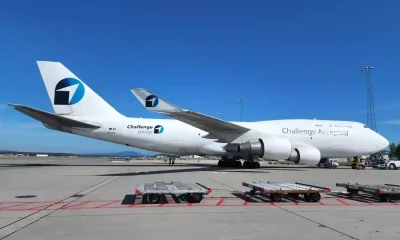
Challenge Group unveiled its newest Boeing 747-400 production freighter registered under its Belgian AOC. With this acquisition, Challenge Group’s fleet now consists of 10 state-of-the-art aircraft, including six Boeing 747-400F and four Boeing 767-300F freighters, trebling its fleet in less than three years. This expansion positions the company to meet increasing customer demand with greater efficiency and flexibility.
The new aircraft will significantly enhance Challenge Group’s capacity and frequency, addressing rising demand for perishable transportation out of Africa, e-commerce shipments from China, and transatlantic trade. Predominantly serving the e-commerce sector from China, the Boeing 747-400F will also support diverse industries and verticals with its versatile cargo capabilities.
“The addition of the Boeing 747-400F is a pivotal step in Challenge Group’s fleet strategy,” said Or Zak, Chief Commercial Officer at Challenge Group. “It reinforces our ability to respond to the evolving demands of the air freight capacity while expanding our capability to serve new markets. This aircraft exemplifies our commitment to operational flexibility and providing additional solutions for our customers.”
This expansion aligns with Challenge Group’s long-term strategy to grow its fleet and increase its market reach. By incorporating advanced freighters like the Boeing 747-400 production freighter, the company is well-positioned to deploy additional capacity as needed and strengthen its global network.
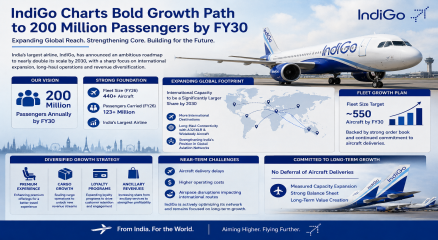
IndiGo has outlined an ambitious growth roadmap for the next four years, aiming to carry 200 million passengers annually by FY30 while significantly expanding its international network and long-haul operations. The strategy marks a shift in the airline's growth focus as it seeks to increase its presence in overseas markets and diversify revenue streams. India's largest airline plans to nearly double its scale by the end of the decade, supported by fleet expansion, the induction of long-range aircraft and a larger share of international capacity. The carrier currently operates a fleet of more than 440 aircraft and transported over 123 million passengers during FY26. A key element of the airline's strategy is the expansion of international services. IndiGo expects overseas operations to account for a substantially larger share of its total capacity by 2030, supported by the deployment of Airbus A321XLR aircraft and future widebody operations. The airline believes long-haul connectivity will open access to new markets and strengthen India's position in global air travel networks. Alongside network growth, IndiGo plans to strengthen its premium travel offerings and increase contributions from cargo, loyalty programmes and ancillary services. The airline views these segments as important sources of future revenue growth beyond its traditional low-cost passenger business. The expansion blueprint comes despite near-term challenges facing the carrier, including aircraft delivery delays, higher operating costs and ongoing airspace disruptions affecting some international routes. In recent weeks, IndiGo announced temporary suspensions on several overseas services as part of network optimisation measures. The airline, however, has indicated that it does not intend to defer aircraft deliveries and remains committed to its long-term fleet growth plans. By FY30, IndiGo is targeting a fleet of around 550 aircraft while maintaining a measured approach to capacity expansion. As competition intensifies across domestic and international markets, IndiGo's strategy reflects a broader effort to evolve from a predominantly domestic low-cost carrier into a larger global aviation player with a stronger international footprint and diversified business model. Follow CARGOCONNECT for more such updates.
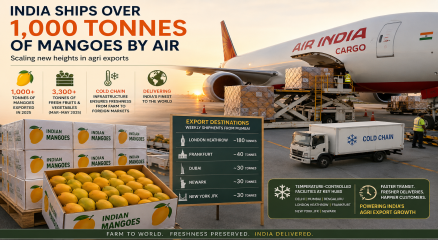

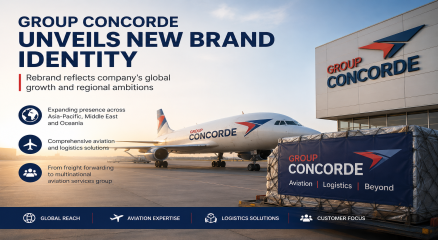
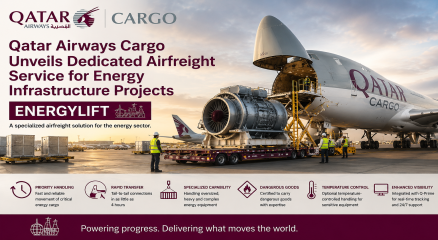
Qatar Airways Cargo has launched a new airfreight product aimed at supporting the movement of critical equipment for energy and infrastructure projects, expanding its portfolio of specialized cargo services as demand grows for time-sensitive industrial logistics solutions. The new service, branded EnergyLift, is designed to handle urgent shipments linked to sectors including oil and gas, power generation, renewable energy, and water infrastructure. The carrier said the offering addresses a gap in the market for faster and more tailored transport options for high-value, project-critical components. EnergyLift provides airport-to-airport transportation with priority handling and expedited transfer processes. According to the airline, shipments can benefit from transfer times of as little as four hours between connecting flights, helping reduce transit delays for equipment required at operational sites and infrastructure projects. The service is also equipped to accommodate oversized and complex cargo, a key requirement for the energy sector where components such as turbines, generators, valves, and industrial machinery often require specialized handling. Additional capabilities include dangerous goods management and optional temperature-controlled transport for sensitive cargo. For customers requiring additional service assurance, EnergyLift can be combined with the carrier’s Q-Prime solution, which offers shipment monitoring, dedicated support, and uplift guarantees for critical recovery situations. The airline said these features are intended to improve reliability for projects where equipment delays can result in significant operational and financial consequences. Bookings are available through Qatar Airways Cargo’s Digital Lounge platform as well as third-party booking channels. The launch follows the carrier’s recent introduction of a specialized pharmaceutical logistics product, reflecting a broader strategy to develop sector-specific cargo solutions. The move highlights increasing competition among cargo operators to target industrial verticals that require specialized handling and guaranteed capacity, particularly as energy and infrastructure investments continue to expand across global markets. Follow CARGOCONNECT for more such updates.


The International Federation of Freight Forwarders Associations (FIATA) has called for a formal review of proposed changes to the International Air Transport Association’s (IATA) Direct Air Waybill (DAWB) framework, warning that the revisions could significantly alter liability structures and disrupt long-standing commercial practices in the global air cargo industry. The debate centres on amendments being introduced under IATA’s Modernisation of the Global Air Cargo Programme. According to FIATA, the proposed framework changes may shift operational and legal responsibilities disproportionately onto freight forwarders while favouring larger market participants. The organisation argues that such changes could create uncertainty across the air cargo ecosystem at a time when supply chains are already facing geopolitical disruptions, cost pressures, and growing compliance demands. FIATA stated that the current proposals require broader consultation and deeper analysis before implementation. The association emphasised that freight forwarders, airlines, insurers, and regulators must collectively evaluate the legal, operational, and insurance implications of the revised Direct Air Waybill structure. The Direct Air Waybill is a critical document used in international air freight shipments where cargo moves directly between the shipper and airline without a traditional house air waybill issued by a freight forwarder. Industry experts note that any changes to the framework could affect liability allocation, cargo claims processes, and contractual obligations across the supply chain. FIATA Director General Dr Stéphane Graber highlighted the importance of ensuring that industry modernisation efforts remain balanced and collaborative. The organisation has consistently supported digitalisation and efficiency improvements in air cargo but maintains that reforms should reflect real-world market practices and protect all stakeholders equally. Industry concerns intensified following discussions at recent air cargo forums, where freight forwarders expressed apprehension over the pace and scope of the proposed revisions. Several stakeholders fear that the updated framework could increase legal exposure for intermediaries while reducing operational flexibility for smaller logistics providers. According to FIATA, modernisation initiatives should enhance trust, interoperability, and resilience across the air cargo sector rather than create additional friction. The organisation also cautioned that introducing major changes without comprehensive legal and technical assessment could lead to increased disputes and market instability. The issue arrives at a pivotal moment for the global air cargo industry, which is accelerating digital transformation initiatives, including electronic documentation and data-sharing systems. As airlines and logistics providers push for greater efficiency, industry bodies are under pressure to ensure that regulatory and procedural reforms do not undermine commercial balance. FIATA has urged IATA and industry stakeholders to engage in further dialogue before finalising the Direct AWB framework changes. The association reiterated that collaborative governance and transparent consultation will be essential to maintaining confidence and stability in global air freight operations. 𝐒𝐭𝐚𝐲 𝐓𝐮𝐧𝐞𝐝 𝐭𝐨 https://cargoconnect.co.in/ 𝐟𝐨𝐫 𝐥𝐚𝐭𝐞𝐬𝐭 𝐮𝐩𝐝𝐚𝐭𝐞𝐬!