
Loading...

Prime Minister Narendra Modi arrived in Kyrgyzstan on Sunday to attend the 26th Shanghai Cooperation Organisation (SCO) Summit, where leaders are expected to discuss regional security, economic cooperation and ways to deepen engagement among member countries. Modi travelled to Bishkek at the invitation of Kyrgyz President Sadyr Zhaparov, following the conclusion of his two-day state visit to Uzbekistan. His participation at the summit comes as the SCO marks 25 years of its existence and as India continues to strengthen its economic and connectivity links with Central Asia. The summit will bring together leaders of SCO member states for discussions on regional and international developments and on expanding cooperation within the grouping. For India, the meeting provides an opportunity to advance its engagement with Central Asian economies, including on trade, transport connectivity and infrastructure. Modi's Kyrgyzstan visit follows a series of agreements reached during his Uzbekistan trip. India and Uzbekistan upgraded their relationship to a Comprehensive Strategic Partnership and agreed to cooperate across areas including trade and investment, infrastructure, digital public infrastructure, artificial intelligence, critical minerals, energy, agriculture, pharmaceuticals and space. The two countries have also set an objective of increasing bilateral trade to $5 billion by 2030, compared with more than $1 billion currently. Improving market access, connectivity and banking and payment mechanisms has been identified as part of the effort to expand commercial ties. For the logistics and supply-chain sector, deeper engagement with Central Asia is particularly relevant as India seeks greater access to markets in the region and improved trade corridors connecting the country with landlocked Central Asian economies. Infrastructure and connectivity remain important factors in determining the cost and reliability of such trade. Follow CARGOCONNECT for more such updates.
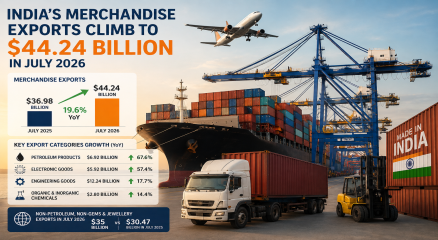
India’s merchandise exports rose 19.6% year-on-year to $44.24 billion in July 2026, marking a sharp increase from $36.98 billion a year earlier, according to provisional data released by the Ministry of Commerce and Industry. The increase was led by petroleum products, electronic goods and engineering products, even as higher imports pushed the merchandise trade deficit close to $32 billion. Among major product categories, petroleum product exports increased 67.6% year-on-year to $6.92 billion. Electronic goods exports climbed 57.4% to $5.92 billion, while engineering goods shipments rose 17.7% to $12.24 billion. Exports of organic and inorganic chemicals increased 14.4% to $2.80 billion. The broader export performance was not limited to petroleum and other high-value categories. Non-petroleum, non-gems-and-jewellery exports reached $35 billion in July, up from $30.47 billion in the same month last year. This points to continued expansion in several manufacturing and processed-goods segments. The improvement in exports came alongside a stronger increase in imports. Merchandise imports rose 17.5% year-on-year to $76.22 billion in July, compared with $64.86 billion in July 2025. As a result, the merchandise trade deficit widened to $31.98 billion, from $27.88 billion a year earlier. The export increase comes as Indian traders continue to contend with disruption across key international shipping routes. Higher freight and insurance costs, along with delays and container availability constraints, have added to logistics costs for exporters, particularly those dependent on West Asian trade corridors. Exports to West Asia nevertheless showed an improvement in July, reaching about $5.7 billion, an 8.6% year-on-year increase, according to government officials. The United States remained a major destination for Indian goods, although exporters continue to face uncertainty over tariff policy and market access. The latest figures therefore present a mixed picture for India’s external trade: merchandise exports are expanding at a strong pace, supported by manufacturing-intensive sectors, but imports are growing nearly as quickly. For logistics and supply-chain operators, the trajectory of freight rates, energy prices and geopolitical disruptions will remain important factors in determining whether the export momentum can be sustained through the rest of the fiscal year. Follow CARGOCONNECT for more such updates.
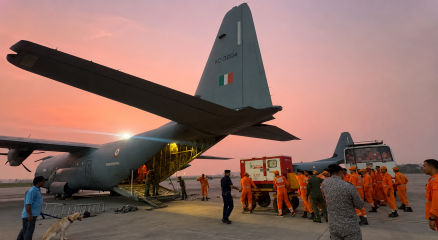
India has airlifted 47.5 tonnes of humanitarian assistance and emergency supplies to Nepal as the neighbouring country continues rescue and relief operations following severe flash floods. The Indian Air Force deployed two transport aircraft over August 26 and 27 to move the consignments to Kathmandu. The first consignment, transported by a C-130J aircraft, weighed 10 tonnes and comprised relief materials including shelters, blankets, hygiene kits and medicines. A second IAF aircraft, a C-17, subsequently delivered 37.5 tonnes. The consignment consisted of 28.5 tonnes of humanitarian relief material, eight tonnes of medicines and one tonne of food packets, taking India's total assistance to 47.5 tonnes. The rapid deployment highlights the role of how military airlift supports emergency supply chain in delivering essential supplies when conventional road links are disrupted by natural disasters. The flooding has damaged roads, bridges and other infrastructure in affected parts of Nepal, creating additional challenges for moving relief material into impacted areas. The air shipments allowed essential supplies to reach Kathmandu while ground-based access remains constrained. India's External Affairs Minister S. Jaishankar said the relief material and medical supplies had reached Kathmandu and that Indian authorities remained in close contact with Nepalese officials over the response. Nepal has been coordinating the disaster response through its own security agencies, while foreign governments and international organisations have offered humanitarian and financial support. The relief operation comes after major flash flooding in Nepal's Bhote Koshi river system and surrounding areas caused extensive damage and significant loss of life. The scale of infrastructure disruption has made the movement of emergency supplies and restoration of transport connectivity key priorities for the ongoing response. Follow CARGOCONNECT for more such updates.
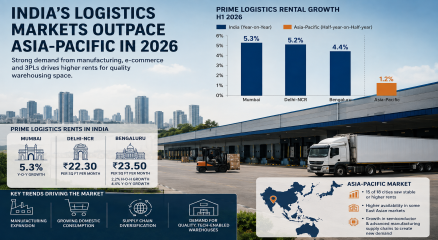
India’s major logistics markets recorded significantly faster rental growth than the broader Asia-Pacific region in the first half of 2026, as manufacturing activity, domestic consumption and supply-chain diversification continued to support demand for modern warehousing space. Data from Knight Frank shows prime logistics rents increased 5.3% year-on-year in Mumbai, 5.2% in Delhi-NCR and 4.4% in Bengaluru. By comparison, logistics rents across the Asia-Pacific market increased 1.2% on a half-year-on-half-year basis during the same period. The stronger performance in India reflects sustained requirements from manufacturers, retailers, e-commerce companies and third-party logistics providers. Companies are increasingly looking for facilities capable of handling larger inventories, automation and more complex distribution networks. Mumbai posted the highest annual rental growth among the three Indian markets tracked by Knight Frank. Delhi-NCR recorded prime rents of ₹22.30 per sq ft per month. In Bengaluru, prime logistics rents rose 2.2% over six months and 4.4% annually to ₹23.50 per sq ft per month. The rental gains come as occupiers become more selective about the type and location of logistics facilities they lease. Rather than simply adding capacity, companies are increasingly assessing warehouse efficiency, connectivity, technology integration and the ability of facilities to support more sophisticated supply-chain operations. This has strengthened demand for professionally managed, institutional-grade warehouses, particularly along established manufacturing and consumption corridors. The trend also has implications for developers and investors. Rising rents in established logistics markets are improving the potential returns from modern industrial and warehousing assets, while occupier requirements are encouraging larger and better-specified developments. India’s rental performance stands in contrast to a more moderate logistics property market across Asia-Pacific. Knight Frank data showed that 15 of the 18 cities tracked in the region recorded either stable or higher rents during the period, although overall rental growth remained restrained. Higher availability in some East Asian markets has limited pricing pressure. Leasing activity in several parts of the region is increasingly being driven by companies relocating, consolidating facilities or moving into better-quality warehouses rather than by significant expansion of their overall logistics footprints. The regional outlook is also being shaped by investments in semiconductor and advanced manufacturing supply chains. Such industries typically require specialised logistics infrastructure and could generate additional demand for strategically located warehousing and industrial facilities. For India, the combination of manufacturing expansion, domestic consumption and efforts by companies to diversify supply chains provides a relatively strong demand base for logistics real estate. The market is therefore moving beyond the earlier emphasis on adding warehouse capacity. Location, operating efficiency, facility specifications and the ability to support increasingly complex supply chains are becoming more important factors in determining demand and rental performance. India’s leading logistics hubs are consequently entering the next phase of the property cycle with rental growth running ahead of the broader Asia-Pacific market, although the pace of future increases will depend on the balance between new supply and occupier demand. Follow CARGOCONNECT for more such updates.

Nestlé India has elevated Jaikishan Gianani to the position of Head of Procurement for the South Asia region, effective 1st August 2026. Gianani brings extensive experience across procurement, supply chain operations, commodities and sustainability to the new leadership role. His career at Nestlé has included responsibilities spanning strategic sourcing, raw material procurement, packaging procurement, factory supply chain and supply chain projects. Over the years, he has worked across a broad range of procurement categories, including oils and fats, coffee, chicory, tea and other agricultural commodities. He has also handled global commodity procurement responsibilities covering regions across Asia, Africa, the Middle East and Oceania. Gianani holds an MBA from S.P. Jain Institute of Management & Research and a B.Tech degree from the National Institute of Technology, Durgapur. His experience extends beyond conventional sourcing. During his tenure as Head of Packaging Procurement and Lead for Sustainable Packaging in South Asia, he was involved in initiatives focused on packaging optimisation, recyclability and reducing the use of virgin plastic. His operational exposure also includes leadership of supply chain activities at Nestlé’s Nanjangud and Choladi factories, followed by a corporate procurement role. More recently, he has been associated with procurement of agri commodities and food ingredients at Nestlé. The new assignment places Gianani at the centre of Nestlé’s procurement agenda for South Asia, where supplier partnerships, commodity risk management, cost efficiency, sustainability and supply resilience remain important priorities. His experience across strategic sourcing and end-to-end supply chain functions is expected to support the company’s procurement objectives in the region. 𝐒𝐭𝐚𝐲 𝐓𝐮𝐧𝐞𝐝 𝐭𝐨 CARGOCONNECT 𝐟𝐨𝐫 𝐥𝐚𝐭𝐞𝐬𝐭 𝐮𝐩𝐝𝐚𝐭𝐞𝐬!
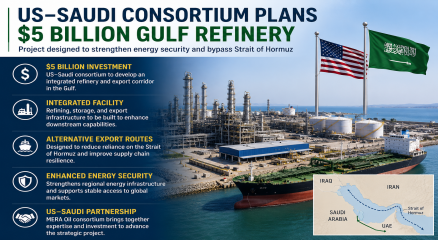
A consortium of U.S. and Saudi Arabian companies has moved ahead with plans to develop a US$5 billion integrated oil refinery and export corridor in the Gulf, aiming to strengthen regional energy infrastructure and reduce reliance on the strategically important Strait of Hormuz for crude exports. The project comes as geopolitical tensions continue to disrupt energy supply routes across the Middle East. The proposed development will combine refining, storage and export infrastructure, enabling crude oil to be processed and shipped through alternative routes outside the Strait of Hormuz. The initiative is expected to improve supply chain resilience by providing an additional export channel for petroleum products while supporting uninterrupted access to global markets. The project is being developed by the MERA Oil consortium, which comprises U.S. and Saudi partners. According to the consortium, the investment is intended to strengthen the Gulf's downstream energy capabilities at a time when regional producers are seeking to diversify export options amid continued security risks affecting maritime trade. The refinery project aligns with a broader regional trend of investing in infrastructure that bypasses the Strait of Hormuz, one of the world's most critical maritime chokepoints. Gulf countries have accelerated plans for new pipelines, export terminals and logistics corridors following repeated disruptions to shipping in the region. The Strait of Hormuz remains a vital artery for global energy trade, carrying a significant share of the world's oil exports. Recent geopolitical tensions have highlighted the vulnerability of this route, prompting governments and energy companies to pursue alternative transport and export networks to improve supply security and reduce operational risks. Follow CARGOCONNECT for more such updates.

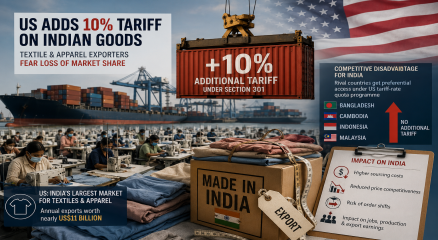
Indian textile and apparel exporters could lose market share in the United States after Washington imposed an additional 10% tariff on a broad range of Indian goods, according to the Confederation of Indian Textile Industry (CITI). The industry body has warned that the measure places Indian suppliers at a competitive disadvantage against several Asian manufacturing hubs that have secured preferential treatment under the new US trade framework. The tariff, introduced under Section 301 of the US Trade Act of 1974, comes on top of existing most-favoured-nation import duties and applies to a significant portion of India's manufactured exports, including textiles and apparel. Industry representatives say the additional levy is likely to increase sourcing costs for US buyers and reduce the price competitiveness of Indian products. CITI said the competitive imbalance has been intensified by the exclusion of India from a new tariff-rate quota programme that allows eligible textile and apparel shipments from countries such as Bangladesh, Cambodia, Indonesia and Malaysia to enter the US market without the additional Section 301 duty, provided they use US-origin cotton and fibre. The industry body believes this could encourage global retailers and brands to shift sourcing away from India. The United States remains India's largest overseas market for textile and apparel exports, with annual shipments valued at nearly US$11 billion. Any decline in demand from US buyers could have implications for manufacturing activity, employment and export earnings across India's textile supply chain, industry participants said. Trade analysts also expect the tariff's impact to extend beyond textiles. According to estimates by the Global Trade Research Initiative, around 70% of India's exports to the US—including garments, machinery, chemicals, plastics, leather products, gems and jewellery, and furniture—are expected to face the additional levy alongside existing import duties. The US tariff measures were introduced as part of a broader trade action targeting imports from multiple countries over concerns related to the enforcement of forced-labour import restrictions. While several product categories remain exempt, the new duties cover the majority of manufactured goods entering the US market. As of the latest reports, India's Ministry of Commerce and Industry had not issued an official response to the industry's concerns. Exporters are expected to closely monitor the implementation of the new tariff regime and assess its impact on order flows and sourcing decisions in the coming months. Follow CARGOCONNECT for more such updates.

India and Japan have reaffirmed their commitment to expanding their strategic partnership, placing greater emphasis on the Indo-Pacific region, maritime cooperation, resilient supply chains, and emerging technologies. During bilateral discussions between Prime Minister Narendra Modi and Japanese Prime Minister Sanae Takaichi, both nations agreed to deepen collaboration across defence, trade, technology, energy, and logistics, reflecting their shared vision for a secure and economically integrated Indo-Pacific. A major outcome of the talks was the decision to strengthen maritime cooperation through enhanced naval collaboration, maritime domain awareness, and joint efforts to ensure freedom of navigation across critical sea lanes. The leaders underscored the importance of maintaining a rules-based international order, particularly as global trade increasingly depends on secure maritime routes linking Asia with the rest of the world. From a supply chain perspective, India and Japan announced significant initiatives to build more resilient and diversified manufacturing ecosystems. Both countries agreed to accelerate cooperation in semiconductor production, advanced electronics, artificial intelligence, and critical technologies to reduce dependence on concentrated global supply networks. Japanese companies also committed fresh investments worth approximately USD 12.5 billion across manufacturing, infrastructure, logistics, clean energy, and industrial development projects in India, reinforcing the country's position as a preferred destination for global supply chain diversification. The two sides also unveiled their first joint defence technology project, marking a new chapter in bilateral defence industrial cooperation. The initiative is expected to encourage technology transfers, collaborative research, and manufacturing partnerships while strengthening regional security architecture. Energy security emerged as another key pillar of the partnership. India and Japan agreed to expand collaboration in clean energy, green hydrogen, renewable power, and next-generation energy technologies, supporting both nations' long-term sustainability goals while creating opportunities for green logistics and low-carbon supply chains. Trade facilitation and infrastructure development also featured prominently in the discussions. Both leaders expressed their commitment to improving connectivity through quality infrastructure, digital trade, and logistics modernisation, enabling smoother movement of goods across regional markets. The renewed India-Japan partnership is expected to play a pivotal role in enhancing supply chain resilience across the Indo-Pacific at a time when geopolitical uncertainties continue to reshape global manufacturing and logistics networks. With growing cooperation spanning defence, technology, investment, maritime security, and infrastructure, both countries are positioning themselves as trusted partners in building secure, sustainable, and diversified regional supply chains that support long-term economic growth. 𝐒𝐭𝐚𝐲 𝐓𝐮𝐧𝐞𝐝 𝐭𝐨 CARGOCONNECT 𝐟𝐨𝐫 𝐥𝐚𝐭𝐞𝐬𝐭 𝐮𝐩𝐝𝐚𝐭𝐞𝐬!
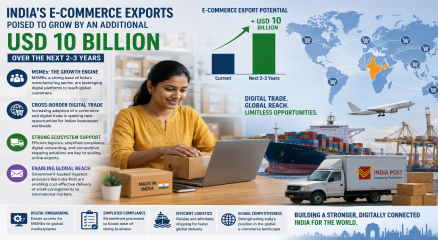
India's e-commerce exports have the potential to grow by an additional USD 10 billion over the next two to three years, supported by the country's large base of micro, small and medium enterprises (MSMEs) and increasing adoption of cross-border digital trade, according to a senior official from the Directorate General of Foreign Trade (DGFT). Speaking at an industry event, Rajesh Kumar Mishra, Additional Director General at DGFT, said India is well positioned to expand its presence in global e-commerce exports by leveraging its manufacturing capabilities and growing network of online marketplaces. He noted that while countries such as China generate significantly higher e-commerce export volumes, India has considerable scope to scale up its cross-border trade. The projected growth is expected to be driven primarily by MSMEs, which account for a substantial share of India's manufacturing sector. Digital commerce platforms are enabling these businesses to reach international consumers directly, reducing barriers traditionally associated with overseas trade. Officials also highlighted the importance of strengthening the ecosystem supporting online exports. Efficient logistics, simplified regulatory compliance, digital onboarding, and competitive shipping solutions are expected to play a key role in helping small exporters expand their global footprint. Government-backed logistics providers, including India Post, were identified as important enablers for cost-effective delivery of small consignments to overseas markets. The growth outlook aligns with the government's broader objective of increasing India's export competitiveness through digital trade. As more businesses adopt e-commerce channels, online exports are expected to become an increasingly important contributor to the country's overall export basket, while creating new opportunities for MSMEs to access international markets. Follow CARGOCONNECT for more such updates.
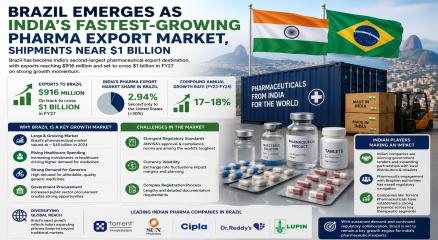
Brazil has emerged as India's second-largest pharmaceutical export destination, overtaking several traditional European markets as Indian drugmakers strengthen their presence in Latin America's largest healthcare market. Exports to Brazil reached $916 million and are on track to cross the $1 billion mark in FY27 if the current growth momentum continues. According to trade data from the Directorate General of Commercial Intelligence and Statistics (DGCIS), Brazil now accounts for 2.94% of India's pharmaceutical exports, behind only the United States, which continues to dominate with a market share of more than 30%. Indian pharmaceutical shipments to Brazil have recorded a compound annual growth rate of 17-18% over the past two years. The growing demand is being driven by Brazil's expanding pharmaceutical market, valued at around $45 billion in 2024. Rising healthcare expenditure, strong demand for generic medicines and increased government procurement have created opportunities for Indian manufacturers known for supplying affordable, high-quality drugs. Despite the strong growth, Brazil remains one of the more challenging export markets for pharmaceutical companies. The country's drug regulator, ANVISA, maintains stringent approval and manufacturing compliance standards that are often considered comparable to those of leading global regulators. Industry executives also point to currency volatility and complex registration procedures as key challenges for exporters. Indian pharmaceutical companies have expanded their footprint by participating in government tenders and strengthening partnerships with local distributors and retail pharmacy networks. Industry experts say ongoing engagement between India's Pharmaceuticals Export Promotion Council (Pharmexcil) and Brazilian regulatory authorities has helped companies better navigate the country's regulatory framework and market-entry requirements. Several Indian drugmakers, including Torrent Pharmaceuticals, have established a strong presence in Brazil across therapeutic segments such as central nervous system and cardiovascular medicines. Other leading manufacturers are also increasing investments to expand product portfolios and strengthen distribution networks in the country. The rapid growth in exports highlights India's increasing diversification beyond its traditional pharmaceutical markets. With sustained demand for generic medicines and continued regulatory engagement, Brazil is expected to remain a key growth driver for India's pharmaceutical exports in the coming years. Follow CARGOCONNECT for more such updates.
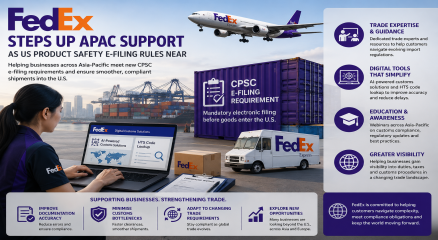
FedEx is expanding its support for businesses across the Asia-Pacific region as exporters prepare for the United States' mandatory Consumer Product Safety Commission (CPSC) electronic filing requirements, aiming to help customers meet new compliance obligations and reduce customs-related disruptions. The logistics company said it is strengthening its trade compliance resources, digital customs capabilities and customer guidance as the new U.S. product safety filing framework approaches. The move is intended to help exporters navigate evolving import regulations while maintaining smoother cross-border shipments into the U.S. market. Under the new CPSC e-filing regime, importers will be required to submit product safety certificate data electronically through U.S. customs systems before goods enter the country. The requirement is expected to increase documentation standards for manufacturers, exporters and logistics providers handling regulated consumer products. To support customers, FedEx is offering trade expertise alongside digital tools designed to simplify customs documentation and improve shipment accuracy. These include AI-powered customs solutions and a Harmonized Tariff Schedule (HTS) code lookup feature that assists shippers in selecting the correct tariff classifications, reducing the risk of clearance delays caused by inaccurate declarations. The company has also expanded educational initiatives across Asia-Pacific, conducting customer webinars focused on customs compliance, regulatory updates and best practices for managing cross-border shipments. According to FedEx, the sessions have attracted thousands of participants from small and medium-sized enterprises as well as multinational companies, reflecting growing demand for guidance amid changing trade regulations. FedEx noted that businesses are increasingly seeking greater visibility into duties, taxes and customs procedures as trade policies continue to evolve. Survey feedback gathered during the webinar programme showed that regulatory changes remain one of the biggest challenges for companies engaged in international trade, while many businesses are also exploring opportunities beyond the U.S., particularly within Asia and Europe. The company said its expanded compliance support is aimed at helping customers improve documentation accuracy, minimise customs bottlenecks and adapt to changing international trade requirements as cross-border supply chains become more complex. Follow CARGOCONNECT for more such updates.
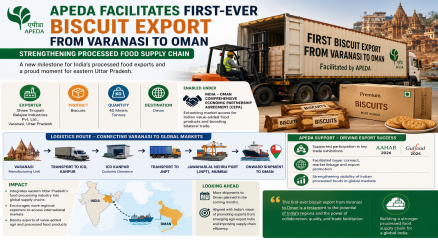
The Agricultural and Processed Food Products Export Development Authority (APEDA) has facilitated the first export shipment of biscuits from Varanasi to Oman, marking a new milestone for India's processed food exports and expanding international market access for manufacturers in eastern Uttar Pradesh. The maiden consignment underscores the growing role of regional food processing clusters in the country's export supply chain. The shipment comprises 40 metric tonnes of biscuits manufactured by Varanasi-based Shree Tirupati Balajee Industries Pvt. Ltd. The export has been enabled under the India-Oman Comprehensive Economic Partnership Agreement (CEPA), which is expected to improve market access for Indian value-added food products while strengthening bilateral trade between the two countries. From a logistics perspective, the consignment will move from Varanasi to the Inland Container Depot (ICD) at Kanpur for customs clearance before being transported to Jawaharlal Nehru Port (JNPT) for onward shipment to Oman. The multimodal transport route highlights the importance of integrated inland logistics infrastructure in connecting manufacturing centres with global maritime trade networks. APEDA said it has supported the exporter through a series of export promotion initiatives, including participation in domestic and international trade exhibitions such as AAHAR 2026 and Gulfood 2026. These efforts have helped improve product visibility, establish overseas buyer connections and create new export opportunities for processed food manufacturers from the region. The shipment represents a significant step in integrating eastern Uttar Pradesh's food processing industry into global supply chains. Industry stakeholders expect the success of the inaugural consignment to encourage more exporters from the region to explore international markets, particularly for value-added agricultural and processed food products. APEDA indicated that additional shipments to Oman are planned in the coming months as demand for Indian processed food products continues to grow. The development aligns with the government's broader strategy of promoting exports from emerging agri-export hubs while improving supply chain efficiency through enhanced logistics connectivity and trade facilitation measures. Follow CARGOCONNECT for more such updates.
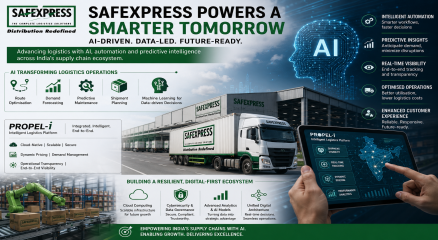
Safexpress is advancing an artificial intelligence (AI)-driven transformation of its logistics operations by integrating AI, automation and predictive analytics into its nationwide supply chain network, as the company seeks to improve operational efficiency, shipment visibility and decision-making across India's freight ecosystem. The company said it is developing an AI-first digital infrastructure capable of orchestrating complex logistics operations through real-time data processing and intelligent automation. The initiative focuses on connecting transportation, warehousing and distribution functions on a unified technology platform, enabling faster response to disruptions while improving resource utilisation and customer service. According to Safexpress, artificial intelligence is being deployed across several operational processes, including route optimisation, demand forecasting, predictive maintenance and shipment planning. The company is also using machine learning models to analyse large volumes of logistics data, helping improve delivery planning, network efficiency and asset utilisation across its nationwide operations. The digital transformation strategy builds on the company's earlier investments in cloud-native logistics technology, including its proprietary transportation management platform, PROPEL-i, which integrates core business functions and provides end-to-end shipment visibility. The platform supports dynamic pricing, demand management and operational transparency across the logistics network. Cybersecurity and data governance form another key pillar of the programme. Safexpress said it is strengthening compliance frameworks while implementing secure cloud infrastructure to protect operational data as digital adoption expands across its business. The company is also evaluating emerging technologies, including generative AI and intelligent automation, to further streamline logistics workflows and enhance customer engagement. Alongside technology investments, Safexpress is modernising its IT architecture to improve scalability and support future business growth. The roadmap includes wider adoption of cloud computing, enhanced analytics capabilities and tighter integration between digital systems to enable real-time operational decision-making across its logistics network. Industry experts view AI-enabled logistics as an increasingly important competitive differentiator, particularly as supply chains become more data-intensive and customer expectations shift towards faster, more predictable deliveries. Technologies such as predictive analytics, automation and intelligent route planning are expected to play a growing role in reducing logistics costs while improving service reliability. Safexpress said its long-term technology strategy is centred on creating a resilient, data-driven logistics ecosystem capable of supporting India's expanding manufacturing, retail and e-commerce sectors. By embedding AI across core logistics processes, the company aims to strengthen supply chain resilience while improving operational agility in an increasingly complex freight environment. Follow CARGOCONNECT for more such updates.
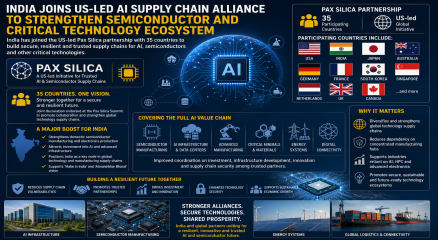
India has joined a US-led initiative aimed at building secure and resilient supply chains for artificial intelligence (AI), semiconductors and other critical technologies, becoming one of 35 participating countries in the Pax Silica partnership. The move is expected to deepen international cooperation on trusted technology ecosystems while reducing vulnerabilities in global AI supply chains. The announcement was made at the Pax Silica Summit, where participating countries endorsed a joint declaration promoting collaboration across AI infrastructure, semiconductor manufacturing, advanced computing, critical minerals, energy systems and digital connectivity. The initiative is designed to strengthen supply chain resilience by encouraging trusted partnerships among member nations. For India, participation is expected to support ongoing efforts to expand domestic semiconductor manufacturing, strengthen electronics production and attract investment into AI infrastructure. The partnership also aligns with the country's broader objective of becoming a key node in global technology and manufacturing supply chains. Beyond semiconductors, the initiative covers the full AI value chain, including software platforms, data infrastructure, advanced manufacturing, logistics networks, mineral processing and energy systems required to support next-generation computing. Member countries have committed to improving coordination on investment, infrastructure development and supply chain security. The expanded coalition reflects growing international efforts to diversify technology supply chains amid increasing geopolitical competition and concerns over concentrated manufacturing capacities. By strengthening cooperation among trusted partners, Pax Silica seeks to improve the reliability of supplies for industries dependent on AI, high-performance computing and advanced electronics. Industry observers say India's inclusion could enhance its role in the global semiconductor and AI ecosystem by creating new opportunities for investment, technology collaboration and supply chain integration. As demand for AI infrastructure continues to grow, participation in multilateral technology partnerships is expected to play an increasingly important role in shaping future manufacturing and logistics networks. Follow CARGOCONNECT for more such updates.
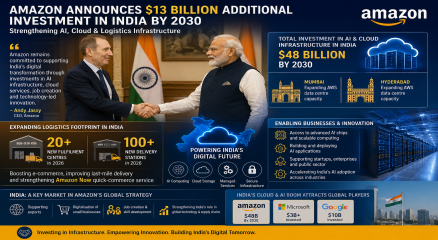
Amazon has announced an additional investment of $13 billion in India by 2030 to strengthen its artificial intelligence (AI), cloud computing and logistics infrastructure, reinforcing the country's position as a key market in the company's long-term global strategy. The fresh commitment will be directed toward expanding Amazon Web Services' (AWS) data centre capacity in Mumbai and Hyderabad, enabling businesses, startups and public sector organisations to access advanced AI computing, cloud storage and managed technology services. The latest investment increases Amazon's planned spending on AI and cloud infrastructure in India to $48 billion by the end of the decade. Alongside its cloud expansion, Amazon plans to significantly grow its logistics footprint across the country. The company intends to add more than 20 fulfilment centres and over 100 delivery stations during 2026, supporting rising e-commerce demand while improving order processing and last-mile delivery capabilities. The expansion is also expected to strengthen Amazon's quick-commerce service, Amazon Now, as it targets a wider presence across Indian cities. The announcement came during Amazon Chief Executive Officer Andy Jassy's visit to New Delhi, where he met Prime Minister Narendra Modi. Jassy said the company remains committed to supporting India's digital transformation through investments in AI infrastructure, cloud services, job creation and technology-led innovation. Amazon said its expanded infrastructure will help organisations develop and deploy AI applications more efficiently while providing access to specialised AI chips, scalable computing resources and secure cloud platforms. The company expects these investments to support enterprises across sectors as AI adoption accelerates. The investment also reflects increasing competition among global technology companies in India's cloud and AI market. Major players including Microsoft and Google have announced multi-billion-dollar commitments to expand digital infrastructure in the country, driven by growing enterprise demand and government initiatives promoting digital services. Amazon said its broader investment strategy in India also includes support for exports, digitalisation of small businesses and employment generation, underscoring the country's growing importance in the global technology and supply chain ecosystem. Follow CARGOCONNECT for more such updates.
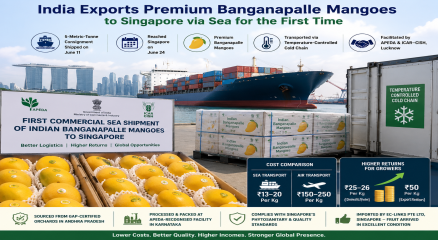
India has successfully completed its first commercial sea shipment of premium Banganapalle mangoes to Singapore, marking a significant development in the country's fresh fruit export logistics. The move is expected to reduce transportation costs, improve supply chain efficiency and create better income opportunities for mango growers. The 5-metric-tonne consignment was exported by Osum Food Solutions LLP on June 11 and reached Singapore on June 24. The initiative was facilitated by the Agricultural and Processed Food Products Export Development Authority (APEDA) in partnership with the ICAR–Central Institute for Subtropical Horticulture (CISH), Lucknow. The shipment demonstrates the commercial viability of transporting fresh mangoes by sea, offering a much cheaper alternative to air freight. According to officials, sea transport reduced logistics costs to around ₹13–20 per kilogram compared with ₹150–250 per kilogram through air cargo, making exports more competitive in overseas markets. The mangoes were sourced from Good Agricultural Practices (GAP)-certified orchards in Andhra Pradesh before being processed and packed at an APEDA-recognised facility in Karnataka. The consignment complied with Singapore's phytosanitary and quality standards and was transported using a temperature-controlled cold chain to preserve freshness during transit. Singapore-based importer EC-Links Pte Ltd reported that the fruit arrived in excellent condition, citing its sweetness, uniform ripening, shelf life and overall quality. The successful delivery highlights the effectiveness of scientific post-harvest handling and cold-chain management for long-distance sea transportation. The export also translated into higher earnings for growers. While Banganapalle mangoes were fetching around ₹25–26 per kilogram in the domestic market, the export consignment realised nearly ₹50 per kilogram, almost doubling farm-gate returns. Officials said the successful shipment could pave the way for wider adoption of sea freight for India's horticultural exports. Lower logistics costs, combined with reliable cold-chain infrastructure, are expected to strengthen the global competitiveness of Indian fresh produce while offering exporters a more sustainable and scalable shipping option. Follow CARGOCONNECT for more such updates.
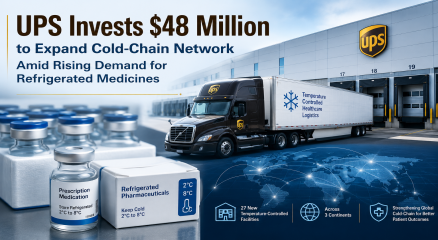
The rapid growth of temperature-sensitive pharmaceuticals, particularly GLP-1 weight-loss and diabetes treatments, is prompting global logistics providers to strengthen their cold-chain capabilities. In response to this trend, UPS has announced a $48 million investment to expand its temperature-controlled logistics infrastructure across key international markets. The company is developing 27 specialised cross-docking and storage facilities across North America, Europe, and Asia. These facilities are designed to support the safe movement of medicines and healthcare products that require strict temperature management throughout transportation and handling. The expansion comes at a time when demand for refrigerated drugs such as Novo Nordisk’s Wegovy and Ozempic continues to surge globally. Since these medications must remain within controlled temperature ranges from manufacturing to patient delivery, pharmaceutical companies are increasingly relying on advanced cold-chain logistics solutions. Commenting on the initiative, Kate Gutmann, President of International, Healthcare and Supply Chain Solutions at UPS, said the company is focused on ensuring critical therapies reach patients without compromising product integrity. She noted that healthcare logistics goes beyond package transportation and plays a direct role in supporting patient care worldwide. Industry forecasts indicate that the market for temperature-sensitive biologics is expected to witness sustained growth over the coming years. Research from Growth Market Reports projects the segment to reach nearly $39 billion by 2033, growing at a compound annual rate of more than 8%. The increasing importance of reliable cold-chain infrastructure is also underscored by findings from the World Health Organization, which has highlighted significant losses of vaccines and other medical products due to temperature-control failures during transit and storage. UPS has also been strengthening its healthcare business through strategic acquisitions. Earlier, the company acquired Canada-based Andlauer Healthcare Group in a cash transaction valued at approximately $1.6 billion. The acquisition enhanced UPS’s presence in pharmaceutical transportation, particularly in temperature-controlled ground logistics, which forms a substantial portion of Andlauer’s operations. Healthcare logistics has emerged as a major growth area within UPS’s broader business transformation strategy. During the company's first-quarter earnings discussion, CEO Carol Tomé stated that UPS has consistently increased its healthcare market presence since 2021. The first quarter of 2026 marked a milestone for the division, with quarterly healthcare revenue surpassing the $3 billion mark for the first time. While UPS generated $21.2 billion in revenue during the quarter, net profit declined year-on-year as the company continued restructuring parts of its domestic delivery network. Despite these challenges, the organisation remains focused on shifting toward higher-value and higher-margin service segments, with healthcare logistics playing a central role. John Bolla, President of UPS Healthcare, said the latest investments reinforce the company’s commitment to safeguarding innovative medicines, diagnostics, and life-science products while helping healthcare providers deliver improved patient outcomes.

India and the United States signalled a renewed effort to strengthen bilateral ties at the G7 Summit in France, with Prime Minister Narendra Modi and US President Donald Trump discussing progress on a proposed trade agreement while placing renewed emphasis on maritime security and the safety of seafarers operating in the Gulf region. The meeting, held on the sidelines of the summit, comes after months of friction over tariffs, energy trade and geopolitical issues. Despite those challenges, both leaders struck a conciliatory tone and indicated that negotiations on a bilateral trade arrangement are moving closer to conclusion. Trump described discussions as productive and suggested that a trade agreement could be finalised in the near future. For the logistics and shipping industry, maritime security emerged as one of the most significant topics of the talks. Modi highlighted the importance of maintaining safe and uninterrupted navigation through the Strait of Hormuz, a critical maritime corridor for global energy shipments and international trade. He stressed that the safety of Indian seafarers working on merchant vessels across global shipping routes must remain a priority amid ongoing instability in West Asia. The issue has gained urgency following recent incidents in the Gulf region that resulted in the deaths of Indian sailors aboard commercial vessels. India has raised concerns about the impact of regional tensions on maritime trade and crew safety, with Modi urging greater international attention to the protection of seafarers and the security of shipping lanes. The Strait of Hormuz remains one of the world's most strategically important maritime chokepoints, handling a substantial share of global oil and gas exports. Any disruption to navigation through the corridor can have immediate consequences for shipping schedules, freight costs, energy markets and supply chains worldwide. In addition to maritime issues, the two leaders reviewed progress in trade negotiations that have continued despite disagreements over tariffs and energy imports. Officials from both countries are expected to continue discussions in the coming weeks, with trade representatives working toward an interim agreement that could ease commercial tensions and support greater bilateral trade flows. The meeting marked the first face-to-face engagement between Modi and Trump in more than a year and underscored the strategic importance both governments place on maintaining cooperation across trade, energy, security and logistics. For the global shipping sector, the renewed focus on maritime safety and freedom of navigation signals continued attention to securing critical trade routes amid persistent geopolitical uncertainty in West Asia. Follow CARGOCONNECT for more such updates.
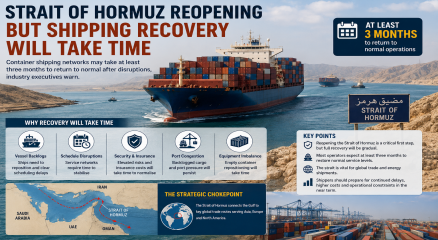
Global container shipping networks may require at least three months to return to normal operations even after the Strait of Hormuz reopens, as carriers work through vessel backlogs, schedule disruptions and elevated security concerns across the region. Industry executives have warned that restoring regular shipping services will be a gradual process despite diplomatic efforts aimed at reopening one of the world's most strategically important maritime corridors. The Strait of Hormuz serves as a critical gateway for energy exports and containerised trade moving between the Gulf region and international markets. Shipping lines have spent months adjusting vessel deployments, revising service networks and implementing contingency measures following disruptions in the waterway. While the reopening of the strait would remove a major operational obstacle, carriers are expected to face significant challenges in repositioning vessels, clearing cargo backlogs and restoring schedule reliability. Executives from major container shipping companies said a return to pre-crisis operating conditions will not happen immediately. The recovery timeline will depend on the duration of the disruption, the pace at which vessels can resume transit and the willingness of operators and insurers to restore normal shipping patterns. Industry estimates suggest that full network stabilisation could take at least three months after unrestricted access is re-established. The disruption has forced carriers to reassess their Gulf service strategies, with some operators expected to review long-term routing decisions once conditions normalise. Although most shipping activity is anticipated to return to traditional trade lanes, companies are likely to maintain a cautious approach while monitoring regional security developments. Beyond vessel movements, the industry must also address a range of operational constraints. Port congestion, delayed cargo deliveries, higher insurance premiums and the repositioning of empty containers are expected to continue affecting supply chains in the months following the reopening. Analysts note that even after transit restrictions are lifted, accumulated cargo volumes and disrupted schedules will take time to unwind. The Strait of Hormuz remains one of the world's most critical shipping chokepoints, linking Gulf ports with major trade routes serving Asia, Europe and North America. Any prolonged disruption has significant implications for global supply chains, energy markets and freight costs. Follow CARGOCONNECT for more such updates.
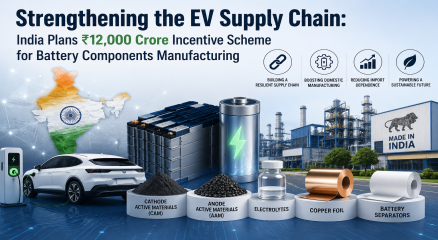
India is preparing to take a significant step towards building a stronger and more self-reliant electric vehicle (EV) supply chain with a proposed incentive scheme worth nearly ₹12,000 crore for the domestic manufacturing of battery components and materials. The initiative is expected to complement the existing ₹18,100 crore Production Linked Incentive (PLI) scheme for Advanced Chemistry Cell (ACC) battery manufacturing and help address a critical gap in India's EV ecosystem. Over the past few years, India has made considerable progress in attracting investments for battery cell production. However, industry stakeholders have consistently pointed out that a large portion of the battery value chain continues to rely on imported materials. While cell manufacturing capacity is being created domestically, many of the essential inputs required for battery production are still sourced from overseas markets, limiting overall localisation. The proposed scheme aims to change this dynamic by encouraging local production of critical battery materials and components. Reports indicate that the incentive framework may cover Cathode Active Materials (CAM), Anode Active Materials (AAM), electrolytes, copper foil, battery separators and other advanced battery materials that form the backbone of modern EV batteries. For India's rapidly expanding EV sector, these components are far more than just manufacturing inputs. They represent a strategic part of the supply chain, influencing production costs, availability, quality and long-term competitiveness. Industry estimates suggest that battery materials account for a substantial share of overall battery costs, making localisation an important lever for improving economics across the EV value chain. The initiative comes at a crucial time as automakers continue to accelerate their electrification plans. Demand for batteries is expected to rise sharply, driven by passenger electric vehicles, electric two-wheelers, commercial EV fleets, energy storage systems and renewable energy integration projects. To support this growth, India will require a robust and dependable supply network capable of serving domestic manufacturers at scale. According to industry projections, India could require more than 400,000 tonnes of Cathode Active Material and over 200,000 tonnes of Anode Active Material by 2030 to support the battery manufacturing capacities that have already been announced. Such figures highlight the enormous opportunity for companies willing to invest in upstream battery manufacturing and supply chain infrastructure. A key objective of the proposed scheme is to reduce India's dependence on global battery supply chains, many of which remain heavily concentrated in China. At present, China dominates several critical segments of the battery ecosystem, including cathode processing, anode materials, battery chemicals and copper foil production. This concentration exposes manufacturers worldwide to supply disruptions, geopolitical uncertainties and price volatility. By supporting local manufacturing, India hopes to create a more resilient and diversified supply chain while attracting global battery material producers to establish operations within the country. Such investments could strengthen domestic capabilities, improve supply security and increase value addition within India. The proposed incentive programme is also expected to complement the ACC PLI scheme, which was launched to establish large-scale battery cell manufacturing capacity. While the PLI scheme has succeeded in attracting investments from major players, the development of upstream battery materials has progressed at a slower pace. Industry experts believe the new initiative could bridge this gap and help create a more integrated battery ecosystem. Nevertheless, several challenges remain. Building a globally competitive battery supply chain will require access to critical minerals such as lithium, cobalt, nickel and graphite, along with significant capital investments, advanced manufacturing technologies and a skilled workforce. Industry observers have repeatedly emphasised that long-term success will depend on developing capabilities across mining, refining, recycling, component manufacturing and battery production. For automotive manufacturers such as Tata Motors, Mahindra & Mahindra, Maruti Suzuki and Hyundai Motor India, stronger domestic sourcing could eventually translate into lower battery costs, improved supply reliability and enhanced competitiveness. Since batteries account for nearly 35-45 per cent of an EV's total cost, supply chain localisation could play a pivotal role in making electric vehicles more affordable and accelerating their adoption across the country. As India pursues its ambitious EV targets, building battery cell factories alone may not be enough. Creating a comprehensive supply chain for battery materials and components will be equally important. If implemented effectively, the proposed ₹12,000 crore scheme could become a key milestone in India's journey towards establishing a globally competitive EV supply chain and emerging as a major hub for advanced battery manufacturing.
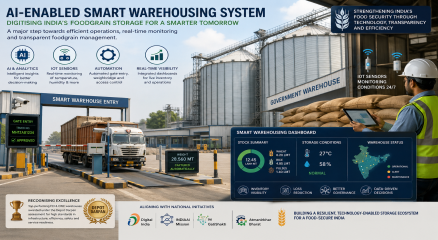
The Centre has launched an Artificial Intelligence (AI)-enabled Smart Warehousing System to modernise foodgrain storage operations, marking a major step in digitising India's public food storage infrastructure. The initiative aims to improve operational efficiency, strengthen inventory management and enhance transparency across the country's warehousing network. Introduced by the Department of Food and Public Distribution (DFPD), the technology-driven platform integrates AI, the Internet of Things (IoT), automation and data analytics to streamline warehouse operations and improve governance. The system is designed to support real-time monitoring of foodgrain storage facilities while enabling faster and more informed decision-making. Among its key features are automated gate entry and weighbridge management, digital access control, intelligent monitoring of storage conditions and real-time inventory visibility through integrated dashboards. These capabilities are expected to reduce manual intervention, improve stock accuracy and strengthen oversight across government warehouses. The initiative forms part of the government's broader strategy to modernise the foodgrain supply chain through digital technologies. It builds on earlier reforms focused on improving transparency, operational efficiency and service delivery in procurement, storage and distribution systems. Alongside the launch, the government recognised top-performing warehouses operated by the Food Corporation of India (FCI) and the Central Warehousing Corporation (CWC) under the Depot Darpan assessment framework. The programme evaluates warehouses on parameters such as infrastructure quality, operational efficiency, safety standards, hygiene and overall service readiness to encourage continuous improvement across the network. Officials said the Smart Warehousing System is expected to strengthen India's food security architecture by creating a more resilient, technology-enabled storage ecosystem. By improving visibility, monitoring and operational control, the platform is intended to minimise losses, optimise warehouse performance and support efficient foodgrain management over the long term. The initiative also aligns with national programmes such as Digital India, the IndiaAI Mission, PM GatiShakti and Atmanirbhar Bharat. Follow CARGOCONNECT for more such updates.
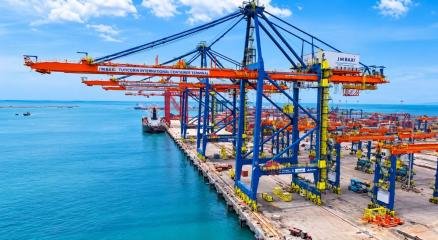
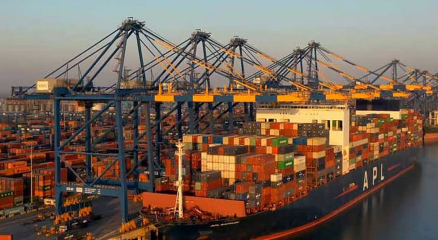
India’s two largest container gateways, Mundra and Nhava Sheva, are facing mounting congestion as rising cargo volumes, truck driver shortages and rerouted shipments from the Middle East strain operations across the country’s logistics network. Shipping lines and logistics operators are reporting worsening turnaround times at both ports, with vessel delays averaging nearly two and a half days and some unscheduled ships waiting up to five days for berthing. The disruptions are slowing cargo movement, tightening yard space and forcing carriers to make last-minute operational changes. According to industry reports, a shortage of truck drivers has become a major bottleneck for container transfers between terminals and inland transport hubs. The issue has reduced the pace of cargo evacuation from ports, adding pressure on already crowded container yards. Terminal operators have intermittently restricted gate access to control container inflow, while export gate schedules continue to shift frequently. These changes are complicating truck planning and increasing uncertainty for exporters and freight forwarders. The congestion is being intensified by cargo diversions linked to disruptions in the Middle East, particularly around Gulf trade routes. Shipping lines have increasingly redirected transshipment cargo to Indian ports as alternatives to facilities in the Persian Gulf, sharply increasing container volumes in recent weeks. The pressure has begun affecting carrier schedules. Some shipping companies are rerouting vessels between terminals at short notice to avoid yard congestion. Danish shipping giant Maersk recently shifted several sailings from its regular terminal at Nhava Sheva to PSA Mumbai after facing space constraints and a growing container backlog. Industry stakeholders say these sudden terminal changes are creating operational and financial challenges for shippers, including higher handling costs and difficulties coordinating customs clearance and inland transportation. The latest disruption comes at a time when India has been positioning itself as a major global manufacturing and logistics hub. Over the past decade, the country has expanded port capacity, improved freight corridors and modernised customs processes to strengthen supply chain efficiency. However, the current congestion highlights the vulnerability of port infrastructure during periods of sudden trade realignment and geopolitical disruption. Logistics experts warn that prolonged delays could increase freight costs, extend delivery timelines and place additional pressure on exporters already dealing with volatile global shipping conditions. Follow CARGOCONNECT for more such updates.
The diversification process by Apple continues to progress as India becomes one of the centers for manufacturing operations. Based on an analysis by Smart Analytics Global (SAG), the percentage share of Indian manufacturing of iPhones has increased from 14% in 2024 to 23% in 2025 and further to 28% by 2026, whereas China’s share has decreased from 83% to 74% within the same timeframe. As Apple continues to lower its reliance on China, India is all set to emerge as the major assembly hub for 28 percent of all iPhones exported around the world by 2026, compared to just 23 percent in the prior year. This change is due to the company's overall strategy of spreading its manufacturing operations in order to mitigate potential tariff risks and geopolitical risks, in addition to creating a more flexible manufacturing network beyond China. Based on the estimates of Smart Analytics Global (SAG), China's share in global iPhone production dropped from 83% in 2024 to 74% in 2025, while India's share increased from 14% in 2024 to 23% in 2025. Estimates provided by another market research firm, Counterpoint Research, indicate that India's share in global iPhone manufacturing could increase to approximately 26% in 2026 from 23% in 2025. As per SAG, “India will account for the manufacture of 28 percent of iPhones shipped globally in 2026, rising from 23 percent in 2025. This growth will be fueled by the ongoing diversification of Apple outside China and capacity build-up at existing manufacturers in India like Tata Electronics,” said Abhilash Kumar, an analyst at Smart Analytics Global. According to Tarun Pathak, research director at Counterpoint Research, “Apple's manufacturing partners have substantially increased their manufacturing capacities and assembly lines in India. They have also diversified their product portfolio made in India.” He further stated that the increase in manufacturing capacity of Tata Electronics is another factor aiding the growth. Apple has managed to localize production substantially in India through manufacturers like Foxconn and Tata Electronics. The recent takeover of Wistron and Pegatron in India by the Tata Group represents a huge step forward in Apple’s localization efforts in India. At present, India is assembling a larger number of iPhones, even the latest versions, and has become an important source of exports, targeting countries like the US and European nations. Over the past five years, Apple has manufactured iPhones worth almost $70 billion in India using its PLI scheme, where around $51 billion, or almost 73% of all iPhones manufactured, were exported from India. Moreover, iPhones have become the most exported goods from India during the previous financial year. India has become the biggest beneficiary of Apple’s changing supply chain. From initially assembling iPhones on a smaller scale, it has grown to become a manufacturing cluster for iPhones through government incentives, increased manufacturing capabilities, and the growing presence of suppliers. Several of the most important suppliers and manufacturers for Apple are still highly entrenched within China, allowing the country to enjoy an unrivaled capacity and adaptability when it comes to managing mass-scale productions and product shifts. For more such news and updates, visit CARGOCONNECT.
Shadowfax is significantly expanding its quick commerce infrastructure, announcing plans to scale its dark store network from 15 facilities to 100 by FY27. The move underscores the company’s growing focus on hyperlocal deliveries, same-day fulfilment, and direct-to-consumer (D2C) logistics as competition intensifies in India’s fast-evolving quick commerce ecosystem. The Bengaluru-based company plans to add 85 new dark stores over the next fiscal year, targeting metro cities with delivery radiuses of approximately seven kilometres and fulfilment timelines of around 30 minutes. The expansion is expected to support rising demand from vertical quick commerce platforms and D2C brands that increasingly rely on third-party logistics (3PL) partners for rapid deliveries. According to company executives, vertical marketplaces are emerging as a profitable segment because of their dependence on outsourced logistics infrastructure rather than captive fulfilment networks. Shadowfax believes this trend creates a strong opportunity for scalable 3PL-led quick commerce models. The dark store expansion will account for nearly 10% of Shadowfax’s planned capital expenditure of ₹180–190 crore in FY27. The company is simultaneously strengthening its automation and artificial intelligence capabilities to improve operational efficiency. AI-led demand forecasting, automated slotting, and smarter sorting centre operations are expected to reduce overhead costs while accelerating breakeven timelines for new facilities. Shadowfax’s aggressive expansion comes on the back of strong financial performance. The company reported a consolidated net profit of ₹55.8 crore in Q4 FY26, compared to a net loss of ₹9.9 crore during the same period last year. Revenue from operations surged 73.6% year-on-year to ₹1,237 crore, reflecting growing order volumes and increased adoption of quick commerce delivery services. Founded in 2015, Shadowfax has evolved into one of India’s largest logistics and last-mile delivery networks, serving over 2,500 cities and more than 15,000 pincodes. The company currently handles millions of shipments daily through a technology-driven delivery ecosystem that supports e-commerce, grocery, hyperlocal, and D2C brands. Industry analysts believe the dark store expansion reflects a broader shift within India’s logistics sector, where speed, proximity-based fulfilment, and automated operations are becoming central to supply chain competitiveness. As quick commerce adoption accelerates beyond groceries into categories such as fashion, electronics, and personal care, logistics providers like Shadowfax are positioning themselves as critical enablers of ultra-fast retail fulfilment. 𝐒𝐭𝐚𝐲 𝐓𝐮𝐧𝐞𝐝 𝐭𝐨 https://cargoconnect.co.in/ 𝐟𝐨𝐫 𝐥𝐚𝐭𝐞𝐬𝐭 𝐮𝐩𝐝𝐚𝐭𝐞𝐬!
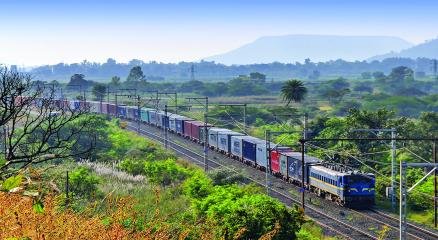
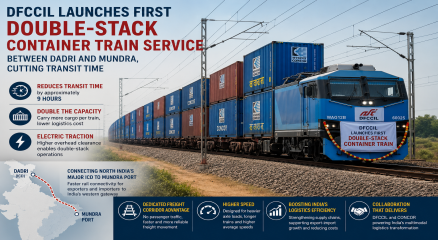
India’s Dedicated Freight Corridors (DFCs) are rapidly reshaping the country’s logistics landscape, with the Western Dedicated Freight Corridor (WDFC) between Dadri and Jawaharlal Nehru Port Authority (JNPA) emerging as a game-changing infrastructure project for supply chains and multimodal freight movement. Designed exclusively for cargo operations, the corridor is significantly reducing transit times, improving reliability, and easing congestion on conventional rail routes. Stretching nearly 1,500 km from Dadri in Uttar Pradesh to JNPA near Mumbai, the corridor forms the backbone of India’s western logistics artery, connecting manufacturing centres, inland container depots, industrial clusters, and ports. With dedicated tracks for freight trains, the network allows uninterrupted cargo movement at higher average speeds, eliminating delays caused by mixed passenger and freight operations. One of the biggest outcomes has been a sharp reduction in transit time. Freight movement between Dadri and JNPA that traditionally took close to 72 hours on congested rail routes is now being completed in nearly half the time, improving turnaround efficiency for exporters, importers, and logistics operators. Industry stakeholders believe the reduction in transit duration will strengthen India’s competitiveness in global trade and support the government’s target of lowering logistics costs as a percentage of GDP. The DFC network has also enabled the operation of longer and heavier freight trains, including double-stack container services on electrified routes. This has increased carrying capacity while lowering per-unit transportation costs. According to sector estimates, rail freight on dedicated corridors is considerably more energy-efficient and environmentally sustainable than road transport, aligning with India’s broader decarbonisation goals. Beyond operational efficiency, the corridors are catalysing the growth of integrated logistics ecosystems. Regions such as Dadri, Greater Noida, and Jewar are witnessing accelerated development of multimodal logistics parks, warehousing zones, and industrial hubs due to their strategic connectivity with both the Eastern and Western DFCs. The emerging “rail-road-air” logistics triangle around the National Capital Region is expected to attract substantial investments in manufacturing and distribution infrastructure. The Dedicated Freight Corridor Corporation of India (DFCCIL) has reported rising freight train volumes on the operational stretches, indicating growing industry adoption. The completion of key links on the western corridor is expected to further enhance throughput and reduce dependency on road transport for long-haul cargo. Analysts say the dedicated rail network could become central to India’s ambition of creating faster, greener, and more resilient supply chains. As India continues investing in additional freight corridors across the country, the success of the Dadri-JNPA route demonstrates how infrastructure modernisation can directly influence trade efficiency, logistics performance, and industrial growth. 𝐒𝐭𝐚𝐲 𝐓𝐮𝐧𝐞𝐝 𝐭𝐨 https://cargoconnect.co.in/ 𝐟𝐨𝐫 𝐥𝐚𝐭𝐞𝐬𝐭 𝐮𝐩𝐝𝐚𝐭𝐞𝐬
In a strategic warehousing move, the South Eastern Coalfields Limited (SECL), the second largest coal-producing subsidiary of Coal India Limited, has signed a Memorandum of Understanding (MoU) with Central Warehousing Corporation (CWC) for collaboration in coal logistics, railway rake provisioning under GPWIS and similar schemes, and integrated transportation services. Guided by the Union Ministry of Coal, SECL is rapidly working to improve India’s energy security and coal logistics infrastructure. The company is taking steps to boost coal evacuation efficiency and ensure a steady fuel supply to essential sectors. This partnership with CWC is a significant move in that direction. The goal of the partnership with CWC is to strengthen SECL’s coal evacuation capabilities by providing reliable and efficient rail logistics solutions to meet the rising demand from the power, steel, cement, and other sectors. The MoU outlines collaboration in various areas, including dedicated railway rake operations, integrated coal transportation solutions, multimodal logistics, first-mile and last-mile connectivity, and the deployment of digital systems for logistics monitoring and operational efficiency. Under the agreed framework, both organizations will explore provisioning and operation of GPWIS and equivalent racks, integrated rail logistics services, and long-term transportation solutions aimed at improving dispatch efficiency and reducing logistical obstacles. The MoU was signed in the presence of Harish Duhan, Chairman-cum-Managing Director of SECL, and Santosh Sinha, Managing Director of CWC. Functional Directors and senior officials from SECL, as well as representatives from CWC, attended the signing ceremony. SECL plays a vital role in meeting the country's growing coal demand. In the current financial year 2026-27, Coal India Limited has already surpassed the 100 million tonne production mark, with SECL contributing more than 26.8 million tonnes. Central Warehousing Corporation (CWC), a Navaratna Central Public Sector Enterprise under the Government of India, is a leader in integrated logistics and warehousing services. It has extensive experience in rail-linked cargo movement and multimodal transportation solutions. For more such news and updates, visit CARGOCONNECT.