
Loading...
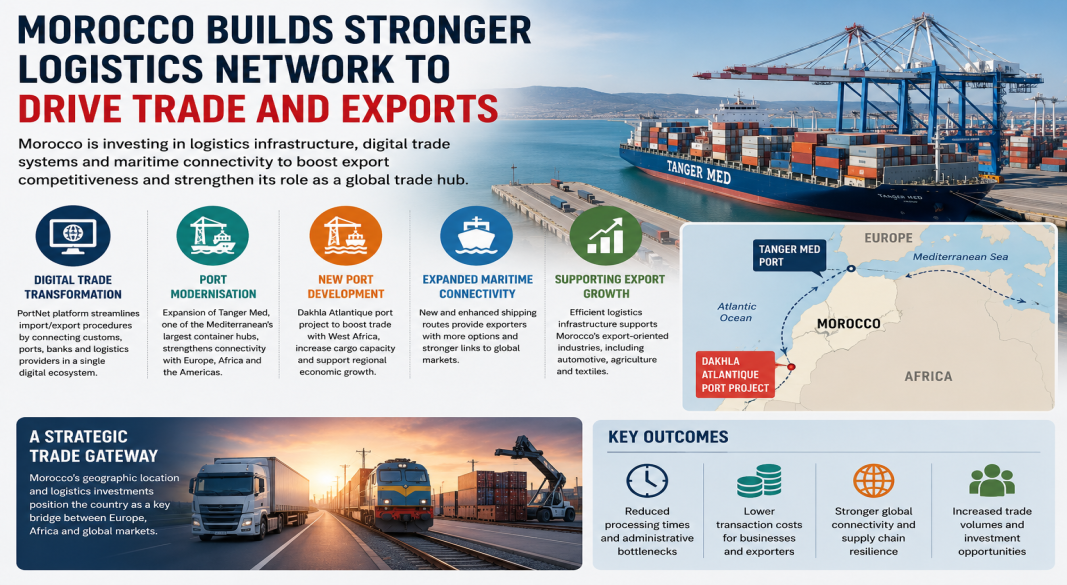
Morocco is accelerating investments in logistics infrastructure, digital trade systems and maritime connectivity as it seeks to strengthen its position as a key trade gateway linking Europe, Africa and Atlantic markets. The strategy is aimed at improving supply chain efficiency, supporting export growth and enhancing the country's role in international commerce.
A central element of the initiative is the modernization of logistics corridors through the integration of digital platforms, port infrastructure upgrades and expanded shipping connections. Moroccan authorities are focusing on reducing administrative bottlenecks, improving cargo movement and creating a more efficient environment for international trade.
The country's digital trade platform, PortNet, is playing a significant role in this transformation. The system has been designed to streamline import and export procedures by bringing together multiple stakeholders, including customs authorities, ports, banks and logistics providers, into a single digital ecosystem. Government officials expect the platform to reduce processing times, improve transparency and lower transaction costs for traders.
Port infrastructure remains another major focus area. The continued expansion of Tanger Med, one of the Mediterranean region's largest container hubs, has reinforced Morocco's importance in global shipping networks. The port serves as a critical gateway connecting manufacturers and exporters to markets across Europe, Africa and the Americas while supporting the country's growing industrial base.
Morocco is also advancing the development of the Dakhla Atlantique port project on the Atlantic coast. The project is expected to strengthen trade links with West African markets, create additional cargo handling capacity and support economic activity in the country's southern regions. The development forms part of a broader effort to diversify maritime trade routes and improve supply chain resilience.
Alongside port investments, Morocco is expanding maritime connections to improve access to international markets. New and enhanced shipping services are expected to provide exporters with greater route options and strengthen connectivity with both European and African trading partners. Industry analysts view these initiatives as increasingly important as global supply chains continue to adapt to changing trade patterns and geopolitical risks.
The logistics upgrades come as Morocco seeks to support long-term export growth and attract greater investment into manufacturing and industrial sectors. Recent trade data shows continued expansion in export-oriented industries, particularly automotive manufacturing, highlighting the importance of efficient logistics infrastructure in sustaining trade competitiveness.
With ongoing investments in digitalisation, ports and multimodal transport networks, Morocco is positioning itself to handle larger trade volumes while improving the speed and reliability of cargo movement. The strategy reflects a broader effort to leverage the country's geographic location and strengthen its role as a regional logistics and trade hub.
Follow CARGOCONNECT for more such updates.
Morocco is accelerating investments in logistics infrastructure, digital trade systems and maritime connectivity as it seeks to strengthen its position as a key trade gateway linking Europe, Africa and Atlantic markets. The strategy is aimed at improving supply chain efficiency, supporting export growth and enhancing the country's role in international commerce. A central element of the initiative is the modernization of logistics corridors through the integration of digital platforms, port infrastructure upgrades and expanded shipping connections. Moroccan authorities are focusing on reducing administrative bottlenecks, improving cargo movement and creating a more efficient environment for international trade. The country's digital trade platform, PortNet, is playing a significant role in this transformation. The system has been designed to streamline import and export procedures by bringing together multiple stakeholders, including customs authorities, ports, banks and logistics providers, into a single digital ecosystem. Government officials expect the platform to reduce processing times, improve transparency and lower transaction costs for traders. Port infrastructure remains another major focus area. The continued expansion of Tanger Med, one of the Mediterranean region's largest container hubs, has reinforced Morocco's importance in global shipping networks. The port serves as a critical gateway connecting manufacturers and exporters to markets across Europe, Africa and the Americas while supporting the country's growing industrial base. Morocco is also advancing the development of the Dakhla Atlantique port project on the Atlantic coast. The project is expected to strengthen trade links with West African markets, create additional cargo handling capacity and support economic activity in the country's southern regions. The development forms part of a broader effort to diversify maritime trade routes and improve supply chain resilience. Alongside port investments, Morocco is expanding maritime connections to improve access to international markets. New and enhanced shipping services are expected to provide exporters with greater route options and strengthen connectivity with both European and African trading partners. Industry analysts view these initiatives as increasingly important as global supply chains continue to adapt to changing trade patterns and geopolitical risks. The logistics upgrades come as Morocco seeks to support long-term export growth and attract greater investment into manufacturing and industrial sectors. Recent trade data shows continued expansion in export-oriented industries, particularly automotive manufacturing, highlighting the importance of efficient logistics infrastructure in sustaining trade competitiveness. With ongoing investments in digitalisation, ports and multimodal transport networks, Morocco is positioning itself to handle larger trade volumes while improving the speed and reliability of cargo movement. The strategy reflects a broader effort to leverage the country's geographic location and strengthen its role as a regional logistics and trade hub. Follow CARGOCONNECT for more such updates.

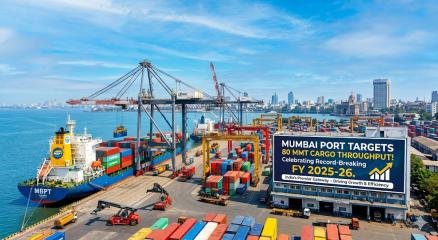
Mumbai Port Authority has set an ambitious cargo throughput target of 80 million metric tonnes (MMT) for the coming fiscal year, following its highest-ever cargo handling performance of 75.15 MMT in FY 2025-26. The achievement underscores the port’s growing importance in India’s maritime logistics ecosystem and highlights its continued focus on operational excellence, capacity optimization, and stakeholder collaboration. The record performance represents a significant milestone for one of India’s oldest and most strategically located ports. During FY 2025-26, Mumbai Port accounted for 8.22% of the cargo handled by the country’s major ports, reinforcing its position as a key gateway for international and coastal trade. The port also maintained strong market shares across critical cargo segments, including iron and steel EXIM cargo, liquid bulk cargo, and coastal trade. The new target was announced during a stakeholder meeting convened by the port authority to review operational performance and identify strategies for sustaining growth. Discussions focused on improving vessel turnaround times, optimizing berth utilization, enhancing cargo handling efficiency, and maintaining cost competitiveness amid evolving global trade dynamics. Addressing industry stakeholders, Mumbai Port Authority Chairperson Dr. M. Angamuthu emphasized that the record cargo throughput was the result of coordinated efforts among port users, trade partners, terminal operators, and government agencies. He highlighted the broader economic impact of port-led growth, noting that increased cargo volumes contribute to revenue generation, employment creation, and national economic development. The port authority is also prioritizing sustainability and long-term infrastructure development as part of its growth strategy. Stakeholders reviewed plans aimed at strengthening operational resilience while advancing environmentally responsible cargo handling practices. Future expansion initiatives, including waterfront development projects, are expected to support the port’s long-term competitiveness and service capabilities. Mumbai Port’s growth ambitions align with the broader momentum across India’s maritime sector. The country’s major ports collectively handled a record 915.17 million tonnes of cargo in FY 2025-26, reflecting rising trade volumes, infrastructure investments, and efficiency improvements across the logistics network. Against this backdrop, Mumbai Port’s 80 MMT target signals its intent to play an even larger role in supporting India’s supply chain and trade ambitions in the years ahead. 𝐒𝐭𝐚𝐲 𝐓𝐮𝐧𝐞𝐝 𝐭𝐨 CARGOCONNECT 𝐟𝐨𝐫 𝐥𝐚𝐭𝐞𝐬𝐭 𝐮𝐩𝐝𝐚𝐭𝐞𝐬!
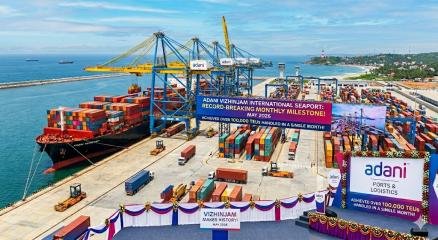

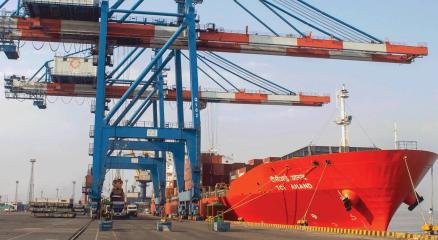
Transport Corporation of India (TCI) is accelerating its presence in India’s coastal shipping sector through a strategic fleet expansion plan aimed at strengthening multimodal logistics capabilities and capturing growing demand for domestic seaborne cargo movement. The integrated logistics and supply chain company has initiated the acquisition of new cargo vessels to enhance its coastal seaway operations; a segment increasingly viewed as a cost-effective and sustainable alternative to road transportation. The move aligns with the broader industry trend of leveraging India’s extensive coastline to improve freight efficiency and reduce logistics costs. According to company executives, TCI has placed orders for two cellular container vessels with a capacity of approximately 7,300 deadweight tonnes (DWT) each. The vessels are expected to be deployed along key routes connecting ports on India’s eastern and western coasts. The company is also exploring opportunities to acquire a second-hand vessel to boost capacity in the near term while awaiting delivery of the new ships. Industry observers note that coastal shipping in India remains significantly underutilized despite the country’s 7,500-kilometre coastline. A relatively small share of domestic cargo currently moves through coastal waterways, creating substantial room for growth as businesses seek more economical and environmentally friendly transportation solutions. The fleet expansion comes at a time when demand for coastal cargo movement is gaining momentum, supported by government initiatives promoting multimodal logistics and port-led development. Rising road congestion, increasing fuel costs and the need for lower carbon emissions are encouraging shippers to consider sea transport for long-haul domestic freight. For TCI, the investment represents a long-term commitment to expanding its marine logistics portfolio. The company already operates a fleet serving coastal container transportation and expects additional vessel capacity to strengthen service reliability and network reach. The new ships are expected to enhance cargo movement between major industrial and consumption centres, supporting sectors such as manufacturing, engineering, consumer goods and automotive logistics. The company’s seaways business has emerged as an important component of its multimodal strategy, complementing its road, rail and warehousing operations. By increasing fleet capacity, TCI aims to capitalize on the growing shift toward integrated logistics solutions while improving operational efficiencies for customers. As India pursues its goal of lowering logistics costs and enhancing supply chain resilience, investments in coastal shipping infrastructure and fleet modernization are expected to play a crucial role. TCI’s latest vessel acquisition plan reflects growing confidence in the sector’s long-term potential and underscores the increasing importance of maritime transport in the country’s evolving logistics landscape. 𝐒𝐭𝐚𝐲 𝐓𝐮𝐧𝐞𝐝 𝐭𝐨 https://cargoconnect.co.in/ 𝐟𝐨𝐫 𝐥𝐚𝐭𝐞𝐬𝐭 𝐮𝐩𝐝𝐚𝐭𝐞𝐬!