
Loading...
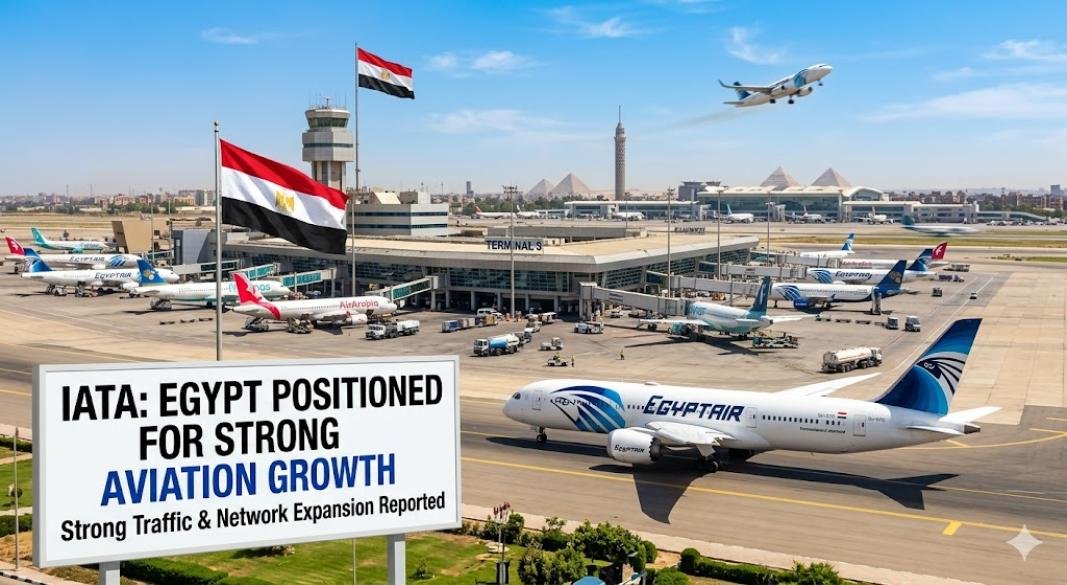
Egypt is poised for significant aviation growth over the coming years, supported by strategic geography, infrastructure investment, and rising demand for passenger and cargo connectivity, according to the International Air Transport Association (IATA). The association believes the country is well positioned to strengthen its role as a regional air transport and logistics gateway linking Africa, the Middle East, and Europe.
IATA highlighted the country’s ongoing airport modernization efforts, expanding airline networks, and growing importance in global supply chains. Egypt’s location along major international trade corridors and proximity to the Suez Canal continue to provide a competitive advantage for both passenger and cargo operations. The sector is increasingly viewed as a critical contributor to trade facilitation, tourism recovery, and economic diversification.
Cairo International Airport remains central to Egypt’s aviation ambitions. The airport has undergone substantial upgrades in recent years, including expanded terminal capacity, improved baggage systems, and enhanced airside infrastructure to accommodate growing traffic volumes and larger aircraft. These investments are expected to improve operational efficiency and strengthen Egypt’s position as a regional transit hub.
The aviation industry’s recovery after the pandemic has also accelerated opportunities for air cargo and logistics providers operating in the region. Industry observers note that rising e-commerce demand, pharmaceutical shipments, and time-sensitive cargo movements are increasing the importance of reliable air freight connectivity across Africa and the Middle East. Egypt’s expanding aviation ecosystem is therefore becoming increasingly relevant for global supply chain networks.
National carrier EgyptAir and private operators such as Nile Air are continuing to expand regional connectivity, supporting passenger mobility and cargo throughput. EgyptAir currently serves more than 75 destinations globally, while Nile Air is strengthening services across the Middle East, Africa, and parts of Europe.
IATA also emphasized the importance of policy alignment and industry collaboration to sustain long-term growth. Areas such as airport capacity development, digitalization, operational efficiency, sustainability, and workforce training will be essential as Egypt aims to capture increasing aviation demand across the region. The association continues to advocate for harmonized regulations and investments that enhance connectivity while improving resilience across the air transport value chain.
Beyond tourism, aviation is expected to play a larger role in supporting Egypt’s broader logistics and trade ambitions. With multinational manufacturers and distributors increasingly seeking alternative regional hubs, Egypt could benefit from its multimodal connectivity combining air, maritime, and land transport infrastructure. Analysts believe this integrated approach may help position the country as a preferred gateway for cargo flows into Africa and surrounding markets.
As global air traffic continues its upward trajectory, IATA’s assessment signals growing confidence in Egypt’s ability to emerge as a stronger player in international aviation and logistics. Continued investment, infrastructure modernization, and strategic partnerships are likely to determine how effectively the country converts this potential into sustained long-term growth.
𝐒𝐭𝐚𝐲 𝐓𝐮𝐧𝐞𝐝 𝐭𝐨 https://cargoconnect.co.in/ 𝐟𝐨𝐫 𝐥𝐚𝐭𝐞𝐬𝐭 𝐮𝐩𝐝𝐚𝐭𝐞𝐬!

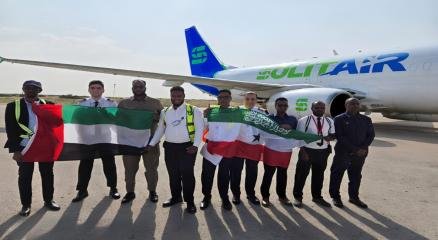
Dubai-based airline flydubai is expanding its cargo business with the launch of dedicated freighter operations, adding three Boeing 737-800 freighters under a wet-lease agreement with SolitAir. The new operation is scheduled to commence on 1 October 2026 from Al Maktoum International Airport (DWC), marking the first phase of the carrier’s dedicated cargo fleet expansion. The three freighters will provide an additional 23,000 kg of payload capacity per flight, complementing cargo carried in the belly holds of flydubai’s existing fleet of 98 Boeing 737 passenger aircraft. The dedicated main-deck capacity is being introduced ahead of the fourth-quarter peak season, while the airline plans to assess passenger-to-freighter conversions from 2029 onwards. Further cargo capacity is also expected as flydubai takes delivery of its planned 30 Boeing 787 Dreamliners. Ghaith Al Ghaith, Chief Executive Officer at flydubai, said: “Dubai has established itself as one of the world's most connected hubs for E-commerce, trade and logistics, and its ambitions under the Dubai Economic Agenda D33 continue to create new opportunities for businesses to reach global markets. The launch of dedicated freighter operations marks an important step in flydubai’s evolution and reflects our commitment to supporting Dubai's vision through enhanced trade connectivity and logistics capabilities. By building on the strength of our network and expanding our cargo offering and list of codeshare and interline partners, we are creating new pathways for businesses to move goods more efficiently, access new markets and contribute to economic growth across the region and beyond.” Based at DWC, flydubai Cargo will benefit from dedicated airside infrastructure and multimodal connectivity through Dubai South. The freighter operation will support scheduled freight services and point-to-point charter operations across a network of more than 125 destinations spanning Africa, Central Asia, the Caucasus, Europe, the GCC, the Middle East, South Asia and Southeast Asia. The dedicated aircraft will also enable specialised handling for pharmaceuticals, perishables, live animals, dangerous goods, express shipments and aerospace components. Initial flights are expected to focus on high-demand regional sectors, with frequencies increasing as capacity develops. The expansion is intended to position flydubai Cargo as a broader logistics provider offering both scheduled freight and ad-hoc charter solutions. 𝐒𝐭𝐚𝐲 𝐓𝐮𝐧𝐞𝐝 𝐭𝐨 CARGOCONNECT 𝐟𝐨𝐫 𝐥𝐚𝐭𝐞𝐬𝐭 𝐮𝐩𝐝𝐚𝐭𝐞𝐬!


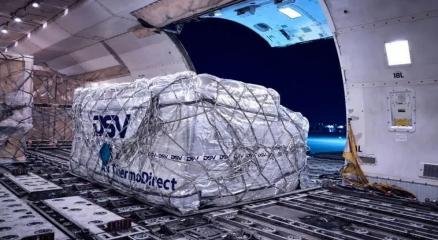
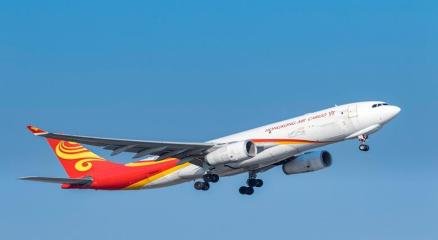
DSV is expanding its Air ThermoDirect temperature-controlled air freight network with a new direct connection between Luxembourg Airport and Shanghai Pudong International Airport (PVG), strengthening its capabilities for pharmaceutical and healthcare logistics. The logistics provider also plans to introduce an additional direct route between Indianapolis International Airport and Shanghai, further extending its Europe-US-Asia cold chain network. The new Luxembourg-Shanghai service will operate with multiple departures using dedicated freighter aircraft. According to DSV, dedicated capacity gives the company greater control over scheduling, routing and cargo handling, helping improve reliability for temperature-sensitive healthcare shipments. The expansion comes amid growing demand for secure, predictable and efficient pharmaceutical logistics worldwide. Shanghai Pudong International Airport is a key gateway for temperature-controlled pharmaceutical cargo and provides an important link between global manufacturers and healthcare markets across Asia. By expanding its operations at PVG, DSV aims to support both inbound and outbound pharmaceutical flows while maintaining consistent temperature-controlled handling throughout the transportation process. “DSV is helping customers improve supply chain efficiency, reduce operating costs, and ensure the integrity of critical healthcare products across one of the world's fastest-growing regions. Through our sustainable reusable thermal packaging program, we are reducing packaging waste and improving the environmental performance of cold chain logistics. This investment represents another important step in building a more resilient, efficient, healthcare supply chain across Asia,” says Kenneth Kallström, EVP, Global Enterprise Vertical Head, Healthcare, DSV. The Shanghai operation is supported by DSV’s partnership with Eastern Air Logistics (EAL), whose specialised ground-handling facilities will support Air ThermoDirect activities in Shanghai. China Eastern Logistics Cold Chain Ltd. will also provide dedicated cold-chain expertise and infrastructure as a ground-handling partner. A key element of the service is DSV’s use of modular thermal packaging solutions. The approach reduces reliance on active containers and conventional passive packaging, providing a more flexible, scalable and cost-efficient model for temperature-controlled air freight while maintaining pharmaceutical handling requirements. The latest expansion follows DSV’s launch earlier this year of “Indy Wings”, a direct air freight connection between Indianapolis and Luxembourg. With the addition of Shanghai connections, Air ThermoDirect is positioned to provide stronger connectivity between major pharmaceutical production, distribution and consumption markets across Europe, North America and Asia. 𝐒𝐭𝐚𝐲 𝐓𝐮𝐧𝐞𝐝 𝐭𝐨 CARGOCONNECT 𝐟𝐨𝐫 𝐥𝐚𝐭𝐞𝐬𝐭 𝐮𝐩𝐝𝐚𝐭𝐞𝐬!




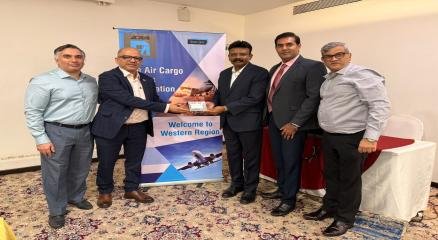
The Air Cargo Agents Association of India (ACAAI) held its Annual General Meeting at Aurika Hotel, Andheri East, Mumbai, followed by a meeting of its Managing Committee, bringing key issues shaping India’s air cargo and freight forwarding industry into focus. The AGM reviewed ACAAI’s activities and initiatives over the past year, with members deliberating on trade facilitation, regulatory developments, operational challenges, infrastructure requirements and the evolving needs of the air cargo sector. Discussions also centred on the Association’s priorities for the coming year and its continued engagement with government authorities, Customs, airlines, airport operators, custodians and other industry stakeholders. The subsequent Managing Committee meeting saw the constitution of the office-bearers for the ensuing term, with the existing leadership team continuing in office. Rajen Bhatia was elected as Honorary Secretary of ACAAI, joining President Samir J. Shah, Vice President Vikram Kumar and Honorary Treasurer Dinesh Krishnan in the Association’s leadership team. The continuity in leadership underscores ACAAI’s focus on stability and sustained industry engagement as the air cargo ecosystem navigates evolving regulatory, operational and infrastructure requirements. Representing India’s air cargo agents and freight forwarding community since 1970, ACAAI remains focused on trade facilitation, policy advocacy, professional development and addressing operational challenges affecting the sector. Looking ahead, the Association has reiterated its commitment to strengthening collaboration with Regional Councils and the wider membership, while working collectively with stakeholders to enhance the efficiency, competitiveness and ease of doing business across India’s air cargo and logistics ecosystem.