
Loading...
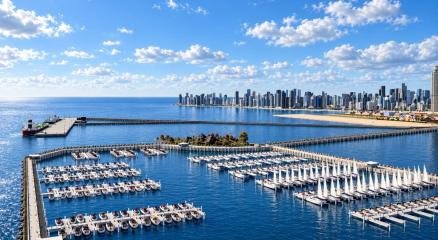
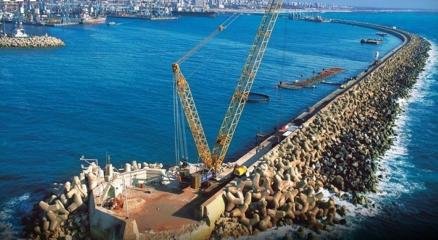
The Mumbai Port Authority (MbPA) has invited domestic and international bids for developing the Viksit Bharat Mumbai Marina, a full-service marina and integrated waterfront project at Victoria Dock in Mumbai. Estimated to cost ₹922.67 crore, the project aims to strengthen maritime tourism, yacht services and waterfront infrastructure while creating new opportunities for port-linked commercial activities. The project will be implemented under the Design, Build, Finance, Operate and Transfer (DBFOT) model, with a concession period of 45 years. The proposed marina will cover a protected water area of 37.3 hectares and accommodate 604 yachts at full development, including 424 berths in the first phase. Mumbai Port Authority has already commenced marine works, including a piled breakwater with an approximately 150-metre approach trestle, six piled service platforms, floating pontoons and gangways for around 424 berths, along with capital dredging. Environmental and Coastal Regulation Zone (CRZ) clearances have also been secured for the entire project area. The selected concessionaire will develop the landside infrastructure, expand berthing capacity beyond the first phase, and operate and maintain the marina throughout the concession period before transferring the assets to the port authority. Planned facilities include a marina terminal building, an international-standard sailing school, a yacht club, a yacht repair yard at Haji Bunder, dry-stack storage and a fuel station. The development will also feature a five-star hotel, tourism business centre, food and beverage outlets, retail zones, and dedicated space for boat shows and events. The tender follows a single-stage, two-envelope electronic bidding process. Bidders will be evaluated on the percentage of gross revenue they propose to share with Mumbai Port Authority, with the highest revenue-share offer determining the preferred bidder. Companies can participate individually or as part of a consortium comprising up to four members. The deadline for pre-bid queries is 28 October 2026, with pre-bid meetings scheduled for 30 October and 25 November. The final date for submitting bids is 15 December 2026. The marina forms part of Mumbai Port Authority’s broader strategy to expand cruise tourism, harbour services and waterfront development, complementing initiatives such as the Mumbai International Cruise Terminal and the city's water taxi network. The project is expected to connect Mumbai’s maritime heritage with sailing, yacht services, hospitality and tourism while retaining port safety and operational requirements as key priorities. 𝐒𝐭𝐚𝐲 𝐓𝐮𝐧𝐞𝐝 𝐭𝐨 CARGOCONNECT 𝐟𝐨𝐫 𝐥𝐚𝐭𝐞𝐬𝐭 𝐮𝐩𝐝𝐚𝐭𝐞𝐬!
Global container freight rates have surged 130% since February 2026, as renewed tensions in the Middle East disrupt shipping routes and increase uncertainty across international trade. The sharp rise in ocean freight costs comes even as India’s container-based export-import trade continues to record strong growth, according to a report by financial services firm Jefferies. According to the report, global container freight rates have climbed from approximately US$2,000–2,500 in February to around US$4,000–4,500 in October 2026. The increase reverses the downward trend witnessed through much of 2025 and early 2026, when an improved demand-supply balance helped ease shipping costs following elevated rates in 2024. The latest surge highlights the vulnerability of global supply chains to geopolitical developments and changes in maritime operations. Higher freight rates can put additional pressure on exporters, importers, freight forwarders and manufacturers by increasing transportation costs and complicating shipment planning. Jefferies identified the potential return of shipping lines to the Suez Canal as a key factor to monitor. Any change in vessel routing could influence transit times, available shipping capacity and freight pricing, depending on security conditions and operational decisions. Despite the rise in global freight rates, India’s containerisable export-import trade recorded a 23% year-on-year increase in value in September 2026. Exports grew 22%, while imports increased 23%, according to the report. Exports to the United States rose 48% year-on-year during the month. However, shipments to the United Arab Emirates and Saudi Arabia declined by 12–15%, reflecting differing trade trends across key markets. India’s port performance was also mixed. Cargo volumes at major ports increased 13% year-on-year in September, while non-major ports registered a 1% decline. Among non-major ports, Gujarat recorded 3% growth, while ports in Maharashtra and Tamil Nadu reported increases of 6–7%. Ports along the eastern coast experienced a sharper decline in volumes. With geopolitical uncertainty continuing to influence maritime operations, developments in West Asia and the possible return of shipping lines to the Suez Canal will remain important indicators for global freight markets. Changes in routing and shipping capacity could shape transportation costs in the coming months, making freight-rate volatility a critical consideration for businesses managing international supply chains. 𝐒𝐭𝐚𝐲 𝐓𝐮𝐧𝐞𝐝 𝐭𝐨 CARGOCONNECT 𝐟𝐨𝐫 𝐥𝐚𝐭𝐞𝐬𝐭 𝐮𝐩𝐝𝐚𝐭𝐞𝐬!
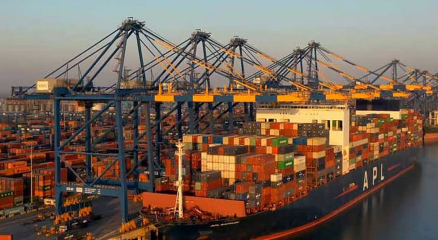
Syama Prasad Mookerjee Port, Kolkata, recorded 34.75 million tonnes of cargo traffic in the first half of FY2026–27, supported by mechanised operations, private terminal participation, digital initiatives and planned infrastructure upgrades. Syama Prasad Mookerjee Port (SMP), Kolkata, handled 34.75 million tonnes (MT) of cargo during the first half of the 2026–27 financial year, registering an increase of 1.34 MT compared with the corresponding period last year. The performance represents year-on-year growth of approximately 4 per cent. The port, which operates through the Kolkata Dock System (KDS) and Haldia Dock Complex (HDC), has set a cargo handling target of 74 MT for the full financial year. Infrastructure modernisation and measures to improve operational efficiency are expected to play an important role in achieving this goal. Mechanised Berths and PPP Operations Support Growth SMP Kolkata Chairman Rathindra Raman attributed the increase in cargo volumes to infrastructure improvements, the development of new berths and jetties, greater participation by public-private partnership (PPP) operators, digital technology adoption and enhanced marketing initiatives. The port has expanded the use of mechanised berths to accelerate cargo handling while reducing dependence on manual operations. It has also increased the utilisation of PPP-operated berths and introduced floating cranes at anchorages to facilitate cargo handling from larger vessels. These measures are intended to improve operational productivity, strengthen cargo-handling capacity and support the port's efforts to attract additional traffic. Digitalisation and Incentives to Attract Cargo Alongside infrastructure development, SMP Kolkata is focusing on digitalisation and commercial incentives to improve its competitiveness. Under its ‘One Port, One Process’ initiative, the port has digitised documentation procedures to simplify operational workflows and improve ease of doing business for port users. It has also introduced promotional rebates on vessel-related and cargo-related charges to encourage additional traffic and attract new business. In another initiative, the port is promoting the development of light industries under the PPP model. Potential activities include agricultural, marine, tea and apparel processing near port facilities. These industries could generate additional cargo volumes while strengthening connections between the port and its hinterland. Capital Dredging Study to Explore Greater Vessel Access Improving navigational access remains another priority for SMP Kolkata. The port has engaged the Indian Institute of Technology Madras (IIT Madras) to conduct a comprehensive feasibility study on capital dredging to assess options for increasing channel depth. Enhanced channel depth could improve access for vessels with greater draught requirements, subject to the findings of the study and the feasibility of implementing the proposed works. Better navigability could also help support future cargo growth and improve operational flexibility. The outcome of the feasibility assessment will be important in determining the scope and potential benefits of any subsequent dredging programme. Proposed Hooghly Twin Tunnel to Improve Connectivity SMP Kolkata is also planning a twin tunnel beneath the Hooghly River to connect port facilities with national highways. The proposed infrastructure is intended to provide an alternative route for cargo traffic, helping bypass urban traffic restrictions and congestion. Improved road connectivity could streamline cargo evacuation, reduce delays in inland transportation and strengthen links between the port and its hinterland. The project's eventual impact will depend on its planning, implementation and integration with the surrounding transport network. Focus on Sustainable Cargo Growth With cargo volumes rising by approximately 4 per cent in H1 FY27, SMP Kolkata is pursuing a combination of operational improvements, private-sector participation, digital processes and infrastructure planning to support its annual target of 74 MT. Mechanised cargo handling, improved terminal utilisation and simplified documentation could help strengthen productivity, while dredging assessments and proposed transport links may address longer-term navigational and connectivity constraints. As trade and logistics requirements continue to evolve, the port's ability to expand capacity, attract new cargo and improve cargo evacuation will be central to sustaining growth during FY2026–27 and beyond. Follow CARGOCONNECT for more such updates
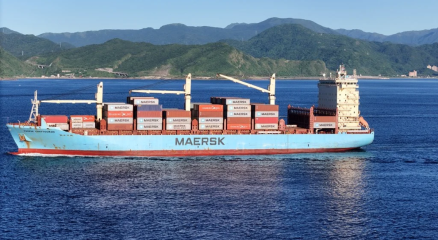
Maersk’s Singapore-flagged container vessel Maersk Chattogram is undergoing its first planned drydocking in India at L&T Shipbuilding’s Kattupalli Shipyard near Chennai, marking the first operational milestone under the Maersk–L&T maritime collaboration. A.P. Moller-Maersk has partnered with Larsen & Toubro (L&T) for the planned drydocking of the Maersk Chattogram at the Kattupalli Shipyard near Chennai. The Singapore-flagged container vessel is scheduled to arrive at the yard on October 20, 2026, subject to operational and weather conditions. The project is the first operational outcome of the Memorandum of Understanding signed by Maersk and L&T during India Maritime Week 2025. The MoU covers potential cooperation in shipbuilding, ship repair, knowledge exchange and development of global-standard maritime capability in India. 10-Year Maintenance and Special Survey The drydocking forms part of the vessel’s planned 10-year lifecycle maintenance programme. Work will include the scheduled special survey along with maintenance and overhaul of the hull and structure, machinery, equipment and propulsion systems. Drydocking allows inspection and repair of areas normally submerged underwater, alongside work on onboard systems. The process is essential for maintaining a vessel’s safety, seaworthiness, operational performance and reliability for the next five years. India’s Largest Shiplift System Maersk Chattogram will undergo a specialised lift-out operation using India’s largest Shiplift system at L&T Shipbuilding, Kattupalli. The system will lift the vessel out of the water for extensive inspection, maintenance and repair work. The project will bring together Maersk’s fleet and technical teams with L&T, Indian subcontractors, suppliers and maritime service providers. The companies said the focus will be on safe execution, quality delivery and knowledge sharing throughout the docking. Boost for India’s Ship Repair Ecosystem The drydocking signals growing confidence in India’s ship repair and shipyard capabilities. Maersk said the project aligns its global technical requirements with India’s developing shipyard, supplier and maritime-service ecosystem. L&T said the docking advances its strategic partnership with Maersk and supports efforts to strengthen domestic capabilities and supply chains across the shipbuilding ecosystem. Both companies view India as having strong potential to become a more important global maritime hub
Andhra Pradesh has invited bids for a proposed ₹1,700-crore inland waterway corridor connecting Muktyala with the upcoming Machilipatnam Port to strengthen industrial freight movement and port connectivity. The project aims to establish an alternative cargo transportation route for industries in the state, reduce dependence on road freight and improve the movement of bulk commodities. The Andhra Pradesh Inland Waterways Authority (APIWA) has initiated the tendering process for the development of the corridor under the Design, Build, Finance, Operate and Transfer (DBFOT) model through a public-private partnership (PPP). The proposed 168-km route will combine an 82-km stretch along the Krishna River between Muktyala and Prakasam Barrage with the Bandar Canal section leading towards Machilipatnam Port. The initiative has received in-principal approval from the Inland Waterways Authority of India (IWAI). The project envisages upgrading the existing waterway infrastructure to accommodate cargo vessels and facilitate the movement of industrial materials, including cement, limestone and fly ash, from manufacturing clusters around Jaggayyapeta. By linking inland industrial centres with port infrastructure, the corridor is expected to improve freight efficiency and offer businesses an additional mode of transport. The Bandar Canal stretch between Prakasam Barrage in Vijayawada and Machilipatnam Port will be developed to specified navigation standards. Plans include maintaining a minimum channel depth of 1.5 metres and a bottom width of 20 metres. A navigation lock measuring 70 metres in length and 15 metres in width will be constructed at Prakasam Barrage to facilitate vessel movement. The development will also involve replacing low-level bridges that obstruct navigation with high-level structures, relocating utility lines and establishing cargo and passenger terminals. Cargo-handling infrastructure, including cranes and conveyors, will support loading and unloading operations. The selected developer will execute the project through a concession arrangement spanning 50 years, structured as an initial 30-year term with two possible 10-year extensions. Construction is expected to be completed within 36 months of the award. APIWA will facilitate statutory clearances and provide support for land acquisition. According to the tender conditions, prospective bidders must meet specified financial and infrastructure-experience requirements. Online bids are due by November 30, 2026, while technical bids are scheduled to be opened on December 7. For Andhra Pradesh, the project represents an opportunity to diversify its freight network by integrating inland waterways with industrial production centres and maritime gateways. If implemented effectively, the corridor could help ease road congestion, improve bulk-cargo logistics and strengthen Machilipatnam Port’s role in the state’s expanding trade infrastructure. 𝐒𝐭𝐚𝐲 𝐓𝐮𝐧𝐞𝐝 𝐭𝐨 CARGOCONNECT 𝐟𝐨𝐫 𝐥𝐚𝐭𝐞𝐬𝐭 𝐮𝐩𝐝𝐚𝐭𝐞𝐬!
India’s inland waterway cargo traffic reached 218 million metric tonnes in the 2025–26 financial year, exceeding the 200-million-tonne target set under Maritime India Vision 2030. The milestone reflects the sector’s expansion over the past decade, as the government continues to develop navigation infrastructure, improve operational information and encourage cargo owners to consider waterway-based freight solutions. According to government figures highlighted on 16 October 2026, inland waterway cargo increased from 29 million tonnes in 2014–15 to 218 million tonnes in 2025–26. The latest volume is 18 million tonnes above the 2030 benchmark, representing a 9% increase over the target. The next challenge for the sector is to translate higher cargo volumes into dependable, commercially competitive freight services that can connect waterways with road and rail networks. Inland Waterway Network Continues to Expand: India has 111 National Waterways spanning 20,187 kilometres across 23 states and four Union Territories. However, 32 waterways, covering 5,155 kilometres, were operational as of March 2026. The distinction between designated and operational waterways remains important for cargo owners and logistics providers. Commercial services require navigable channels, suitable terminals, reliable vessel operations and effective connections to production and consumption centres. The Union Budget 2026–27 announced plans to operationalise 20 additional National Waterways over five years. The initiative forms part of the broader effort to expand the availability of inland water transport and strengthen its role in the national freight network. Longer-term policy ambitions include increasing inland water transport’s share of freight movement from approximately 2% to 5% and reaching 500 million tonnes of cargo by 2047. Navigation Information Becomes Critical to Operations: As cargo volumes rise, navigation reliability and access to timely operational information are becoming increasingly important. By September 2026, regular surveys monitoring the deepest navigable channel covered 22 National Waterways. Depending on local requirements, surveys are conducted weekly, fortnightly or monthly to assess available depth and support decisions on vessel draft and cargo loading. Electronic Navigational Charts had also been prepared for 18 operational and tidal waterways. Digital platforms, including PANI and IWAI Vessel Tracker, provide navigation-related information to operators. Access to more reliable data can help vessel operators plan voyages, determine loading conditions and manage schedules. However, digital information must be supported by physical infrastructure and fairway maintenance to ensure that waterways remain usable under changing conditions. For freight customers, the effectiveness of these measures will depend on whether they improve service consistency, vessel utilisation and the predictability of cargo movements. Jalvahak Scheme Seeks to Encourage Cargo Shift: Financial incentives are another element of the government’s strategy to increase waterway utilisation. Launched in December 2024, the Jalvahak scheme provides incentives of up to 35% of eligible operating expenditure for the waterway leg of qualifying cargo movements. The scheme covers National Waterways 1, 2 and 16, along with eligible routes under the Indo-Bangladesh Protocol. A separate component supports scheduled services operated by Inland and Coastal Shipping Limited, with funding from the Inland Waterways Authority of India (IWAI). The scheme addresses a key challenge in multimodal logistics: while water transport may offer advantages over certain long-distance road movements, additional handling, terminal charges and connecting transport can affect the overall cost of delivery. The incentive excludes first- and last-mile expenditure. Cargo owners must therefore evaluate the full logistics chain, including terminal handling, connecting road or rail transport, sailing frequency, transit time and delivery requirements. The commercial viability of waterway freight ultimately depends on the cost and reliability of the complete journey rather than the waterborne segment alone. Infrastructure Supports Multimodal Freight Movement: Infrastructure developed under the Jal Marg Vikas Project provides part of the foundation for cargo operations along National Waterway 1. Key developments include multimodal terminals at Varanasi, Sahibganj and Haldia, an intermodal terminal at Kalughat and a navigation lock at Farakka. These facilities are intended to support cargo handling and connect river transport with inland logistics networks. Private investment is also being encouraged to expand terminal infrastructure. The National Waterways (Construction of Jetties/Terminals) Regulations, 2025 established a framework intended to facilitate the development of jetties and terminals by companies, public bodies and joint ventures. The combination of infrastructure investment, navigation support and cargo incentives is intended to create more opportunities for businesses to incorporate inland waterways into their transport strategies. Commercial Competitiveness Remains the Next Test: Crossing the 200-million-tonne target represents a significant milestone in the expansion of India’s inland waterway cargo business. Sustaining this growth will require more than increasing aggregate tonnage. For manufacturers, exporters, importers and logistics providers, key considerations include predictable transit times, dependable vessel schedules, adequate terminal capacity and effective road and rail connections. Cargo volumes also need to be assessed alongside the distances travelled and the economics of individual routes. Tonnage measures the quantity of cargo handled, while tonne-kilometres account for both cargo weight and distance, offering a different perspective on freight activity. As additional waterways become operational and supporting infrastructure develops, the sector’s progress will increasingly depend on its ability to secure regular commercial cargo commitments. For India’s logistics industry, the priority is now to turn the expansion in inland waterway traffic into reliable, cost-effective and integrated freight services that can support long-term supply chain development. Follow CARGOCONNECT for more such updates

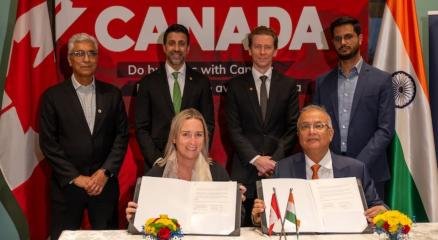
The Port of Montreal and Adani Group have renewed their collaboration agreement to strengthen maritime trade between India and Canada, improve cargo connectivity and create new business opportunities for exporters, importers and logistics providers. The agreement was signed in Mumbai on October 15, 2026, during Team Canada’s trade mission to India, held from October 12 to 17. Captain Sandeep Mehta, representing Adani Group, and Marie-Claude Galarneau, Executive Vice-President and Chief Operating and Transformation Officer of the Montreal Port Authority (MPA), signed the agreement in the presence of Canada’s Minister of International Trade, Maninder Sidhu. The renewed partnership builds on cooperation established in 2018 and prioritises the development of the Mundra-Montreal maritime corridor. Key areas of collaboration include joint business promotion, information sharing, the exchange of port and technological expertise, and improvements in port operations and road-rail connectivity. The organisations will also explore opportunities in vehicle transportation and exchanges between their teams. India ranked as the Port of Montreal’s second-largest trading partner in 2025, with approximately one million tonnes of goods exchanged between the two countries through the port. Exports accounted for around 60% of the trade volume, while imports represented the remaining 40%. Major commodities imported from India include food products, ceramics and plastics, while Montreal facilitates exports to India that include forestry and metal products. To strengthen its market presence, the MPA has appointed Prakash Tulsiani as its representative in India. The appointment is expected to improve engagement with shipping lines, freight forwarders, importers and exporters, helping identify commercial opportunities and promote the port’s services. The Port of Montreal handled 34.3 million tonnes of cargo in 2025, including containerised freight, liquid bulk and dry bulk. Its container throughput reached 1.52 million TEUs, underlining its role as a diversified gateway for international trade and multimodal logistics. The agreement comes amid broader efforts by India and Canada to expand bilateral commercial engagement and diversify international trade partnerships. Both countries are also pursuing a Comprehensive Economic Partnership Agreement, which could create further opportunities for businesses and logistics stakeholders. For supply chain operators, the renewed collaboration offers a framework to explore more efficient cargo movement, share operational best practices and strengthen connections between maritime and inland transport networks. However, the agreement does not announce a new scheduled direct shipping service; actual routing and transit arrangements will continue to depend on carrier networks and cargo requirements. As trade flows evolve, closer cooperation between the Port of Montreal and Adani Group could help businesses assess new market opportunities and improve access to international supply chains. The partnership's long-term impact will depend on commercial participation, reliable transport connections and the growth of cargo volumes between the two countries. 𝐒𝐭𝐚𝐲 𝐓𝐮𝐧𝐞𝐝 𝐭𝐨 CARGOCONNECT 𝐟𝐨𝐫 𝐥𝐚𝐭𝐞𝐬𝐭 𝐮𝐩𝐝𝐚𝐭𝐞𝐬!
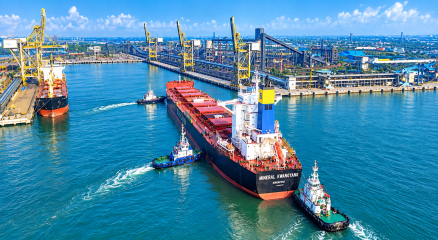
Paradip Port Authority (PPA) has set a target of handling more than 170 million metric tonnes (MMT) of cargo in the financial year 2026-27, building on its record throughput of 156.45 MMT in FY 2025-26. The target represents an increase of approximately 8.7% over the previous financial year, reinforcing the port’s ambition to strengthen its position as a leading maritime gateway on India’s eastern coast. PPA Chairperson Susanta Kumar Purohit announced the target during an interactive meeting with members of the Paradip Port Stevedores Association on 15 October 2026. The meeting, attended by heads of departments, focused on improving cargo-handling productivity, resolving operational bottlenecks and strengthening coordination among port stakeholders. Infrastructure Upgrades to Support Cargo Growth To facilitate higher cargo volumes, PPA reviewed several infrastructure improvement measures aimed at ensuring smoother cargo movement and more efficient port operations. These include upgrading roads within and outside the port premises, improving paved surfaces and developing suitable cargo-stacking areas to facilitate transportation and minimise waterlogging. Drainage improvements have also received approval, while better sanitation, hygiene and welfare facilities for workers and visitors remain part of the port’s efforts to improve conditions across its operational areas. Strengthening Operational Efficiency and Coordination The discussions also covered mechanisation, dredging requirements, traffic management and coordination between PPA, private terminal operators and stevedores. The authority emphasised the importance of integrating modern cargo-handling practices while safeguarding the business interests of traditional stevedoring operators. Purohit called for collective efforts from port officials and industry stakeholders to improve productivity and maintain competitiveness amid global economic uncertainties and increasing regional competition. Greater coordination among stakeholders is expected to help address operational challenges and support more consistent cargo movement. Building on Record Performance Paradip Port’s latest target follows its highest-ever annual cargo throughput since operations began in 1966. Achieving the FY 2026–27 goal will require sustained operational performance, reliable infrastructure and effective collaboration across the port’s cargo-handling ecosystem. The planned improvements underline the importance of combining infrastructure development with day-to-day operational efficiency. As cargo demand evolves, Paradip’s ability to streamline port operations and strengthen stakeholder coordination will be critical to achieving its growth target and supporting trade across eastern India. 𝐒𝐭𝐚𝐲 𝐓𝐮𝐧𝐞𝐝 𝐭𝐨 CARGOCONNECT 𝐟𝐨𝐫 𝐥𝐚𝐭𝐞𝐬𝐭 𝐮𝐩𝐝𝐚𝐭𝐞𝐬!
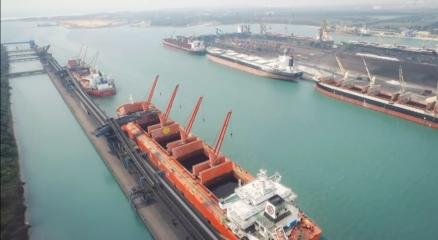
Paradip Port Authority (PPA) has constructed the 500-metre-long Atharabanki Bridge at a cost of ₹24.89 crore to strengthen road connectivity and facilitate smoother cargo transportation in the Paradip Port region. The three-lane bridge is expected to ease traffic congestion, improve the movement of commercial vehicles and enhance connectivity between the port and the surrounding road network. The development is particularly significant given that nearly 3,000 trucks move through Paradip Port every day. Three-Lane Bridge to Ease Traffic Congestion: The newly constructed Atharabanki Bridge replaces an ageing two-lane structure that faced capacity constraints amid rising transportation demand. Its expanded configuration is designed to accommodate increased traffic volumes and improve access for trucks and other vehicles involved in port-related operations. The upgraded infrastructure is expected to support more efficient cargo movement, reduce potential delays and improve road access for transport operators, logistics providers and other stakeholders associated with the port. Key Features of the Atharabanki Bridge: The project incorporates several features aimed at improving connectivity and functionality: Project cost: ₹24.89 crore Length: 500 metres Configuration: Three lanes Structural component: 30-metre composite girder Additional facilities: Dedicated footpaths and a pipeline corridor Dedicated pedestrian pathways provide designated space for people on foot, while the pipeline corridor accommodates infrastructure requirements associated with pipelines. Boost to Port Logistics and Regional Connectivity: As a major maritime gateway on India's eastern coast, Paradip Port plays an important role in cargo transportation and trade. Efficient road connectivity is essential to ensuring the smooth movement of goods between port facilities and the wider transportation network. The Atharabanki Bridge is expected to strengthen this vital link by improving traffic flow and supporting the movement of cargo-carrying vehicles. Better connectivity could also help reduce transportation delays, improve logistics efficiency and enhance the reliability of port-related operations. Beyond its immediate benefits for port traffic, the bridge is expected to improve regional accessibility and support economic activity in the Paradip area. Infrastructure Investment to Support Future Growth: The construction of the Atharabanki Bridge highlights the importance of developing supporting infrastructure to meet the evolving demands of ports, trade and logistics. As cargo volumes and road transportation requirements increase, investments in bridges and connectivity corridors are essential to strengthening supply-chain efficiency. By upgrading the existing two-lane crossing to a modern three-lane structure, Paradip Port Authority has taken a step towards improving the port's supporting infrastructure. The project is expected to contribute to smoother cargo movement, stronger regional connectivity and improved efficiency across India's maritime logistics network.
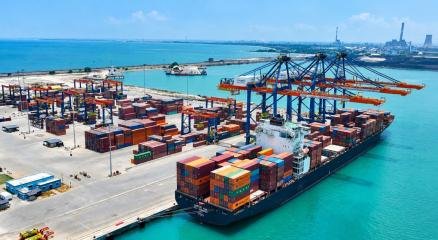
Tuticorin Container Terminal handled a record 33,771 twenty-foot equivalent units (TEUs) in September 2026, marking a significant milestone in its operational performance and reinforcing its focus on efficiency, reliability and service quality. The achievement reflects the collective efforts of the terminal’s workforce across operational, technical and support functions. Their dedication, resilience and coordination have played a key role in ensuring smooth cargo movement and maintaining operational continuity. The terminal also highlighted the contributions of women across its operational, technical and support teams, underscoring the growing importance of gender diversity and inclusive workforce practices in the maritime sector. Tuticorin Container Terminal expressed its gratitude to vessel operators, container lines and other stakeholders for their continued trust and partnership. It also acknowledged the support and cooperation of the V.O. Chidambaranar Port Authority in facilitating efficient terminal operations. The record monthly throughput marks another step in the terminal’s efforts to strengthen operational excellence and stakeholder collaboration. With a continued focus on dependable services, workforce engagement, and operational efficiency, the terminal aims to support growing cargo movement and enhance regional container logistics capabilities. The handling of 33,771 TEUs in a single month highlights the role of coordinated teamwork and industry partnerships in strengthening Tuticorin’s position in India’s container logistics network. Follow CARGOCONNECT for more such updates

Prime Minister Narendra Modi has inaugurated development projects and laid foundation stones for infrastructure initiatives worth more than ₹13,000 crore across Tamil Nadu, highlighting the state’s strategic role in strengthening India’s maritime logistics, transport connectivity and industrial growth. The announcements, made in Chennai on October 11, 2026, include port infrastructure upgrades, road and railway projects, and urban transport development. A key highlight was the proposed transformation of V O Chidambaranar (VOC) Port in Thoothukudi into a world-class mega container and green energy hub, backed by an investment of approximately ₹17,000 crore. The planned development is intended to enhance the port’s capacity to handle ultra-large container vessels, strengthen maritime connectivity and position Tamil Nadu as a more competitive gateway for international trade. VOC Port Expansion to Strengthen Maritime Logistics The proposed mega container hub at VOC Port is expected to support India’s ambitions to expand its container-handling capabilities and improve integration with global shipping networks. Greater capacity for large vessels could help strengthen trade connectivity, improve operational efficiency and support cargo movement through southern India. The Prime Minister emphasised the importance of modernising port infrastructure to enable the shipping sector to grow. He also highlighted improvements in port efficiency, noting that reduced vessel turnaround times have helped Indian goods reach international markets faster. Alongside the long-term expansion plan, projects worth ₹517.19 crore were included for a container terminal at VOC Port. The terminal forms part of eight projects at the port with a combined investment of ₹753.68 crore. Separately, port infrastructure works worth ₹640 crore at Chennai and Kamarajar ports are aimed at expanding cargo-handling capacity and strengthening logistics infrastructure. The proposed ₹17,000-crore VOC Port transformation is a strategic development distinct from the projects worth over ₹13,000 crore launched during the Chennai visit. Connectivity and Infrastructure Development The wider investment programme spans ports, highways, railways, petroleum infrastructure, urban transport and scientific research. Among the major initiatives, Modi inaugurated the Poonamallee–Vadapalani stretch of Chennai Metro Phase II, developed at a cost of approximately ₹4,900 crore. The new section is expected to improve connectivity across western Chennai and support smoother urban mobility. Road and railway infrastructure projects are also intended to strengthen regional connectivity, facilitate passenger and freight movement, and support industrial activity across Tamil Nadu. Supporting Trade, Jobs and Economic Growth The infrastructure push reflects the importance of coordinated investment across transport modes to improve logistics efficiency and economic competitiveness. Modern ports, supported by efficient road and rail links, can help reduce bottlenecks, improve cargo evacuation and connect manufacturing centres with domestic and international markets. The VOC Port mega container and green energy hub proposal also aligns with the broader ambition to strengthen India’s maritime capabilities while advancing cleaner energy infrastructure. Its long-term impact will depend on project execution, capacity creation and effective integration with inland logistics networks. Together, the announced initiatives are expected to support employment generation, improve connectivity and reinforce Tamil Nadu’s position as an important industrial and logistics centre. For India’s supply chain sector, the port investments are particularly significant as the country seeks to expand trade capacity and build more efficient links with global markets. 𝐒𝐭𝐚𝐲 𝐓𝐮𝐧𝐞𝐝 𝐭𝐨 CARGOCONNECT 𝐟𝐨𝐫 𝐥𝐚𝐭𝐞𝐬𝐭 𝐮𝐩𝐝𝐚𝐭𝐞𝐬!
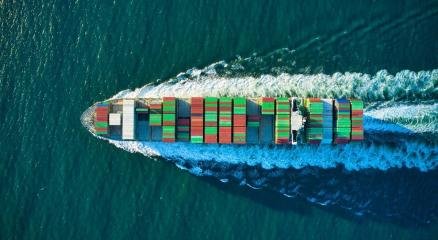
India and the European Union (EU) have launched an industry coalition to develop a green shipping corridor between the two markets, marking a significant step towards cleaner maritime trade and the adoption of low-emission fuels. The initiative was announced during the third edition of Sagar Manthan 2026 and aims to bring industry stakeholders together to advance greener maritime routes and supporting infrastructure. Shipping Secretary Vijay Kumar said the coalition would help translate cooperation between India and the EU into practical industry partnerships focused on cleaner maritime operations. The initiative comes at a time when the global shipping sector is navigating geopolitical disruptions, supply-chain vulnerabilities, climate pressures and rapid technological changes. The coalition is expected to provide a platform for companies and other stakeholders to collaborate on the development of green shipping infrastructure, alternative fuels and lower-emission maritime trade routes. Greater international cooperation and private investment will be critical to building resilient maritime supply chains while enabling emerging economies to participate in the global transition towards cleaner energy. As part of its broader maritime decarbonisation strategy, India is also targeting a substantial increase in renewable energy use at its major ports. The country plans to raise the share of renewable energy in the overall energy consumption of major ports to more than 60% by 2030 and above 90% by 2047. The transition is also extending to harbour craft. Diesel-powered harbour tugs are being progressively replaced with green-powered vessels, while Deendayal Port at Kandla, Paradip Port and V.O. Chidambaranar Port at Tuticorin have been identified as green hydrogen hubs. These ports are being positioned to support the production, storage and bunkering of cleaner fuels, including green hydrogen. The green shipping corridor initiative also aligns with India's wider plans to expand maritime infrastructure and capacity. The government is targeting total port capacity of 10 billion tonnes annually by 2047. Major ports handled more than 915 million tonnes of cargo in 2025-26, compared with 581 million tonnes in 2014-15. Cargo transported through national waterways has also increased substantially, reaching 218 million tonnes from 18 million tonnes in 2013-14. The India-EU green shipping corridor could therefore serve as a framework for aligning cleaner fuels, port infrastructure, vessel operations and international trade. By bringing industry participation into the decarbonisation process, the coalition could help accelerate investment and create commercially viable pathways for lower-emission shipping between India and Europe. 𝐒𝐭𝐚𝐲 𝐓𝐮𝐧𝐞𝐝 𝐭𝐨 CARGOCONNECT 𝐟𝐨𝐫 𝐥𝐚𝐭𝐞𝐬𝐭 𝐮𝐩𝐝𝐚𝐭𝐞𝐬!

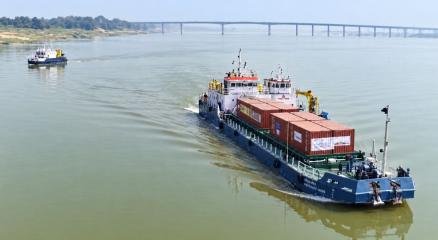
Assam has marked a significant milestone in India’s inland waterways and Northeast logistics landscape, with the first international cargo consignment from Upper Assam to a foreign port since Independence departing from the Bogibeel Terminal in Dibrugarh for Bangladesh. Union Minister for Ports, Shipping and Waterways Sarbananda Sonowal flagged off the vessel DLB Patkai, pushed by the tug Kushal Konwar, carrying 540 metric tonnes of methanol produced by Assam Petro-Chemicals Limited (APCL) at Namrup. The consignment is bound for Pangaon Port in Dhaka, Bangladesh, marking the revival of Dibrugarh’s international river trade after nearly seven decades. The cargo will travel approximately 768 km along the Brahmaputra, designated as National Waterway-2 (NW-2), before entering the Indo-Bangladesh Protocol Route (IBPR) for onward movement to Bangladesh. The overall journey from Bogibeel to Narayanganj is expected to cover around 1,300 km. The landmark movement is being viewed as a test of the Brahmaputra’s potential as a commercially viable freight corridor connecting the Northeast with international markets. The reopening of this route could provide industries in Assam and neighbouring states with an alternative to road-based transportation, while improving access to Bangladesh and other regional markets. The development has been enabled by infrastructure upgrades at Bogibeel and the establishment of customs and immigration facilities at Bogibeel and Dhubri. The Bogibeel passenger and cargo terminal, which became operational in 2024, is expected to play an important role in supporting future cargo movements. The Ministry of Ports, Shipping and Waterways said the initiative is expected to reduce logistics costs, ease pressure on road networks and strengthen regional economic connectivity. Regular methanol shipments to Bangladesh are also planned, indicating that the maiden voyage could evolve into a sustained trade service rather than remain a one-off movement. The revival also reconnects Dibrugarh with its historic role as a river-trade centre. Regular river cargo operations from the town declined after the mid-20th century as trade patterns shifted towards rail and other modes. The latest shipment represents a renewed effort to leverage the Brahmaputra for modern freight movement. Sonowal has also announced a ₹200-crore skill development centre at Bogibeel, expected to train around 50,000 young people from Assam and the Northeast over the next decade for opportunities in the maritime and shipping sectors. A With cargo movement on India’s national waterways rising substantially in recent years, the Dibrugarh-Dhaka shipment adds another dimension to the country’s multimodal logistics strategy. It could strengthen the Northeast’s position as a gateway to eastern and international markets while promoting inland waterways as a cost-efficient and lower-emission freight option. 𝐒𝐭𝐚𝐲 𝐓𝐮𝐧𝐞𝐝 𝐭𝐨 CARGOCONNECT 𝐟𝐨𝐫 𝐥𝐚𝐭𝐞𝐬𝐭 𝐮𝐩𝐝𝐚𝐭𝐞𝐬!
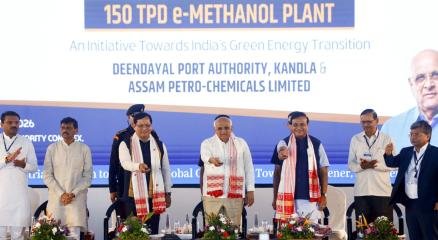
India has taken a landmark step towards establishing itself as a global supplier of green maritime fuel with the foundation stone laid for the country’s first port-based e-methanol production facility at Deendayal Port Authority (DPA) in Kandla, Gujarat. The ₹2,300-crore project is being jointly developed by DPA and Namrup-based Assam Petro-Chemicals Ltd (APCL) and is designed to support the decarbonisation of international shipping. The foundation stone was laid on September 26 by Union Minister for Ports, Shipping and Waterways Sarbananda Sonowal, Gujarat Chief Minister Bhupendra Patel and Assam Chief Minister Himanta Biswa Sarma. The facility will have a total production capacity of 150 tonnes of e-methanol per day. It will use renewable power, water and biogenic carbon dioxide (CO₂) to produce e-methanol, which is intended to be supplied to vessels operating along the Asia-Europe International Trade Corridor, one of the world’s busiest maritime routes. The e-methanol plant will be established through scalable modules in two phases. Phase I will add 50 tonnes per day of production capacity at an investment of ₹1,200 crore and is targeted for completion by January 2027. Phase II, involving a further 100 tonnes per day, will require an investment of ₹1,100 crore and is scheduled for completion by March 2027. Together, the two phases will take the project’s total investment to ₹2,300 crore. The capital contribution between DPA and APCL will be in a 76:24 ratio. DPA’s contribution includes ₹567.32 crore in equity capital, 75 acres of land, desalinated water and renewable energy in the form of green hydrogen. The facility is expected to rank among India’s largest e-methanol production plants and generate more than 3,500 direct and indirect jobs. According to the Ministry of Ports, Shipping and Waterways, the plant is expected to produce green methanol at around US$750 per tonne, compared with a global rate of about US$1,300 per tonne. This cost advantage could strengthen India’s position as a competitive producer and supplier of green fuel for international shipping. Beyond fuel production, the project is expected to stimulate a wider green-energy value chain around Kandla, covering transportation, storage, supply and other ancillary activities associated with green molecule production. It also aligns with India’s broader maritime decarbonisation objectives and its Net Zero emissions target for 2070. The government aims to add 100 ships to the Indian merchant fleet over the next five years and make India one of the world’s top five ship-owning nations by 2047. Therefore, the Kandla facility represents more than a new green-fuel production asset; it marks an effort to integrate port infrastructure, renewable energy and maritime fuel supply into a single ecosystem, potentially positioning Kandla as an emerging green-fuel hub for global shipping. 𝐒𝐭𝐚𝐲 𝐓𝐮𝐧𝐞𝐝 𝐭𝐨 CARGOCONNECT 𝐟𝐨𝐫 𝐥𝐚𝐭𝐞𝐬𝐭 𝐮𝐩𝐝𝐚𝐭𝐞𝐬!
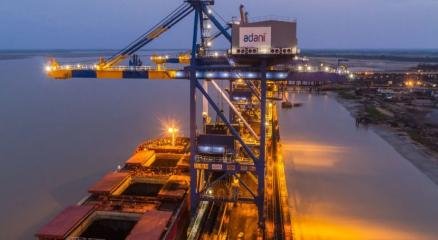
Dhamra Port in Odisha, operated by Adani Ports and Special Economic Zone (APSEZ), has transitioned its entire electricity consumption to renewable power, making it India’s first large-scale private multi-cargo port to operate fully on renewable electricity. The transition, effective from August 2026, forms part of APSEZ’s long-term Net-Zero strategy. The port currently meets more than 90 lakh units of monthly electricity demand through renewable sources, with annualised renewable power consumption exceeding 108 gigawatt-hours (GWh). Renewable electricity now supports its round-the-clock operations, including cargo handling, storage, rail-linked activities and other critical port infrastructure. Dhamra’s renewable electricity supply is structured through a combination of captive generation, third-party access and green-power procurement under Odisha’s regulatory framework. Around 25–30% of its renewable power comes from APSEZ’s captive hybrid power plant at Khavda in Gujarat, while another 10–15% is sourced through third-party access. The remaining requirement is met through a Green Consumer arrangement with Odisha’s distribution utility. The shift is expected to reduce emissions associated with purchased electricity while improving the environmental performance of the port’s energy-intensive operations. It also strengthens Dhamra’s position as a major logistics infrastructure asset supporting the decarbonisation of India’s maritime and supply chain ecosystem. Located on Odisha’s coast between Haldia and Paradip, Dhamra is one of eastern India’s key deep-draft ports. It has an installed cargo-handling capacity of 60 million tonnes (MT) and handled 48.8 MT of cargo during the financial year ended March 2026. The port has six dry-cargo berths, rapid-loading silos, wagon tipplers, track hoppers, mechanised storage yards and jetty equipment. Additionally, the port is also connected by rail and road with mineral-rich hinterlands across Odisha, Jharkhand and West Bengal, making it an important gateway for the region’s industrial and bulk cargo flows. Its renewable electricity transition places the port among large-scale logistics and industrial facilities increasingly adopting cleaner energy to lower operational emissions and advance long-term decarbonisation goals. 𝐒𝐭𝐚𝐲 𝐓𝐮𝐧𝐞𝐝 𝐭𝐨 CARGOCONNECT 𝐟𝐨𝐫 𝐥𝐚𝐭𝐞𝐬𝐭 𝐮𝐩𝐝𝐚𝐭𝐞𝐬!
India’s maritime sector is entering a new phase of transformation, with the focus shifting from policy formulation to effective implementation, technology adoption and measurable outcomes. The message emerged prominently during discussions around the country’s evolving maritime strategy, highlighting the need to translate long-term policy objectives into operational capabilities. The transition reflects a broader effort to strengthen India’s maritime ecosystem through coordinated action across infrastructure, institutions, technology, skills and processes. With a comprehensive policy framework and long-term maritime vision already in place, the emphasis is increasingly on execution supported by clearly defined targets and measurable key performance indicators (KPIs). Technology is emerging as a critical enabler of this shift. Digital systems, data-driven decision-making, research, innovation and entrepreneurship are expected to connect policy intent with implementation and ultimately deliver tangible improvements across maritime operations. The approach also underscores the importance of developing skilled human capital capable of supporting a technology-led and increasingly sustainable maritime industry. India’s maritime transformation is also being reflected at the operational level. Ports are increasingly adopting artificial intelligence and digital technologies to improve efficiency, resilience, safety and competitiveness. Recent industry discussions have highlighted the potential of AI-enabled systems to support predictive operations, integrated data management and smarter decision-making across ports. The shift from policy to practice is therefore becoming a defining feature of India’s maritime development agenda. Rather than measuring progress solely through policies and infrastructure creation, the sector is moving towards evaluating outcomes through operational performance, technology deployment, institutional coordination and workforce capability. As India pursues its ambition of becoming a globally competitive maritime power, effective implementation will remain central to translating strategic objectives into real-world outcomes. The emerging approach positions technology, innovation and execution as key pillars of India’s maritime transformation. 𝐒𝐭𝐚𝐲 𝐓𝐮𝐧𝐞𝐝 𝐭𝐨 CARGOCONNECT 𝐟𝐨𝐫 𝐥𝐚𝐭𝐞𝐬𝐭 𝐮𝐩𝐝𝐚𝐭𝐞𝐬!

Sagarmala Finance Corporation Limited (SMFCL), India’s first maritime-focused lender, is set to launch the country’s maiden blue bond issue on September 28, 2026, marking a significant step towards creating dedicated financing avenues for maritime and coastal infrastructure. The lender plans to raise ₹600 crore through 10-year bonds, including a ₹500-crore greenshoe option, according to a provisional term sheet. The proceeds will be directed towards lending to the maritime sector, financing greenfield port projects and supporting coastal road networks, among other related infrastructure initiatives. SMFCL Managing Director L.V.S. Sudhakar Babu said the funds are expected to be utilised during the current financial year. Blue bonds are debt instruments designed to mobilise capital for sustainable water and marine-related projects. Such financing can support areas including clean water, recycling, sustainable shipping and fishing, ocean energy, marine mapping and other projects linked to the sustainable use of marine resources. The proposed issue has received an AA+ credit rating from ICRA and CARE, while SBI Capital Markets has been appointed as the arranger. SMFCL is also engaging large insurance companies and provident fund institutions as potential investors. The lender plans to invite coupon and commitment bids as part of the issue process. SMFCL was inaugurated in June 2025 as India’s first Non-Banking Financial Company focused on the maritime sector. The institution was established to help address financing gaps across ports, shipping, maritime infrastructure, MSMEs and startups. Its board has approved an overall borrowing limit of ₹25,000 crore, with ₹8,000 crore earmarked for its first financial year of operations. The proposed blue bond also comes as other Indian institutions explore similar financing mechanisms. Vadodara Municipal Corporation is separately planning to raise around ₹200 crore through a blue bond issue, highlighting the emerging interest in thematic financing for sustainable water and maritime-related infrastructure. 𝐒𝐭𝐚𝐲 𝐓𝐮𝐧𝐞𝐝 𝐭𝐨 CARGOCONNECT 𝐟𝐨𝐫 𝐥𝐚𝐭𝐞𝐬𝐭 𝐮𝐩𝐝𝐚𝐭𝐞𝐬!
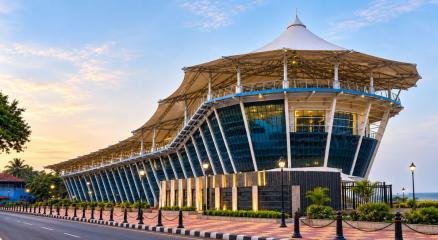
The Captain of Ports (CoP) Department, Government of Goa, has invited bids under a public-private partnership (PPP) model for the operation and maintenance of the Captain of Ports Terminal at Panaji, along with associated jetty facilities and the development of a new yacht docking station. The project, estimated at ₹27.04 crore, is aimed at strengthening Goa’s passenger and maritime infrastructure while creating a more integrated waterfront facility. Under the proposed PPP arrangement, the selected private operator will be responsible for operating and maintaining the newly developed Captain of Ports Terminal and six existing jetties located across Panaji, Old Goa and Betim. The project also envisages the integration of three additional floating jetties near Kala Academy, Mahaveer Garden and the Parshuram statue. According to the tender details, bids for the project can be submitted until October 23, 2026. A key component of the project is the proposed yacht docking station near Divja Circle, adjacent to the Santa Monica Tourism Jetty. The facility is planned as a floating concrete jetty with an associated mini-terminal building and yacht docking infrastructure. The proposed docking station will measure approximately 200 metres by six metres and is designed to accommodate at least 40 vessels, including three berths earmarked for government use. The private concessionaire will be permitted to generate revenues through passenger and user charges, as well as commercial activities at the terminal. For the yacht docking facility, the operator can charge up to ₹30,000 per vessel per month. Where Central Government financial assistance is utilised, the permitted monthly charge would be capped at ₹15,000 per vessel. The concession period is proposed at 30 years, with a possible extension of another 10 years. The model is expected to bring private-sector operational capabilities into the management of Goa’s maritime passenger infrastructure while supporting investment in allied waterfront facilities. The tender also provides an opportunity to develop commercial services around the terminal and associated jetties. Located along Dayanand Bandodkar Marg on the Mandovi River, the Captain of Ports Terminal has been developed as an integrated administrative, passenger and maritime services facility. The proposed PPP structure is intended to consolidate its operations while expanding the network of passenger and recreational maritime facilities around Panaji. The initiative comes as Goa continues to strengthen its maritime and tourism infrastructure. By combining terminal operations, existing and proposed jetties and yacht berthing facilities under a single concession, the project could improve coordination across passenger movement, vessel berthing and waterfront services. 𝐒𝐭𝐚𝐲 𝐓𝐮𝐧𝐞𝐝 𝐭𝐨 CARGOCONNECT 𝐟𝐨𝐫 𝐥𝐚𝐭𝐞𝐬𝐭 𝐮𝐩𝐝𝐚𝐭𝐞𝐬!

India is stepping up efforts to establish itself as a global hub for ship ownership, leasing and maritime finance, with GIFT City in Gujarat emerging as a key platform for developing an integrated maritime financial ecosystem. Union Minister for Ports, Shipping and Waterways Sarbananda Sonowal outlined the government’s ambition at the India Ship Leasing and Financing Summit held at GIFT City, Gandhinagar. Organised by the International Financial Services Centres Authority (IFSCA) in collaboration with the Ministry of Ports, Shipping and Waterways, the summit brought together shipowners, lessors, charterers, financiers, policymakers and other maritime stakeholders. Sonowal said the objective is to build a comprehensive ecosystem covering ship ownership, leasing, financing, insurance, brokering and allied services. “This gathering marks a significant milestone in our collective journey to position India, and particularly GIFT City, as a global maritime hub for a comprehensive maritime value chain ecosystem, encompassing ship leasing, owning, financing, insurance, brokering and other ancillary services,” Sonowal said. India’s ship-leasing ecosystem has already begun expanding. According to the Minister, 38 ship lessors are currently registered in the country, collectively leasing 43 vessels with total leasing capacity exceeding 2.99 million DWT. Of these, 24 vessels fly the Indian flag. Meanwhile, 41 domestic and international banks operating in the International Financial Services Centre (IFSC) have extended nearly USD 60.1 million in funding to ship-leasing entities. Sonowal also highlighted policy reforms designed to improve the competitiveness of Indian shipping. These include exemption from licensing requirements under the Coastal Shipping Act, 2025, for foreign vessels operating on charter and permission for GIFT IFSC-based shipping companies to own foreign-flag vessels. “More fundamentally, it marks a shift in how we count our fleet, from tonnage that flies our flag to tonnage that we own and control. PM Narendra Modi's dynamic leadership has carried GIFT City from thought to fruition, and it is now poised to be the launchpad for India's next wave of maritime growth” The government is also backing the maritime sector through substantial financial measures. The ₹25,000 crore Maritime Development Fund is expected to catalyse investments of up to ₹1.5 lakh crore by 2030, while the Shipbuilding Financial Assistance Scheme (SBFAS) 2.0 has a revised outlay of ₹24,736 crore, extended to 2036. These initiatives are aimed at strengthening domestic shipbuilding, vessel ownership and the wider maritime ecosystem. The initiatives align with Maritime India Vision 2030 and Maritime Amrit Kaal Vision 2047, which seek to expand India’s fleet, strengthen port capacity and coastal shipping, and position the country among the world’s top five shipbuilding nations. Sonowal also highlighted India’s growing role in ship recycling, with its share of global ship-recycling tonnage rising from 30.1% in 2024 to 35.4% in 2025. 𝐒𝐭𝐚𝐲 𝐓𝐮𝐧𝐞𝐝 𝐭𝐨 CARGOCONNECT 𝐟𝐨𝐫 𝐥𝐚𝐭𝐞𝐬𝐭 𝐮𝐩𝐝𝐚𝐭𝐞𝐬!

Chennai Port Authority has sought government approval for a ₹17,000 crore outer harbour project that will add 5 million TEUs of container capacity in two phases. The project is proposed to be developed through a hybrid public-private model, with marine works such as breakwater construction, dredging and reclamation planned under the Hybrid Annuity Mode (HAM) at an estimated cost of ₹7,000 crore. Container terminals will be developed through a DBFOT concession with private investment. The first phase is planned with an 18-metre draft, followed by a second phase with a 21-metre draft, enabling the facility to handle larger vessels and additional transhipment cargo. The proposal comes as Chennai’s existing container terminals face capacity constraints, while the port’s location within the city limits limits further expansion of current facilities. The outer harbour is expected to support gateway cargo from Tamil Nadu’s manufacturing and export sectors while strengthening Chennai’s role in east coast transhipment. Subject to approval, the project could be awarded by mid-to-late 2027, with construction expected to begin in 2028 and container operations targeted for 2033. The outer harbour is also expected to include berths supporting the requirements of the Indian Navy and Coast Guard. Follow CARGOCONNECT for more such updates
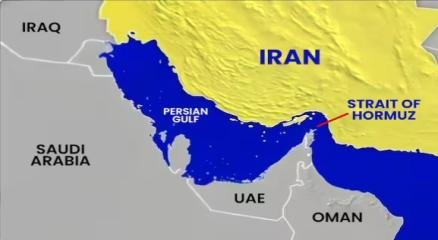
Iran is preparing to announce a new restricted maritime zone in the Gulf and a proposed international shipping corridor through the Strait of Hormuz, raising fresh concerns for global shipping, energy security and supply chains. The move comes amid heightened military tensions in the region and a sharp decline in vessel movements through the strategically vital waterway. Mohsen Rezaei, Secretary of Iran’s Supreme National Security Council, said the proposed restricted zone would begin from the point where the US blockade of Iran starts and extend into parts of the Gulf. Under the proposed arrangement, vessels entering the designated area could be placed on Iran’s sanctions list. Further details, including the exact boundaries and operating rules of the zone, are yet to be disclosed. At the same time, Tehran says it has agreed on maps for a new international maritime corridor running through Iranian and Omani waters. According to Rezaei, Iran would manage the proposed route, with the maps expected to be formally signed in the coming days. The initiative could introduce a new framework for vessel movements through the Strait of Hormuz, although its practical implementation remains unclear. The developments come as shipping activity through the Strait of Hormuz has fallen significantly. According to reports, an average of about 10 commodity vessels crossed the waterway each day over a recent 10-day period, marking the lowest level reported since May. Before the current disruption, the Strait carried roughly one-fifth of global oil supplies, underlining its importance to international energy and maritime trade. For India, the situation carries significant implications. The country imports nearly 90% of its crude oil requirements, with a substantial share sourced from Gulf producers and transported through the Strait of Hormuz. Any prolonged restriction, additional charges or uncertainty around vessel access could therefore increase freight, insurance and energy costs, while also affecting imports of LNG, LPG and petrochemical products. For global supply chains, the proposed restricted zone adds another layer of uncertainty to an already volatile maritime environment. Shipping lines, tanker operators, energy traders and cargo owners are likely to closely monitor the final route maps, sanctions framework and navigational arrangements before determining their operational strategies. 𝐒𝐭𝐚𝐲 𝐓𝐮𝐧𝐞𝐝 𝐭𝐨 CARGOCONNECT 𝐟𝐨𝐫 𝐥𝐚𝐭𝐞𝐬𝐭 𝐮𝐩𝐝𝐚𝐭𝐞𝐬!
India’s two largest container gateways, Mundra and Nhava Sheva, are facing mounting congestion as rising cargo volumes, truck driver shortages and rerouted shipments from the Middle East strain operations across the country’s logistics network. Shipping lines and logistics operators are reporting worsening turnaround times at both ports, with vessel delays averaging nearly two and a half days and some unscheduled ships waiting up to five days for berthing. The disruptions are slowing cargo movement, tightening yard space and forcing carriers to make last-minute operational changes. According to industry reports, a shortage of truck drivers has become a major bottleneck for container transfers between terminals and inland transport hubs. The issue has reduced the pace of cargo evacuation from ports, adding pressure on already crowded container yards. Terminal operators have intermittently restricted gate access to control container inflow, while export gate schedules continue to shift frequently. These changes are complicating truck planning and increasing uncertainty for exporters and freight forwarders. The congestion is being intensified by cargo diversions linked to disruptions in the Middle East, particularly around Gulf trade routes. Shipping lines have increasingly redirected transshipment cargo to Indian ports as alternatives to facilities in the Persian Gulf, sharply increasing container volumes in recent weeks. The pressure has begun affecting carrier schedules. Some shipping companies are rerouting vessels between terminals at short notice to avoid yard congestion. Danish shipping giant Maersk recently shifted several sailings from its regular terminal at Nhava Sheva to PSA Mumbai after facing space constraints and a growing container backlog. Industry stakeholders say these sudden terminal changes are creating operational and financial challenges for shippers, including higher handling costs and difficulties coordinating customs clearance and inland transportation. The latest disruption comes at a time when India has been positioning itself as a major global manufacturing and logistics hub. Over the past decade, the country has expanded port capacity, improved freight corridors and modernised customs processes to strengthen supply chain efficiency. However, the current congestion highlights the vulnerability of port infrastructure during periods of sudden trade realignment and geopolitical disruption. Logistics experts warn that prolonged delays could increase freight costs, extend delivery timelines and place additional pressure on exporters already dealing with volatile global shipping conditions. Follow CARGOCONNECT for more such updates.
The diversification process by Apple continues to progress as India becomes one of the centers for manufacturing operations. Based on an analysis by Smart Analytics Global (SAG), the percentage share of Indian manufacturing of iPhones has increased from 14% in 2024 to 23% in 2025 and further to 28% by 2026, whereas China’s share has decreased from 83% to 74% within the same timeframe. As Apple continues to lower its reliance on China, India is all set to emerge as the major assembly hub for 28 percent of all iPhones exported around the world by 2026, compared to just 23 percent in the prior year. This change is due to the company's overall strategy of spreading its manufacturing operations in order to mitigate potential tariff risks and geopolitical risks, in addition to creating a more flexible manufacturing network beyond China. Based on the estimates of Smart Analytics Global (SAG), China's share in global iPhone production dropped from 83% in 2024 to 74% in 2025, while India's share increased from 14% in 2024 to 23% in 2025. Estimates provided by another market research firm, Counterpoint Research, indicate that India's share in global iPhone manufacturing could increase to approximately 26% in 2026 from 23% in 2025. As per SAG, “India will account for the manufacture of 28 percent of iPhones shipped globally in 2026, rising from 23 percent in 2025. This growth will be fueled by the ongoing diversification of Apple outside China and capacity build-up at existing manufacturers in India like Tata Electronics,” said Abhilash Kumar, an analyst at Smart Analytics Global. According to Tarun Pathak, research director at Counterpoint Research, “Apple's manufacturing partners have substantially increased their manufacturing capacities and assembly lines in India. They have also diversified their product portfolio made in India.” He further stated that the increase in manufacturing capacity of Tata Electronics is another factor aiding the growth. Apple has managed to localize production substantially in India through manufacturers like Foxconn and Tata Electronics. The recent takeover of Wistron and Pegatron in India by the Tata Group represents a huge step forward in Apple’s localization efforts in India. At present, India is assembling a larger number of iPhones, even the latest versions, and has become an important source of exports, targeting countries like the US and European nations. Over the past five years, Apple has manufactured iPhones worth almost $70 billion in India using its PLI scheme, where around $51 billion, or almost 73% of all iPhones manufactured, were exported from India. Moreover, iPhones have become the most exported goods from India during the previous financial year. India has become the biggest beneficiary of Apple’s changing supply chain. From initially assembling iPhones on a smaller scale, it has grown to become a manufacturing cluster for iPhones through government incentives, increased manufacturing capabilities, and the growing presence of suppliers. Several of the most important suppliers and manufacturers for Apple are still highly entrenched within China, allowing the country to enjoy an unrivaled capacity and adaptability when it comes to managing mass-scale productions and product shifts. For more such news and updates, visit CARGOCONNECT.
Shadowfax is significantly expanding its quick commerce infrastructure, announcing plans to scale its dark store network from 15 facilities to 100 by FY27. The move underscores the company’s growing focus on hyperlocal deliveries, same-day fulfilment, and direct-to-consumer (D2C) logistics as competition intensifies in India’s fast-evolving quick commerce ecosystem. The Bengaluru-based company plans to add 85 new dark stores over the next fiscal year, targeting metro cities with delivery radiuses of approximately seven kilometres and fulfilment timelines of around 30 minutes. The expansion is expected to support rising demand from vertical quick commerce platforms and D2C brands that increasingly rely on third-party logistics (3PL) partners for rapid deliveries. According to company executives, vertical marketplaces are emerging as a profitable segment because of their dependence on outsourced logistics infrastructure rather than captive fulfilment networks. Shadowfax believes this trend creates a strong opportunity for scalable 3PL-led quick commerce models. The dark store expansion will account for nearly 10% of Shadowfax’s planned capital expenditure of ₹180–190 crore in FY27. The company is simultaneously strengthening its automation and artificial intelligence capabilities to improve operational efficiency. AI-led demand forecasting, automated slotting, and smarter sorting centre operations are expected to reduce overhead costs while accelerating breakeven timelines for new facilities. Shadowfax’s aggressive expansion comes on the back of strong financial performance. The company reported a consolidated net profit of ₹55.8 crore in Q4 FY26, compared to a net loss of ₹9.9 crore during the same period last year. Revenue from operations surged 73.6% year-on-year to ₹1,237 crore, reflecting growing order volumes and increased adoption of quick commerce delivery services. Founded in 2015, Shadowfax has evolved into one of India’s largest logistics and last-mile delivery networks, serving over 2,500 cities and more than 15,000 pincodes. The company currently handles millions of shipments daily through a technology-driven delivery ecosystem that supports e-commerce, grocery, hyperlocal, and D2C brands. Industry analysts believe the dark store expansion reflects a broader shift within India’s logistics sector, where speed, proximity-based fulfilment, and automated operations are becoming central to supply chain competitiveness. As quick commerce adoption accelerates beyond groceries into categories such as fashion, electronics, and personal care, logistics providers like Shadowfax are positioning themselves as critical enablers of ultra-fast retail fulfilment. 𝐒𝐭𝐚𝐲 𝐓𝐮𝐧𝐞𝐝 𝐭𝐨 https://cargoconnect.co.in/ 𝐟𝐨𝐫 𝐥𝐚𝐭𝐞𝐬𝐭 𝐮𝐩𝐝𝐚𝐭𝐞𝐬!
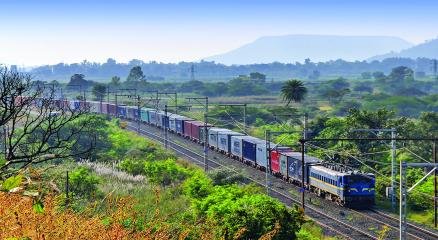
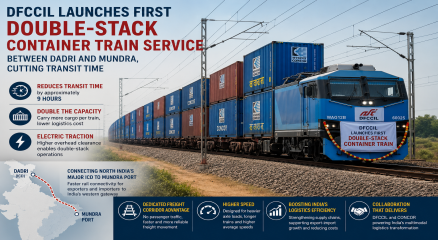
India’s Dedicated Freight Corridors (DFCs) are rapidly reshaping the country’s logistics landscape, with the Western Dedicated Freight Corridor (WDFC) between Dadri and Jawaharlal Nehru Port Authority (JNPA) emerging as a game-changing infrastructure project for supply chains and multimodal freight movement. Designed exclusively for cargo operations, the corridor is significantly reducing transit times, improving reliability, and easing congestion on conventional rail routes. Stretching nearly 1,500 km from Dadri in Uttar Pradesh to JNPA near Mumbai, the corridor forms the backbone of India’s western logistics artery, connecting manufacturing centres, inland container depots, industrial clusters, and ports. With dedicated tracks for freight trains, the network allows uninterrupted cargo movement at higher average speeds, eliminating delays caused by mixed passenger and freight operations. One of the biggest outcomes has been a sharp reduction in transit time. Freight movement between Dadri and JNPA that traditionally took close to 72 hours on congested rail routes is now being completed in nearly half the time, improving turnaround efficiency for exporters, importers, and logistics operators. Industry stakeholders believe the reduction in transit duration will strengthen India’s competitiveness in global trade and support the government’s target of lowering logistics costs as a percentage of GDP. The DFC network has also enabled the operation of longer and heavier freight trains, including double-stack container services on electrified routes. This has increased carrying capacity while lowering per-unit transportation costs. According to sector estimates, rail freight on dedicated corridors is considerably more energy-efficient and environmentally sustainable than road transport, aligning with India’s broader decarbonisation goals. Beyond operational efficiency, the corridors are catalysing the growth of integrated logistics ecosystems. Regions such as Dadri, Greater Noida, and Jewar are witnessing accelerated development of multimodal logistics parks, warehousing zones, and industrial hubs due to their strategic connectivity with both the Eastern and Western DFCs. The emerging “rail-road-air” logistics triangle around the National Capital Region is expected to attract substantial investments in manufacturing and distribution infrastructure. The Dedicated Freight Corridor Corporation of India (DFCCIL) has reported rising freight train volumes on the operational stretches, indicating growing industry adoption. The completion of key links on the western corridor is expected to further enhance throughput and reduce dependency on road transport for long-haul cargo. Analysts say the dedicated rail network could become central to India’s ambition of creating faster, greener, and more resilient supply chains. As India continues investing in additional freight corridors across the country, the success of the Dadri-JNPA route demonstrates how infrastructure modernisation can directly influence trade efficiency, logistics performance, and industrial growth. 𝐒𝐭𝐚𝐲 𝐓𝐮𝐧𝐞𝐝 𝐭𝐨 https://cargoconnect.co.in/ 𝐟𝐨𝐫 𝐥𝐚𝐭𝐞𝐬𝐭 𝐮𝐩𝐝𝐚𝐭𝐞𝐬
In a strategic warehousing move, the South Eastern Coalfields Limited (SECL), the second largest coal-producing subsidiary of Coal India Limited, has signed a Memorandum of Understanding (MoU) with Central Warehousing Corporation (CWC) for collaboration in coal logistics, railway rake provisioning under GPWIS and similar schemes, and integrated transportation services. Guided by the Union Ministry of Coal, SECL is rapidly working to improve India’s energy security and coal logistics infrastructure. The company is taking steps to boost coal evacuation efficiency and ensure a steady fuel supply to essential sectors. This partnership with CWC is a significant move in that direction. The goal of the partnership with CWC is to strengthen SECL’s coal evacuation capabilities by providing reliable and efficient rail logistics solutions to meet the rising demand from the power, steel, cement, and other sectors. The MoU outlines collaboration in various areas, including dedicated railway rake operations, integrated coal transportation solutions, multimodal logistics, first-mile and last-mile connectivity, and the deployment of digital systems for logistics monitoring and operational efficiency. Under the agreed framework, both organizations will explore provisioning and operation of GPWIS and equivalent racks, integrated rail logistics services, and long-term transportation solutions aimed at improving dispatch efficiency and reducing logistical obstacles. The MoU was signed in the presence of Harish Duhan, Chairman-cum-Managing Director of SECL, and Santosh Sinha, Managing Director of CWC. Functional Directors and senior officials from SECL, as well as representatives from CWC, attended the signing ceremony. SECL plays a vital role in meeting the country's growing coal demand. In the current financial year 2026-27, Coal India Limited has already surpassed the 100 million tonne production mark, with SECL contributing more than 26.8 million tonnes. Central Warehousing Corporation (CWC), a Navaratna Central Public Sector Enterprise under the Government of India, is a leader in integrated logistics and warehousing services. It has extensive experience in rail-linked cargo movement and multimodal transportation solutions. For more such news and updates, visit CARGOCONNECT.