
Loading...

The International Federation of Freight Forwarders Associations (FIATA) has called for a formal review of proposed changes to the International Air Transport Association’s (IATA) Direct Air Waybill (DAWB) framework, warning that the revisions could significantly alter liability structures and disrupt long-standing commercial practices in the global air cargo industry.
The debate centres on amendments being introduced under IATA’s Modernisation of the Global Air Cargo Programme. According to FIATA, the proposed framework changes may shift operational and legal responsibilities disproportionately onto freight forwarders while favouring larger market participants. The organisation argues that such changes could create uncertainty across the air cargo ecosystem at a time when supply chains are already facing geopolitical disruptions, cost pressures, and growing compliance demands.
FIATA stated that the current proposals require broader consultation and deeper analysis before implementation. The association emphasised that freight forwarders, airlines, insurers, and regulators must collectively evaluate the legal, operational, and insurance implications of the revised Direct Air Waybill structure.
The Direct Air Waybill is a critical document used in international air freight shipments where cargo moves directly between the shipper and airline without a traditional house air waybill issued by a freight forwarder. Industry experts note that any changes to the framework could affect liability allocation, cargo claims processes, and contractual obligations across the supply chain.
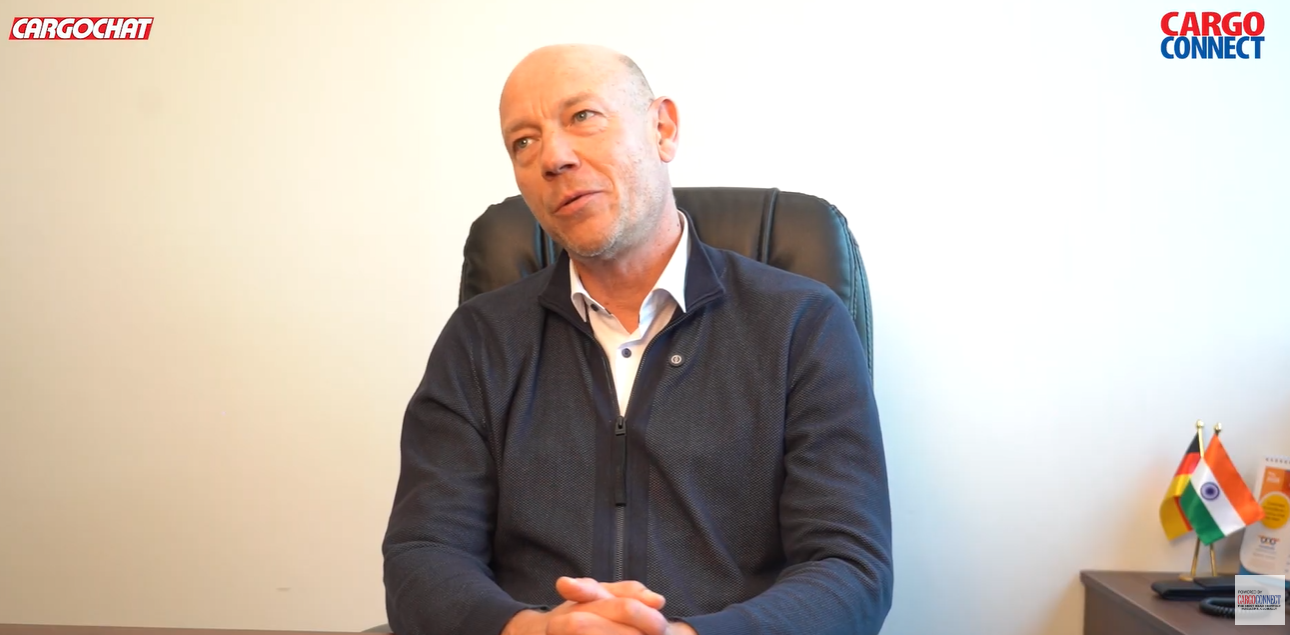
FIATA Director General Dr Stéphane Graber highlighted the importance of ensuring that industry modernisation efforts remain balanced and collaborative. The organisation has consistently supported digitalisation and efficiency improvements in air cargo but maintains that reforms should reflect real-world market practices and protect all stakeholders equally.
Industry concerns intensified following discussions at recent air cargo forums, where freight forwarders expressed apprehension over the pace and scope of the proposed revisions. Several stakeholders fear that the updated framework could increase legal exposure for intermediaries while reducing operational flexibility for smaller logistics providers.
According to FIATA, modernisation initiatives should enhance trust, interoperability, and resilience across the air cargo sector rather than create additional friction. The organisation also cautioned that introducing major changes without comprehensive legal and technical assessment could lead to increased disputes and market instability.
The issue arrives at a pivotal moment for the global air cargo industry, which is accelerating digital transformation initiatives, including electronic documentation and data-sharing systems. As airlines and logistics providers push for greater efficiency, industry bodies are under pressure to ensure that regulatory and procedural reforms do not undermine commercial balance.
FIATA has urged IATA and industry stakeholders to engage in further dialogue before finalising the Direct AWB framework changes. The association reiterated that collaborative governance and transparent consultation will be essential to maintaining confidence and stability in global air freight operations.
𝐒𝐭𝐚𝐲 𝐓𝐮𝐧𝐞𝐝 𝐭𝐨 https://cargoconnect.co.in/ 𝐟𝐨𝐫 𝐥𝐚𝐭𝐞𝐬𝐭 𝐮𝐩𝐝𝐚𝐭𝐞𝐬!

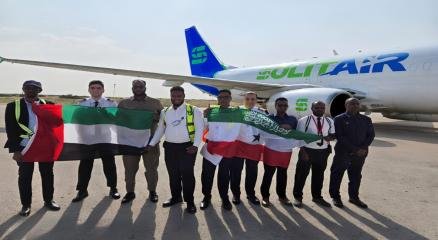
Dubai-based airline flydubai is expanding its cargo business with the launch of dedicated freighter operations, adding three Boeing 737-800 freighters under a wet-lease agreement with SolitAir. The new operation is scheduled to commence on 1 October 2026 from Al Maktoum International Airport (DWC), marking the first phase of the carrier’s dedicated cargo fleet expansion. The three freighters will provide an additional 23,000 kg of payload capacity per flight, complementing cargo carried in the belly holds of flydubai’s existing fleet of 98 Boeing 737 passenger aircraft. The dedicated main-deck capacity is being introduced ahead of the fourth-quarter peak season, while the airline plans to assess passenger-to-freighter conversions from 2029 onwards. Further cargo capacity is also expected as flydubai takes delivery of its planned 30 Boeing 787 Dreamliners. Ghaith Al Ghaith, Chief Executive Officer at flydubai, said: “Dubai has established itself as one of the world's most connected hubs for E-commerce, trade and logistics, and its ambitions under the Dubai Economic Agenda D33 continue to create new opportunities for businesses to reach global markets. The launch of dedicated freighter operations marks an important step in flydubai’s evolution and reflects our commitment to supporting Dubai's vision through enhanced trade connectivity and logistics capabilities. By building on the strength of our network and expanding our cargo offering and list of codeshare and interline partners, we are creating new pathways for businesses to move goods more efficiently, access new markets and contribute to economic growth across the region and beyond.” Based at DWC, flydubai Cargo will benefit from dedicated airside infrastructure and multimodal connectivity through Dubai South. The freighter operation will support scheduled freight services and point-to-point charter operations across a network of more than 125 destinations spanning Africa, Central Asia, the Caucasus, Europe, the GCC, the Middle East, South Asia and Southeast Asia. The dedicated aircraft will also enable specialised handling for pharmaceuticals, perishables, live animals, dangerous goods, express shipments and aerospace components. Initial flights are expected to focus on high-demand regional sectors, with frequencies increasing as capacity develops. The expansion is intended to position flydubai Cargo as a broader logistics provider offering both scheduled freight and ad-hoc charter solutions. 𝐒𝐭𝐚𝐲 𝐓𝐮𝐧𝐞𝐝 𝐭𝐨 CARGOCONNECT 𝐟𝐨𝐫 𝐥𝐚𝐭𝐞𝐬𝐭 𝐮𝐩𝐝𝐚𝐭𝐞𝐬!


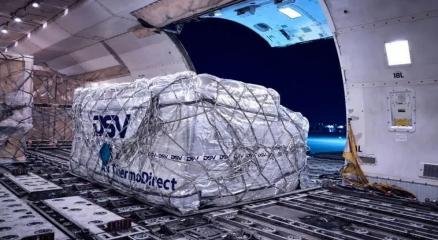
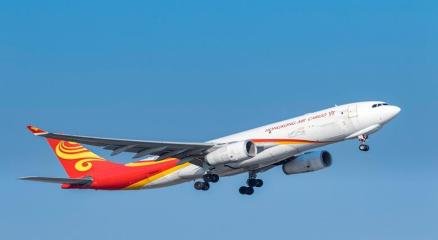
DSV is expanding its Air ThermoDirect temperature-controlled air freight network with a new direct connection between Luxembourg Airport and Shanghai Pudong International Airport (PVG), strengthening its capabilities for pharmaceutical and healthcare logistics. The logistics provider also plans to introduce an additional direct route between Indianapolis International Airport and Shanghai, further extending its Europe-US-Asia cold chain network. The new Luxembourg-Shanghai service will operate with multiple departures using dedicated freighter aircraft. According to DSV, dedicated capacity gives the company greater control over scheduling, routing and cargo handling, helping improve reliability for temperature-sensitive healthcare shipments. The expansion comes amid growing demand for secure, predictable and efficient pharmaceutical logistics worldwide. Shanghai Pudong International Airport is a key gateway for temperature-controlled pharmaceutical cargo and provides an important link between global manufacturers and healthcare markets across Asia. By expanding its operations at PVG, DSV aims to support both inbound and outbound pharmaceutical flows while maintaining consistent temperature-controlled handling throughout the transportation process. “DSV is helping customers improve supply chain efficiency, reduce operating costs, and ensure the integrity of critical healthcare products across one of the world's fastest-growing regions. Through our sustainable reusable thermal packaging program, we are reducing packaging waste and improving the environmental performance of cold chain logistics. This investment represents another important step in building a more resilient, efficient, healthcare supply chain across Asia,” says Kenneth Kallström, EVP, Global Enterprise Vertical Head, Healthcare, DSV. The Shanghai operation is supported by DSV’s partnership with Eastern Air Logistics (EAL), whose specialised ground-handling facilities will support Air ThermoDirect activities in Shanghai. China Eastern Logistics Cold Chain Ltd. will also provide dedicated cold-chain expertise and infrastructure as a ground-handling partner. A key element of the service is DSV’s use of modular thermal packaging solutions. The approach reduces reliance on active containers and conventional passive packaging, providing a more flexible, scalable and cost-efficient model for temperature-controlled air freight while maintaining pharmaceutical handling requirements. The latest expansion follows DSV’s launch earlier this year of “Indy Wings”, a direct air freight connection between Indianapolis and Luxembourg. With the addition of Shanghai connections, Air ThermoDirect is positioned to provide stronger connectivity between major pharmaceutical production, distribution and consumption markets across Europe, North America and Asia. 𝐒𝐭𝐚𝐲 𝐓𝐮𝐧𝐞𝐝 𝐭𝐨 CARGOCONNECT 𝐟𝐨𝐫 𝐥𝐚𝐭𝐞𝐬𝐭 𝐮𝐩𝐝𝐚𝐭𝐞𝐬!



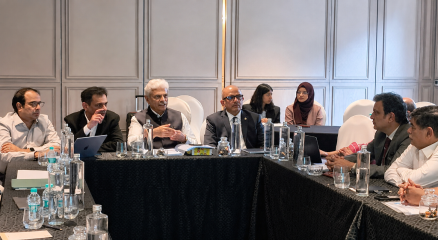
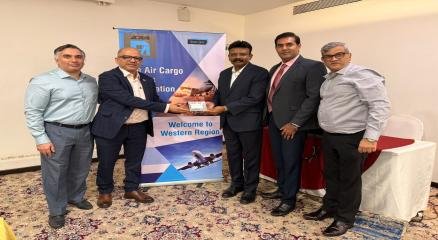
The Air Cargo Agents Association of India (ACAAI) held its Annual General Meeting at Aurika Hotel, Andheri East, Mumbai, followed by a meeting of its Managing Committee, bringing key issues shaping India’s air cargo and freight forwarding industry into focus. The AGM reviewed ACAAI’s activities and initiatives over the past year, with members deliberating on trade facilitation, regulatory developments, operational challenges, infrastructure requirements and the evolving needs of the air cargo sector. Discussions also centred on the Association’s priorities for the coming year and its continued engagement with government authorities, Customs, airlines, airport operators, custodians and other industry stakeholders. The subsequent Managing Committee meeting saw the constitution of the office-bearers for the ensuing term, with the existing leadership team continuing in office. Rajen Bhatia was elected as Honorary Secretary of ACAAI, joining President Samir J. Shah, Vice President Vikram Kumar and Honorary Treasurer Dinesh Krishnan in the Association’s leadership team. The continuity in leadership underscores ACAAI’s focus on stability and sustained industry engagement as the air cargo ecosystem navigates evolving regulatory, operational and infrastructure requirements. Representing India’s air cargo agents and freight forwarding community since 1970, ACAAI remains focused on trade facilitation, policy advocacy, professional development and addressing operational challenges affecting the sector. Looking ahead, the Association has reiterated its commitment to strengthening collaboration with Regional Councils and the wider membership, while working collectively with stakeholders to enhance the efficiency, competitiveness and ease of doing business across India’s air cargo and logistics ecosystem.