
Loading...
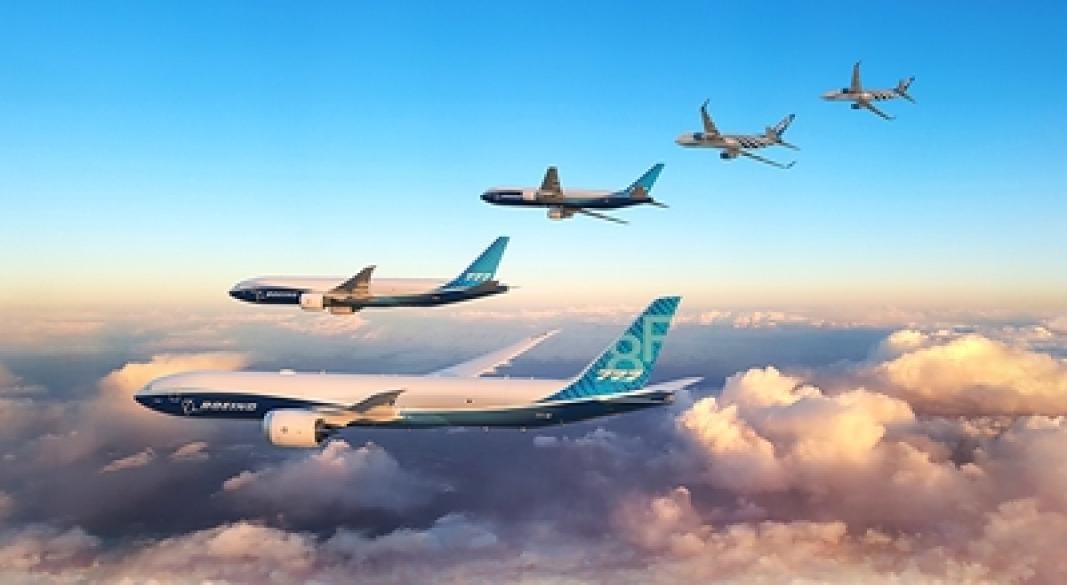
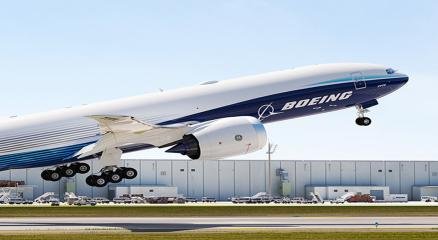
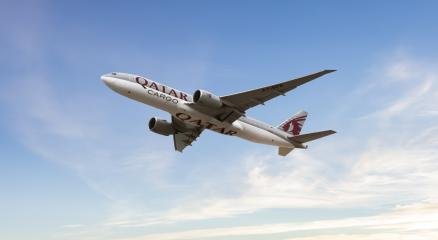
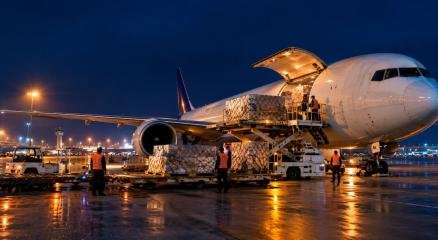
Global air cargo traffic is projected to double over the next two decades, prompting demand for nearly 3,000 new and converted freighters as e-commerce, supply chain diversification and high-tech shipments reshape the industry.
The global freighter fleet is expected to expand to 4,010 aircraft by 2045, up 67% from 2,395 aircraft in 2025, according to Boeing’s 2026 World Air Cargo Forecast. The outlook, released on October 28 at the International Air Cargo Association’s Air Cargo Forum in Miami, highlights the growing importance of air freight in supporting international trade and increasingly time-sensitive supply chains.
Boeing projects global air cargo traffic to grow at an average annual rate of 3.5% over the next 20 years, outpacing long-term economic and trade growth. The expansion is expected to be driven by rising e-commerce volumes, direct-to-consumer business models, advanced manufacturing and shipments associated with artificial intelligence (AI) infrastructure.
To accommodate rising demand and replace ageing aircraft, airlines will require an estimated 2,930 new and converted freighters over the forecast period. Boeing expects approximately 55% of these deliveries to provide additional capacity, while the remaining 45% will replace older, less-efficient aircraft.
Passenger-to-freighter conversions are projected to account for around two-thirds of deliveries, with the remainder comprising newly manufactured freighters. This mix highlights the continuing role of converted aircraft in expanding cargo capacity while enabling operators to manage fleet renewal requirements.
Dedicated freighters are expected to continue carrying more than half of global air cargo traffic in the long term, underlining their importance for shipments requiring dependable capacity, specialised handling and faster transit times.
Asia to Drive Air Cargo Growth
Trade flows involving Asia are forecast to account for approximately 60% of the global air cargo market, reinforcing the region’s importance in international logistics networks. Businesses are diversifying sourcing and manufacturing locations, while geopolitical disruptions and changing trade routes are prompting carriers to adjust their networks.
The demand outlook also reflects the growing movement of high-value technology products. Boeing cited industry data indicating that more than 70% of AI-related goods were transported by air in 2025, demonstrating the mode’s importance for transporting advanced equipment and other time-critical shipments.
Global air cargo traffic reached a record annual level in 2025, increasing by nearly 5% compared with 2024 despite trade volatility and geopolitical uncertainty.
Express Logistics to Gain Ground
The forecast also points to continued growth in express and time-definite delivery services. Boeing expects integrators’ share of global air cargo traffic to approach 25% by 2045 as demand rises for coordinated transport networks that combine air freight with collection, sorting and final delivery.
Although, air cargo represents less than 1% of global trade by volume, it accounts for approximately one-third of international trade value, reflecting its significance for high-value, perishable and time-sensitive goods.
The projections underline the need for airlines, freight forwarders and logistics providers to prepare for expanding volumes, changing trade lanes and evolving customer expectations. Fleet modernisation, capacity planning and network flexibility will remain central to meeting future demand while maintaining the speed and reliability that make air cargo critical to global supply chains.
𝐒𝐭𝐚𝐲 𝐓𝐮𝐧𝐞𝐝 𝐭𝐨 CARGOCONNECT 𝐟𝐨𝐫 𝐥𝐚𝐭𝐞𝐬𝐭 𝐮𝐩𝐝𝐚𝐭𝐞𝐬!

Global air cargo traffic is projected to double over the next two decades, prompting demand for nearly 3,000 new and converted freighters as e-commerce, supply chain diversification and high-tech shipments reshape the industry. The global freighter fleet is expected to expand to 4,010 aircraft by 2045, up 67% from 2,395 aircraft in 2025, according to Boeing’s 2026 World Air Cargo Forecast. The outlook, released on October 28 at the International Air Cargo Association’s Air Cargo Forum in Miami, highlights the growing importance of air freight in supporting international trade and increasingly time-sensitive supply chains. Boeing projects global air cargo traffic to grow at an average annual rate of 3.5% over the next 20 years, outpacing long-term economic and trade growth. The expansion is expected to be driven by rising e-commerce volumes, direct-to-consumer business models, advanced manufacturing and shipments associated with artificial intelligence (AI) infrastructure. To accommodate rising demand and replace ageing aircraft, airlines will require an estimated 2,930 new and converted freighters over the forecast period. Boeing expects approximately 55% of these deliveries to provide additional capacity, while the remaining 45% will replace older, less-efficient aircraft. Passenger-to-freighter conversions are projected to account for around two-thirds of deliveries, with the remainder comprising newly manufactured freighters. This mix highlights the continuing role of converted aircraft in expanding cargo capacity while enabling operators to manage fleet renewal requirements. Dedicated freighters are expected to continue carrying more than half of global air cargo traffic in the long term, underlining their importance for shipments requiring dependable capacity, specialised handling and faster transit times. Asia to Drive Air Cargo Growth Trade flows involving Asia are forecast to account for approximately 60% of the global air cargo market, reinforcing the region’s importance in international logistics networks. Businesses are diversifying sourcing and manufacturing locations, while geopolitical disruptions and changing trade routes are prompting carriers to adjust their networks. The demand outlook also reflects the growing movement of high-value technology products. Boeing cited industry data indicating that more than 70% of AI-related goods were transported by air in 2025, demonstrating the mode’s importance for transporting advanced equipment and other time-critical shipments. Global air cargo traffic reached a record annual level in 2025, increasing by nearly 5% compared with 2024 despite trade volatility and geopolitical uncertainty. Express Logistics to Gain Ground The forecast also points to continued growth in express and time-definite delivery services. Boeing expects integrators’ share of global air cargo traffic to approach 25% by 2045 as demand rises for coordinated transport networks that combine air freight with collection, sorting and final delivery. Although, air cargo represents less than 1% of global trade by volume, it accounts for approximately one-third of international trade value, reflecting its significance for high-value, perishable and time-sensitive goods. The projections underline the need for airlines, freight forwarders and logistics providers to prepare for expanding volumes, changing trade lanes and evolving customer expectations. Fleet modernisation, capacity planning and network flexibility will remain central to meeting future demand while maintaining the speed and reliability that make air cargo critical to global supply chains. 𝐒𝐭𝐚𝐲 𝐓𝐮𝐧𝐞𝐝 𝐭𝐨 CARGOCONNECT 𝐟𝐨𝐫 𝐥𝐚𝐭𝐞𝐬𝐭 𝐮𝐩𝐝𝐚𝐭𝐞𝐬!



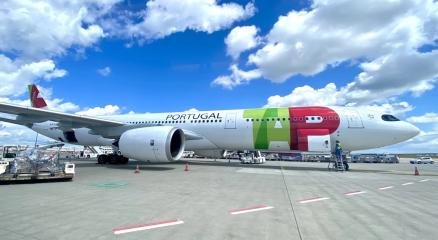
TAP Air Portugal is set to introduce the first-ever nonstop passenger service between Orlando, Florida, and Lisbon, Portugal, from October 29, 2026, creating a new air cargo connection between central Florida and a key European gateway. ECS Group subsidiary America Cargo GSA has already begun marketing cargo capacity on the route, with between 45 and 60 tonnes of weekly uplift available to US freight forwarders. The service will operate three times a week, on Mondays, Thursdays and Saturdays, using an Airbus A330. The new connection is expected to offer a faster alternative to existing two-leg routings, particularly for time-sensitive and high-value shipments moving between the US and Europe. Jean Ceccaldi, Chief Executive Officer of ECS Group, highlighted Orlando’s concentration of aerospace, technology and industrial manufacturers, alongside Lisbon’s position as a European gateway and a connecting point for South America. He identified aerospace components, electronics, medical technology, industrial machinery, seafood and vegetables among the cargo segments that could benefit from the service. According to Ceccaldi, America Cargo GSA is working closely with major freight forwarders and has received strong initial interest in the new routing. Lisbon to Strengthen Connections across Europe and Brazil The new service also supports TAP Air Cargo’s strategy to expand its presence in the North American market and strengthen connectivity between North America, Europe and Brazil. Rúben da Silva Jorge, Head of Sales North America at TAP Air Cargo, said customer feedback had been encouraging, with the airline looking to develop Orlando as both a local cargo market and a gateway within its wider network. He added that the airline would work with America Cargo GSA to serve freight forwarding customers. Under the published schedule, outbound flight TP267 will depart Lisbon at 14:20 and arrive in Orlando at 20:10, with a stated journey time of approximately nine hours and 50 minutes. The return flight, TP268, will leave Orlando at 21:40 and arrive in Lisbon at 10:30 the following morning, with a flight time of around seven hours and 50 minutes. From Lisbon, shipments will have onward connection opportunities to 38 European destinations, as well as TAP Air Portugal’s daily flights to Rio de Janeiro, Brazil. America Cargo GSA to Drive Cargo Sales America Cargo GSA and TAP Air Portugal have worked together in the US market for five years. The GSA promotes TAP Air Cargo’s services and sells cargo capacity through its established US sales and distribution network, while also representing the airline at major industry events. The launch comes as the air cargo industry gathers for the TIACA Air Cargo Forum in Miami from October 26–29, 2026, where ECS Group is inviting interested stakeholders to explore the opportunities presented by the new Orlando–Lisbon connection. With direct connectivity, scheduled weekly capacity and onward access to European and Brazilian markets, the route adds a new option for freight forwarders handling specialised, high-value and time-sensitive cargo between central Florida and international markets.

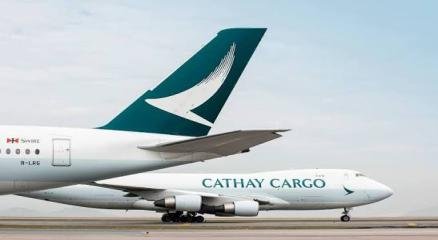
Cathay Cargo recorded a 14.2% year-on-year increase in cargo tonnage in September 2026, transporting 154,041 tonnes of freight as resilient demand from mainland China and Southeast Asia supported its performance. The Hong Kong-based carrier’s latest traffic figures indicate continued momentum in air freight ahead of the traditional year-end peak season. According to the Cathay Group’s September traffic report, available freight tonne kilometres (AFTKs), a measure of cargo capacity, increased by 5.3% year on year to approximately 1.344 billion. Revenue freight tonne kilometres (RFTKs), which measure freight carried over distance, rose by 8.6% to approximately 792 million. The cargo load factor improved by 1.8 percentage points to 58.9%, reflecting growth in freight traffic relative to available capacity. Cathay Cargo also operated 1,367 freighter flight sectors during the month, an increase of 4.8% compared with September 2025. For the January-September 2026 period, Cathay Cargo handled 1.324 million tonnes of freight, representing an 8.9% increase over the corresponding period last year. Available freight capacity grew by 3.3%, while revenue freight tonne kilometres increased by 4.7%. The cumulative cargo load factor reached 58.9%, up 0.8 percentage points year on year. The figures highlight sustained cargo demand, with tonnage growth outpacing the expansion in available freight capacity during both September and the first nine months of the year. Cathay’s Chief Customer and Commercial Officer, Lavinia Lau, said demand remained resilient across mainland China and Southeast Asia. The carrier’s specialist cargo solutions also contributed to performance, with Cathay Priority maintaining momentum through time-critical shipments from Southeast Asia. Meanwhile, continued semiconductor flows supported demand for Cathay Expert, its specialised cargo offering. Cathay expects cargo demand to strengthen further as the industry approaches the traditional year-end peak season. The outlook is supported by anticipated market demand during the final quarter, when seasonal shipping requirements can increase pressure on air freight capacity and network operations. The latest performance reinforces the importance of Hong Kong as an international air cargo hub, connecting manufacturing and export markets across Asia with global destinations. For freight forwarders and shippers, sustained demand for semiconductor and time-sensitive shipments will make reliable capacity, specialised handling and predictable transit times important considerations in the coming months. 𝐒𝐭𝐚𝐲 𝐓𝐮𝐧𝐞𝐝 𝐭𝐨 CARGOCONNECT 𝐟𝐨𝐫 𝐥𝐚𝐭𝐞𝐬𝐭 𝐮𝐩𝐝𝐚𝐭𝐞𝐬!