
Loading...
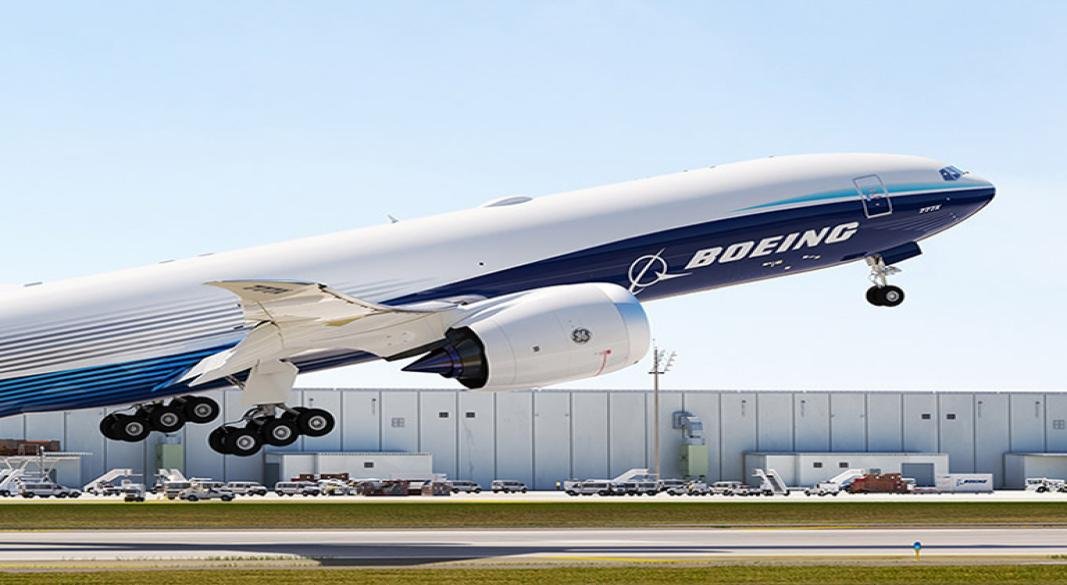
Boeing’s 777 Freighter (777F) has become the most widely operated dedicated freighter aircraft globally, overtaking the combined in-service fleet of Boeing 747 freighter variants, according to reports. The milestone reinforces the aircraft’s position in long-haul air cargo operations, where airlines require high payload capacity, extended range and operational efficiency.
More than 330 Boeing 777F aircraft are now in service worldwide. Boeing’s reported figures indicate that the fleet accounts for approximately 40% of global freighter capacity and transports more air cargo annually than any other freighter type. Its growing presence reflects the importance of large widebody aircraft in connecting major manufacturing centres, distribution hubs and consumer markets across continents.
Strong performance on long-haul routes
The 777F’s operational utilisation highlights its role in international freight networks. During 2025, the fleet recorded approximately 6,250 flight hours, averaging more than 17 hours of operation per aircraft per day. Boeing’s figures also indicate that the aircraft accounted for around 80% of freighter flights covering distances exceeding 6,000 nautical miles. The company estimates that goods worth approximately US$4 trillion were transported aboard 777F aircraft during the year.
The aircraft’s capabilities support direct, long-distance cargo services with fewer technical stops. Boeing lists the 777F’s maximum structural payload at 107 tonnes and its range at up to 5,000 nautical miles with a full payload of that capacity. These characteristics make it suitable for express shipments, e-commerce consignments, industrial goods and other time-sensitive international freight.
Production outlook and next-generation transition
The aircraft’s market position is also supported by continued demand for large freighters. In September 2026, the US Federal Aviation Administration granted Boeing an exemption allowing up to 35 additional 777F aircraft to receive certification beyond the emissions-rule deadline, providing a bridge towards the next-generation 777-8 Freighter.
Boeing’s 777-8F is designed to carry up to 118 tonnes of structural payload, with a range of 5,000 nautical miles at a 110-tonne payload. As global trade networks evolve and demand for long-haul air freight remains significant, the 777F’s extensive operating base underlines its importance to airlines, freight forwarders and international supply chains.
𝐒𝐭𝐚𝐲 𝐓𝐮𝐧𝐞𝐝 𝐭𝐨 CARGOCONNECT 𝐟𝐨𝐫 𝐥𝐚𝐭𝐞𝐬𝐭 𝐮𝐩𝐝𝐚𝐭𝐞𝐬!

Cathay Cargo recorded a 14.2% year-on-year increase in cargo tonnage in September 2026, transporting 154,041 tonnes of freight as resilient demand from mainland China and Southeast Asia supported its performance. The Hong Kong-based carrier’s latest traffic figures indicate continued momentum in air freight ahead of the traditional year-end peak season. According to the Cathay Group’s September traffic report, available freight tonne kilometres (AFTKs), a measure of cargo capacity, increased by 5.3% year on year to approximately 1.344 billion. Revenue freight tonne kilometres (RFTKs), which measure freight carried over distance, rose by 8.6% to approximately 792 million. The cargo load factor improved by 1.8 percentage points to 58.9%, reflecting growth in freight traffic relative to available capacity. Cathay Cargo also operated 1,367 freighter flight sectors during the month, an increase of 4.8% compared with September 2025. For the January-September 2026 period, Cathay Cargo handled 1.324 million tonnes of freight, representing an 8.9% increase over the corresponding period last year. Available freight capacity grew by 3.3%, while revenue freight tonne kilometres increased by 4.7%. The cumulative cargo load factor reached 58.9%, up 0.8 percentage points year on year. The figures highlight sustained cargo demand, with tonnage growth outpacing the expansion in available freight capacity during both September and the first nine months of the year. Cathay’s Chief Customer and Commercial Officer, Lavinia Lau, said demand remained resilient across mainland China and Southeast Asia. The carrier’s specialist cargo solutions also contributed to performance, with Cathay Priority maintaining momentum through time-critical shipments from Southeast Asia. Meanwhile, continued semiconductor flows supported demand for Cathay Expert, its specialised cargo offering. Cathay expects cargo demand to strengthen further as the industry approaches the traditional year-end peak season. The outlook is supported by anticipated market demand during the final quarter, when seasonal shipping requirements can increase pressure on air freight capacity and network operations. The latest performance reinforces the importance of Hong Kong as an international air cargo hub, connecting manufacturing and export markets across Asia with global destinations. For freight forwarders and shippers, sustained demand for semiconductor and time-sensitive shipments will make reliable capacity, specialised handling and predictable transit times important considerations in the coming months. 𝐒𝐭𝐚𝐲 𝐓𝐮𝐧𝐞𝐝 𝐭𝐨 CARGOCONNECT 𝐟𝐨𝐫 𝐥𝐚𝐭𝐞𝐬𝐭 𝐮𝐩𝐝𝐚𝐭𝐞𝐬!



IAG Cargo, the cargo division of International Airlines Group (IAG), is strengthening its global air freight network for the 2026/27 winter season, introducing a new direct London Gatwick–Colombo service and increasing frequencies on key routes to Bangkok, Delhi and several other international destinations. Running from October 2026 through March 2027, the winter schedule is designed to expand cargo capacity and improve connectivity across major trade lanes linking Europe, Asia, North America and Latin America, giving freight forwarders greater flexibility in planning shipments. The new London Gatwick–Colombo service, launching on 23 October, will operate three times weekly. It is expected to support Sri Lankan exports including garments, perishables and rubber products, alongside tyres and automotive components moving through the international supply chain. The route will also provide onward connections through IAG Cargo’s wider network, including destinations across Europe and the Americas. Capacity is also increasing on established Asian routes. London Gatwick–Bangkok frequencies will double from three to six flights per week, while London Heathrow–Delhi services have increased from 14 to 21 flights weekly, effective September 2026. These additions strengthen connections between key Asian markets and the UK, supporting a wider range of cargo movements. Beyond Asia, IAG Cargo is expanding capacity across several other trade lanes. London Heathrow–Cape Town services will rise from seven to 19 flights per week, while London Heathrow–Bridgetown frequencies will double from seven to 14. Services between London Heathrow and Malé will increase from three to seven weekly flights. In Latin America and the Caribbean, Madrid–Santo Domingo will increase to 10 weekly widebody services, while the Madrid–San José route will gain capacity through the introduction of larger aircraft. The winter programme also includes the return of several services. London Heathrow–Dubai will resume with seven flights per week from 3 November, while the London Heathrow–Doha service resumed with seven weekly flights on 1 September. London Heathrow–San José is also scheduled to return with five flights per week. Across the Atlantic, IAG Cargo will continue serving 29 destinations in North America from London, Dublin, Madrid and Barcelona, maintaining extensive connectivity across key transatlantic trade lanes. Camilo Garcia Cervera, Chief Sales and Marketing Officer at IAG Cargo, said the winter schedule is focused on providing customers with the capacity and connectivity required across major global trade routes. He noted that the addition of Colombo, alongside increased services to Bangkok and Delhi, strengthens links between Asia and international markets while giving freight forwarders greater choice and flexibility. The expanded schedule reflects IAG Cargo’s focus on aligning capacity with demand across key international markets. By introducing new routes, increasing frequencies and deploying larger aircraft on selected services, the carrier is broadening shipment options and reinforcing connections across its global air freight network.


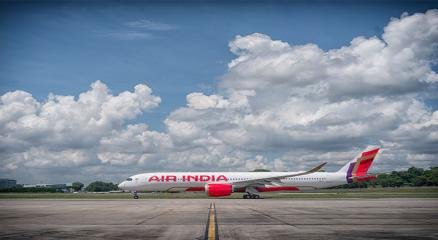
Air India has commenced construction of a new Maintenance, Repair and Overhaul (MRO) hangar at Delhi’s Indira Gandhi International Airport (IGIA), to strengthen its in-house aircraft maintenance capabilities. The project is aimed at improving fleet availability, operational efficiency and the airline’s self-reliance in aircraft engineering and maintenance. Spread across nine acres, the multi-facility MRO hangar will be the first facility in Delhi designed to accommodate one widebody and one narrowbody aircraft simultaneously. The infrastructure will enable Air India to consolidate key engineering and maintenance activities at its largest hub, allowing closer operational oversight and more efficient coordination of technical services. The ground-breaking ceremony was attended by Tewolde Gebremariam, Chief Executive Officer & Managing Director, Air India, along with senior executives from Air India and Delhi International Airport Limited (DIAL), including P Balaji, Group Head - Governance, Regulatory, Compliance and Corporate Affairs, Air India; Basil Kwauk, Chief Operations Officer, Air India; Jeremy Yew, Senior Vice President - Engineering & Maintenance, Air India; Manomay Rai, Deputy Chief Executive Officer, DIAL; Vijay K Sharma, Vice President & Head - Aviation Services Business, DIAL; and Deepika Sharma, AGM - Aero Related, Commercial Aero, DIAL, among others. The new facility is expected to help reduce aircraft ground time by bringing inspections, cabin maintenance and defect rectification under one roof. Integrated engineering offices and an on-site spare parts warehouse will support streamlined workflows, improve access to critical components and reduce logistics costs associated with maintenance operations. A dedicated Cabin Shop will facilitate faster repairs to aircraft interiors, reducing dependence on third-party service providers and helping address cabin-related defects more efficiently. The facility will also enable quicker recovery of aircraft grounded by technical issues through direct access to engineering teams and spare parts, potentially minimising operational disruptions. These capabilities are particularly relevant as airlines seek to improve aircraft utilisation, maintain reliable schedules and manage the technical requirements of expanding fleets. The Delhi MRO hangar will feature a clear internal height of 25 metres and large column-free spans to accommodate next-generation aircraft. Its design incorporates stringent safety provisions, including advanced fire protection systems, while following Indian Green Building Council (IGBC) Green Building norms to support energy and water conservation. The project aligns with Air India’s broader strategy to develop stronger in-house maintenance infrastructure and build a more integrated aviation engineering ecosystem in India. Greater control over maintenance activities can help the airline improve turnaround times, strengthen fleet reliability and reduce its dependence on external facilities for selected technical requirements. As construction progresses, the new hangar is expected to strengthen Delhi’s role in Air India’s maintenance network. The investment also reflects the growing importance of domestic MRO infrastructure in supporting India’s expanding aviation sector, improving operational resilience and developing specialised engineering capabilities. 𝐒𝐭𝐚𝐲 𝐓𝐮𝐧𝐞𝐝 𝐭𝐨 CARGOCONNECT 𝐟𝐨𝐫 𝐥𝐚𝐭𝐞𝐬𝐭 𝐮𝐩𝐝𝐚𝐭𝐞𝐬!