
Loading...

India has taken a landmark step towards establishing itself as a global supplier of green maritime fuel with the foundation stone laid for the country’s first port-based e-methanol production facility at Deendayal Port Authority (DPA) in Kandla, Gujarat. The ₹2,300-crore project is being jointly developed by DPA and Namrup-based Assam Petro-Chemicals Ltd (APCL) and is designed to support the decarbonisation of international shipping. The foundation stone was laid on September 26 by Union Minister for Ports, Shipping and Waterways Sarbananda Sonowal, Gujarat Chief Minister Bhupendra Patel and Assam Chief Minister Himanta Biswa Sarma. The facility will have a total production capacity of 150 tonnes of e-methanol per day. It will use renewable power, water and biogenic carbon dioxide (CO₂) to produce e-methanol, which is intended to be supplied to vessels operating along the Asia-Europe International Trade Corridor, one of the world’s busiest maritime routes. The e-methanol plant will be established through scalable modules in two phases. Phase I will add 50 tonnes per day of production capacity at an investment of ₹1,200 crore and is targeted for completion by January 2027. Phase II, involving a further 100 tonnes per day, will require an investment of ₹1,100 crore and is scheduled for completion by March 2027. Together, the two phases will take the project’s total investment to ₹2,300 crore. The capital contribution between DPA and APCL will be in a 76:24 ratio. DPA’s contribution includes ₹567.32 crore in equity capital, 75 acres of land, desalinated water and renewable energy in the form of green hydrogen. The facility is expected to rank among India’s largest e-methanol production plants and generate more than 3,500 direct and indirect jobs. According to the Ministry of Ports, Shipping and Waterways, the plant is expected to produce green methanol at around US$750 per tonne, compared with a global rate of about US$1,300 per tonne. This cost advantage could strengthen India’s position as a competitive producer and supplier of green fuel for international shipping. Beyond fuel production, the project is expected to stimulate a wider green-energy value chain around Kandla, covering transportation, storage, supply and other ancillary activities associated with green molecule production. It also aligns with India’s broader maritime decarbonisation objectives and its Net Zero emissions target for 2070. The government aims to add 100 ships to the Indian merchant fleet over the next five years and make India one of the world’s top five ship-owning nations by 2047. Therefore, the Kandla facility represents more than a new green-fuel production asset; it marks an effort to integrate port infrastructure, renewable energy and maritime fuel supply into a single ecosystem, potentially positioning Kandla as an emerging green-fuel hub for global shipping. 𝐒𝐭𝐚𝐲 𝐓𝐮𝐧𝐞𝐝 𝐭𝐨 CARGOCONNECT 𝐟𝐨𝐫 𝐥𝐚𝐭𝐞𝐬𝐭 𝐮𝐩𝐝𝐚𝐭𝐞𝐬!

Brussels Airport and Hyderabad International Airport have signed a memorandum of understanding (MoU) to strengthen cooperation in air cargo development and explore opportunities to enhance connectivity between Belgium and India. The partnership will focus particularly on pharmaceutical and life sciences shipments, knowledge sharing and the development of stronger trade links. Under the agreement, the two airports will work together to identify opportunities for stronger air connectivity and develop cargo links between Brussels and Hyderabad. The collaboration will examine market demand, freight flows, route viability, cargo operating practices and stakeholder engagement, with the objective of developing concrete business cases for potential future services. Airlines, freight forwarders and other logistics stakeholders are also expected to be engaged as the initiative progresses. Brussels Airport will contribute its expertise in pharmaceutical logistics, while Hyderabad’s expanding life sciences ecosystem offers significant potential for joint development. Brussels Airport became the first airport globally to achieve CEIV Pharma certification in 2014 and currently provides 45,000 square metres of temperature-controlled storage capacity, the largest concentration of dedicated airport pharma storage facilities in Europe. Arnaud Feist, CEO Brussels Airport, said, “With this MoU, we are taking an important step to bring the ecosystems of Brussels Airport and Hyderabad International Airport closer together. By strengthening cargo flows between our regions, we can support trade and economic growth. As Europe's preferred pharma and life sciences hub, Brussels Airport has built a strong ecosystem and extensive expertise in pharmaceutical logistics. Combined with Hyderabad's leading life sciences ecosystem, this creates valuable opportunities for future cooperation and knowledge exchange." Kadhir Kadhiravan, CEO, GMR Hyderabad International Airport, said, “Hyderabad’s growing economic base and strategic location position it strongly to serve as a gateway for India’s international trade. Our collaboration with Brussels Airport strengthens our ability to connect Hyderabad with the wider European cargo ecosystem and supports our ambition to build a more globally integrated cargo network. By bringing together market expertise, industry partnerships and complementary strengths, we can create new opportunities for businesses in Hyderabad and across the region while strengthening the airport’s role in India’s international trade corridors.” India is the world’s largest supplier of generic medicines, accounting for around 20% of global supply by volume, while Hyderabad is a major life sciences hub spanning pharmaceuticals, vaccines and research and development. The MoU was signed with support from Flanders Investment & Trade (FIT), highlighting strengthening economic ties between Belgium and India. Importantly, there is currently no direct air connection between the two cities. The partnership will therefore explore ways to improve connectivity and support greater cargo flows between the two markets. 𝐒𝐭𝐚𝐲 𝐓𝐮𝐧𝐞𝐝 𝐭𝐨 CARGOCONNECT 𝐟𝐨𝐫 𝐥𝐚𝐭𝐞𝐬𝐭 𝐮𝐩𝐝𝐚𝐭𝐞𝐬!

Cathay Cargo has shifted its Mumbai freighter operations to Navi Mumbai International Airport (NMIA), effective September 21, 2026, strengthening dedicated freighter connectivity from the Mumbai region. The carrier is operating three dedicated freighter flights per week from NMIA, using Boeing 747-400ERF and Boeing 747-8F aircraft. The services provide robust main-deck capacity and nose-door loading capabilities, enabling the handling of oversized, heavy and other specialised cargo. From its Hong Kong hub, Cathay Cargo connects Indian customers with key markets across the Chinese Mainland, Southeast Asia, North America and other international destinations. The relocation is expected to support the growing movement of Indian manufacturing and export cargo by providing direct freighter connectivity to Cathay Cargo’s global network through Hong Kong. The move also strengthens Western India’s access to international cargo markets at a time when freighter operations are shifting towards Navi Mumbai. Cathay Regional Head of Cargo for South Asia, the Middle East, and Africa, Rajesh Menon said, “The move of our Mumbai freighter operations to Navi Mumbai International Airport reinforces our steadfast commitment to the Indian market and its growth trajectory. By combining NMIA's modern infrastructure with our dedicated freighter presence and our ‘We Know How’ expertise, we are providing reliable connectivity and specialist handling for local enterprises, exporters and SMEs. This will also further strengthen connectivity between Western India’s exporters and key global markets through our Hong Kong hub." In addition to its Navi Mumbai International Airport freighter service, Cathay Cargo continues to operate its dedicated freighter network across India, operating five weekly freighter flights from Delhi and Chennai, respectively. Cathay Cargo’s “We Know How” approach is supported by specialist solutions including Cathay Expert for odd-sized, heavy and project cargo; Cathay Pharma for temperature-controlled pharmaceuticals and vaccines; Cathay Fresh for perishables and seafood; Cathay Priority for time-critical commercial shipments; and Cathay Live for specialised live-animal transportation. Its specialist cargo solutions and Hong Kong cargo terminal are supported by IATA CEIV certifications covering Pharma, Fresh, Live Animals and Lithium Batteries. In addition to its freighter network, Cathay Cargo leverages belly-hold capacity on Cathay Pacific passenger services from Mumbai, Delhi, Chennai, Bengaluru and Hyderabad, with 45 passenger flights per week across these five Indian gateways. 𝐒𝐭𝐚𝐲 𝐓𝐮𝐧𝐞𝐝 𝐭𝐨 CARGOCONNECT 𝐟𝐨𝐫 𝐥𝐚𝐭𝐞𝐬𝐭 𝐮𝐩𝐝𝐚𝐭𝐞𝐬!
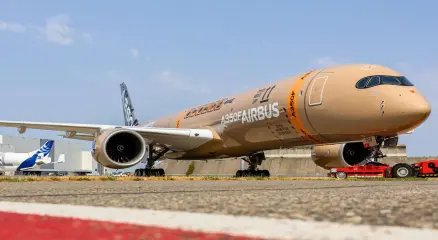
Airbus is set to take a major step in the development of its next-generation freighter, with the A350F scheduled to make its maiden flight on 29 September 2026 from Toulouse, France. The first flight marks a significant milestone for Airbus as it seeks to strengthen its position in the large widebody freighter market. The flight is scheduled for 10:20 a.m. local time in Toulouse and is expected to be broadcast live by Airbus. However, the manufacturer has stated that the event remains subject to operational requirements and weather conditions. The first flight-test aircraft, MSN700, registered F-WXLD, has been undergoing final ground preparations. On 24 September, the aircraft completed two high-speed rejected-takeoff tests at Toulouse, supporting preparations for its transition to flight testing. The A350F is a purpose-built freighter derived from the A350 family. Its configuration combines the forward fuselage of the A350-900 with the rear fuselage and wings of the larger A350-1000, creating a unique aerodynamic profile that requires dedicated flight testing. Airbus plans a certification campaign involving approximately 400 flight hours across two test aircraft. MSN700 will primarily support testing of aerodynamic performance, handling characteristics and the autopilot, while the second aircraft, MSN701, will focus on systems testing, including air-conditioning and fire and smoke evaluations. Airbus has indicated that certification and first customer deliveries remain targeted for 2027. The A350F is designed for a payload of more than 110 tonnes and is intended to address growing demand for efficient, modern large freighters. Its development also comes as the air cargo industry prepares for tighter emissions requirements affecting older-generation freighter designs. With the A350F competing in the emerging new-generation widebody freighter segment alongside Boeing’s 777-8F, its maiden flight will be closely watched by airlines, cargo operators and the wider global air freight industry. 𝐒𝐭𝐚𝐲 𝐓𝐮𝐧𝐞𝐝 𝐭𝐨 CARGOCONNECT 𝐟𝐨𝐫 𝐥𝐚𝐭𝐞𝐬𝐭 𝐮𝐩𝐝𝐚𝐭𝐞𝐬!
The International Air Transport Association (IATA) has called for stronger, coordinated action across the air cargo supply chain to tackle the growing risks associated with undeclared and mis-declared dangerous goods (DG), stressing that security screening alone cannot provide a complete solution. The call follows discussions among regulators on whether existing aviation security screening processes could serve as a primary defence against dangerous goods entering the air cargo system. IATA said screening remains an important layer of protection, but its primary purpose is to identify security threats such as explosives and weapons rather than the broad range of hazardous materials covered by dangerous goods regulations. According to IATA, around 80% of dangerous goods incidents reported to the association during the first half of 2025 involved undeclared or hidden dangerous goods. Lithium batteries, along with concealed e-cigarettes, aerosols and other hazardous commodities, were among the products frequently identified. IATA Global Head of Cargo Brendan Sullivan said the risk arises when dangerous goods enter the supply chain without being declared or are incorrectly declared. He emphasised that responsibility for identifying and preventing such incidents must extend across the entire cargo ecosystem, beginning as far upstream as possible. IATA's latest white paper, Safety and Security in the Cargo Supply Chain, highlights limitations in relying primarily on existing screening systems. Technologies, certification standards, algorithms and training programmes used for cargo screening have largely been developed around aviation security threats and may not be designed to identify every category of dangerous goods. Certain shipments may also present practical challenges for screening because of their size, density, shape or other characteristics. Instead, IATA is advocating a layered, risk-based and supply-chain-wide approach focused on prevention and early detection. The association has called on governments to strengthen regulatory oversight and enforcement, while manufacturers and online marketplaces should improve product identification, certification and information accuracy. Shippers, freight forwarders and postal operators are encouraged to strengthen training, acceptance procedures and the use of customer and shipment data to identify higher-risk cargo before it reaches airports. Airlines and ground handlers should reinforce checks before loading, while airports should improve coordination and information sharing among cargo stakeholders. IATA's position reinforces the need for dangerous goods safety to be treated as a shared supply chain responsibility rather than a challenge addressed only at the airport. With e-commerce, lithium-battery-powered products and increasingly complex cargo flows reshaping air freight, the association believes prevention and information-sharing upstream must complement security screening to strengthen overall cargo safety and resilience. 𝐒𝐭𝐚𝐲 𝐓𝐮𝐧𝐞𝐝 𝐭𝐨 CARGOCONNECT 𝐟𝐨𝐫 𝐥𝐚𝐭𝐞𝐬𝐭 𝐮𝐩𝐝𝐚𝐭𝐞𝐬!

Blue Dart Express Limited has announced a planned leadership transition, with R.S. Subramanian set to take over as Managing Director from 30 November 2026, subject to requisite approvals. He will succeed Balfour Manuel, who will step down from the role on 29 November after a 43-year association with the express logistics company. As part of the succession plan, Manuel will continue with Blue Dart as Senior Strategic Advisor until 15 May 2027, supporting continuity across the company’s strategic priorities during the transition. The company’s Board approved Subramanian’s appointment for the period from 30 November 2026 to 25 May 2030, subject to shareholder and other statutory approvals. Manuel joined Blue Dart in 1983 as one of its earliest employees and has played a significant role in the company’s development, including its customer-centric culture, market position, network expansion and operational capabilities. He became Managing Director in 2019. Reflecting on the leadership transition, Balfour Manuel said, “Blue Dart has been the defining journey of my professional life. After careful consideration, I believe this is the right time to implement a structured succession plan that serves the company’s long-term interests. I have every confidence in R.S. Subramanian, who understands our business, respects our culture and shares our ambition. As Senior Strategic Advisor, I look forward to working closely with him and the Board to ensure continuity throughout the transition.” Subramanian brings more than three decades of experience across product-led and service businesses, with expertise spanning business strategy, customer experience, organisational transformation and profitable growth. He currently serves as Senior Vice President, DHL Express South Asia, and Managing Director, DHL Express India, and is a member of the DHL Express Asia Pacific Management Board. Associated with DHL Express since 2004, Subramanian has held leadership responsibilities across South Asia and has overseen operations in markets including India, Bangladesh, Sri Lanka, Nepal, the Maldives and Bhutan. He has also been a Director on the Blue Dart Express Board since 2019, giving him familiarity with the company’s operations and strategic priorities. Commenting on his appointment, R.S. Subramanian said, “It is a privilege to lead Blue Dart, an institution that has played a defining role in the development of India's express logistics industry. Having served on the Blue Dart Board over the past seven years, I have had the opportunity to gain a firsthand appreciation of the company’s strong customer focus, operational excellence and the culture that the team has built. My focus will be on building on Blue Dart’s strong foundation, advancing its market leadership and delivering sustainable, profitable growth, while continuing to create value for customers, employees and shareholders alike.” The leadership transition comes as Blue Dart continues to expand its express logistics network and capabilities. The company reported revenue of ₹6,141 crore for FY2025-26 and serves more than 56,400 locations in India, according to its latest fact sheet. 𝐒𝐭𝐚𝐲 𝐓𝐮𝐧𝐞𝐝 𝐭𝐨 CARGOCONNECT 𝐟𝐨𝐫 𝐥𝐚𝐭𝐞𝐬𝐭 𝐮𝐩𝐝𝐚𝐭𝐞𝐬!

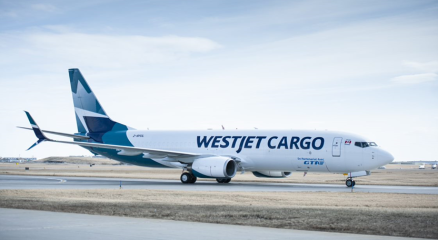
WestJet Cargo has appointed AVIAREPS as its General Sales Agent (GSA) in India, giving the aviation services company nationwide responsibility for cargo sales, customer engagement and market development. The appointment is aimed at strengthening WestJet Cargo’s commercial presence and relationships across the Indian air cargo market. Under the new mandate, AVIAREPS will represent WestJet Cargo, the cargo business of Canadian airline WestJet, across India. The company will work closely with freight forwarders, cargo agents and other industry stakeholders to support cargo sales, develop commercial relationships and identify new business opportunities. AVIAREPS will draw on its pan-India network and knowledge of the local aviation and cargo ecosystem to support WestJet Cargo’s market development objectives. The partnership combines the airline’s international cargo offering with AVIAREPS’ local sales capabilities and established industry relationships. Frederick Overton, Global Head of Cargo, AVIAREPS, said, “We are delighted to support WestJet Cargo as its Cargo GSA in India. Our pan-India presence, local market expertise and established relationships across the aviation and cargo ecosystem position us well to support WestJet Cargo’s commercial objectives in the country. We look forward to working closely with customers and industry partners across India and contributing to the continued development of WestJet Cargo’s business in this market.” The appointment forms part of WestJet Cargo’s wider GSA structure in India. Airline Services International (ASI) will work with Rainbow Aviation Private Limited to cover selected regional cargo markets, including Maharashtra, Gujarat, Telangana and Goa. For AVIAREPS, the mandate further expands its portfolio of airline cargo representation assignments and reinforces its role in providing sales, market development and customer engagement support to international carriers. For WestJet Cargo, the nationwide representation provides a dedicated local platform to engage with India’s freight forwarding and cargo community. The arrangement is expected to support the carrier’s sales activities while helping identify opportunities across one of the world’s key aviation and trade markets. 𝐒𝐭𝐚𝐲 𝐓𝐮𝐧𝐞𝐝 𝐭𝐨 CARGOCONNECT 𝐟𝐨𝐫 𝐥𝐚𝐭𝐞𝐬𝐭 𝐮𝐩𝐝𝐚𝐭𝐞𝐬!
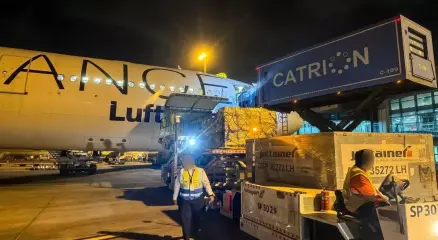
Lufthansa has resumed its Frankfurt-Riyadh passenger service, restoring additional belly-hold cargo capacity between Germany and Saudi Arabia amid strong demand for air freight. The airline restarted the route on September 10, 2026, with three weekly Airbus A340 services, with available cargo capacity reportedly fully utilised from the first day. The renewed connection provides shippers with additional capacity between Frankfurt, one of Europe’s major air cargo gateways, and Riyadh, supporting the movement of time-sensitive and high-value shipments between Europe and Saudi Arabia. Lufthansa Cargo has highlighted the strong initial response from customers following the restoration of the service. The resumption forms part of the Lufthansa Group’s gradual restoration of services to the Middle East following a comprehensive safety and security assessment. The group said it continues to monitor the regional security situation and remains in close contact with relevant authorities. For the air cargo sector, the return of the Frankfurt–Riyadh service is particularly relevant because passenger aircraft belly capacity remains an important component of Lufthansa Cargo’s network. Lufthansa Cargo’s global offering combines dedicated Boeing 777F and Airbus A321F freighters with cargo capacity on passenger aircraft operated by Lufthansa and its partners. The strong cargo uptake on the resumed Riyadh service also highlights continued demand for reliable air freight connectivity to Saudi Arabia. The development comes as the Kingdom continues to strengthen its position as a major commercial and logistics market, while Riyadh expands its role as an important gateway for international trade. The restored connection is expected to provide exporters, importers and logistics providers with greater network flexibility, while strengthening links between the European and Saudi markets. For Lufthansa Cargo, the early utilisation levels underline the importance of restored belly capacity in meeting customer requirements across key Middle Eastern trade lanes. 𝐒𝐭𝐚𝐲 𝐓𝐮𝐧𝐞𝐝 𝐭𝐨 CARGOCONNECT 𝐟𝐨𝐫 𝐥𝐚𝐭𝐞𝐬𝐭 𝐮𝐩𝐝𝐚𝐭𝐞𝐬!
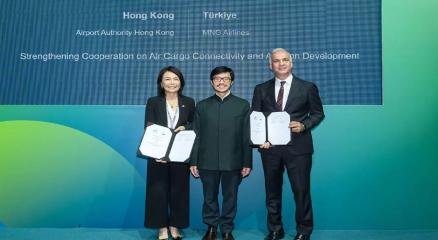
Hong Kong International Airport (HKIA) is strengthening its role as a key aviation and logistics gateway to Belt and Road markets through two new cooperation agreements with MNG Airlines and Uzbekistan-focused investment firm Harvest Epoch Strategic (International) Investment Limited. The agreements were signed during the Belt and Road Summit and are aimed at expanding air connectivity, operational collaboration and airport development. Expanding Hong Kong-Türkiye Air Cargo Connectivity Airport Authority Hong Kong (AAHK) and MNG Airlines have signed a Memorandum of Understanding (MoU) to deepen cooperation across several areas, including direct air connectivity, operational efficiency, service quality and the exchange of management and operational expertise. The agreement was signed by Vivian Cheung, Chief Executive Officer (CEO), AAHK, and Ali Sedat ÖZKAZANÇ, CEO, MNG Airlines, in the presence of Nicolas Ho, Commissioner for Belt and Road. The partnership also covers sustainable aviation development and talent building, including training programmes delivered through the Hong Kong International Aviation Academy. MNG Airlines, headquartered at Istanbul Airport, is Turkey’s pioneer privately owned cargo airline and operates freighter services to more than 60 destinations across Europe, Asia and North America. The carrier currently operates eight to 10 freighter flights every week between Turkey and Hong Kong and is looking to increase frequencies as trade demand between the two markets grows. Highlighting HKIA’s expanding Belt and Road network, Vivian Cheung said, “As of March 2026, HKIA is connected to 78 destination airports in 41 countries in Belt and Road regions. We are pleased to further deepen HKIA’s aviation ties with Belt and Road countries, reinforcing our role as an international aviation hub.” Supporting Uzbekistan’s Aviation Hub Development In a parallel move, Hong Kong International Airport Consultancy Limited (HKIA Consultancy) has entered into a cooperation agreement with Harvest Epoch Strategic (International) Investment Limited to support the modernisation and management enhancement of Navoi International Airport in Uzbekistan. The agreement was signed by Simon Li, CEO of HKIA Consultancy, and Yip Koon Shing, Chief Strategic Officer of Harvest Epoch. Representatives from the Belt and Road Office, Navoi International Airport and Harvest Epoch were present at the signing ceremony. Under the partnership, HKIA Consultancy will bring its airport management and operational expertise to support the development of Navoi International Airport. The collaboration is expected to enhance the airport’s technical capabilities, operational efficiency and overall development as a strategic logistics hub along the Belt and Road corridor. Together, the two agreements underscore HKIA’s broader strategy of extending its aviation expertise and strengthening cargo and trade links across Belt and Road markets. They also reinforce Hong Kong’s position as an international air cargo hub connecting businesses and supply chains across Asia, Europe and Central Asia. 𝐒𝐭𝐚𝐲 𝐓𝐮𝐧𝐞𝐝 𝐭𝐨 CARGOCONNECT 𝐟𝐨𝐫 𝐥𝐚𝐭𝐞𝐬𝐭 𝐮𝐩𝐝𝐚𝐭𝐞𝐬!

Logistics and supply chain resilience have emerged as key economic themes at the BRICS Summit 2026 in New Delhi, with India using its chairship to push discussions around more resilient and predictable trade infrastructure among member countries. The two-day summit opened in New Delhi this weekend, bringing supply chains and trade logistics into sharper focus as part of the broader economic discussions among BRICS members. The emphasis reflects the growing importance of logistics infrastructure in supporting trade and maintaining the reliability of cross-border supply networks. The issue was already highlighted a day before the formal summit sessions began, at the BRICS Business Forum on Friday, where the push for stronger trade and logistics systems was laid out. Logistics gains strategic importance For BRICS economies, the ability to move goods efficiently across borders is closely linked to the expansion and reliability of trade. Supply chain disruptions can affect the movement of goods, increase uncertainty for businesses and make trade flows less predictable. Against this backdrop, the focus in New Delhi has been on creating conditions that can make trade infrastructure more resilient. India's approach under its BRICS chairship has placed predictability alongside resilience, signalling the importance of infrastructure and logistics networks that can support sustained trade between member economies. The emphasis also reflects the changing role of logistics in the global economy. Once viewed primarily as an operational component of trade, logistics infrastructure is increasingly becoming part of wider economic and strategic discussions, particularly as businesses and governments seek greater resilience in international supply chains. Trade infrastructure in focus The focus on trade logistics at the summit comes as BRICS economies continue to look at ways of strengthening economic cooperation. Efficient infrastructure, dependable trade corridors and predictable movement of goods are fundamental to making greater intra-BRICS trade possible. For India, the discussion is particularly relevant as it continues to position logistics infrastructure as an important element of its wider trade and economic agenda. The BRICS chairship provides a platform to bring these issues into discussions involving major emerging economies. The discussions in New Delhi therefore put logistics closer to the centre of the BRICS economic conversation. Rather than being treated simply as a supporting function for trade, supply chains are increasingly being considered an important part of economic resilience and international cooperation. As the summit proceedings continue, the focus on resilient and predictable trade infrastructure highlights the role that logistics can play in shaping the future of economic engagement among BRICS countries. Follow CARGOCONNECT for more such news

Dubai-based airline flydubai is expanding its cargo business with the launch of dedicated freighter operations, adding three Boeing 737-800 freighters under a wet-lease agreement with SolitAir. The new operation is scheduled to commence on 1 October 2026 from Al Maktoum International Airport (DWC), marking the first phase of the carrier’s dedicated cargo fleet expansion. The three freighters will provide an additional 23,000 kg of payload capacity per flight, complementing cargo carried in the belly holds of flydubai’s existing fleet of 98 Boeing 737 passenger aircraft. The dedicated main-deck capacity is being introduced ahead of the fourth-quarter peak season, while the airline plans to assess passenger-to-freighter conversions from 2029 onwards. Further cargo capacity is also expected as flydubai takes delivery of its planned 30 Boeing 787 Dreamliners. Ghaith Al Ghaith, Chief Executive Officer at flydubai, said: “Dubai has established itself as one of the world's most connected hubs for E-commerce, trade and logistics, and its ambitions under the Dubai Economic Agenda D33 continue to create new opportunities for businesses to reach global markets. The launch of dedicated freighter operations marks an important step in flydubai’s evolution and reflects our commitment to supporting Dubai's vision through enhanced trade connectivity and logistics capabilities. By building on the strength of our network and expanding our cargo offering and list of codeshare and interline partners, we are creating new pathways for businesses to move goods more efficiently, access new markets and contribute to economic growth across the region and beyond.” Based at DWC, flydubai Cargo will benefit from dedicated airside infrastructure and multimodal connectivity through Dubai South. The freighter operation will support scheduled freight services and point-to-point charter operations across a network of more than 125 destinations spanning Africa, Central Asia, the Caucasus, Europe, the GCC, the Middle East, South Asia and Southeast Asia. The dedicated aircraft will also enable specialised handling for pharmaceuticals, perishables, live animals, dangerous goods, express shipments and aerospace components. Initial flights are expected to focus on high-demand regional sectors, with frequencies increasing as capacity develops. The expansion is intended to position flydubai Cargo as a broader logistics provider offering both scheduled freight and ad-hoc charter solutions. 𝐒𝐭𝐚𝐲 𝐓𝐮𝐧𝐞𝐝 𝐭𝐨 CARGOCONNECT 𝐟𝐨𝐫 𝐥𝐚𝐭𝐞𝐬𝐭 𝐮𝐩𝐝𝐚𝐭𝐞𝐬!

Frankfurt Airport (FRA), Europe’s leading air cargo gateway, recorded a notable increase in freight volumes during August 2026, underlining the resilience of global air cargo demand despite ongoing economic uncertainties. Operator Fraport AG reported that cargo throughput, comprising airfreight and airmail, rose by 3.2 per cent year-on-year to around 172,700 metric tonnes during the month. The growth in cargo volumes came even as passenger traffic remained broadly stable. Frankfurt Airport handled approximately 6.2 million passengers in August, reflecting marginal growth compared with the same period last year. The steady rise in freight activity highlights Frankfurt’s strategic importance as one of Europe’s key logistics and distribution hubs, connecting major manufacturing and consumer markets across the globe. Industry observers attribute the increase in cargo throughput to stronger demand from sectors such as pharmaceuticals, e-commerce, high-tech products and industrial components. Continued shifts in supply chain strategies and the need for faster transportation solutions have also supported airfreight demand across European gateways. Aircraft movements at Frankfurt Airport increased by 2.2 per cent year-on-year to nearly 41,500 take-offs and landings in August, while maximum take-off weights rose by 2.1 per cent, indicating healthy operational activity across passenger and cargo segments. Fraport’s international airport portfolio also reported positive traffic trends, reflecting improving global aviation demand. Frankfurt Airport remains a vital node in international trade flows, serving numerous freighter operators and integrated logistics providers. The latest cargo growth further reinforces the airport’s role in supporting European supply chains, particularly as businesses seek greater reliability and speed in global transportation networks. With air cargo demand expected to remain stable in the coming months, Frankfurt Airport is likely to continue benefiting from its strong infrastructure, extensive connectivity and position as one of the world’s leading freight hubs. 𝐒𝐭𝐚𝐲 𝐓𝐮𝐧𝐞𝐝 𝐭𝐨 CARGOCONNECT 𝐟𝐨𝐫 𝐥𝐚𝐭𝐞𝐬𝐭 𝐮𝐩𝐝𝐚𝐭𝐞𝐬!

Emirates SkyCargo has expanded its freighter network in India with the introduction of new weekly freighter services to Bengaluru, Chennai and Hyderabad, strengthening cargo connectivity from three major commercial and manufacturing centres to international markets. The expansion takes the carrier’s total number of weekly freighter flights in India to seven, supplementing the capacity available through its 167 weekly passenger services. The move comes as demand for reliable international air freight capacity continues to grow alongside India’s expanding manufacturing and export ecosystem. Emirates SkyCargo transported more than 153,000 tonnes of Indian exports during FY 2025/26, covering a broad mix of commodities including pharmaceuticals, perishables, high-tech electronics, engineering and automotive components, and fashion goods. Bengaluru, Chennai and Hyderabad are important gateways for India’s technology, manufacturing, pharmaceutical and engineering industries. By deploying dedicated freighter capacity at these locations, Emirates SkyCargo is providing exporters with additional cargo capacity and direct access to its wider global network through Dubai. Badr Abbas, Divisional Senior Vice President, Emirates SkyCargo, said: “India is a strategic market for Emirates SkyCargo. With a fast-growing economy, the country is strengthening its position” as a hub for manufacturing and production. He added that the carrier is focused on helping Indian exporters connect efficiently with international customers and global supply chains. India’s growing perishables and pharmaceutical trade is also contributing to demand for specialised air cargo solutions. Emirates SkyCargo currently transports more than 650 tonnes of pharmaceuticals and over 600 tonnes of fresh food and other perishables from India every week via Dubai. Between April and June 2026, the carrier transported close to 2,900 tonnes of Indian mangoes to international customers. The expansion also aligns with the strengthening India-UAE trade relationship. Emirates SkyCargo moved more than 28,000 tonnes of exports from India to the UAE during FY 2025/26, representing a 24% year-on-year increase. The growth comes amid expanding bilateral trade supported by the Comprehensive Economic Partnership Agreement (CEPA), which took effect in May 2022. Beyond its airport gateways, Emirates SkyCargo is also extending its reach into inland markets through its road feeder network. More than 4,500 tonnes of import and export cargo were transported through its trucking connectivity across Indian states over the past 12 months, enabling customers outside the airline’s direct airport network to access its international cargo services. The latest freighter expansion reinforces Emirates SkyCargo’s role in supporting India’s export growth while providing additional capacity for time-sensitive and high-value cargo moving between India and global markets. 𝐒𝐭𝐚𝐲 𝐓𝐮𝐧𝐞𝐝 𝐭𝐨 CARGOCONNECT 𝐟𝐨𝐫 𝐥𝐚𝐭𝐞𝐬𝐭 𝐮𝐩𝐝𝐚𝐭𝐞𝐬!

The Union Cabinet has approved eight railway multitracking projects worth ₹20,804 crore across nine states, marking a major push to expand rail capacity, improve freight movement and decongest high-density railway corridors. The projects, cleared by the Cabinet Committee on Economic Affairs (CCEA) chaired by Prime Minister Narendra Modi, will add around 1,196 km to the Indian Railways network and are targeted for completion by 2029-30. The projects span Tamil Nadu, Andhra Pradesh, Karnataka, Telangana, West Bengal, Jharkhand, Odisha, Madhya Pradesh and Chhattisgarh, covering 31 districts and improving connectivity to around 6,911 villages with a combined population of nearly 1.08 crore. The capacity expansion is expected to ease congestion, enhance operational efficiency and improve the reliability of passenger and freight services. Five projects, with an estimated investment of ₹10,021 crore, will add approximately 540 km across Tamil Nadu, Andhra Pradesh, Karnataka and Telangana. These include the third and fourth lines between Arakkonam-Renigunta and Whitefield-Bangarapet, doubling of the Hosur-Omalur and Salem-Karur-Dindigul sections, and multitracking between Secunderabad (Ghatkesar)-Kazipet. The remaining three projects, costing around ₹10,783 crore, will add about 656 km across West Bengal, Jharkhand, Odisha, Madhya Pradesh and Chhattisgarh. They comprise the fourth line between Kharagpur-Jharsuguda (Bagdehi), the fourth line between Katni-Pendra Road, and the third line between Bilaspur (Uslapur)-Pendra Road. Importantly for India’s logistics sector, the projects are expected to generate additional freight capacity of around 74 million tonnes per annum (MTPA). The upgraded corridors will support movement of coal, cement, iron and steel, containers, automobiles, foodgrains, petroleum products and fertilisers. Planned under the PM Gati Shakti National Master Plan, the projects are intended to strengthen multimodal connectivity, improve logistics efficiency and support a greater shift towards rail freight, helping reduce logistics costs, fuel consumption and emissions. 𝐒𝐭𝐚𝐲 𝐓𝐮𝐧𝐞𝐝 𝐭𝐨 CARGOCONNECT 𝐟𝐨𝐫 𝐥𝐚𝐭𝐞𝐬𝐭 𝐮𝐩𝐝𝐚𝐭𝐞𝐬!

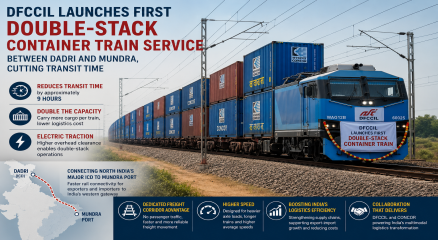
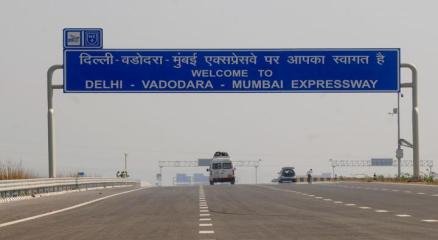
Prime Minister Narendra Modi has marked a major milestone in India’s logistics and rail freight infrastructure by flagging off freight trains from four strategic stations of the Western Dedicated Freight Corridor (WDFC) and dedicating three newly completed sections to the nation. The development completes India’s approximately 2,843-km Dedicated Freight Corridor (DFC) network, strengthening the country’s freight transportation backbone. Freight trains were flagged off from New Sanand (North), New Makarpura, New Umbergaon and New JNPT. The three newly commissioned WDFC sections—New Sanand (North)-New Makarpura, New Umbergaon-New Saphale and New Saphale-New JNPT, cover around 326 route km and have been developed at an investment of more than ₹20,700 crore. The commissioning establishes direct dedicated freight connectivity between northern and western industrial centres and Jawaharlal Nehru Port (JNPT), improving the movement of export-import cargo between production hubs, logistics centres and India’s western maritime gateways. The direct rail link is expected to accelerate container evacuation, improve supply-chain predictability and ease congestion on conventional railway routes. India’s DFC network comprises the 1,337-km Eastern Dedicated Freight Corridor (EDFC) between Ludhiana and Sonnagar and the 1,506-km WDFC between Dadri and JNPT. The corridors enable freight trains to operate on dedicated tracks, including double-stack container and higher axle-load trains, increasing cargo-carrying capacity and improving operational efficiency. The completed WDFC is also reducing transit times. Freight movement between Dadri and JNPT has fallen from around 66 hours to about 58 hours, according to DFCCIL, enhancing the competitiveness of rail freight and enabling faster access to ports. The two DFCs currently handle an average of around 443 freight trains daily, while Indian Railways’ freight loading reached 1,670 million tonnes in 2025-26, up from 1,098 million tonnes in 2014-15. The shift of freight traffic to dedicated corridors is also releasing capacity on conventional routes for additional passenger and freight services. The government is already planning the next phase of freight infrastructure. The Union Budget 2026 announced a proposed Dankuni-Surat Dedicated Freight Corridor, with work on its Detailed Project Report underway. The expansion is expected to further strengthen east-west connectivity and India's multimodal logistics ecosystem. 𝐒𝐭𝐚𝐲 𝐓𝐮𝐧𝐞𝐝 𝐭𝐨 CARGOCONNECT 𝐟𝐨𝐫 𝐥𝐚𝐭𝐞𝐬𝐭 𝐮𝐩𝐝𝐚𝐭𝐞𝐬!
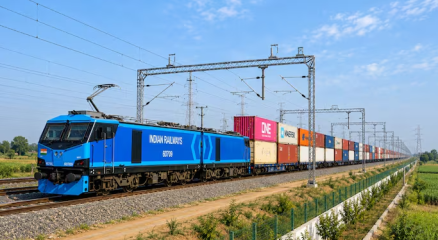
Prime Minister Narendra Modi has dedicated the final three sections of the Western Dedicated Freight Corridor (WDFC) to the nation, completing the entire freight rail connection between Jawaharlal Nehru Port (JNPT/JNPA) in Maharashtra and Dadri in Uttar Pradesh. The milestone marks a major step in strengthening India’s dedicated freight rail network and improving the movement of export-import cargo between ports and key industrial and consumption centres. The three newly completed sections—Sanand (North)-Makarpura, New Umbergaon-New Saphale and New Saphale-JNPA, span a combined 326 route kilometres and have been developed at an investment of more than ₹20,700 crore. Their commissioning completes the previously missing port-end link of the WDFC, enabling seamless freight movement between JNPA and the northern hinterland. The WDFC connects JNPA with Dadri, where it intersects with the Eastern Dedicated Freight Corridor (EDFC). The EDFC, stretching from Sonnagar in Bihar to Ludhiana in Punjab, is already operational. Together, the two corridors establish a dedicated freight rail backbone across India’s western, northern and eastern regions. According to the Times of India, the combined operational DFC network covers around 2,843 km. The completion of the WDFC is expected to have a direct impact on India’s logistics efficiency. The corridor allows the deployment of double-stack container trains, facilitating higher cargo volumes per train while improving rail capacity and reliability. Direct rail connectivity to JNPA is also expected to accelerate the evacuation of export-import containers, strengthen links between manufacturing centres and ports, and ease pressure on Mumbai’s conventional railway network. The development is particularly significant for exporters, importers, container train operators, logistics parks, inland container depots and manufacturing clusters across western and northern India. It is also expected to support a greater shift of long-haul freight from road to rail, potentially lowering transportation costs and reducing road congestion. The scale of utilisation of the dedicated freight network underscores its growing importance. Railway data cited by the Times of India shows that operational DFC stretches had handled approximately 5.2 lakh freight train trips as of August, averaging about 435 trains a day. The network had generated around 658 billion gross tonne-km and 360 billion net tonne-km. With the WDFC now fully connected from JNPA to Dadri, India’s freight infrastructure enters a new phase in which capacity, operational efficiency and greater rail-based cargo penetration will become key measures of the corridors’ impact on the country’s logistics and supply-chain ecosystem. 𝐒𝐭𝐚𝐲 𝐓𝐮𝐧𝐞𝐝 𝐭𝐨 CARGOCONNECT 𝐟𝐨𝐫 𝐥𝐚𝐭𝐞𝐬𝐭 𝐮𝐩𝐝𝐚𝐭𝐞𝐬!
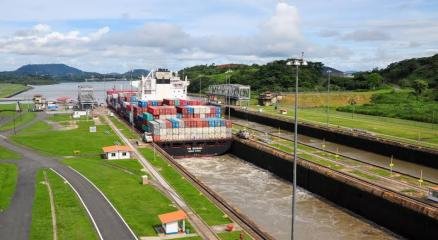
The Panama Canal could further reduce the number of vessels permitted to transit the crucial waterway as intensifying El Niño conditions worsen drought and water shortages, raising fresh concerns for global shipping, commodity flows and supply chains. The Panama Canal Authority’s new administrator, Ilya Espino de Marotta, has warned that daily transit slots could eventually fall to around 29 if rainfall fails to replenish the reservoirs that supply the canal’s lock system. The canal is currently moving towards a limit of 32 vessels a day, down from 36 previously. Authorities have indicated that further restrictions could be introduced in January, February or March depending on rainfall during the critical months ahead. The potential reduction comes as the Panama Canal is already facing heightened demand. The waterway has become particularly important for shipping lines seeking alternatives amid disruptions to traffic through the Strait of Hormuz. The canal handles around 5% of global maritime trade and provides a key shortcut between the Atlantic and Pacific oceans. The canal’s dependence on freshwater makes it especially vulnerable to prolonged dry conditions. Each vessel transit consumes approximately 200 million litres of water, which is used to operate the locks. Between April and August, Panama recorded a rainfall deficit of 35.8% against the historical average, with authorities reporting no immediate signs of recovery. Alongside transit restrictions, the maximum permitted vessel draft has already been reduced from 15.2 metres to 14.6 metres. A lower draft can restrict the amount of cargo vessels are able to carry, potentially affecting vessel economics and increasing pressure on freight rates. The situation recalls the severe 2023-24 drought, when daily Panama Canal crossings fell as low as 22. However, the canal authority does not currently expect restrictions to reach those levels. Any further reduction in Panama Canal capacity could increase waiting times, vessel operating costs and freight rates, while prompting carriers to consider longer alternative routes. Industry observers have already warned that the canal’s constraints could add to disruptions affecting global commodity and supply-chain movements. For a maritime industry already navigating geopolitical disruptions and shifting trade routes, the prospect of another capacity constraint highlights the growing influence of climate and water security on global logistics networks. Panama is pursuing a new reservoir project on the Rio Indio as a longer-term solution, although completion is expected to take several years. 𝐒𝐭𝐚𝐲 𝐓𝐮𝐧𝐞𝐝 𝐭𝐨 CARGOCONNECT 𝐟𝐨𝐫 𝐥𝐚𝐭𝐞𝐬𝐭 𝐮𝐩𝐝𝐚𝐭𝐞𝐬!
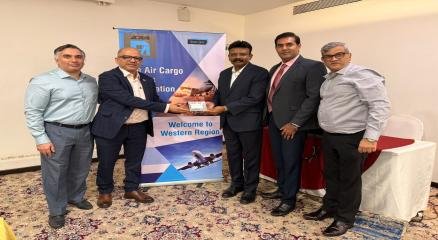
The Western Region of Air Cargo Agents Association of India (ACAAI) has appointed a new team of office bearers, with Arunkumar Menon of Sevenseas Global Express Logistics taking charge as Chairman of the Western Region with effect from September 1, 2026. The appointments were announced at the ACAAI Western Region meeting held in Mumbai. The meeting brought together members of the air cargo and logistics industry to deliberate on key operational and policy matters concerning airlines, Customs, custodians and PTFC/CCFC operations. Alongside the leadership transition, the meeting featured a knowledge session focused on the growing opportunities for logistics companies under India's Free Trade Agreements (FTAs) and Comprehensive Economic Partnership Agreements (CEPAs). Dr Joshua Ebenezer, Principal Consultant, NuCov Facilitrade, led the session titled “Beyond Goods & Tariffs: Unlocking the Services Opportunity under India’s FTAs – A Practical Perspective for Freight Forwarders & Logistics Service Providers.” The session examined how Indian freight forwarders and logistics service providers can leverage the services provisions embedded in India's trade agreements. Dr Ebenezer highlighted opportunities relating to market access, commercial presence and the movement of professionals, areas that remain relatively underexplored by logistics companies. Using the India-UAE Comprehensive Economic Partnership Agreement (CEPA) as a practical reference, the session demonstrated how logistics businesses can look beyond conventional goods trade and explore opportunities in international services markets. The discussions also considered the changing geopolitical environment and its implications for global trade and supply chain operations. Under the new Western Region leadership, Shailesh Sharma of Aroscan Cargo Trade will continue as Hon. Secretary, while Farokh Hansotia of Airlift (India) will continue as Hon. Treasurer. There is no change in these two positions. The meeting concluded with an interactive networking session, enabling members to exchange industry perspectives and strengthen professional relationships. The new leadership is expected to continue ACAAI Western Region's engagement with stakeholders while encouraging greater awareness of emerging trade and services opportunities for India's logistics sector. 𝐒𝐭𝐚𝐲 𝐓𝐮𝐧𝐞𝐝 𝐭𝐨 CARGOCONNECT 𝐟𝐨𝐫 𝐥𝐚𝐭𝐞𝐬𝐭 𝐮𝐩𝐝𝐚𝐭𝐞𝐬!

Susanta Kumar Purohit, IRSEE (1996 batch) and Chairperson of V.O. Chidambaranar Port Authority, has assumed the additional charge of Chairperson of Paradip Port Authority (PPA), effective September 1, 2026. The additional responsibility has been entrusted to him by the Ministry of Ports, Shipping and Waterways, Government of India. Purohit brings extensive experience across port administration, infrastructure development, engineering, public policy and public-sector management. Before taking charge at Paradip, he served as Joint Secretary in the Department of Chemicals & Petrochemicals, where he was involved in policy development and sectoral initiatives. His career has also included important assignments with Indian Railways, the Ministry of Power and the Government of Odisha. His appointment comes at an important stage in Paradip Port’s development as the port continues to expand capacity, strengthen connectivity and modernise its operations. According to PPA, the immediate focus under his additional charge will include infrastructure and connectivity enhancement, improved operational efficiency, modernisation of cargo-handling systems and greater emphasis on green and sustainable port development. In his Chairperson’s message, Purohit highlighted Paradip Port’s evolution as a major gateway for international and coastal trade serving the hinterland of Odisha and the eastern and central regions of India. He pointed to projects such as the Western Dock Expansion, berth mechanisation, deep-draft facilities and integrated traffic and cargo management systems as key elements of the port’s modernisation programme. He also underlined the importance of digital transformation, automation and technology-led solutions in improving cargo movement and transparency. “These advancements strengthen Paradip Port’s competitiveness and position it as a future-ready logistics hub,” Purohit said. Purohit will continue to serve as Chairperson of V.O. Chidambaranar Port Authority alongside his additional responsibility at Paradip. His leadership is expected to support PPA’s efforts to strengthen its role in India’s maritime and logistics ecosystem while advancing the broader objectives of Maritime Vision 2030 and a globally competitive maritime sector. 𝐒𝐭𝐚𝐲 𝐓𝐮𝐧𝐞𝐝 𝐭𝐨 CARGOCONNECT 𝐟𝐨𝐫 𝐥𝐚𝐭𝐞𝐬𝐭 𝐮𝐩𝐝𝐚𝐭𝐞𝐬!
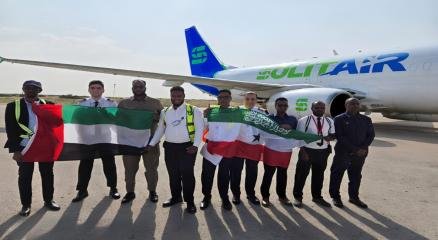
UAE-based cargo carrier SolitAir has expanded its African freighter network with new services to Port Harcourt in Nigeria and Hargeisa in Somaliland, strengthening air cargo connectivity between the Gulf and underserved markets across the continent. The new destinations are served through Port Harcourt International Airport (PHC) and Egal International Airport (HGA), respectively. Their addition takes SolitAir’s African network to 20 destinations across 16 countries, while its global footprint now covers more than 60 destinations in over 35 countries across Asia, Africa and Europe. The expansion is closely aligned with regional trade requirements. Port Harcourt is a major logistics gateway for Nigeria’s oil and gas industry, creating demand for dependable cargo capacity. Hargeisa, meanwhile, serves a commercial region where exports such as livestock and time-sensitive agricultural products depend on reliable air freight connections. SolitAir has already completed a specialised cargo operation to Port Harcourt, carrying 20 tonnes of general cargo on a Boeing 737-800BCF freighter. The one-off operation followed a multi-sector routing through Dubai World Central (DWC), Nairobi, Port Harcourt and Kuwait, leveraging the carrier’s East African hub at Jomo Kenyatta International Airport. SolitAir said frequencies on the route could be increased and scheduled regularly depending on customer demand. The carrier said its network expansion is being driven by customer requirements and emerging trade flows rather than a fixed route-development strategy. Hamdi Osman, founder and CEO of SolitAir, said the new markets would strengthen connections between the Gulf and African economies where reliable air cargo services are in demand. The move also builds on SolitAir’s growing presence in West Africa, with the carrier planning further expansion into Lagos, Nigeria, and Freetown, Sierra Leone. SolitAir currently operates seven Boeing 737-800BCF freighters, each capable of carrying up to 20 tonnes. Operating from its Dubai World Central hub, the airline is targeting a fleet of 20 freighter aircraft by the end of 2027 as it responds to rising demand along international trade corridors. For shippers and logistics providers, the Nigeria and Somaliland additions could offer additional middle-mile air freight capacity and more direct access to Gulf-linked supply chains, particularly for time-sensitive and high-value cargo. 𝐒𝐭𝐚𝐲 𝐓𝐮𝐧𝐞𝐝 𝐭𝐨 CARGOCONNECT 𝐟𝐨𝐫 𝐥𝐚𝐭𝐞𝐬𝐭 𝐮𝐩𝐝𝐚𝐭𝐞𝐬!

Delhi’s Indira Gandhi International Airport has expanded its transshipment cargo network to four additional domestic origin stations and two international destinations, strengthening its role as a potential air cargo hub between eastern and western markets. Civil Aviation Minister Ram Mohan Naidu on August 19 flagged off the scaled-up phase of India’s transshipment cargo reform at Delhi International Airport Limited’s (DIAL) Transshipment Excellence Centre (TEC) at Terminal 2. The expanded network will now connect Bengaluru, Ahmedabad, Mumbai and Hyderabad with London and Copenhagen, following the successful completion of a proof-of-concept project on the Chennai-Delhi-Frankfurt route. The proof of concept for domestic-to-international transshipment began on June 20, 2026, with Air India operating the service end-to-end. Since its launch, around 280 metric tonnes of cargo have been transshipped through the Delhi facility, while aircraft capacity utilisation increased from 75 per cent to nearly 100 per cent. According to the Civil Aviation Ministry, the expansion is expected to increase Air India’s monthly cargo carriage on the covered routes from 1,763 metric tonnes to 3,183 metric tonnes, representing an increase of nearly 80 per cent. Speaking at the Transshipment Excellence Centre at Terminal 2 of IGI Airport, Naidu said the reform was aimed at reducing turnaround time, handling costs and congestion at cargo terminals. The proof-of-concept exercise demonstrated a significant reduction in average end-to-end transit time on the Chennai-Delhi-Frankfurt route, from around 60 hours to 20 hours. The government was working to expand the model further and eventually establish India as a global air cargo transshipment hub by leveraging the country’s geographical position between eastern and western markets, he said “While our immediate focus is on Domestic-to-International transshipment, our larger ambition is to position India as a global cargo transshipment hub,” Naidu said, adding that the framework would subsequently be expanded to International-to-International and International-to-Domestic transshipment. The reform follows a revised framework notified through Addendum-II to AVSEC Circular No. 6/2024 by the Bureau of Civil Aviation Security (BCAS) on July 21, 2025. Under the framework, secured transshipment cargo can be moved through dedicated Transfer Cargo Security Hold Areas (TCSHAs) without mandatory re-screening, subject to prescribed security safeguards. Naidu said the removal of mandatory re-screening had addressed a long-standing industry concern and was helping improve the efficiency and competitiveness of India’s air cargo ecosystem. He also said the initiative was part of the government’s broader effort to develop major Indian airports as global transit hubs. Following the strengthening of hub-and-spoke operations for passengers, similar measures are being undertaken to build India’s air cargo hub capabilities. The Minister congratulated Delhi International Airport Limited (DIAL), BCAS, CISF, airlines, Customs and other stakeholders for their coordination in implementing the reform. The ministry said additional domestic origin stations and international destinations are expected to be brought under the framework in the coming months, further expanding India’s air cargo connectivity and strengthening its position as a competitive global aviation hub. The event was attended by Civil Aviation Secretary Samir Kumar Sinha, Airports Authority of India Chairman Vipin Kumar, Joint Secretary in the Ministry of Civil Aviation Asangba Chuba Ao, BCAS Joint Director General Pratibha Ambedkar and senior officials from the ministry, AAI, BCAS, DIAL, Air India and other stakeholders. 𝐒𝐭𝐚𝐲 𝐓𝐮𝐧𝐞𝐝 𝐭𝐨 CARGOCONNECT 𝐟𝐨𝐫 𝐥𝐚𝐭𝐞𝐬𝐭 𝐮𝐩𝐝𝐚𝐭𝐞𝐬!
India’s two largest container gateways, Mundra and Nhava Sheva, are facing mounting congestion as rising cargo volumes, truck driver shortages and rerouted shipments from the Middle East strain operations across the country’s logistics network. Shipping lines and logistics operators are reporting worsening turnaround times at both ports, with vessel delays averaging nearly two and a half days and some unscheduled ships waiting up to five days for berthing. The disruptions are slowing cargo movement, tightening yard space and forcing carriers to make last-minute operational changes. According to industry reports, a shortage of truck drivers has become a major bottleneck for container transfers between terminals and inland transport hubs. The issue has reduced the pace of cargo evacuation from ports, adding pressure on already crowded container yards. Terminal operators have intermittently restricted gate access to control container inflow, while export gate schedules continue to shift frequently. These changes are complicating truck planning and increasing uncertainty for exporters and freight forwarders. The congestion is being intensified by cargo diversions linked to disruptions in the Middle East, particularly around Gulf trade routes. Shipping lines have increasingly redirected transshipment cargo to Indian ports as alternatives to facilities in the Persian Gulf, sharply increasing container volumes in recent weeks. The pressure has begun affecting carrier schedules. Some shipping companies are rerouting vessels between terminals at short notice to avoid yard congestion. Danish shipping giant Maersk recently shifted several sailings from its regular terminal at Nhava Sheva to PSA Mumbai after facing space constraints and a growing container backlog. Industry stakeholders say these sudden terminal changes are creating operational and financial challenges for shippers, including higher handling costs and difficulties coordinating customs clearance and inland transportation. The latest disruption comes at a time when India has been positioning itself as a major global manufacturing and logistics hub. Over the past decade, the country has expanded port capacity, improved freight corridors and modernised customs processes to strengthen supply chain efficiency. However, the current congestion highlights the vulnerability of port infrastructure during periods of sudden trade realignment and geopolitical disruption. Logistics experts warn that prolonged delays could increase freight costs, extend delivery timelines and place additional pressure on exporters already dealing with volatile global shipping conditions. Follow CARGOCONNECT for more such updates.
The diversification process by Apple continues to progress as India becomes one of the centers for manufacturing operations. Based on an analysis by Smart Analytics Global (SAG), the percentage share of Indian manufacturing of iPhones has increased from 14% in 2024 to 23% in 2025 and further to 28% by 2026, whereas China’s share has decreased from 83% to 74% within the same timeframe. As Apple continues to lower its reliance on China, India is all set to emerge as the major assembly hub for 28 percent of all iPhones exported around the world by 2026, compared to just 23 percent in the prior year. This change is due to the company's overall strategy of spreading its manufacturing operations in order to mitigate potential tariff risks and geopolitical risks, in addition to creating a more flexible manufacturing network beyond China. Based on the estimates of Smart Analytics Global (SAG), China's share in global iPhone production dropped from 83% in 2024 to 74% in 2025, while India's share increased from 14% in 2024 to 23% in 2025. Estimates provided by another market research firm, Counterpoint Research, indicate that India's share in global iPhone manufacturing could increase to approximately 26% in 2026 from 23% in 2025. As per SAG, “India will account for the manufacture of 28 percent of iPhones shipped globally in 2026, rising from 23 percent in 2025. This growth will be fueled by the ongoing diversification of Apple outside China and capacity build-up at existing manufacturers in India like Tata Electronics,” said Abhilash Kumar, an analyst at Smart Analytics Global. According to Tarun Pathak, research director at Counterpoint Research, “Apple's manufacturing partners have substantially increased their manufacturing capacities and assembly lines in India. They have also diversified their product portfolio made in India.” He further stated that the increase in manufacturing capacity of Tata Electronics is another factor aiding the growth. Apple has managed to localize production substantially in India through manufacturers like Foxconn and Tata Electronics. The recent takeover of Wistron and Pegatron in India by the Tata Group represents a huge step forward in Apple’s localization efforts in India. At present, India is assembling a larger number of iPhones, even the latest versions, and has become an important source of exports, targeting countries like the US and European nations. Over the past five years, Apple has manufactured iPhones worth almost $70 billion in India using its PLI scheme, where around $51 billion, or almost 73% of all iPhones manufactured, were exported from India. Moreover, iPhones have become the most exported goods from India during the previous financial year. India has become the biggest beneficiary of Apple’s changing supply chain. From initially assembling iPhones on a smaller scale, it has grown to become a manufacturing cluster for iPhones through government incentives, increased manufacturing capabilities, and the growing presence of suppliers. Several of the most important suppliers and manufacturers for Apple are still highly entrenched within China, allowing the country to enjoy an unrivaled capacity and adaptability when it comes to managing mass-scale productions and product shifts. For more such news and updates, visit CARGOCONNECT.
Shadowfax is significantly expanding its quick commerce infrastructure, announcing plans to scale its dark store network from 15 facilities to 100 by FY27. The move underscores the company’s growing focus on hyperlocal deliveries, same-day fulfilment, and direct-to-consumer (D2C) logistics as competition intensifies in India’s fast-evolving quick commerce ecosystem. The Bengaluru-based company plans to add 85 new dark stores over the next fiscal year, targeting metro cities with delivery radiuses of approximately seven kilometres and fulfilment timelines of around 30 minutes. The expansion is expected to support rising demand from vertical quick commerce platforms and D2C brands that increasingly rely on third-party logistics (3PL) partners for rapid deliveries. According to company executives, vertical marketplaces are emerging as a profitable segment because of their dependence on outsourced logistics infrastructure rather than captive fulfilment networks. Shadowfax believes this trend creates a strong opportunity for scalable 3PL-led quick commerce models. The dark store expansion will account for nearly 10% of Shadowfax’s planned capital expenditure of ₹180–190 crore in FY27. The company is simultaneously strengthening its automation and artificial intelligence capabilities to improve operational efficiency. AI-led demand forecasting, automated slotting, and smarter sorting centre operations are expected to reduce overhead costs while accelerating breakeven timelines for new facilities. Shadowfax’s aggressive expansion comes on the back of strong financial performance. The company reported a consolidated net profit of ₹55.8 crore in Q4 FY26, compared to a net loss of ₹9.9 crore during the same period last year. Revenue from operations surged 73.6% year-on-year to ₹1,237 crore, reflecting growing order volumes and increased adoption of quick commerce delivery services. Founded in 2015, Shadowfax has evolved into one of India’s largest logistics and last-mile delivery networks, serving over 2,500 cities and more than 15,000 pincodes. The company currently handles millions of shipments daily through a technology-driven delivery ecosystem that supports e-commerce, grocery, hyperlocal, and D2C brands. Industry analysts believe the dark store expansion reflects a broader shift within India’s logistics sector, where speed, proximity-based fulfilment, and automated operations are becoming central to supply chain competitiveness. As quick commerce adoption accelerates beyond groceries into categories such as fashion, electronics, and personal care, logistics providers like Shadowfax are positioning themselves as critical enablers of ultra-fast retail fulfilment. 𝐒𝐭𝐚𝐲 𝐓𝐮𝐧𝐞𝐝 𝐭𝐨 https://cargoconnect.co.in/ 𝐟𝐨𝐫 𝐥𝐚𝐭𝐞𝐬𝐭 𝐮𝐩𝐝𝐚𝐭𝐞𝐬!
India’s Dedicated Freight Corridors (DFCs) are rapidly reshaping the country’s logistics landscape, with the Western Dedicated Freight Corridor (WDFC) between Dadri and Jawaharlal Nehru Port Authority (JNPA) emerging as a game-changing infrastructure project for supply chains and multimodal freight movement. Designed exclusively for cargo operations, the corridor is significantly reducing transit times, improving reliability, and easing congestion on conventional rail routes. Stretching nearly 1,500 km from Dadri in Uttar Pradesh to JNPA near Mumbai, the corridor forms the backbone of India’s western logistics artery, connecting manufacturing centres, inland container depots, industrial clusters, and ports. With dedicated tracks for freight trains, the network allows uninterrupted cargo movement at higher average speeds, eliminating delays caused by mixed passenger and freight operations. One of the biggest outcomes has been a sharp reduction in transit time. Freight movement between Dadri and JNPA that traditionally took close to 72 hours on congested rail routes is now being completed in nearly half the time, improving turnaround efficiency for exporters, importers, and logistics operators. Industry stakeholders believe the reduction in transit duration will strengthen India’s competitiveness in global trade and support the government’s target of lowering logistics costs as a percentage of GDP. The DFC network has also enabled the operation of longer and heavier freight trains, including double-stack container services on electrified routes. This has increased carrying capacity while lowering per-unit transportation costs. According to sector estimates, rail freight on dedicated corridors is considerably more energy-efficient and environmentally sustainable than road transport, aligning with India’s broader decarbonisation goals. Beyond operational efficiency, the corridors are catalysing the growth of integrated logistics ecosystems. Regions such as Dadri, Greater Noida, and Jewar are witnessing accelerated development of multimodal logistics parks, warehousing zones, and industrial hubs due to their strategic connectivity with both the Eastern and Western DFCs. The emerging “rail-road-air” logistics triangle around the National Capital Region is expected to attract substantial investments in manufacturing and distribution infrastructure. The Dedicated Freight Corridor Corporation of India (DFCCIL) has reported rising freight train volumes on the operational stretches, indicating growing industry adoption. The completion of key links on the western corridor is expected to further enhance throughput and reduce dependency on road transport for long-haul cargo. Analysts say the dedicated rail network could become central to India’s ambition of creating faster, greener, and more resilient supply chains. As India continues investing in additional freight corridors across the country, the success of the Dadri-JNPA route demonstrates how infrastructure modernisation can directly influence trade efficiency, logistics performance, and industrial growth. 𝐒𝐭𝐚𝐲 𝐓𝐮𝐧𝐞𝐝 𝐭𝐨 https://cargoconnect.co.in/ 𝐟𝐨𝐫 𝐥𝐚𝐭𝐞𝐬𝐭 𝐮𝐩𝐝𝐚𝐭𝐞𝐬
In a strategic warehousing move, the South Eastern Coalfields Limited (SECL), the second largest coal-producing subsidiary of Coal India Limited, has signed a Memorandum of Understanding (MoU) with Central Warehousing Corporation (CWC) for collaboration in coal logistics, railway rake provisioning under GPWIS and similar schemes, and integrated transportation services. Guided by the Union Ministry of Coal, SECL is rapidly working to improve India’s energy security and coal logistics infrastructure. The company is taking steps to boost coal evacuation efficiency and ensure a steady fuel supply to essential sectors. This partnership with CWC is a significant move in that direction. The goal of the partnership with CWC is to strengthen SECL’s coal evacuation capabilities by providing reliable and efficient rail logistics solutions to meet the rising demand from the power, steel, cement, and other sectors. The MoU outlines collaboration in various areas, including dedicated railway rake operations, integrated coal transportation solutions, multimodal logistics, first-mile and last-mile connectivity, and the deployment of digital systems for logistics monitoring and operational efficiency. Under the agreed framework, both organizations will explore provisioning and operation of GPWIS and equivalent racks, integrated rail logistics services, and long-term transportation solutions aimed at improving dispatch efficiency and reducing logistical obstacles. The MoU was signed in the presence of Harish Duhan, Chairman-cum-Managing Director of SECL, and Santosh Sinha, Managing Director of CWC. Functional Directors and senior officials from SECL, as well as representatives from CWC, attended the signing ceremony. SECL plays a vital role in meeting the country's growing coal demand. In the current financial year 2026-27, Coal India Limited has already surpassed the 100 million tonne production mark, with SECL contributing more than 26.8 million tonnes. Central Warehousing Corporation (CWC), a Navaratna Central Public Sector Enterprise under the Government of India, is a leader in integrated logistics and warehousing services. It has extensive experience in rail-linked cargo movement and multimodal transportation solutions. For more such news and updates, visit CARGOCONNECT.