
Loading...

Etihad Cargo has supported a five-year international wildlife rescue mission by transporting two rescued brown bears from Russia to their new home at Wild Ireland, a wildlife sanctuary in County Donegal, highlighting the role of specialised air cargo operations in advancing animal welfare and conservation.
The bears, Bu, a former circus bear, and Tyapa, previously kept at a petting zoo, had spent years in unsuitable conditions in Dagestan, Russia. Their arrival in Ireland on 4 August 2026 marked a major milestone in the rescue effort led by Killian McLaughlin, Founder and Director of Wild Ireland, with more than 100 people across multiple countries contributing to the mission.
Etihad Cargo transported the bears from Moscow to Dublin via its Abu Dhabi hub, working alongside Abu Dhabi Airports and Velora to coordinate specialist handling and transit arrangements at Zayed International Airport. The operation drew on the carrier’s experience in live-animal transportation, supported by its International Air Transport Association (IATA) CEIV Live Animals certification, which recognises standards for animal handling, safety and welfare.
Stanislas Brun, Chief Cargo Officer at Etihad, said the mission demonstrated how the airline’s global network and operational expertise can contribute to wildlife conservation and animal welfare. He highlighted the collaboration between the participating organisations as central to giving the bears an opportunity for a better life.
Following their arrival, Bu and Tyapa moved into their new forest habitat at Wild Ireland in September, where they are showing encouraging signs of recovery and gradually adapting to their surroundings. McLaughlin said the successful relocation was the culmination of years of challenges and collective effort across national borders.
The rescue is also being documented by Abu Dhabi-based Moondance Productions, with a documentary chronicling the five-year mission expected to be released in 2027. Shane Brennan, CEO of Moondance Productions, described the collaboration between Wild Ireland, Etihad Cargo and international partners as a powerful example of what coordinated efforts can achieve for animal welfare.
Beyond the transportation itself, the mission underscores the importance of specialised cargo expertise, careful handling and cross-border coordination in moving vulnerable animals safely. For Etihad Cargo, the operation illustrates how its international network can support initiatives that extend beyond commercial logistics to wildlife protection and conservation.
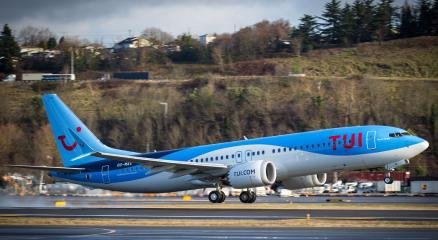
TCE is helping TUI Airline transform the freight potential of its passenger network into a structured cargo business, combining commercial development, customer management, operational coordination and regulatory compliance to unlock opportunities beyond its established leisure operations. Since January 2019, TCE has provided the specialist organisation supporting TUI Airline’s cargo activities, enabling the passenger carrier to pursue airfreight opportunities without diverting its teams from their core business. Its remit spans sales and marketing, customer service, booking coordination, capacity management, operational support, quality assurance and security compliance. The partnership reflects a wider commercial opportunity for passenger airlines: aircraft connecting holidaymakers to destinations can also carry airfreight, creating an additional revenue stream from existing network capacity. Realising that potential, however, requires more than available space. It calls for dedicated cargo expertise, established customer relationships and coordination across the entire shipment journey. “Aircraft capacity creates an opportunity, but expertise turns it into a business. We bring together the commercial relationships, operational coordination and compliance support that TUI Airline needs to develop its cargo activity,” said Sarah Scheibe, Managing Director of TCE. She added that the objective is to make the airline’s capacity accessible to freight customers through a professionally managed service. Connecting commercial promise with operational delivery For TUI Airline, cargo represents a way to maximise the value of its network while responding to demand for reliable airfreight solutions. TCE supports this ambition by acting as an extension of the airline’s organisation, linking commercial commitments with the operational processes required to move shipments through its network. Its responsibilities begin with business development, customer management and booking coordination, and extend to the operational support needed to translate enquiries and confirmed bookings into workable cargo movements. This integrated approach helps ensure that the capacity offered to customers is aligned with the airline’s operating requirements. The model also provides freight customers and handling partners with a dedicated point of contact and coordinated support. For TUI Airline, it brings together specialist resources across multiple functions under one organisation, avoiding the need to build an equivalent internal structure from the ground up. “A successful cargo product depends on every part of the operation working together. Customers need clear communication, handling partners need effective coordination and the airline needs confidence that its requirements are being met,” Scheibe said. She noted that managing these activities within one organisation helps maintain continuity from the first enquiry through to operational execution. Quality and compliance underpin growth As the cargo business develops, quality assurance and security remain integral to TCE’s role. The company manages cargo quality activities, coordinates audits and supports compliance with applicable regulatory requirements, including ACC3 validation processes where required. By integrating these responsibilities with commercial and operational management, the partnership places the necessary quality, safety and security considerations alongside business development. This helps ensure that opportunities to grow cargo volumes are supported by the standards and processes required for consistent service delivery. The arrangement also provides a framework for evaluating performance through verified operational and commercial data. Measures such as cargo volumes, revenue, capacity utilisation and service performance can help assess progress, identify opportunities and inform future decisions. TCE’s contribution therefore extends beyond sales support. Its market relationships help connect TUI Airline with freight customers, while its operational expertise and compliance oversight provide the structure needed to manage cargo as a coordinated business. Building on a long-term partnership The cooperation will continue to underpin TUI Airline’s cargo strategy, with TCE remaining its key partner in developing freight activity and making better use of available network capacity. “Our partnership with TUI Airline has developed through sustained cooperation and a shared focus on making cargo work within a passenger airline environment,” Scheibe said. She added that the focus remains on identifying commercial opportunities while maintaining the operational discipline, quality assurance and security oversight needed for long-term development. The partnership highlights the importance of an integrated approach to passenger-airline cargo. By bringing commercial development, customer support, operational coordination and compliance together, TCE provides TUI Airline with a dedicated framework to connect available capacity with market demand and further develop its freight offering across its network.
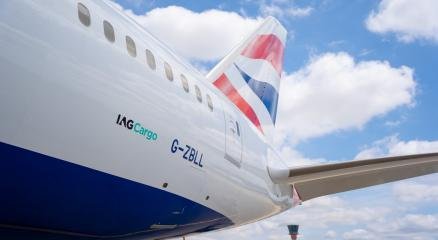

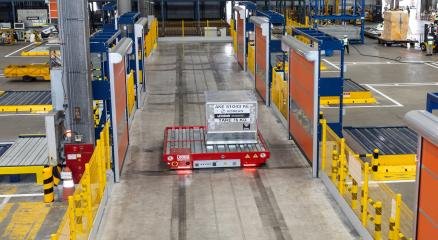
Korean Air has completed the modernisation of its cargo terminal at Incheon International Airport in South Korea, transforming the facility into an integrated smart cargo terminal equipped with advanced automation technologies. The upgrade is expected to increase overall cargo-handling capacity by more than 25%, strengthening the airline’s ability to accommodate growing air freight demand and improve operational efficiency. The modernisation project began in June 2025 and was completed in September 2026. It introduced automated guided vehicles (AGVs), upgraded elevating transfer vehicles (ETVs) and improvements to the terminal’s cargo-transfer infrastructure. These technologies are designed to streamline freight movement, improve handling accuracy and reduce operational bottlenecks while maintaining service quality. A key development is the expansion of the terminal’s bypass infrastructure from a single line to two automated transfer lines integrated with the new ETVs. This has increased the hourly processing capacity for unit load devices (ULDs), the standardised containers and pallets used to transport air freight, from 18 to 30 units. The increased throughput is expected to support faster cargo processing and improve the efficiency of terminal operations. Automating the movement of heavy equipment also reduces manual handling requirements, helping improve workplace safety and working conditions. Infrastructure improvements include upgrades intended to create a more efficient working environment for terminal personnel. Alongside automation, Korean Air is expanding facilities for specialised and high-value shipments, including cargo requiring temperature-controlled handling. Its dedicated Cool Cargo Center at Incheon can store and process more than 150 tonnes of fresh cargo at a time, supporting the movement of perishables and other temperature-sensitive goods. The Incheon upgrade forms part of the airline’s broader efforts to strengthen its cargo infrastructure. Korean Air is also modernising its cargo terminal at John F. Kennedy International Airport in New York, with completion targeted for 2027. By investing in automated handling systems and specialised cargo infrastructure, Korean Air aims to enhance throughput, operational precision and service capabilities across its international air cargo network. 𝐒𝐭𝐚𝐲 𝐓𝐮𝐧𝐞𝐝 𝐭𝐨 CARGOCONNECT 𝐟𝐨𝐫 𝐥𝐚𝐭𝐞𝐬𝐭 𝐮𝐩𝐝𝐚𝐭𝐞𝐬!

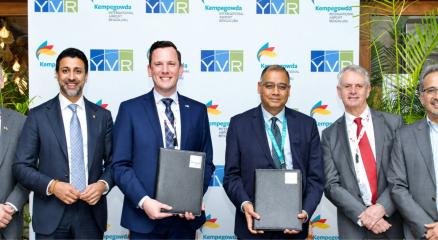
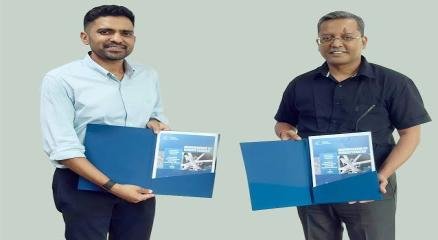
Bengaluru–Vancouver sister airport agreement focuses on cargo development, technology collaboration and the potential for future direct flights. Kempegowda International Airport Bengaluru (BLR) and Vancouver International Airport (YVR) have signed a sister airport agreement aimed at strengthening cooperation in air cargo, digital innovation and airport operations, while supporting efforts to improve air connectivity between southern India and western Canada. The agreement establishes a framework for collaboration between Bangalore International Airport Limited (BIAL), which operates Bengaluru Airport, and Vancouver International Airport. The announcement was marked at Bengaluru Airport’s Terminal 2 in the presence of Canada’s Minister of International Trade, Maninder Sidhu. The partnership covers seven areas of cooperation, including technology-driven operational improvements, innovation, cargo development and the exchange of expertise in sustainable airport operations and terminal performance management. Cargo Cooperation at the Centre of the Partnership: Improving cargo movement between Canada and southern India is a key objective of the agreement. Closer collaboration could help the airports explore opportunities to support freight demand from technology and other industries, while examining operational processes and customer requirements. Both airports have established cargo operations. Bengaluru handled 520,985 tonnes of cargo in calendar year 2025, registering 5% growth year on year. Vancouver processed approximately 365,000 tonnes over the same period, up 7.4%. Although these figures reflect total airport cargo volumes rather than traffic between the two cities, they demonstrate the scale of the logistics operations that underpin the partnership. The agreement provides a platform for further engagement on cargo-related opportunities. Its commercial impact will depend on specific initiatives, available airline capacity, handling arrangements and the development of viable transport connections. Digital Technology and Operational Innovation: Digital innovation is another major component of the partnership. The airports intend to explore opportunities for joint technology development and testing, drawing on operational experience and emerging digital solutions. Vancouver's digital twin technology offers a potential reference point for this collaboration. Developed to support airport planning and operations, the platform combines historical data, sensor inputs and real-time information in two-dimensional and three-dimensional visualisations. Vancouver agreed with Unity in March 2023 to commercialise the platform for the wider aviation industry. Its applications include simulation, planning, training and operational analysis. The Bengaluru–Vancouver agreement creates an opportunity to exchange knowledge in this area, although no specific digital twin deployment at Bengaluru Airport has been announced as part of the partnership. Direct Air Connectivity Remains a Longer-Term Goal: The airports have also identified direct air connectivity between Bengaluru and Vancouver as an objective. However, the sister airport agreement does not confirm a new flight service, and no airline, launch date or operating schedule has been announced. Introducing a direct route would require an airline to evaluate demand, aircraft availability, operating costs and commercial viability before committing to a service. The regulatory framework already provides scope for future development. In November 2022, Canada and India expanded their bilateral air transport agreement, allowing designated airlines to operate unlimited flights between the two countries, replacing the previous limit of 35 weekly flights for each country. Bengaluru was among the Indian cities accessible to Canadian carriers under the arrangement, while Vancouver was among the Canadian gateways available to Indian airlines. All-cargo flight rights were already unrestricted. These provisions provide regulatory flexibility but do not guarantee that a direct passenger or cargo service between Bengaluru and Vancouver will be launched. A Framework for Practical Cooperation: The agreement brings together two established international gateways with opportunities to exchange expertise in cargo operations, digital technology and sustainable airport management. For the logistics and aviation sectors, the next indicators of progress will be the announcement of concrete cargo initiatives, joint technology projects, operational trials and any future airline commitments. While the agreement establishes a basis for closer cooperation, its long-term significance will depend on how the proposed collaboration develops into measurable operational improvements and commercially viable services. Follow CARGOCONNECT for more such updates