Loading...
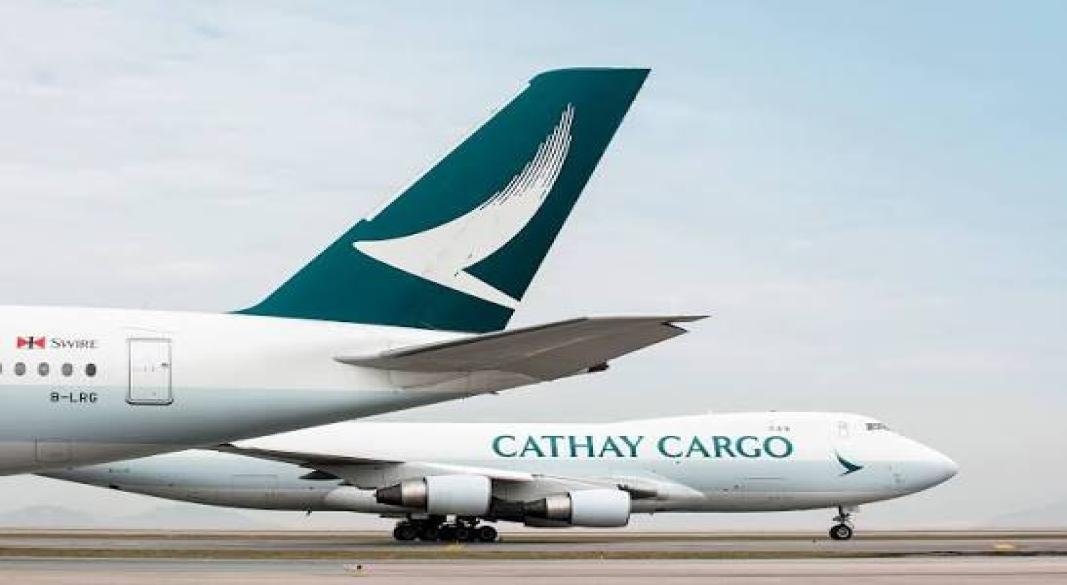
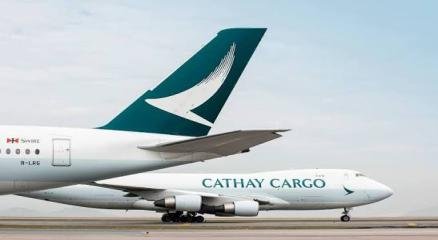
Cathay Cargo recorded a 14.2% year-on-year increase in cargo tonnage in September 2026, transporting 154,041 tonnes of freight as resilient demand from mainland China and Southeast Asia supported its performance. The Hong Kong-based carrier’s latest traffic figures indicate continued momentum in air freight ahead of the traditional year-end peak season.
According to the Cathay Group’s September traffic report, available freight tonne kilometres (AFTKs), a measure of cargo capacity, increased by 5.3% year on year to approximately 1.344 billion. Revenue freight tonne kilometres (RFTKs), which measure freight carried over distance, rose by 8.6% to approximately 792 million.
The cargo load factor improved by 1.8 percentage points to 58.9%, reflecting growth in freight traffic relative to available capacity. Cathay Cargo also operated 1,367 freighter flight sectors during the month, an increase of 4.8% compared with September 2025.
For the January-September 2026 period, Cathay Cargo handled 1.324 million tonnes of freight, representing an 8.9% increase over the corresponding period last year. Available freight capacity grew by 3.3%, while revenue freight tonne kilometres increased by 4.7%. The cumulative cargo load factor reached 58.9%, up 0.8 percentage points year on year.
The figures highlight sustained cargo demand, with tonnage growth outpacing the expansion in available freight capacity during both September and the first nine months of the year.
Cathay’s Chief Customer and Commercial Officer, Lavinia Lau, said demand remained resilient across mainland China and Southeast Asia. The carrier’s specialist cargo solutions also contributed to performance, with Cathay Priority maintaining momentum through time-critical shipments from Southeast Asia. Meanwhile, continued semiconductor flows supported demand for Cathay Expert, its specialised cargo offering.
Cathay expects cargo demand to strengthen further as the industry approaches the traditional year-end peak season. The outlook is supported by anticipated market demand during the final quarter, when seasonal shipping requirements can increase pressure on air freight capacity and network operations.
The latest performance reinforces the importance of Hong Kong as an international air cargo hub, connecting manufacturing and export markets across Asia with global destinations. For freight forwarders and shippers, sustained demand for semiconductor and time-sensitive shipments will make reliable capacity, specialised handling and predictable transit times important considerations in the coming months.
𝐒𝐭𝐚𝐲 𝐓𝐮𝐧𝐞𝐝 𝐭𝐨 CARGOCONNECT 𝐟𝐨𝐫 𝐥𝐚𝐭𝐞𝐬𝐭 𝐮𝐩𝐝𝐚𝐭𝐞𝐬!
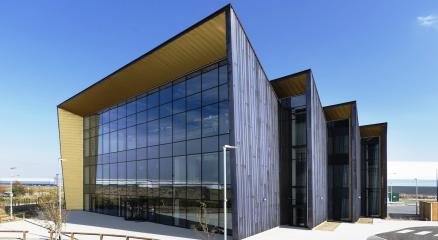
GlobeCross GmbH, a wholly owned subsidiary of Lufthansa Cargo, has opened its new headquarters at Frankfurt Airport, bringing its eCommerce logistics, customs clearance and import terminal operations teams together under one roof. The move marks a significant step in integrating the company’s operations following the merger of heyworld GmbH and CB Customs Broker GmbH. Located at one of Europe’s major air cargo and logistics hubs, the new headquarters is designed to improve internal coordination, streamline decision-making and support the company’s growth in cross-border logistics. By consolidating key functions in a shared workspace, GlobeCross aims to strengthen collaboration between teams and enhance operational efficiency, innovation and customer service. GlobeCross supports businesses transporting goods into and across Europe through integrated cross-border eCommerce logistics, import terminal handling and customs clearance services. Its offering combines logistics expertise with digital processes to help customers navigate customs requirements and manage international shipments more efficiently. Commenting on the development, Ashwin Bhat, CEO of Lufthansa Cargo, said the new headquarters reflects GlobeCross’s evolution into an integrated service provider and aligns with Lufthansa Cargo’s mission of enabling global business. He noted that the consolidation brings together the cultures, expertise and capabilities of the two businesses that formed the subsidiary. Nikola Todic, Managing Director of GlobeCross, said the headquarters represents the company’s shared vision and provides a foundation for closer collaboration and future development, supporting its ambition to turn borders into gateways. Established in May 2026 following the formal merger of heyworld and CB Customs Broker, GlobeCross combines digital eCommerce logistics capabilities with more than two decades of customs expertise. Its services include end-to-end eCommerce logistics, specialised import terminal operations and digital customs solutions for international trade. The Frankfurt headquarters is now fully operational. GlobeCross also maintains offices in the Netherlands and China, supporting its international operations. The development reinforces Lufthansa Cargo’s strategy of expanding beyond traditional airport-to-airport airfreight services by integrating complementary logistics and customs capabilities. As cross-border eCommerce continues to generate demand for reliable, transparent and compliant shipment solutions, GlobeCross aims to simplify trade processes and improve the movement of goods across European markets. 𝐒𝐭𝐚𝐲 𝐓𝐮𝐧𝐞𝐝 𝐭𝐨 CARGOCONNECT 𝐟𝐨𝐫 𝐥𝐚𝐭𝐞𝐬𝐭 𝐮𝐩𝐝𝐚𝐭𝐞𝐬!
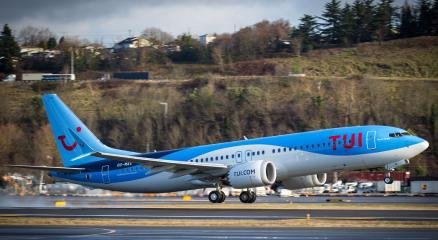
TCE is helping TUI Airline transform the freight potential of its passenger network into a structured cargo business, combining commercial development, customer management, operational coordination and regulatory compliance to unlock opportunities beyond its established leisure operations. Since January 2019, TCE has provided the specialist organisation supporting TUI Airline’s cargo activities, enabling the passenger carrier to pursue airfreight opportunities without diverting its teams from their core business. Its remit spans sales and marketing, customer service, booking coordination, capacity management, operational support, quality assurance and security compliance. The partnership reflects a wider commercial opportunity for passenger airlines: aircraft connecting holidaymakers to destinations can also carry airfreight, creating an additional revenue stream from existing network capacity. Realising that potential, however, requires more than available space. It calls for dedicated cargo expertise, established customer relationships and coordination across the entire shipment journey. “Aircraft capacity creates an opportunity, but expertise turns it into a business. We bring together the commercial relationships, operational coordination and compliance support that TUI Airline needs to develop its cargo activity,” said Sarah Scheibe, Managing Director of TCE. She added that the objective is to make the airline’s capacity accessible to freight customers through a professionally managed service. Connecting commercial promise with operational delivery For TUI Airline, cargo represents a way to maximise the value of its network while responding to demand for reliable airfreight solutions. TCE supports this ambition by acting as an extension of the airline’s organisation, linking commercial commitments with the operational processes required to move shipments through its network. Its responsibilities begin with business development, customer management and booking coordination, and extend to the operational support needed to translate enquiries and confirmed bookings into workable cargo movements. This integrated approach helps ensure that the capacity offered to customers is aligned with the airline’s operating requirements. The model also provides freight customers and handling partners with a dedicated point of contact and coordinated support. For TUI Airline, it brings together specialist resources across multiple functions under one organisation, avoiding the need to build an equivalent internal structure from the ground up. “A successful cargo product depends on every part of the operation working together. Customers need clear communication, handling partners need effective coordination and the airline needs confidence that its requirements are being met,” Scheibe said. She noted that managing these activities within one organisation helps maintain continuity from the first enquiry through to operational execution. Quality and compliance underpin growth As the cargo business develops, quality assurance and security remain integral to TCE’s role. The company manages cargo quality activities, coordinates audits and supports compliance with applicable regulatory requirements, including ACC3 validation processes where required. By integrating these responsibilities with commercial and operational management, the partnership places the necessary quality, safety and security considerations alongside business development. This helps ensure that opportunities to grow cargo volumes are supported by the standards and processes required for consistent service delivery. The arrangement also provides a framework for evaluating performance through verified operational and commercial data. Measures such as cargo volumes, revenue, capacity utilisation and service performance can help assess progress, identify opportunities and inform future decisions. TCE’s contribution therefore extends beyond sales support. Its market relationships help connect TUI Airline with freight customers, while its operational expertise and compliance oversight provide the structure needed to manage cargo as a coordinated business. Building on a long-term partnership The cooperation will continue to underpin TUI Airline’s cargo strategy, with TCE remaining its key partner in developing freight activity and making better use of available network capacity. “Our partnership with TUI Airline has developed through sustained cooperation and a shared focus on making cargo work within a passenger airline environment,” Scheibe said. She added that the focus remains on identifying commercial opportunities while maintaining the operational discipline, quality assurance and security oversight needed for long-term development. The partnership highlights the importance of an integrated approach to passenger-airline cargo. By bringing commercial development, customer support, operational coordination and compliance together, TCE provides TUI Airline with a dedicated framework to connect available capacity with market demand and further develop its freight offering across its network.

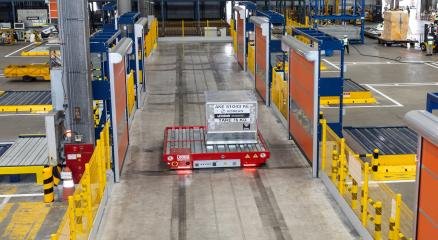
Korean Air has completed the modernisation of its cargo terminal at Incheon International Airport in South Korea, transforming the facility into an integrated smart cargo terminal equipped with advanced automation technologies. The upgrade is expected to increase overall cargo-handling capacity by more than 25%, strengthening the airline’s ability to accommodate growing air freight demand and improve operational efficiency. The modernisation project began in June 2025 and was completed in September 2026. It introduced automated guided vehicles (AGVs), upgraded elevating transfer vehicles (ETVs) and improvements to the terminal’s cargo-transfer infrastructure. These technologies are designed to streamline freight movement, improve handling accuracy and reduce operational bottlenecks while maintaining service quality. A key development is the expansion of the terminal’s bypass infrastructure from a single line to two automated transfer lines integrated with the new ETVs. This has increased the hourly processing capacity for unit load devices (ULDs), the standardised containers and pallets used to transport air freight, from 18 to 30 units. The increased throughput is expected to support faster cargo processing and improve the efficiency of terminal operations. Automating the movement of heavy equipment also reduces manual handling requirements, helping improve workplace safety and working conditions. Infrastructure improvements include upgrades intended to create a more efficient working environment for terminal personnel. Alongside automation, Korean Air is expanding facilities for specialised and high-value shipments, including cargo requiring temperature-controlled handling. Its dedicated Cool Cargo Center at Incheon can store and process more than 150 tonnes of fresh cargo at a time, supporting the movement of perishables and other temperature-sensitive goods. The Incheon upgrade forms part of the airline’s broader efforts to strengthen its cargo infrastructure. Korean Air is also modernising its cargo terminal at John F. Kennedy International Airport in New York, with completion targeted for 2027. By investing in automated handling systems and specialised cargo infrastructure, Korean Air aims to enhance throughput, operational precision and service capabilities across its international air cargo network. 𝐒𝐭𝐚𝐲 𝐓𝐮𝐧𝐞𝐝 𝐭𝐨 CARGOCONNECT 𝐟𝐨𝐫 𝐥𝐚𝐭𝐞𝐬𝐭 𝐮𝐩𝐝𝐚𝐭𝐞𝐬!