
Loading...
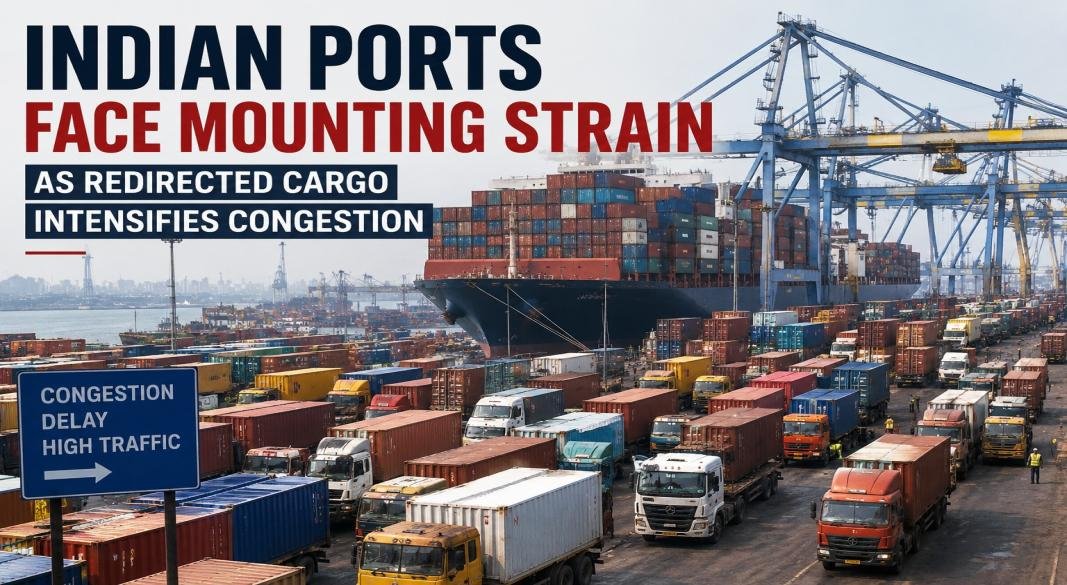
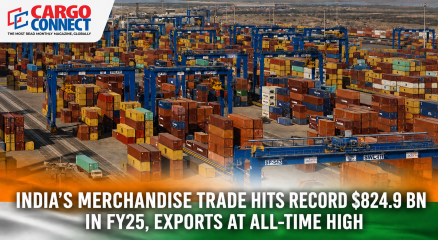
India’s two largest container gateways, Mundra and Nhava Sheva, are facing mounting congestion as rising cargo volumes, truck driver shortages and rerouted shipments from the Middle East strain operations across the country’s logistics network.
Shipping lines and logistics operators are reporting worsening turnaround times at both ports, with vessel delays averaging nearly two and a half days and some unscheduled ships waiting up to five days for berthing. The disruptions are slowing cargo movement, tightening yard space and forcing carriers to make last-minute operational changes.
According to industry reports, a shortage of truck drivers has become a major bottleneck for container transfers between terminals and inland transport hubs. The issue has reduced the pace of cargo evacuation from ports, adding pressure on already crowded container yards.
Terminal operators have intermittently restricted gate access to control container inflow, while export gate schedules continue to shift frequently. These changes are complicating truck planning and increasing uncertainty for exporters and freight forwarders.
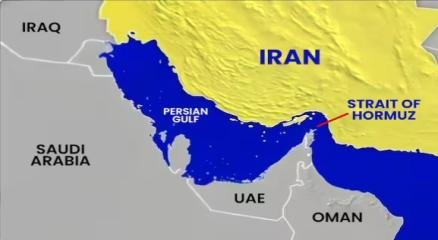
The congestion is being intensified by cargo diversions linked to disruptions in the Middle East, particularly around Gulf trade routes. Shipping lines have increasingly redirected transshipment cargo to Indian ports as alternatives to facilities in the Persian Gulf, sharply increasing container volumes in recent weeks.
The pressure has begun affecting carrier schedules. Some shipping companies are rerouting vessels between terminals at short notice to avoid yard congestion. Danish shipping giant Maersk recently shifted several sailings from its regular terminal at Nhava Sheva to PSA Mumbai after facing space constraints and a growing container backlog.
Industry stakeholders say these sudden terminal changes are creating operational and financial challenges for shippers, including higher handling costs and difficulties coordinating customs clearance and inland transportation.
The latest disruption comes at a time when India has been positioning itself as a major global manufacturing and logistics hub. Over the past decade, the country has expanded port capacity, improved freight corridors and modernised customs processes to strengthen supply chain efficiency.
However, the current congestion highlights the vulnerability of port infrastructure during periods of sudden trade realignment and geopolitical disruption. Logistics experts warn that prolonged delays could increase freight costs, extend delivery timelines and place additional pressure on exporters already dealing with volatile global shipping conditions.
Follow CARGOCONNECT for more such updates.

Chennai Port Authority has sought government approval for a ₹17,000 crore outer harbour project that will add 5 million TEUs of container capacity in two phases. The project is proposed to be developed through a hybrid public-private model, with marine works such as breakwater construction, dredging and reclamation planned under the Hybrid Annuity Mode (HAM) at an estimated cost of ₹7,000 crore. Container terminals will be developed through a DBFOT concession with private investment. The first phase is planned with an 18-metre draft, followed by a second phase with a 21-metre draft, enabling the facility to handle larger vessels and additional transhipment cargo. The proposal comes as Chennai’s existing container terminals face capacity constraints, while the port’s location within the city limits limits further expansion of current facilities. The outer harbour is expected to support gateway cargo from Tamil Nadu’s manufacturing and export sectors while strengthening Chennai’s role in east coast transhipment. Subject to approval, the project could be awarded by mid-to-late 2027, with construction expected to begin in 2028 and container operations targeted for 2033. The outer harbour is also expected to include berths supporting the requirements of the Indian Navy and Coast Guard. Follow CARGOCONNECT for more such updates
Mundra, Gujarat | September 5, 2026 A strike by empty-container depot operators at Mundra Port has disrupted the movement of export-import (EXIM) cargo, with transporters also joining the stoppage. The disruption is affecting the return and availability of empty containers required for export cargo stuffing. The dispute follows Adani Ports and Special Economic Zone (APSEZ)'s decision to restrict empty-container yard codes outside the Mundra port/SEZ limits. Under the new system, shipping lines are required to nominate empty containers to designated yards within the Mundra SEZ. Empty-container yard operators have opposed the move, arguing that it could adversely affect their businesses. The resulting stoppage has created difficulties for exporters, importers, freight forwarders and transport operators. Industry estimates suggest that around 5,000 containers a day could face delays, increasing the risk of shipment rollovers, missed vessel cut-offs, additional transportation costs and detention charges. APSEZ plans dedicated empty-container yard Amid the disruption, APSEZ has announced plans for a dedicated Empty Container Yard (ECY) inside the Mundra Port SEZ, with integrated warehousing facilities. The facility is intended to centralise empty-container handling and improve operational efficiency. However, the effectiveness of the new facility could depend on the availability of transport services, as container transport operators have also supported the ongoing strike. Impact on exporters and importers The disruption is particularly significant for industries that depend heavily on Mundra for international shipments. Exporters may face difficulties obtaining empty containers for factory stuffing, while importers could experience delays in returning empty boxes. Trade bodies have called for intervention to maintain the smooth flow of EXIM cargo and prevent additional costs from being passed on to exporters and importers. What it means for the logistics sector The Mundra situation highlights the importance of empty-container availability and last-mile connectivity in maintaining uninterrupted container supply chains. A prolonged disruption could increase logistics costs, create congestion and affect export schedules. With APSEZ developing a new dedicated yard while depot operators continue their protest, the coming days will be important for determining whether container movement at Mundra returns to normal. Key takeaway: The Mundra disruption is creating immediate pressure on India's EXIM supply chain, while APSEZ's proposed dedicated empty-container yard could provide a longer-term solution to streamline empty-container handling.


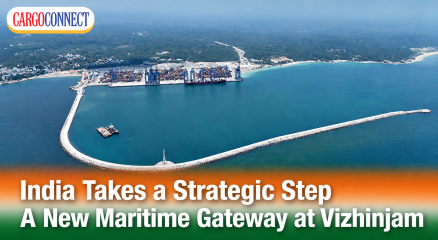
Thiruvananthapuram: Vizhinjam International Seaport has officially commenced full-scale Export-Import (EXIM) operations, opening a direct maritime gateway for cargo from South India to global markets. The launch was marked by the flag-off of the port’s first commercial export consignment to Valencia, Spain. The shipment, comprising frozen traditional food products from Thiruvananthapuram-based Nilamel Exporters, highlights the potential for the port to reduce transit times for exporters by eliminating overseas transhipment points. According to the port, shipments to European markets that previously took nearly 60 days could now reach their destinations in around 24 days by avoiding transhipment through hubs such as Colombo, Singapore and Dubai. The commencement of direct EXIM services marks a significant expansion of Vizhinjam’s role, positioning it not only as a transhipment facility but also as a gateway for inbound and outbound international cargo from the region. Ashwani Gupta, CEO and Director, Adani Ports and Special Economic Zone Ltd (APSEZ), said the company plans to invest an additional ₹16,000 crore to expand the port’s container-handling capacity from 1.6 million TEUs to 5.7 million TEUs. The expanded capacity is expected to strengthen Vizhinjam’s position as a major container hub in the Indian Ocean region as cargo volumes increase. The direct EXIM connectivity is also expected to benefit exporters across Kerala, Tamil Nadu and Karnataka by reducing transhipment-related costs and shortening supply chain turnaround times. Key commodities from the region include spices, cashew, marine products, handlooms and manufactured goods. Vizhinjam’s location further supports its role as an international gateway. The port has a natural depth of around 20–24 metres and is located approximately 10 nautical miles from the major east-west international shipping route, allowing it to accommodate large container vessels with limited dredging requirements. The port also uses an automated container-handling system supported by artificial intelligence and algorithm-driven operations, aimed at improving cargo-handling efficiency and safety. With direct EXIM operations now underway and a major capacity expansion planned, Vizhinjam is emerging as an important addition to India’s maritime infrastructure and its efforts to connect domestic exporters more directly with global trade routes. Follow CARGOCONNECT for more such news