
Loading...
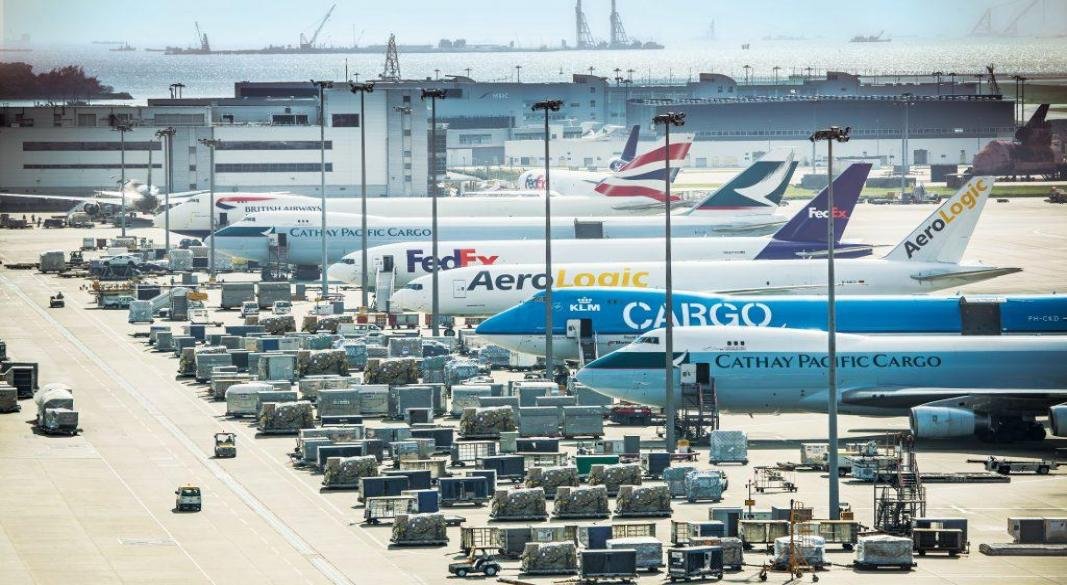
Global air cargo rates have begun to stabilise after weeks of sharp increases triggered by geopolitical tensions in the Middle East, offering cautious relief to shippers and logistics providers navigating volatile supply chains.
According to recent market data from the TAC Index, the overall Baltic Air Freight Index (BAI00) declined by 4.9% in the week ending May 18, signaling the first notable easing in freight prices since conflict-related disruptions tightened global air cargo capacity earlier this year. Despite the weekly correction, rates remain significantly elevated compared to last year, underlining the fragile balance between supply and demand in the air freight sector.
The softening trend has been largely attributed to a decline in jet fuel prices during early May. Fuel costs, which account for a substantial share of airline operating expenses, had surged amid fears of prolonged disruption around major Gulf transit corridors. However, easing oil prices and improving market sentiment have reduced immediate pressure on carriers and shippers alike.
Freight rates from major Asian export hubs, including Hong Kong, Shanghai, India and South Korea, registered week-on-week declines. Outbound Hong Kong rates fell 2.4%, while Shanghai slipped 1.7%. India-origin air freight rates also eased after experiencing some of the steepest increases during the height of the disruption. Nevertheless, pricing on many trade lanes remains well above year-ago levels due to ongoing capacity constraints and rerouting challenges.
Industry analysts note that the recent moderation does not necessarily indicate a return to pre-crisis stability. Earlier this year, Middle East airspace disruptions forced carriers to reroute flights, cut frequencies and absorb higher fuel burn, leading to severe capacity shortages across Asia-Europe and India-Europe corridors. In some cases, spot rates doubled within weeks as demand outpaced available lift.
The easing of rates is also being supported by gradual network adjustments and the return of limited capacity into the market. Airlines have started introducing alternative routings and additional freighter services to stabilize operations, although backlogs continue to affect several global gateways.
Market observers believe air cargo demand will remain resilient through the second half of 2026, particularly for high-value and time-sensitive shipments such as electronics, pharmaceuticals and e-commerce goods. However, uncertainty surrounding fuel markets, geopolitical risks and supply chain disruptions could continue to drive periodic volatility in freight pricing.
For logistics providers and shippers, the latest decline in air freight rates may offer temporary cost relief, but the broader market remains highly sensitive to global economic and geopolitical developments.
𝐒𝐭𝐚𝐲 𝐓𝐮𝐧𝐞𝐝 𝐭𝐨 https://cargoconnect.co.in/ 𝐟𝐨𝐫 𝐥𝐚𝐭𝐞𝐬𝐭 𝐮𝐩𝐝𝐚𝐭𝐞𝐬!

UPS has opened a new international air hub at Clark International Airport in the Philippines, backed by an investment of more than US$80 million. The facility is designed to strengthen global trade connectivity, expand parcel-processing capacity and improve delivery speeds across key international trade lanes. The development forms part of UPS’s broader strategy to reinforce its Asia-Pacific logistics network amid evolving trade patterns and growing demand for reliable, time-sensitive international shipments. UPS Clark Hub Expands Package Processing and Global Connectivity Spanning 30,000 square metres, the new facility is 15 times larger than the previous hub and can process an average of 46,000 packages daily, with a maximum throughput of 15,000 packages per hour. It is equipped to support specialised shipments for healthcare, high-tech and manufacturing customers, including consignments that require time-sensitive or temperature-controlled handling. The hub operates within UPS’s expanding international air network, with 170 weekly flight segments to and from Clark. These services connect businesses across Asia-Pacific, India, Europe and the United States, enabling shipments to reach some international destinations in as little as one business day. According to UPS, the expanded facility will improve services across more than 1,100 global trade lanes. Shipments to and from eastern China and other major Asia-Pacific markets could benefit from delivery times up to two days faster. Connections between several Southeast Asian markets and India are also expected to become faster, alongside improvements to services originating from or destined for the Philippines. Extended collection cut-off times and earlier deliveries are additional benefits for customers. Automation and Temperature-Controlled Handling Technology and specialised infrastructure form a central part of the new hub's operations. The facility incorporates an automated small-package sorting system capable of handling up to 9,000 packages weighing less than three kilograms per hour. This is intended to improve sorting efficiency and support the processing of high shipment volumes. For healthcare and other sensitive cargo, the hub features three refrigeration and freezer units operating across a temperature range of -20°C to 25°C, dedicated re-icing capabilities and UPS Premier radio-frequency identification (RFID) technology. These systems are designed to support priority handling and improve shipment visibility for critical and temperature-sensitive consignments. The facility also incorporates electric ground-service equipment, including cargo tractors, belt loaders, cargo loaders, ground power units and forklifts. Its sustainability certification and building design aligned with Leadership in Energy and Environmental Design (LEED) standards reflect an emphasis on operational efficiency and environmental considerations. Investment Strengthens the Philippines' Logistics Infrastructure The investment has created nearly 600 jobs across operations, security, information technology, maintenance and other functions, with recruitment extending to communities in Pampanga and neighbouring areas. UPS established its first hub at Clark International Airport in 2002, making the new facility a significant expansion of its long-standing presence in the Philippines. Bernard Jiang, president of UPS Asia-Pacific, said the project forms part of a sustained investment strategy to strengthen the company's regional network and provide faster connections in response to growing trade flows. The Clark hub follows other recent UPS investments in Asia-Pacific, including the opening of a major logistics centre in Taiwan, construction of a new hub at Hong Kong International Airport and an expansion at Incheon Airport in South Korea. Together, these developments underline the company's focus on improving regional connectivity, service reliability and supply chain resilience as businesses navigate changing trade routes and increasingly complex logistics requirements. 𝐒𝐭𝐚𝐲 𝐓𝐮𝐧𝐞𝐝 𝐭𝐨 CARGOCONNECT 𝐟𝐨𝐫 𝐥𝐚𝐭𝐞𝐬𝐭 𝐮𝐩𝐝𝐚𝐭𝐞𝐬!



Liege Airport handled more than one million tonnes of air cargo in the first nine months of 2026, with strong export growth offsetting the impact of new European charges on low-value e-commerce parcels. The Belgian cargo hub processed 1,032,283 tonnes of freight between January and September, marking a 7.3% increase from 961,640 tonnes recorded during the same period in 2025. According to the airport’s latest traffic figures, exports were the principal driver of growth. Outbound cargo volumes rose 18.5% year-on-year to 453,265 tonnes, compared with 382,299 tonnes in the first nine months of last year. The performance enabled the airport to cross the one-million-tonne milestone by the end of September, despite a slowdown in overall activity during the third quarter. During the July-September quarter, Liege Airport handled 334,467 tonnes of freight, marginally below the 334,950 tonnes recorded in the corresponding period of 2025. Aircraft movements declined by 6% to 6,826, compared with 7,261 a year earlier. The airport attributed the reduction in flight activity largely to the introduction of a €3 charge on imported parcels valued below €150, which came into effect on 1 July 2026. Since the measure was introduced, volumes of small parcels have fallen by 42%, affecting part of the airport’s e-commerce business and reducing the number of flights dedicated to this segment. The development highlights the immediate effect of regulatory changes on cross-border e-commerce flows and the air cargo operations that support them. The slowdown in parcel traffic contrasts with the continued expansion of export shipments, demonstrating how different cargo segments are influencing the airport’s overall performance. Despite the third-quarter slowdown, aircraft movements remained broadly stable over the first nine months of 2026. The airport recorded 21,180 movements between January and September, compared with 21,153 during the same period last year. The difference between cargo tonnage growth and aircraft movements suggests that freight volumes have expanded without a corresponding increase in total flight activity. Meanwhile, the strong export performance has helped sustain the airport’s growth amid changing market conditions. Commenting on the results, Laurent Jossart, CEO of Liege Airport, said, “The sluggish growth in the third quarter reflects the immediate impact of the new tax applied to small parcels. But when we look at the results since the beginning of the year, we can see that the airport continues to grow. We recorded stable traffic in terms of the number of movements, passed the million-tonne mark and posted particularly strong growth in exports. These results demonstrate the resilience of our platform and the diversification of our cargo activities.” The nine-month performance underlines the importance of export demand and diversified cargo flows to Liege Airport’s operations. However, the impact of the new parcel charge on e-commerce volumes and flight activity will remain an important factor for the airport as the year progresses. 𝐒𝐭𝐚𝐲 𝐓𝐮𝐧𝐞𝐝 𝐭𝐨 CARGOCONNECT 𝐟𝐨𝐫 𝐥𝐚𝐭𝐞𝐬𝐭 𝐮𝐩𝐝𝐚𝐭𝐞𝐬!




FlyUs Aviation Group (FlyUs), the global General Sales and Services Agent (GSSA), has expanded its partnership with Air Canada through the opening of a new office in Puerto Rico, where it will represent the airline’s cargo business. Under the appointment, FlyUs will support Air Canada’s cargo capacity on three weekly freighter flights between Luis Muñoz Marín International Airport (SJU) and the carrier’s Toronto Pearson International Airport (YYZ) hub, providing onward connections to Air Canada’s extensive global network. The move brings a particular focus on temperature-sensitive cargo. Puerto Rico is the leading US bioscience manufacturing hub by export volume, creating significant demand for reliable, temperature-controlled air freight capacity. FlyUs President and Chief Executive Officer Carlo de Haas said the company’s experience in handling pharmaceuticals, perishables and flowers positions its local team to support Air Canada and its customers with specialised shipments. The Puerto Rico appointment builds on an established relationship between the two companies. FlyUs already represents Air Canada in Belgium, the Netherlands, Luxembourg, Ecuador and several Central American countries. Matthieu Casey, Managing Director, Commercial – Cargo, Air Canada, said FlyUs had established itself as a trusted partner through its performance across multiple markets, making Puerto Rico a logical extension of the relationship. He highlighted reliable cargo uplift from one of the United States’ significant export markets as an important element of Air Canada’s cargo offering. The expansion also advances FlyUs’ broader international growth strategy. The company currently represents 24 airlines across 28 locations, with further office openings planned for the remainder of 2026 and into 2027. According to de Haas, the Puerto Rico office will strengthen the group’s global footprint and its ability to deploy specialist cargo expertise in markets where airline partners need support. FlyUs is also scheduled to participate in the International Air Cargo Association’s Air Cargo Forum in Miami, Florida, from 26–29 October 2026.