
Loading...
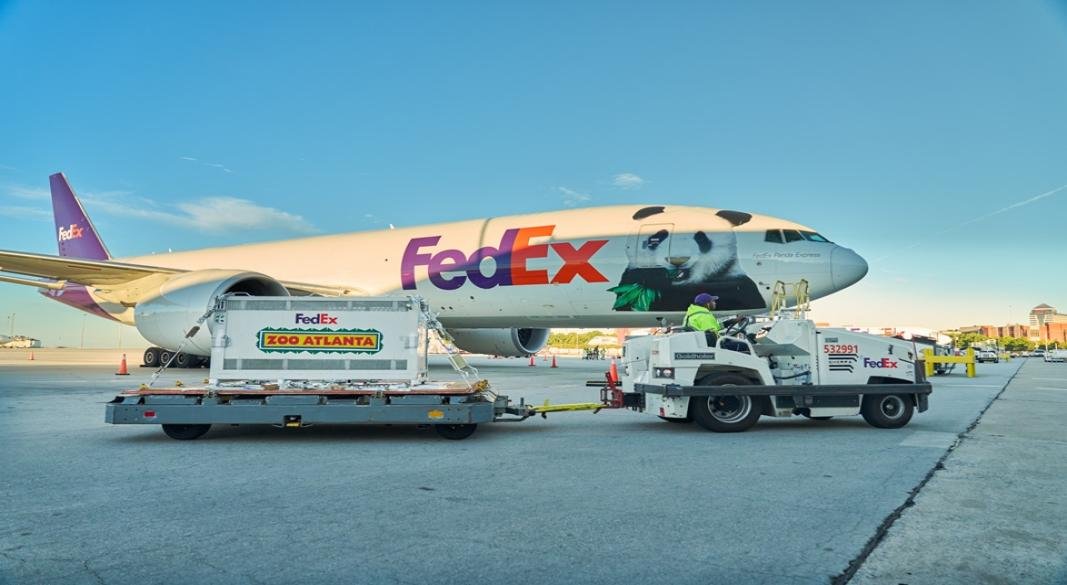
FedEx has completed a specialised international air cargo operation, transporting two giant pandas from Chengdu, China to Atlanta, United States, as part of ongoing global conservation efforts. The mission saw six-year-old male Ping Ping and five-year-old female Fu Shuang travel aboard a dedicated FedEx Boeing 777F, known as the “FedEx Panda Express”, to their new home at Zoo Atlanta.
The pandas travelled on a non-stop flight from Chengdu Shuangliu International Airport to Hartsfield-Jackson Atlanta International Airport. According to industry reports, the journey covered approximately 13,000 kilometres and lasted around 16 hours, highlighting the operational precision required to move live and highly sensitive cargo across continents.
For the journey, Ping Ping and Fu Shuang were placed in custom-built travel crates and accompanied by animal specialists from Zoo Atlanta. The pandas were the only cargo aboard the aircraft, travelling with fresh bamboo, water and their preferred treats. Before departure, they were also given time to become familiar with their transport enclosures, helping ensure a safe and comfortable journey.
The operation extended beyond air transportation. Following the flight, FedEx provided trucking and logistical support in Atlanta to move the pandas from the airport to Zoo Atlanta. The coordinated operation brought together air, ground and logistics capabilities across China and the US, demonstrating the specialised handling, security and precision required for exceptional cargo movements.
FedEx also donated the full transportation cost of the mission as part of its corporate social responsibility and environmental conservation efforts. The company has been involved in transporting giant pandas for more than two decades, working with the Chinese government and zoos and conservation institutions worldwide. With the latest mission, FedEx has transported 23 pandas to and from China since 2000.
The latest movement follows several previous FedEx Panda Express missions involving the transportation of pandas between China and destinations including the United States, Canada, France and Scotland. These operations have established specialised animal transportation as an important demonstration of the logistics provider’s ability to manage high-priority, sensitive shipments requiring dedicated resources and cross-border coordination.
Following their arrival, Ping Ping and Fu Shuang entered quarantine at Zoo Atlanta ahead of their planned public debut later this year. Beyond the symbolic importance of the animals, the mission underscores how specialised air cargo networks can support international conservation, scientific collaboration and wildlife protection by safely connecting institutions across borders.
𝐒𝐭𝐚𝐲 𝐓𝐮𝐧𝐞𝐝 𝐭𝐨 CARGOCONNECT 𝐟𝐨𝐫 𝐥𝐚𝐭𝐞𝐬𝐭 𝐮𝐩𝐝𝐚𝐭𝐞𝐬!

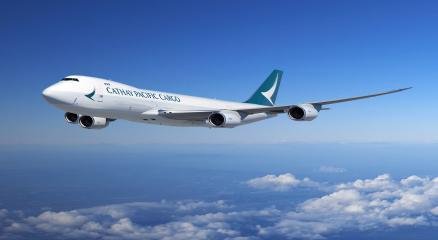
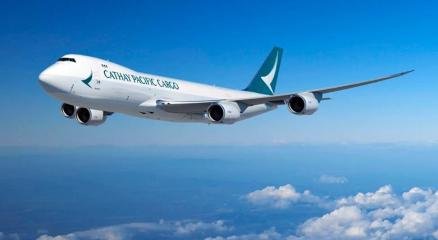
Cathay Cargo has introduced an AI-assisted screening capability designed to help customers identify potential permit and trade-control requirements earlier in the air cargo shipment process, strengthening compliance as international trade regulations become increasingly complex. The new digital capability uses artificial intelligence-assisted language analysis to assess shipment information against relevant trade-control requirements covering imports, exports and transhipments. Unlike conventional screening processes that depend largely on keyword matching, the system is designed to interpret the context of goods descriptions and identify potential links to applicable control-list requirements. The additional layer of digital screening is intended to give shippers greater visibility of regulatory obligations before cargo enters Cathay Cargo’s network. It can also help reduce the risk of shipment delays or disruptions arising from unidentified compliance requirements. However, shippers remain responsible for providing accurate and complete cargo declarations, while human oversight continues to be an integral part of the process. Cathay Cargo Director Cargo Dominic Perret said: “As global trade requirements continue to evolve, what customers value most is certainty — knowing that obligations are identified before a shipment moves, not after. Leveraging this new AI-assisted screening and clearer operational context for our frontline teams, Cathay Cargo is strengthening our ability to identify potential compliance requirements earlier, keep information accurate throughout the shipment journey, and facilitate safe, reliable and responsible cargo movement.” Alongside the AI capability, Cathay Cargo has redesigned its frontline display to present screening alerts and regulatory information more clearly. Operational teams can see why a shipment has been flagged and determine the follow-up action required, enabling them to prioritise alerts and address potential compliance issues before cargo moves through the network. The initiative builds on Cathay Cargo’s broader digitalisation and AI strategy. The carrier already uses AI-assisted technologies in areas including lithium-battery screening, predictive safety analysis and AI-enhanced CCTV at its cargo terminals. Perret added: “Through digital innovation and AI, Cathay Cargo continues to set the new industry standards that will shape the future of air cargo. The value of this enhancement is in how dense regulatory requirements are made clearer and more actionable for our people. Pairing digital intelligence with operational expertise creates better outcomes for customers, regulators and the wider air cargo community. We will continue to enhance the capability through operational feedback and compliance reviews.” As global trade controls continue to evolve, Cathay Cargo said it will further refine the screening capability through operational feedback and compliance reviews, reinforcing its focus on secure, compliant and efficient cargo movement. 𝐒𝐭𝐚𝐲 𝐓𝐮𝐧𝐞𝐝 𝐭𝐨 CARGOCONNECT 𝐟𝐨𝐫 𝐥𝐚𝐭𝐞𝐬𝐭 𝐮𝐩𝐝𝐚𝐭𝐞𝐬!
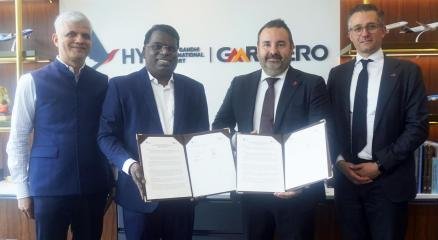
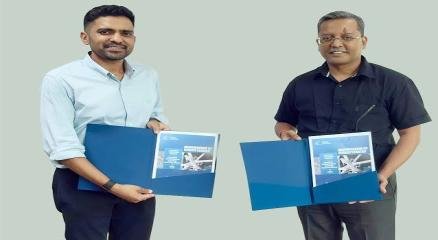
Brussels Airport and Hyderabad International Airport have signed a memorandum of understanding (MoU) to strengthen cooperation in air cargo development and explore opportunities to enhance connectivity between Belgium and India. The partnership will focus particularly on pharmaceutical and life sciences shipments, knowledge sharing and the development of stronger trade links. Under the agreement, the two airports will work together to identify opportunities for stronger air connectivity and develop cargo links between Brussels and Hyderabad. The collaboration will examine market demand, freight flows, route viability, cargo operating practices and stakeholder engagement, with the objective of developing concrete business cases for potential future services. Airlines, freight forwarders and other logistics stakeholders are also expected to be engaged as the initiative progresses. Brussels Airport will contribute its expertise in pharmaceutical logistics, while Hyderabad’s expanding life sciences ecosystem offers significant potential for joint development. Brussels Airport became the first airport globally to achieve CEIV Pharma certification in 2014 and currently provides 45,000 square metres of temperature-controlled storage capacity, the largest concentration of dedicated airport pharma storage facilities in Europe. Arnaud Feist, CEO Brussels Airport, said, “With this MoU, we are taking an important step to bring the ecosystems of Brussels Airport and Hyderabad International Airport closer together. By strengthening cargo flows between our regions, we can support trade and economic growth. As Europe's preferred pharma and life sciences hub, Brussels Airport has built a strong ecosystem and extensive expertise in pharmaceutical logistics. Combined with Hyderabad's leading life sciences ecosystem, this creates valuable opportunities for future cooperation and knowledge exchange." Kadhir Kadhiravan, CEO, GMR Hyderabad International Airport, said, “Hyderabad’s growing economic base and strategic location position it strongly to serve as a gateway for India’s international trade. Our collaboration with Brussels Airport strengthens our ability to connect Hyderabad with the wider European cargo ecosystem and supports our ambition to build a more globally integrated cargo network. By bringing together market expertise, industry partnerships and complementary strengths, we can create new opportunities for businesses in Hyderabad and across the region while strengthening the airport’s role in India’s international trade corridors.” India is the world’s largest supplier of generic medicines, accounting for around 20% of global supply by volume, while Hyderabad is a major life sciences hub spanning pharmaceuticals, vaccines and research and development. The MoU was signed with support from Flanders Investment & Trade (FIT), highlighting strengthening economic ties between Belgium and India. Importantly, there is currently no direct air connection between the two cities. The partnership will therefore explore ways to improve connectivity and support greater cargo flows between the two markets. 𝐒𝐭𝐚𝐲 𝐓𝐮𝐧𝐞𝐝 𝐭𝐨 CARGOCONNECT 𝐟𝐨𝐫 𝐥𝐚𝐭𝐞𝐬𝐭 𝐮𝐩𝐝𝐚𝐭𝐞𝐬!
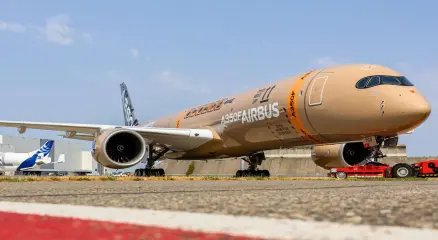
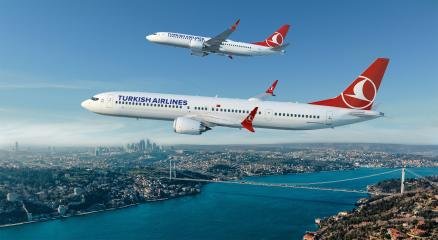
Turkish Airlines has finalised an agreement with Boeing for up to 150 Boeing 737 MAX aircraft, marking the airline’s largest-ever Boeing single-aisle aircraft order and reinforcing its long-term fleet expansion strategy. The agreement, finalised on 23 September 2026 in the presence of Türkiye’s President Recep Tayyip Erdoğan, is expected to support the carrier’s growing short- and medium-haul network. The agreement covers 100 firm orders for Boeing 737-8 aircraft, along with options for a further 50 Boeing 737 MAX aircraft. It also provides Turkish Airlines with substitution rights for the Boeing 737-10, the largest member of the 737 MAX family. This flexibility will allow the airline to adjust aircraft capacity in line with evolving passenger demand across its network. The new aircraft are intended to strengthen Turkish Airlines’ short- and medium-haul operations, particularly across high-demand domestic and international routes. According to the airline, the Boeing 737-8 offers a combination of range and payload flexibility suited to its operational requirements. The aircraft is also stated to deliver a 20% reduction in fuel consumption and emissions, supporting the carrier’s efforts to improve operational efficiency as its fleet and network continue to expand. Prof Murat Şeker, Chairman of the Board and the Executive Committee of Turkish Airlines, said the agreement would bring greater efficiency and flexibility to the airline’s operations while supporting its extensive network from Istanbul. He also highlighted the role of the agreement in continuing Turkish Airlines’ longstanding cooperation with Boeing and supporting Türkiye’s wider aviation ecosystem. Stephanie Pope, President and CEO of Boeing Commercial Airplanes, said the order reflects the longstanding partnership and shared vision between the two companies, while reaffirming Boeing’s support for Turkish Airlines’ Istanbul-based network expansion. Turkish Airlines, including AJet, currently operates more than 200 Boeing aircraft, comprising 737 MAX and 737 Next-Generation aircraft as well as 787 Dreamliner, 777 and 777 Freighter aircraft. The latest agreement builds on the airline’s order for 75 Boeing 787 Dreamliners announced in 2025. Beyond fleet expansion, Turkish Airlines and Boeing have also established a strategic Memorandum of Understanding on Industrial Participation. The framework focuses on skill development, value creation and business awards, with objectives including technology and know-how transfer, workforce development, sustainability and new industrial cooperation opportunities. With the latest agreement, Turkish Airlines is strengthening both its narrowbody fleet and its broader partnership with Boeing, while positioning additional capacity to support the continued development of its Istanbul hub and international network. 𝐒𝐭𝐚𝐲 𝐓𝐮𝐧𝐞𝐝 𝐭𝐨 CARGOCONNECT 𝐟𝐨𝐫 𝐥𝐚𝐭𝐞𝐬𝐭 𝐮𝐩𝐝𝐚𝐭𝐞𝐬!