
Loading...
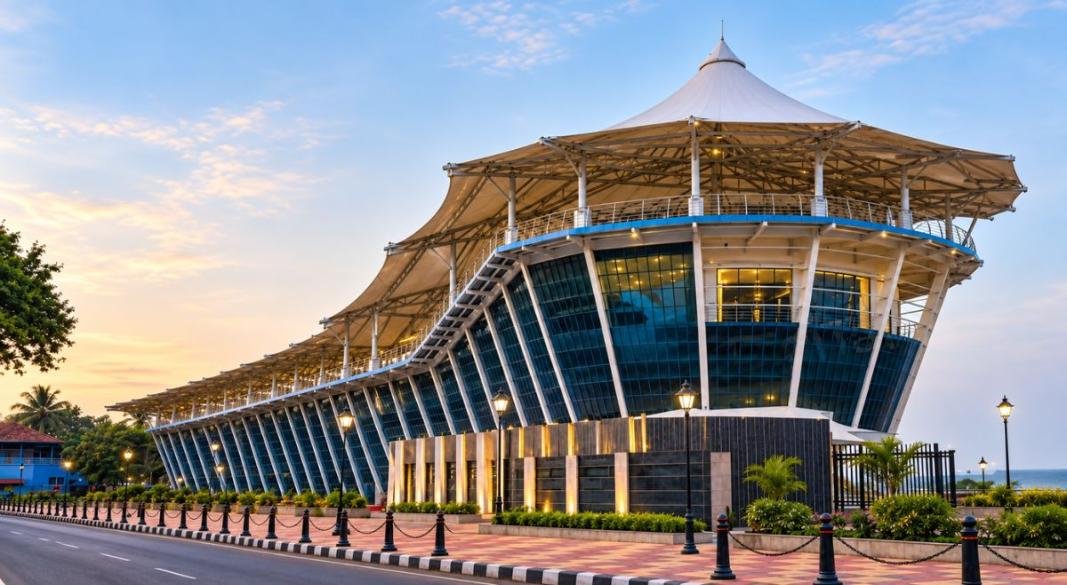
The Captain of Ports (CoP) Department, Government of Goa, has invited bids under a public-private partnership (PPP) model for the operation and maintenance of the Captain of Ports Terminal at Panaji, along with associated jetty facilities and the development of a new yacht docking station. The project, estimated at ₹27.04 crore, is aimed at strengthening Goa’s passenger and maritime infrastructure while creating a more integrated waterfront facility.
Under the proposed PPP arrangement, the selected private operator will be responsible for operating and maintaining the newly developed Captain of Ports Terminal and six existing jetties located across Panaji, Old Goa and Betim. The project also envisages the integration of three additional floating jetties near Kala Academy, Mahaveer Garden and the Parshuram statue. According to the tender details, bids for the project can be submitted until October 23, 2026.
A key component of the project is the proposed yacht docking station near Divja Circle, adjacent to the Santa Monica Tourism Jetty. The facility is planned as a floating concrete jetty with an associated mini-terminal building and yacht docking infrastructure. The proposed docking station will measure approximately 200 metres by six metres and is designed to accommodate at least 40 vessels, including three berths earmarked for government use.
The private concessionaire will be permitted to generate revenues through passenger and user charges, as well as commercial activities at the terminal. For the yacht docking facility, the operator can charge up to ₹30,000 per vessel per month. Where Central Government financial assistance is utilised, the permitted monthly charge would be capped at ₹15,000 per vessel.
The concession period is proposed at 30 years, with a possible extension of another 10 years. The model is expected to bring private-sector operational capabilities into the management of Goa’s maritime passenger infrastructure while supporting investment in allied waterfront facilities. The tender also provides an opportunity to develop commercial services around the terminal and associated jetties.
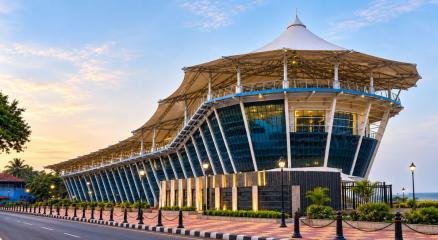
Located along Dayanand Bandodkar Marg on the Mandovi River, the Captain of Ports Terminal has been developed as an integrated administrative, passenger and maritime services facility. The proposed PPP structure is intended to consolidate its operations while expanding the network of passenger and recreational maritime facilities around Panaji.
The initiative comes as Goa continues to strengthen its maritime and tourism infrastructure. By combining terminal operations, existing and proposed jetties and yacht berthing facilities under a single concession, the project could improve coordination across passenger movement, vessel berthing and waterfront services.
𝐒𝐭𝐚𝐲 𝐓𝐮𝐧𝐞𝐝 𝐭𝐨 CARGOCONNECT 𝐟𝐨𝐫 𝐥𝐚𝐭𝐞𝐬𝐭 𝐮𝐩𝐝𝐚𝐭𝐞𝐬!
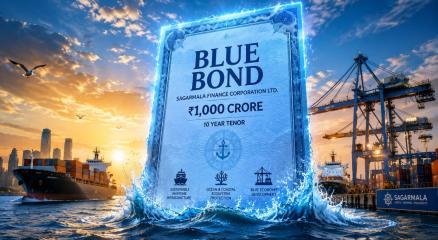
Sagarmala Finance Corporation Limited (SMFCL), India’s first maritime-focused lender, is set to launch the country’s maiden blue bond issue on September 28, 2026, marking a significant step towards creating dedicated financing avenues for maritime and coastal infrastructure. The lender plans to raise ₹600 crore through 10-year bonds, including a ₹500-crore greenshoe option, according to a provisional term sheet. The proceeds will be directed towards lending to the maritime sector, financing greenfield port projects and supporting coastal road networks, among other related infrastructure initiatives. SMFCL Managing Director L.V.S. Sudhakar Babu said the funds are expected to be utilised during the current financial year. Blue bonds are debt instruments designed to mobilise capital for sustainable water and marine-related projects. Such financing can support areas including clean water, recycling, sustainable shipping and fishing, ocean energy, marine mapping and other projects linked to the sustainable use of marine resources. The proposed issue has received an AA+ credit rating from ICRA and CARE, while SBI Capital Markets has been appointed as the arranger. SMFCL is also engaging large insurance companies and provident fund institutions as potential investors. The lender plans to invite coupon and commitment bids as part of the issue process. SMFCL was inaugurated in June 2025 as India’s first Non-Banking Financial Company focused on the maritime sector. The institution was established to help address financing gaps across ports, shipping, maritime infrastructure, MSMEs and startups. Its board has approved an overall borrowing limit of ₹25,000 crore, with ₹8,000 crore earmarked for its first financial year of operations. The proposed blue bond also comes as other Indian institutions explore similar financing mechanisms. Vadodara Municipal Corporation is separately planning to raise around ₹200 crore through a blue bond issue, highlighting the emerging interest in thematic financing for sustainable water and maritime-related infrastructure. 𝐒𝐭𝐚𝐲 𝐓𝐮𝐧𝐞𝐝 𝐭𝐨 CARGOCONNECT 𝐟𝐨𝐫 𝐥𝐚𝐭𝐞𝐬𝐭 𝐮𝐩𝐝𝐚𝐭𝐞𝐬!


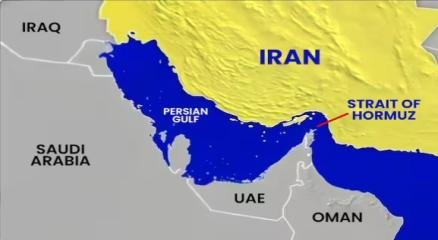
Iran is preparing to announce a new restricted maritime zone in the Gulf and a proposed international shipping corridor through the Strait of Hormuz, raising fresh concerns for global shipping, energy security and supply chains. The move comes amid heightened military tensions in the region and a sharp decline in vessel movements through the strategically vital waterway. Mohsen Rezaei, Secretary of Iran’s Supreme National Security Council, said the proposed restricted zone would begin from the point where the US blockade of Iran starts and extend into parts of the Gulf. Under the proposed arrangement, vessels entering the designated area could be placed on Iran’s sanctions list. Further details, including the exact boundaries and operating rules of the zone, are yet to be disclosed. At the same time, Tehran says it has agreed on maps for a new international maritime corridor running through Iranian and Omani waters. According to Rezaei, Iran would manage the proposed route, with the maps expected to be formally signed in the coming days. The initiative could introduce a new framework for vessel movements through the Strait of Hormuz, although its practical implementation remains unclear. The developments come as shipping activity through the Strait of Hormuz has fallen significantly. According to reports, an average of about 10 commodity vessels crossed the waterway each day over a recent 10-day period, marking the lowest level reported since May. Before the current disruption, the Strait carried roughly one-fifth of global oil supplies, underlining its importance to international energy and maritime trade. For India, the situation carries significant implications. The country imports nearly 90% of its crude oil requirements, with a substantial share sourced from Gulf producers and transported through the Strait of Hormuz. Any prolonged restriction, additional charges or uncertainty around vessel access could therefore increase freight, insurance and energy costs, while also affecting imports of LNG, LPG and petrochemical products. For global supply chains, the proposed restricted zone adds another layer of uncertainty to an already volatile maritime environment. Shipping lines, tanker operators, energy traders and cargo owners are likely to closely monitor the final route maps, sanctions framework and navigational arrangements before determining their operational strategies. 𝐒𝐭𝐚𝐲 𝐓𝐮𝐧𝐞𝐝 𝐭𝐨 CARGOCONNECT 𝐟𝐨𝐫 𝐥𝐚𝐭𝐞𝐬𝐭 𝐮𝐩𝐝𝐚𝐭𝐞𝐬!
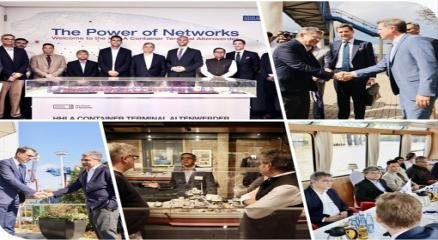
India is utilising the global platform of SMM Hamburg 2026 to deepen maritime cooperation with Germany, with a high-level Indian delegation undertaking strategic engagements with port authorities, terminal operators and maritime industry stakeholders in Hamburg. Led by Vijay Kumar, IAS, Secretary, Ministry of Ports, Shipping and Waterways (MoPSW), the delegation included Vipul Singhal, Director, MoPSW, and Pradeep Sudhakar, Chief Ship Surveyor, Directorate General of Shipping/Maritime Administration (DGMA). Their engagements focused on exchanging expertise and identifying opportunities for collaboration across port operations, maritime infrastructure, digitalisation and sustainability. A key component of the visit was an interaction at HHLA Container Terminal Altenwerder (CTA), where the delegation examined advanced approaches to automated container-terminal operations. Discussions with Patrick Krawutschke, Managing Director, Hamburg Port Consulting (HPC), covered terminal efficiency, automation, logistics planning and the deployment of technology to improve port management. The delegation also visited EUROGATE Container Terminal Hamburg and held discussions with Tom Eckelmann, President, EUROGATE, exchanging perspectives on terminal productivity, digitalisation and the evolution of modern maritime logistics infrastructure. Further discussions with senior representatives of the Hamburg Port Authority (HPA) and Hamburg’s Ministry of Economic Affairs, Labour and Innovation covered port modernisation, green-port initiatives, environmental sustainability, logistics management and future-ready maritime infrastructure. India's participation at SMM 2026 comes amid an expanded national presence at the world's leading maritime trade fair. For the first time, MoPSW and the Indian Ports Association are organising two official Indian joint pavilions, while around 35 Indian exhibitors are expected to showcase capabilities spanning shipbuilding, maritime technology and sustainable solutions. The Hamburg engagements assume added significance as India-Germany strategic relations enter a new phase, with both countries marking 75 years of diplomatic relations in 2026. The two governments have also reaffirmed their commitment to expanding cooperation in trade, investment, technology, innovation and sustainable development. For India's maritime sector, the discussions provide an avenue to learn from Hamburg's port ecosystem while exploring partnerships in smart ports, green shipping, automation, logistics integration and maritime infrastructure. The engagements are expected to contribute to stronger institutional and industry-level cooperation between India and Germany and support India's ambition to build a globally competitive, technology-enabled and sustainable maritime ecosystem. 𝐒𝐭𝐚𝐲 𝐓𝐮𝐧𝐞𝐝 𝐭𝐨 CARGOCONNECT 𝐟𝐨𝐫 𝐥𝐚𝐭𝐞𝐬𝐭 𝐮𝐩𝐝𝐚𝐭𝐞𝐬!