
Loading...
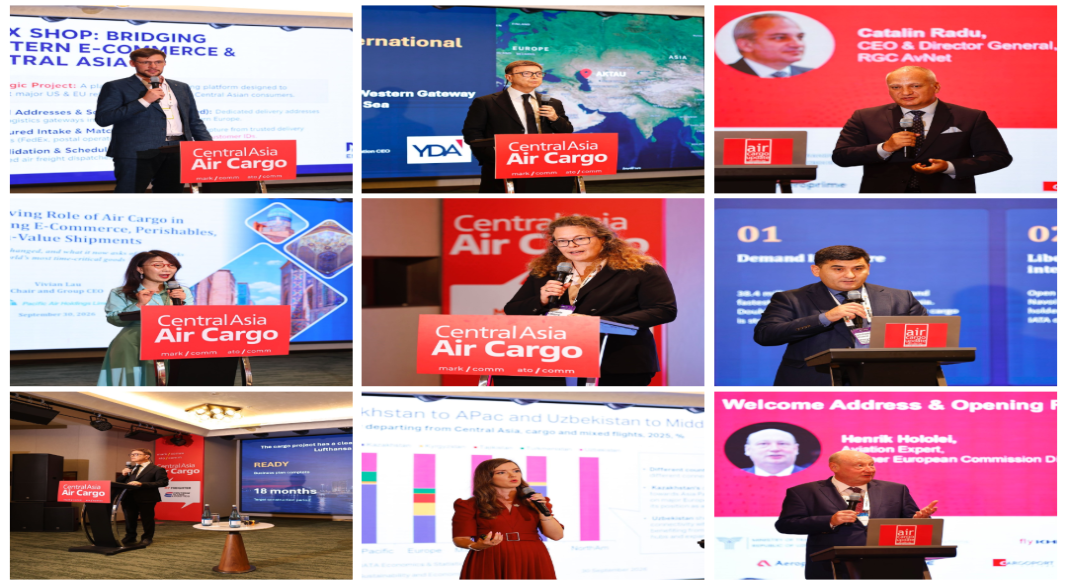
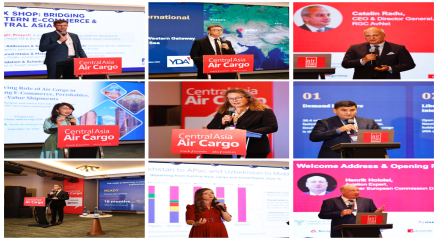
Central Asia is strengthening its position as an emerging air cargo bridge between Asia and Europe, with airlines, airports, logistics providers and regulators increasingly focused on building stronger connections with China, Europe and the Middle East. The shift was a key theme at the Central Asia Aviation Cargo Summit, held in Tashkent on September 30 and October 1, 2026, which brought together 340 representatives from across the aviation and logistics ecosystem.
The region’s growing relevance is supported by a significant expansion in air cargo volumes. According to the International Air Transport Association (IATA), Central Asia’s air cargo volumes more than doubled between 2019 and 2024. Kazakhstan remained the region’s leading gateway, with volumes increasing 149% over the period, while Uzbekistan recorded even faster growth of 182%, supported by infrastructure investment.
The summit highlighted that Central Asia’s ambitions are extending beyond simply adding aircraft capacity. Airlines and airports are increasingly looking at how airfreight can be integrated with road and rail networks to create more efficient multimodal corridors. Representatives from Silk Way West Airlines, Saudia Cargo and DHL Global Forwarding discussed opportunities to strengthen connections linking Central Asia with China, Europe, the Middle East and other major markets.
Digitalisation and Standards Gain Importance
Digital transformation emerged as another critical component of the region’s cargo development. An IATA roundtable brought together representatives from IATA, Lufthansa Cargo, Qatar Airways, Centrum Air/My Freighter and Uzbekistan’s Customs Committee to discuss international standards, certification, ONE Record, cargo connectivity and regulatory modernisation.
For Central Asian markets seeking deeper integration with global supply chains, improved data exchange and greater alignment with international cargo standards could help reduce manual processes and improve shipment visibility. The summit also examined artificial intelligence, cargo terminal automation and cybersecurity as technologies that could support higher volumes and more efficient operations.
Airports Compete for Eurasian Cargo Flows
Tashkent, Almaty and Navoi are increasingly positioning themselves as important gateways within the emerging Eurasian cargo network. Tashkent Airport and Navoi International Airport presented their cargo development strategies and infrastructure plans at the summit, while an industry panel examined the competitive and complementary roles of regional airports.
The discussions covered scheduled and charter services, ACMI operations, express logistics, GSSA services, digital platforms and airport infrastructure. Flexible capacity is expected to remain important as cargo flows evolve and airlines respond to changing demand across Eurasian trade lanes.
E-Commerce Adds Momentum
The expansion of cross-border e-commerce is also creating new opportunities for Central Asian air cargo. Perishables, high-value shipments and express consignments are generating demand for faster customs processes, specialised handling and reliable last-mile delivery.
The summit also addressed workforce development, highlighting the need for skilled professionals as airlines, airports and logistics companies expand their operations. Training, recruitment and operational expertise will therefore remain critical alongside investment in terminals, aircraft and digital infrastructure.
Central Asia’s air cargo proposition is consequently evolving from a transit-focused model towards a broader logistics ecosystem. With rising cargo volumes, new infrastructure, stronger multimodal connections and greater adoption of digital standards, the region is seeking to convert its geographic position between East and West into a sustainable competitive advantage.
The next phase will depend on how effectively airlines, airports, customs authorities and logistics providers translate these investments and partnerships into new routes, efficient cargo handling and dependable Eurasian trade corridors.
𝐒𝐭𝐚𝐲 𝐓𝐮𝐧𝐞𝐝 𝐭𝐨 CARGOCONNECT 𝐟𝐨𝐫 𝐥𝐚𝐭𝐞𝐬𝐭 𝐮𝐩𝐝𝐚𝐭𝐞𝐬!
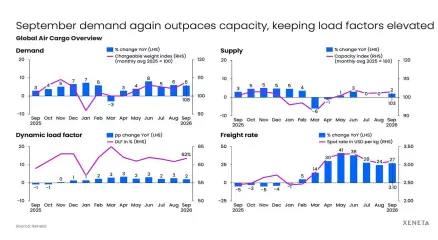
Global air freight demand continued to strengthen in September 2026, prompting shippers to favour shorter-term and more flexible capacity agreements as rising demand, elevated rates and market volatility make long-term commitments increasingly difficult. According to data from Xeneta, global air freight volumes increased 6% year on year in September, following similar growth of 6% in August and 5% in July. Demand growth has outpaced capacity expansion, with global air cargo capacity rising only 2% year on year in September. As a result, Xeneta’s dynamic load factor increased by two percentage points to 62%. The tighter demand-capacity balance has also kept freight rates elevated. Global air cargo spot rates averaged $3.10 per kg in September, 27% higher than a year earlier and 2% above August. Seasonal demand at the end of the third quarter, alongside higher jet fuel costs and geopolitical tensions, contributed to the firmer pricing environment. Against this backdrop, shippers are increasingly avoiding lengthy fixed-rate commitments. Xeneta data shows that 60% of new air freight contracts starting in the third quarter of 2026 were for three months or less, compared with 25% during the same period in 2025 and 47% in the second quarter of 2026. Three-month contracts represented 42% of new agreements, up sharply from 16% a year earlier. In contrast, the proportion of 12-month contracts fell from 40% to 25%, while agreements exceeding one year accounted for just 3%. Niall van de Wouw, Chief Airfreight Officer at Xeneta, said shippers are increasingly looking for “floating mechanisms” that combine a base rate with adjustments reflecting changes in market conditions. “There is a high degree of realism in the way shippers are approaching the market. There remains a lot of instability and that’s making it almost impossible for shippers to make long-term capacity deals without having T&Cs in place to deal with these volatile conditions.” The shift reflects a broader move towards flexibility and transparency in air freight procurement. Shippers are seeking arrangements that can respond to changing capacity, demand and pricing rather than locking them into annual rates that may quickly become misaligned with market conditions. Xeneta expects global air freight demand to grow by around 4% in 2026. However, the company anticipates a relatively subdued peak season, with limited signs of a major fourth-quarter surge so far. 𝐒𝐭𝐚𝐲 𝐓𝐮𝐧𝐞𝐝 𝐭𝐨 CARGOCONNECT 𝐟𝐨𝐫 𝐥𝐚𝐭𝐞𝐬𝐭 𝐮𝐩𝐝𝐚𝐭𝐞𝐬!



Worldwide Flight Services (WFS), a SATS company, has inaugurated a new air cargo terminal at Lyon-Saint Exupéry Airport in France, strengthening cargo-handling capacity and consolidating its operations at one location within the airport’s CargoPort zone. The Aéroport de Lyon DC1 facility is directly connected to the airport’s airside infrastructure and has been designed to improve cargo flows, operational efficiency and supply chain reliability. The 25,313-square-metre facility, developed by logistics real estate company Prologis with Groupe em2c overseeing design, construction coordination and technical supervision, represents WFS’ second-largest operation in France after Paris Charles de Gaulle. WFS has operated at Lyon Airport since 1971 and will now centralise its local activities at the new terminal, supporting 380 customers in the region. The facility comprises 19,200 square metres of warehouse space across three cargo-handling units, including 4,400 square metres of temperature-controlled cold-storage areas. It also features 36 loading doors, including five dedicated to air freight pallet transfers, enabling smoother movement between landside access, cargo-handling areas and airside operations. The new terminal is particularly positioned to support high-value and temperature-sensitive cargo, including pharmaceuticals, healthcare products, biotechnology shipments and perishables. The development is expected to strengthen Lyon’s role in national and European logistics flows, while supporting more than 300 direct and indirect jobs associated with the facility. Laurent Bernard, Vice-President France at WFS, said: “Aéroport de Lyon DC1 represents a new milestone for WFS in Lyon, where we first commenced operations in 1971. Its design, temperature-controlled areas, and organisation of cargo flows enable us to strengthen our capacity and operational efficiency to handle sensitive and high value goods for our airline and freight forwarder customers. Given Lyon’s strategically important location, industrial base, and high-value economic sectors, this new generation of logistics infrastructure reinforces Lyon’s position in national and European logistics flows and will strengthen the economic attractiveness of the region.” The facility is also targeting a BREEAM ‘Very Good’ rating, with sustainability considerations incorporated into its design. Its roof is solar-ready to accommodate a future photovoltaic installation. The project brings together Aéroports de Lyon, WFS, Prologis and Groupe em2c, creating infrastructure tailored to the evolving requirements of air cargo. 𝐒𝐭𝐚𝐲 𝐓𝐮𝐧𝐞𝐝 𝐭𝐨 CARGOCONNECT 𝐟𝐨𝐫 𝐥𝐚𝐭𝐞𝐬𝐭 𝐮𝐩𝐝𝐚𝐭𝐞𝐬!


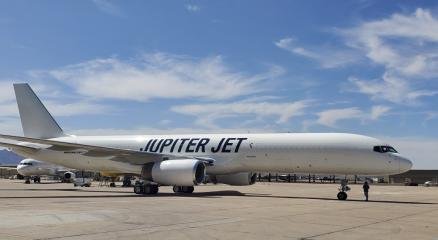
Kazakhstan-based cargo airline Jupiter Jet is rebuilding its operations with the addition of a leased Boeing 757-200 passenger-to-freighter (P2F) aircraft from AerSale, marking an important step in the carrier’s plans to expand its regional and international freight network. The Boeing 757-200PCF is Jupiter Jet’s first aircraft as it resumes operations and is expected to support cargo services across Central Asia and neighbouring markets. The aircraft offers a combination of payload capability, operating economics and range, making it suitable for express cargo and e-commerce networks, particularly across the region. The addition of the freighter strengthens Jupiter Jet’s fleet and provides the carrier with increased operational flexibility as demand for reliable air cargo capacity continues to grow. Jupiter Jet serves Kazakhstan and surrounding markets, offering freight solutions across Central Asia and beyond. “We are pleased to support Jupiter Jet’s fleet expansion with this Boeing 757 freighter,” said Craig Wright, Senior Vice President and Head of Asset Management at AerSale. “The 757 remains one of the industry’s most versatile and dependable medium-haul freighters, and this lease demonstrates AerSale’s ability to provide tailored fleet solutions that help operators meet evolving market demand,” he added. For Jupiter Jet, the aircraft is expected to provide the performance and economics required to develop its expanding cargo network. The airline has retained its air operator certificate during its period of suspended operations and is now using the Boeing 757 to rebuild its presence in the regional freight market. “We are excited to add the Boeing 757 freighter to our fleet through our partnership with AerSale,” said Erik Kozbagarov, Chief Executive Officer of Jupiter Jet. “The aircraft’s performance and economics make it an excellent fit for our expanding cargo network, allowing us to better serve our customers while positioning Jupiter Jet for continued growth,” he added. The lease also adds another Boeing 757 freighter to AerSale’s growing Central Asian cargo portfolio, following its earlier agreement with Tashkent-based Stratos Freight for a Boeing 757-200 Precision Converted Freighter. AerSale’s aircraft leasing platform supports operators worldwide with fleet solutions backed by capabilities spanning aircraft and component maintenance, repair and overhaul (MRO), engine solutions, used serviceable material (USM) and asset management. 𝐒𝐭𝐚𝐲 𝐓𝐮𝐧𝐞𝐝 𝐭𝐨 CARGOCONNECT 𝐟𝐨𝐫 𝐥𝐚𝐭𝐞𝐬𝐭 𝐮𝐩𝐝𝐚𝐭𝐞𝐬!