
Loading...
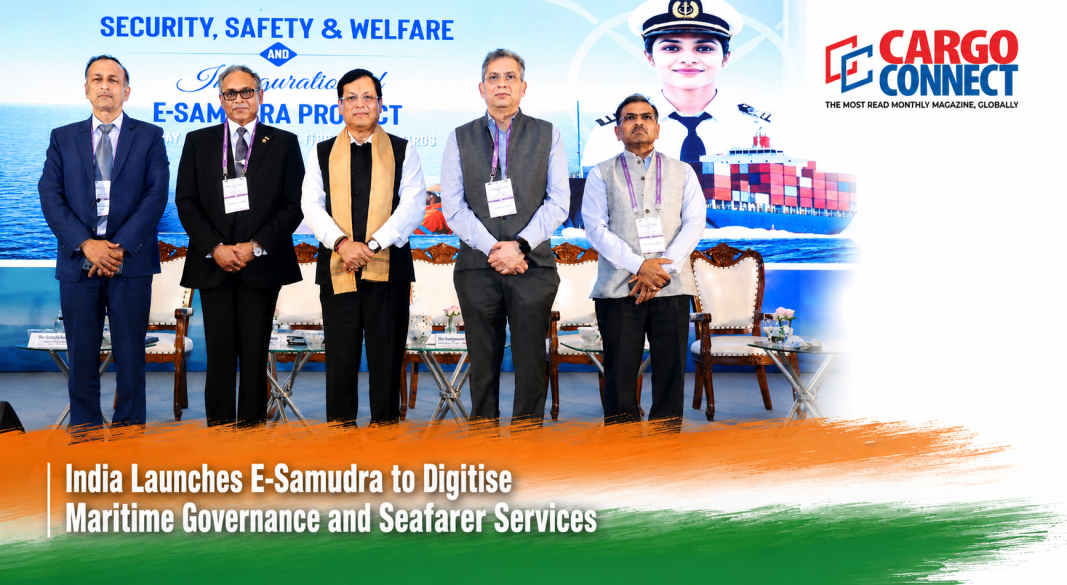
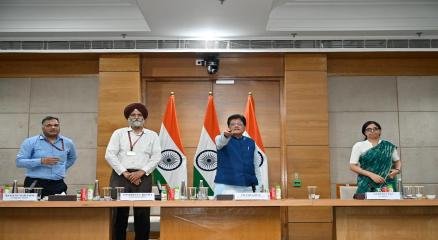
India has launched E-Samudra, a unified digital platform intended to bring a wide range of maritime regulatory and service functions onto a single online system for seafarers, shipowners, shipping companies, ports and other industry stakeholders. Union Minister for Ports, Shipping and Waterways Sarbananda Sonowal inaugurated the platform in Mumbai during a national stakeholder interaction focused on seafarer security, safety and welfare.
E-Samudra is designed around a single-window model, with end-to-end digital workflows, online payments, real-time status tracking and digitally issued certificates. The objective is to make regulatory processes more predictable and reduce the need for stakeholders to interact with multiple administrative systems. According to the Ministry of Ports, Shipping and Waterways, the platform will consolidate maritime services and provide a common digital interface for stakeholders. The move is expected to reduce administrative friction while improving visibility over applications and certificates.
The development comes as India's maritime workforce and shipping activity have expanded significantly. The country's active seafarer workforce increased from about 103,000 in 2013 to more than 323,000 in 2025, increasing the scale of services that maritime authorities need to administer. The Directorate General of Maritime Administration has described the platform as a shift towards "Digital First and Faceless Governance", with greater reliance on online processing rather than physical submissions and office visits.
The E-Samudra launch was accompanied by several measures aimed at improving services and welfare for Indian seafarers. These include the e-NAVIK 24×7 grievance-redressal system, a planned Seafarer Tracking Dashboard and a Digital Seafarers Employment Agreement. Authorities also highlighted initiatives under the Seafarers Welfare Fund Society, along with programmes focused on the physical and mental wellbeing of seafarers and improving support for women working at sea.
The government's focus on digital service delivery also reflects the operational challenges faced by Indian seafarers during periods of disruption to international shipping. Maritime authorities said they had monitored more than 16,000 vessel calls, processed over 40,000 communications and helped coordinate the repatriation of more than 4,000 Indian seafarers affected by recent geopolitical disruptions.
E-Samudra is not an isolated technology initiative. It follows other digital reforms introduced by the maritime administration, including a ship-registration module on the platform and additional digital systems covering grievances, medical practitioners and ship recycling.The government's broader maritime strategy is being implemented under the Maritime India Vision 2030 and Maritime Amrit Kaal Vision 2047 frameworks. The Merchant Shipping Act 2025, which recognises seafarers as key workers, is also part of the policy framework underpinning the latest reforms.
For the shipping industry, the significance of E-Samudra will ultimately depend on how comprehensively services are integrated and how reliably the platform handles applications, payments, certificates and regulatory interactions. Greater standardisation and visibility could reduce administrative delays, but the effectiveness of the system will be measured by its adoption and day-to-day performance across India's maritime ecosystem.
The launch nevertheless marks another step in the government's effort to move maritime administration towards a more integrated digital model, with seafarer services and industry-facing regulatory processes increasingly managed through online platforms.
Follow CARGOCONNECT for more such updates.
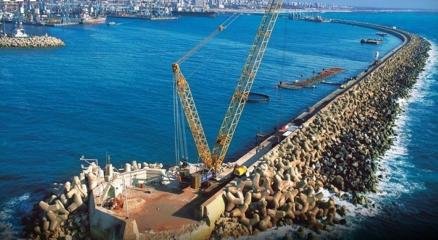
Andhra Pradesh has invited bids for a proposed ₹1,700-crore inland waterway corridor connecting Muktyala with the upcoming Machilipatnam Port to strengthen industrial freight movement and port connectivity. The project aims to establish an alternative cargo transportation route for industries in the state, reduce dependence on road freight and improve the movement of bulk commodities. The Andhra Pradesh Inland Waterways Authority (APIWA) has initiated the tendering process for the development of the corridor under the Design, Build, Finance, Operate and Transfer (DBFOT) model through a public-private partnership (PPP). The proposed 168-km route will combine an 82-km stretch along the Krishna River between Muktyala and Prakasam Barrage with the Bandar Canal section leading towards Machilipatnam Port. The initiative has received in-principal approval from the Inland Waterways Authority of India (IWAI). The project envisages upgrading the existing waterway infrastructure to accommodate cargo vessels and facilitate the movement of industrial materials, including cement, limestone and fly ash, from manufacturing clusters around Jaggayyapeta. By linking inland industrial centres with port infrastructure, the corridor is expected to improve freight efficiency and offer businesses an additional mode of transport. The Bandar Canal stretch between Prakasam Barrage in Vijayawada and Machilipatnam Port will be developed to specified navigation standards. Plans include maintaining a minimum channel depth of 1.5 metres and a bottom width of 20 metres. A navigation lock measuring 70 metres in length and 15 metres in width will be constructed at Prakasam Barrage to facilitate vessel movement. The development will also involve replacing low-level bridges that obstruct navigation with high-level structures, relocating utility lines and establishing cargo and passenger terminals. Cargo-handling infrastructure, including cranes and conveyors, will support loading and unloading operations. The selected developer will execute the project through a concession arrangement spanning 50 years, structured as an initial 30-year term with two possible 10-year extensions. Construction is expected to be completed within 36 months of the award. APIWA will facilitate statutory clearances and provide support for land acquisition. According to the tender conditions, prospective bidders must meet specified financial and infrastructure-experience requirements. Online bids are due by November 30, 2026, while technical bids are scheduled to be opened on December 7. For Andhra Pradesh, the project represents an opportunity to diversify its freight network by integrating inland waterways with industrial production centres and maritime gateways. If implemented effectively, the corridor could help ease road congestion, improve bulk-cargo logistics and strengthen Machilipatnam Port’s role in the state’s expanding trade infrastructure. 𝐒𝐭𝐚𝐲 𝐓𝐮𝐧𝐞𝐝 𝐭𝐨 CARGOCONNECT 𝐟𝐨𝐫 𝐥𝐚𝐭𝐞𝐬𝐭 𝐮𝐩𝐝𝐚𝐭𝐞𝐬!
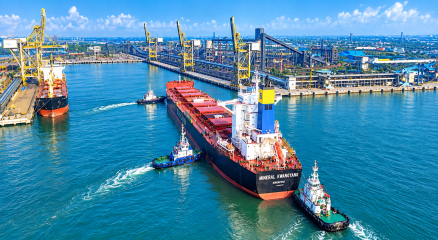
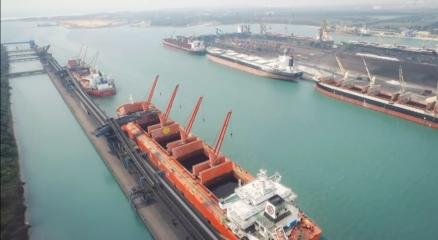
Paradip Port Authority (PPA) has constructed the 500-metre-long Atharabanki Bridge at a cost of ₹24.89 crore to strengthen road connectivity and facilitate smoother cargo transportation in the Paradip Port region. The three-lane bridge is expected to ease traffic congestion, improve the movement of commercial vehicles and enhance connectivity between the port and the surrounding road network. The development is particularly significant given that nearly 3,000 trucks move through Paradip Port every day. Three-Lane Bridge to Ease Traffic Congestion: The newly constructed Atharabanki Bridge replaces an ageing two-lane structure that faced capacity constraints amid rising transportation demand. Its expanded configuration is designed to accommodate increased traffic volumes and improve access for trucks and other vehicles involved in port-related operations. The upgraded infrastructure is expected to support more efficient cargo movement, reduce potential delays and improve road access for transport operators, logistics providers and other stakeholders associated with the port. Key Features of the Atharabanki Bridge: The project incorporates several features aimed at improving connectivity and functionality: Project cost: ₹24.89 crore Length: 500 metres Configuration: Three lanes Structural component: 30-metre composite girder Additional facilities: Dedicated footpaths and a pipeline corridor Dedicated pedestrian pathways provide designated space for people on foot, while the pipeline corridor accommodates infrastructure requirements associated with pipelines. Boost to Port Logistics and Regional Connectivity: As a major maritime gateway on India's eastern coast, Paradip Port plays an important role in cargo transportation and trade. Efficient road connectivity is essential to ensuring the smooth movement of goods between port facilities and the wider transportation network. The Atharabanki Bridge is expected to strengthen this vital link by improving traffic flow and supporting the movement of cargo-carrying vehicles. Better connectivity could also help reduce transportation delays, improve logistics efficiency and enhance the reliability of port-related operations. Beyond its immediate benefits for port traffic, the bridge is expected to improve regional accessibility and support economic activity in the Paradip area. Infrastructure Investment to Support Future Growth: The construction of the Atharabanki Bridge highlights the importance of developing supporting infrastructure to meet the evolving demands of ports, trade and logistics. As cargo volumes and road transportation requirements increase, investments in bridges and connectivity corridors are essential to strengthening supply-chain efficiency. By upgrading the existing two-lane crossing to a modern three-lane structure, Paradip Port Authority has taken a step towards improving the port's supporting infrastructure. The project is expected to contribute to smoother cargo movement, stronger regional connectivity and improved efficiency across India's maritime logistics network.
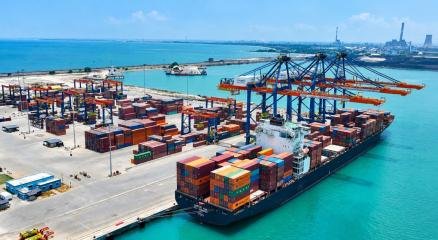


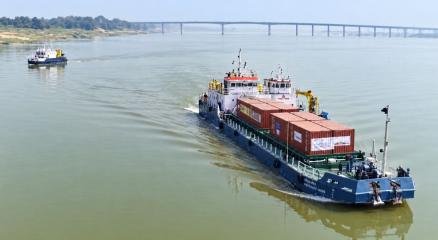
Assam has marked a significant milestone in India’s inland waterways and Northeast logistics landscape, with the first international cargo consignment from Upper Assam to a foreign port since Independence departing from the Bogibeel Terminal in Dibrugarh for Bangladesh. Union Minister for Ports, Shipping and Waterways Sarbananda Sonowal flagged off the vessel DLB Patkai, pushed by the tug Kushal Konwar, carrying 540 metric tonnes of methanol produced by Assam Petro-Chemicals Limited (APCL) at Namrup. The consignment is bound for Pangaon Port in Dhaka, Bangladesh, marking the revival of Dibrugarh’s international river trade after nearly seven decades. The cargo will travel approximately 768 km along the Brahmaputra, designated as National Waterway-2 (NW-2), before entering the Indo-Bangladesh Protocol Route (IBPR) for onward movement to Bangladesh. The overall journey from Bogibeel to Narayanganj is expected to cover around 1,300 km. The landmark movement is being viewed as a test of the Brahmaputra’s potential as a commercially viable freight corridor connecting the Northeast with international markets. The reopening of this route could provide industries in Assam and neighbouring states with an alternative to road-based transportation, while improving access to Bangladesh and other regional markets. The development has been enabled by infrastructure upgrades at Bogibeel and the establishment of customs and immigration facilities at Bogibeel and Dhubri. The Bogibeel passenger and cargo terminal, which became operational in 2024, is expected to play an important role in supporting future cargo movements. The Ministry of Ports, Shipping and Waterways said the initiative is expected to reduce logistics costs, ease pressure on road networks and strengthen regional economic connectivity. Regular methanol shipments to Bangladesh are also planned, indicating that the maiden voyage could evolve into a sustained trade service rather than remain a one-off movement. The revival also reconnects Dibrugarh with its historic role as a river-trade centre. Regular river cargo operations from the town declined after the mid-20th century as trade patterns shifted towards rail and other modes. The latest shipment represents a renewed effort to leverage the Brahmaputra for modern freight movement. Sonowal has also announced a ₹200-crore skill development centre at Bogibeel, expected to train around 50,000 young people from Assam and the Northeast over the next decade for opportunities in the maritime and shipping sectors. A With cargo movement on India’s national waterways rising substantially in recent years, the Dibrugarh-Dhaka shipment adds another dimension to the country’s multimodal logistics strategy. It could strengthen the Northeast’s position as a gateway to eastern and international markets while promoting inland waterways as a cost-efficient and lower-emission freight option. 𝐒𝐭𝐚𝐲 𝐓𝐮𝐧𝐞𝐝 𝐭𝐨 CARGOCONNECT 𝐟𝐨𝐫 𝐥𝐚𝐭𝐞𝐬𝐭 𝐮𝐩𝐝𝐚𝐭𝐞𝐬!