
Loading...
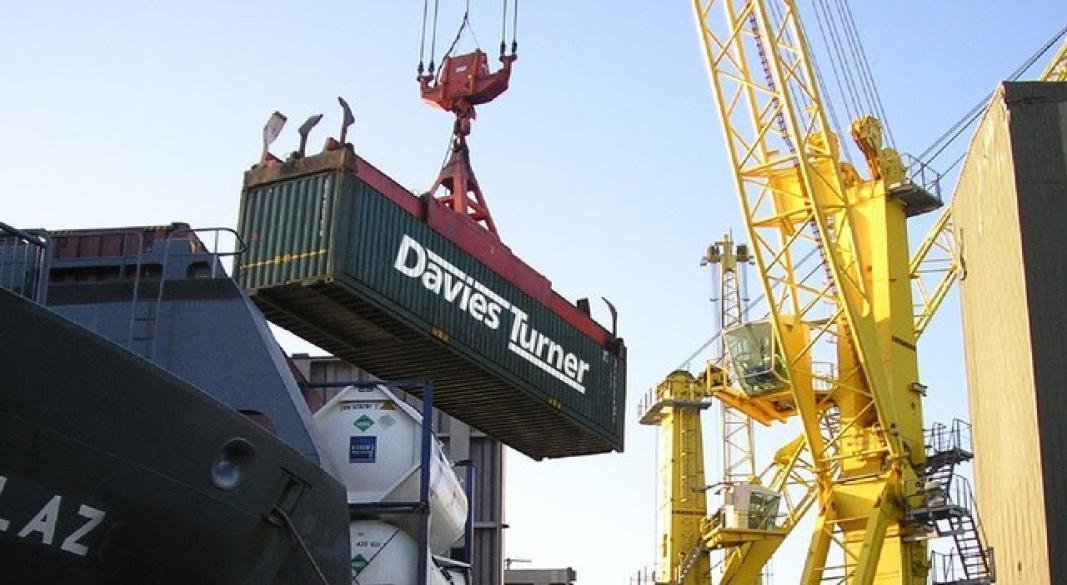
Davies Turner is introducing a seasonal full-container-load (FCL) service from China to the UK using the Northern Sea Route, with a scheduled transit time of 21 days from Ningbo to Felixstowe.
The freight forwarder will use sailings operated by Sea Legend for the new service, branded the Polar Silk Road. The programme is scheduled to run from August through October 2026, with departures planned at close to weekly intervals during the Arctic navigation season.
The service is aimed at shippers seeking shorter transit times than conventional ocean freight without moving to the significantly higher cost of air freight.
Cargo will be collected from six Chinese ports — Dalian, Fuzhou, Nansha, Qingdao, Shanghai and Taicang — and consolidated at Ningbo before being shipped to Felixstowe. From the UK port, Davies Turner will use its existing distribution network to move containers to destinations across the UK and mainland Europe.
The Northern Sea Route runs along Russia's Arctic coast and provides a shorter maritime connection between Asia and northern Europe than routes through the Suez Canal or around the Cape of Good Hope. Its use is limited by seasonal navigation conditions, making the new service a temporary addition to Davies Turner's China-Europe offering.
The company said the service is intended to give importers another option during the peak shipping period, particularly for cargo where conventional sea freight does not meet required delivery times.
Tony Cole, Davies Turner's head of ocean, said the service would add another multimodal option for customers managing transit times and transport costs.
The Polar Silk Road forms part of Davies Turner's wider expansion of its China-origin logistics network. The company has more than 150 years of experience in freight forwarding and provides sea, air and road transport, customs services, warehousing and supply chain operations.
The Northern Sea Route service is scheduled to operate for an eight-week programme between August and October 2026.
Follow CARGOCONNECT for more such news.
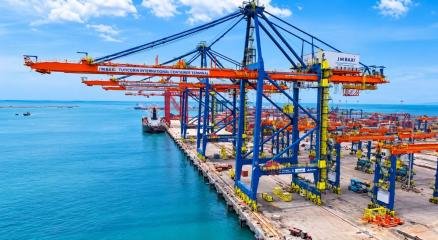
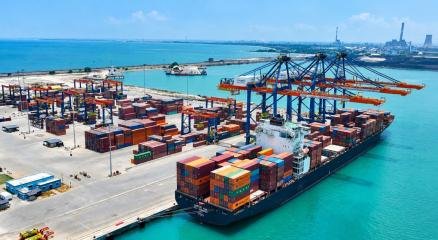
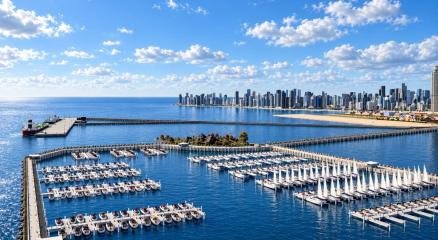
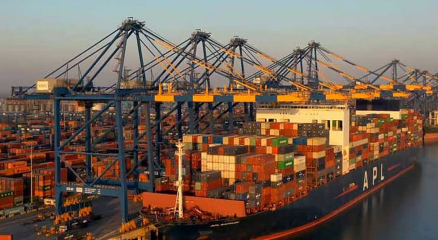
Tuticorin International Container Terminal (TICT) at V.O. Chidambaranar (VOC) Port has been declared a “Green Terminal” after achieving 100% electrification of its operational equipment, according to an official statement. Union Shipping Secretary Vijay Kumar made the declaration during a review of ongoing development projects at VOC Port, valued at approximately ₹18,000 crore. As part of the terminal’s green transition, the Secretary flagged off 13 electric Internal Transfer Vehicles (E-ITVs) to support cleaner and more sustainable container-handling operations. Advancing Green Port Operations The complete electrification of TICT’s operational equipment is expected to reduce diesel consumption and local emissions from container-yard and quay operations. The initiative marks a significant step towards cleaner port logistics, as the maritime sector increasingly focuses on reducing its environmental footprint. The green terminal designation relates to the electrification of operational equipment and does not imply that visiting vessels are powered by alternative fuels. VOC Port Expands Green Energy Initiatives During the review, the Shipping Secretary also assessed several green infrastructure initiatives at VOC Port, including a pilot methanol bunkering and refuelling facility, a green hydrogen pilot project, and wind energy infrastructure. VOC Port Chairman Sushanta Kumar Purohit highlighted the port’s annual cargo-handling capacity of 82 million tonnes and its long maritime history, with trade links dating back to 123 AD. The port is also pursuing employee welfare and social infrastructure projects, including a golf course and a Kendriya Vidyalaya. Outer Harbour Project to Boost Transshipment The review also covered the outer harbour project, which is expected to add 4 million tonnes per annum of cargo-handling capacity. The project aims to strengthen Tamil Nadu’s position as a major transshipment hub for southern India. With the electrification of terminal equipment and investments in alternative fuels and green energy, VOC Port is advancing its efforts to combine sustainable port operations with expanded cargo-handling and transshipment capacity. Follow CARGOCONNECT for more such updates

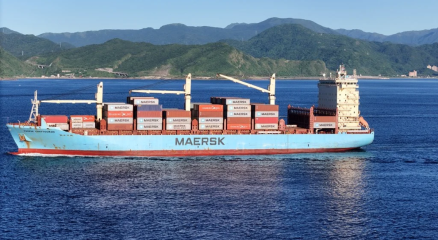
Maersk’s Singapore-flagged container vessel Maersk Chattogram is undergoing its first planned drydocking in India at L&T Shipbuilding’s Kattupalli Shipyard near Chennai, marking the first operational milestone under the Maersk–L&T maritime collaboration. A.P. Moller-Maersk has partnered with Larsen & Toubro (L&T) for the planned drydocking of the Maersk Chattogram at the Kattupalli Shipyard near Chennai. The Singapore-flagged container vessel is scheduled to arrive at the yard on October 20, 2026, subject to operational and weather conditions. The project is the first operational outcome of the Memorandum of Understanding signed by Maersk and L&T during India Maritime Week 2025. The MoU covers potential cooperation in shipbuilding, ship repair, knowledge exchange and development of global-standard maritime capability in India. 10-Year Maintenance and Special Survey The drydocking forms part of the vessel’s planned 10-year lifecycle maintenance programme. Work will include the scheduled special survey along with maintenance and overhaul of the hull and structure, machinery, equipment and propulsion systems. Drydocking allows inspection and repair of areas normally submerged underwater, alongside work on onboard systems. The process is essential for maintaining a vessel’s safety, seaworthiness, operational performance and reliability for the next five years. India’s Largest Shiplift System Maersk Chattogram will undergo a specialised lift-out operation using India’s largest Shiplift system at L&T Shipbuilding, Kattupalli. The system will lift the vessel out of the water for extensive inspection, maintenance and repair work. The project will bring together Maersk’s fleet and technical teams with L&T, Indian subcontractors, suppliers and maritime service providers. The companies said the focus will be on safe execution, quality delivery and knowledge sharing throughout the docking. Boost for India’s Ship Repair Ecosystem The drydocking signals growing confidence in India’s ship repair and shipyard capabilities. Maersk said the project aligns its global technical requirements with India’s developing shipyard, supplier and maritime-service ecosystem. L&T said the docking advances its strategic partnership with Maersk and supports efforts to strengthen domestic capabilities and supply chains across the shipbuilding ecosystem. Both companies view India as having strong potential to become a more important global maritime hub
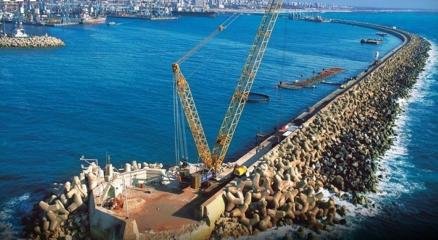
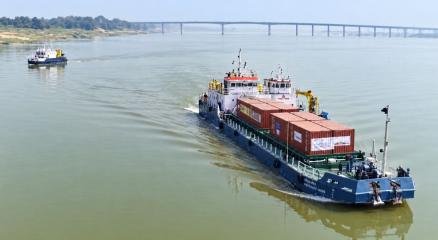
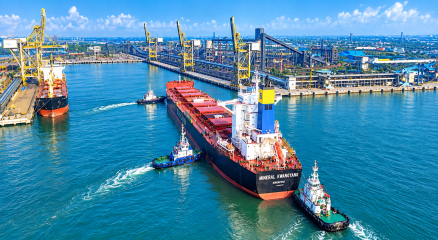
Paradip Port Authority (PPA) has set a target of handling more than 170 million metric tonnes (MMT) of cargo in the financial year 2026-27, building on its record throughput of 156.45 MMT in FY 2025-26. The target represents an increase of approximately 8.7% over the previous financial year, reinforcing the port’s ambition to strengthen its position as a leading maritime gateway on India’s eastern coast. PPA Chairperson Susanta Kumar Purohit announced the target during an interactive meeting with members of the Paradip Port Stevedores Association on 15 October 2026. The meeting, attended by heads of departments, focused on improving cargo-handling productivity, resolving operational bottlenecks and strengthening coordination among port stakeholders. Infrastructure Upgrades to Support Cargo Growth To facilitate higher cargo volumes, PPA reviewed several infrastructure improvement measures aimed at ensuring smoother cargo movement and more efficient port operations. These include upgrading roads within and outside the port premises, improving paved surfaces and developing suitable cargo-stacking areas to facilitate transportation and minimise waterlogging. Drainage improvements have also received approval, while better sanitation, hygiene and welfare facilities for workers and visitors remain part of the port’s efforts to improve conditions across its operational areas. Strengthening Operational Efficiency and Coordination The discussions also covered mechanisation, dredging requirements, traffic management and coordination between PPA, private terminal operators and stevedores. The authority emphasised the importance of integrating modern cargo-handling practices while safeguarding the business interests of traditional stevedoring operators. Purohit called for collective efforts from port officials and industry stakeholders to improve productivity and maintain competitiveness amid global economic uncertainties and increasing regional competition. Greater coordination among stakeholders is expected to help address operational challenges and support more consistent cargo movement. Building on Record Performance Paradip Port’s latest target follows its highest-ever annual cargo throughput since operations began in 1966. Achieving the FY 2026–27 goal will require sustained operational performance, reliable infrastructure and effective collaboration across the port’s cargo-handling ecosystem. The planned improvements underline the importance of combining infrastructure development with day-to-day operational efficiency. As cargo demand evolves, Paradip’s ability to streamline port operations and strengthen stakeholder coordination will be critical to achieving its growth target and supporting trade across eastern India. 𝐒𝐭𝐚𝐲 𝐓𝐮𝐧𝐞𝐝 𝐭𝐨 CARGOCONNECT 𝐟𝐨𝐫 𝐥𝐚𝐭𝐞𝐬𝐭 𝐮𝐩𝐝𝐚𝐭𝐞𝐬!