
Loading...

Munich Airport has reinforced its long-standing Sister Airport partnership with Japan's Chubu Centrair International Airport (Centrair), hosting a high-level delegation for a multi-day knowledge exchange focused on innovation, operational excellence, digital transformation and future airport development.
The delegation, led by Centrair President & CEO Hironori Kagohashi, was welcomed by Munich Airport CEO, Jost Lammers as both airports reaffirmed their commitment to strengthening international collaboration and sharing best practices across airport operations, passenger services and commercial development.
Highlighting the significance of the partnership, Lammers said that by sharing experiences and learning from one another, we can jointly develop innovative solutions, enhance operational excellence and continuously elevate the travel experience for our passengers. The partnership between Centrair and Munich Airport is a strong example of how airports can create value through international cooperation and prepare airports for the future.
A key component of the visit was an extensive workshop programme hosted by the Munich Airport Academy, where specialists from both airports discussed a broad range of strategic priorities. Among the topics were long-term capacity planning, Munich Airport's planned extension of the T-shaped pier at Terminal 2, and strategies to efficiently manage seasonal traffic peaks and demand associated with major international events.
The discussions also focused on preparations for the 2026 Asian Games in Aichi-Nagoya, which are expected to generate substantial passenger traffic across the region. Both airports explored operational planning approaches to maintain service quality while accommodating increased travel demand. Commercial strategy also formed part of the agenda, covering airport advertising, media and parking business models, alongside commercial opportunities linked to infrastructure expansion projects.
Innovation in airside operations featured prominently during the exchange. Munich Airport shared updates on its autonomous cargo transport testing activities, reflecting the growing role of automation in enhancing logistics efficiency and airside operations. In return, Centrair presented progress on its Smart Ramp initiative, including the deployment of autonomous vehicle technologies designed to improve safety, productivity and operational performance.
Digital transformation was another central theme, with experts comparing automated passenger processing systems and Fast Travel solutions aimed at streamlining airport operations. The exchanges highlighted how automation, digitalization and intelligent infrastructure can help airports improve throughput, optimize resources and deliver a more seamless passenger journey.
Therefore, this collaboration underscores the value of the Sister Airport network, an international alliance that includes Munich Airport, Denver International Airport, Chubu Centrair International Airport, Airports of Thailand (Bangkok), Singapore Changi Airport, Beijing Capital International Airport and Airports Company South Africa. By leveraging collective expertise, member airports continue to develop innovative solutions that support sustainable growth, operational resilience and the evolving needs of global aviation, air cargo and passenger mobility.
𝐒𝐭𝐚𝐲 𝐓𝐮𝐧𝐞𝐝 𝐭𝐨 CARGOCONNECT 𝐟𝐨𝐫 𝐥𝐚𝐭𝐞𝐬𝐭 𝐮𝐩𝐝𝐚𝐭𝐞𝐬!
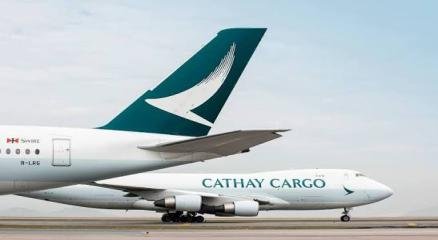
Cathay Cargo has become the first airline to join Hong Kong’s Port Community System (PCS), marking a landmark step towards integrating air freight operations with the city’s maritime and land-based logistics networks. The initiative aims to improve shipment visibility, streamline information exchange and strengthen multimodal connectivity through digital integration. The development follows a Memorandum of Understanding (MoU) signed on 17 November 2026 between Cathay Cargo, the Transport and Logistics Bureau (TLB) of the Hong Kong Special Administrative Region Government, the Logistics and Supply Chain MultiTech R&D Centre (LSCM) and air cargo technology provider Global Logistic System (HK) Co. Ltd (GLS). The agreement was signed during the Asian Logistics, Maritime and Aviation Conference (ALMAC), held as part of Hong Kong Maritime Week. The collaboration will extend the capabilities of Hong Kong’s PCS, which was initially developed around sea and land transport, to include air cargo operations. By connecting different transport modes through a common digital platform, the initiative seeks to address information gaps between air and land logistics and improve coordination across the supply chain. A key component of the partnership is the adoption of the International Air Transport Association’s (IATA) ONE Record data standard. The open global standard enables airlines, freight forwarders and other logistics stakeholders to exchange shipment information in a common digital format, supported by secure data access controls. The partners will explore its implementation, develop data-sharing services within the PCS and conduct pilot trials involving other logistics stakeholders. The initial implementation will focus on making key shipment milestones associated with Cathay Cargo Air Waybills (AWBs) carried on Cathay-operated flights accessible through the PCS. This will allow freight forwarders and other logistics partners to obtain a more consolidated view of shipment movements across different transport modes. GLS will oversee the technical integration and implementation, with technical testing scheduled for November 2026, followed by a focused pilot in December. The transition to full production is targeted for 2027. As additional logistics partners and use cases are incorporated, the platform is expected to facilitate more comprehensive data sharing, improve shipment tracking and enable earlier identification of operational exceptions. These capabilities could also help stakeholders coordinate corrective measures more effectively when disruptions or changes occur during transportation. Cathay General Manager Cargo Service Delivery Tim Wong highlighted that connecting the airline with the PCS would strengthen shipment visibility and enable faster responses to exceptions, supporting more reliable and transparent customer services. The initiative also aligns with Hong Kong’s broader ambition to strengthen its position as an international maritime and aviation hub through smart port infrastructure and digital transformation. Integrating air cargo information with existing maritime and land transport data is expected to improve intermodal transshipment efficiency and facilitate smoother cargo movement through the region. The partnership further builds on Cathay Cargo’s ongoing digitalisation initiatives in mainland China, where the airline has been working with the Civil Aviation Administration of China Information Centre and China Unidata to advance ONE Record-compatible data exchange with airports. By extending digital connectivity across air, sea and land transportation, Cathay Cargo’s integration with the PCS represents an important development in Hong Kong’s multimodal logistics ecosystem. The initiative is expected to create opportunities for wider industry participation, strengthen supply chain transparency and support more efficient end-to-end cargo operations as the platform expands. 𝐒𝐭𝐚𝐲 𝐭𝐮𝐧𝐞𝐝 𝐭𝐨 CARGOCONNECT 𝐟𝐨𝐫 𝐥𝐚𝐭𝐞𝐬𝐭 𝐮𝐩𝐝𝐚𝐭𝐞𝐬!
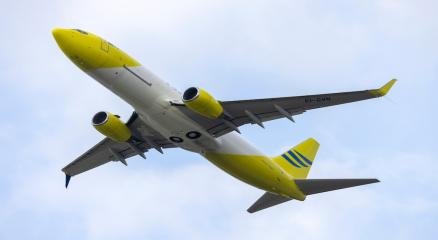
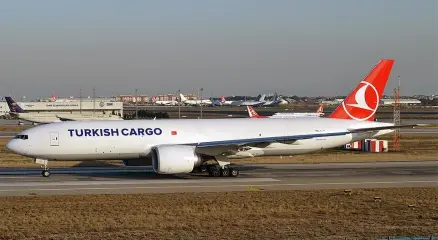


Thai Airways and ECS Group have strengthened their long-standing partnership by introducing a unified General Sales and Service Agent (GSSA) structure across Europe, aimed at improving air cargo capacity management, enhancing customer service and strengthening the airline’s commercial presence across key European markets. Under the revised arrangement, ECS Group’s subsidiaries in France, Italy, Belgium, Switzerland, Denmark and Sweden, along with its offline stations in Finland and Central and Eastern Europe (CEE), will operate under a common Thai Cargo Service Level Agreement and a coordinated commercial strategy. The integrated framework is expected to streamline sales operations, improve capacity utilisation and ensure consistent service standards for freight forwarders across the region. The partnership will also enable both companies to manage cargo capacity and revenue more effectively across European markets, with particular attention to shipments of pharmaceuticals, food products and luxury goods. By bringing regional operations under a single commercial framework, the companies aim to improve transparency in sales performance, strengthen coordination between individual markets and minimise cross-border sales competition. The collaboration builds on a relationship that dates back to 2004, when ECS Group’s French subsidiary, Aerocargo, began representing Thai Airways. The partnership expanded to Italy through Globe Air Cargo in 2006 and Central and Eastern Europe in 2010. Belgium and Switzerland joined the network in 2025, while HWF took over representation in Denmark and Sweden during the same year. Nordics GSA has represented Thai Airways in Finland since 2012. The expanded arrangement also extends Thai Airways’ commercial reach to six additional Central and Eastern European markets: the Czech Republic, Slovakia, Poland, Bulgaria, Hungary and Romania, alongside Finland. Regular weekly, quarterly and annual meetings between the companies will support coordinated market strategies and enable them to respond more effectively to changing customer requirements and market conditions. Commenting on the development, Jean Ceccaldi, Chief Executive Officer, ECS Group, said that AVS GSA in Bangkok had worked closely with Thai Airways’ Cargo Team and European subsidiaries to develop a streamlined commercial cargo concept and strategy for Europe. He highlighted capacity optimisation, revenue management and consistent service standards as the key priorities underpinning the initiative. Meanwhile, Thai Airways is preparing to expand its European flight frequencies, creating additional opportunities for air cargo customers. The airline currently operates daily direct services connecting Paris Charles de Gaulle, Milan, Brussels, Stockholm Arlanda, Copenhagen and Zurich with its Bangkok hub. Its fleet of Boeing 787-800, Boeing 787-900, Boeing 777-300 and Airbus A350-900 aircraft offers cargo capacity ranging from five to 20 tonnes per flight. From December 2026, Thai Airways will double its Paris services by introducing a daily Boeing 787-900 flight alongside its existing daily Boeing 777-300 operation. This will increase available cargo capacity from Paris to up to 20 tonnes per day. Services to Zurich will also increase to 11 flights per week from January 2027, with Boeing 777-300 aircraft offering 20 tonnes of cargo capacity per flight. Through the unified European GSSA framework and increased flight frequencies, Thai Airways and ECS Group are looking to strengthen their competitive positioning in the European air freight market while providing freight forwarders with more coordinated cargo solutions and improved access to capacity. 𝐒𝐭𝐚𝐲 𝐭𝐮𝐧𝐞𝐝 𝐭𝐨 CARGOCONNECT 𝐟𝐨𝐫 𝐥𝐚𝐭𝐞𝐬𝐭 𝐮𝐩𝐝𝐚𝐭𝐞𝐬!

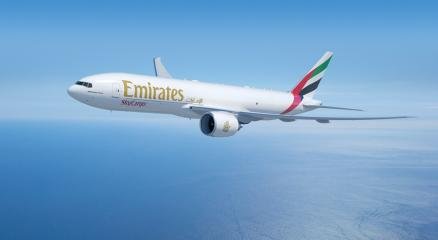
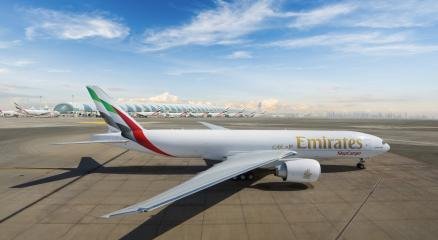
Emirates SkyCargo has announced the launch of a new weekly freighter service between Milan Malpensa Airport (MXP) and John F. Kennedy International Airport (JFK), New York, effective 5 December 2026. The new route is aimed at addressing growing demand for air cargo capacity between Northern Italy and the United States while providing businesses with improved access to international markets. Operated by the airline's Boeing 777-F freighter aircraft, the service will offer approximately 100 tonnes of cargo capacity per flight. It will primarily support exports from Italy's Lombardy region, including pharmaceuticals, vaccines, clinical trial medicines, luxury goods, fashion products, industrial equipment, automotive components, fresh produce and speciality food products. The development comes amid strong growth in Emirates SkyCargo's export volumes from Milan, which increased by 13% in FY2025-26 compared with the previous financial year. The airline currently provides more than 500 tonnes of weekly export capacity from Milan to global destinations, including over 100 tonnes of weekly bellyhold capacity on passenger flights to New York. Commenting on the expansion, Badr Abbas, Divisional Senior Vice President, Emirates SkyCargo, said the additional freighter capacity would provide exporters with greater access, flexibility and reliability in serving the US market. He also highlighted the growing export demand from the Greater New York region and the importance of strengthening international cargo connections through Dubai. Strengthening Two-Way Trade Connectivity Beyond supporting Italian exports, the new service will improve cargo connectivity for businesses in the Greater New York region and the Northeastern United States. Emirates SkyCargo reported a 23% increase in export volumes from New York's JFK and Newark Liberty International Airport (EWR) between FY2024-25 and FY2025-26. Key commodities moving out of the US include pharmaceuticals and healthcare products, perishables, e-commerce shipments, machinery and industrial components. Through its Dubai hub, the airline will offer onward connections to markets across the Middle East, Asia and Oceania, creating additional opportunities for international freight movement. The new route also complements Emirates SkyCargo's existing operations in Italy. The carrier operates a weekly freighter service between Milan and Dubai World Central (DWC), alongside passenger bellyhold capacity and road feeder services. Across its four Italian gateways – Bologna, Milan, Rome and Venice – the airline provides more than 1,000 tonnes of weekly export cargo capacity. Expanding Global Freighter Network The Milan–New York launch forms part of Emirates SkyCargo's broader network expansion strategy in North America. The carrier introduced freighter services to Los Angeles and Dallas while increasing frequencies to Miami in 2026. Fleet expansion has further supported this growth. Emirates SkyCargo took delivery of eight freighter aircraft, comprising seven new-production Boeing 777-F freighters and one Boeing 777-300ER converted freighter. Consequently, its dedicated freighter network expanded from more than 40 destinations in March 2026 to over 60 destinations by July 2026. With the additional Milan–New York connection, the carrier aims to strengthen its transatlantic cargo operations, improve access to international markets and support the evolving logistics requirements of global businesses. 𝐒𝐭𝐚𝐲 𝐓𝐮𝐧𝐞𝐝 𝐭𝐨 CARGOCONNECT 𝐟𝐨𝐫 𝐥𝐚𝐭𝐞𝐬𝐭 𝐮𝐩𝐝𝐚𝐭𝐞𝐬!