
Loading...
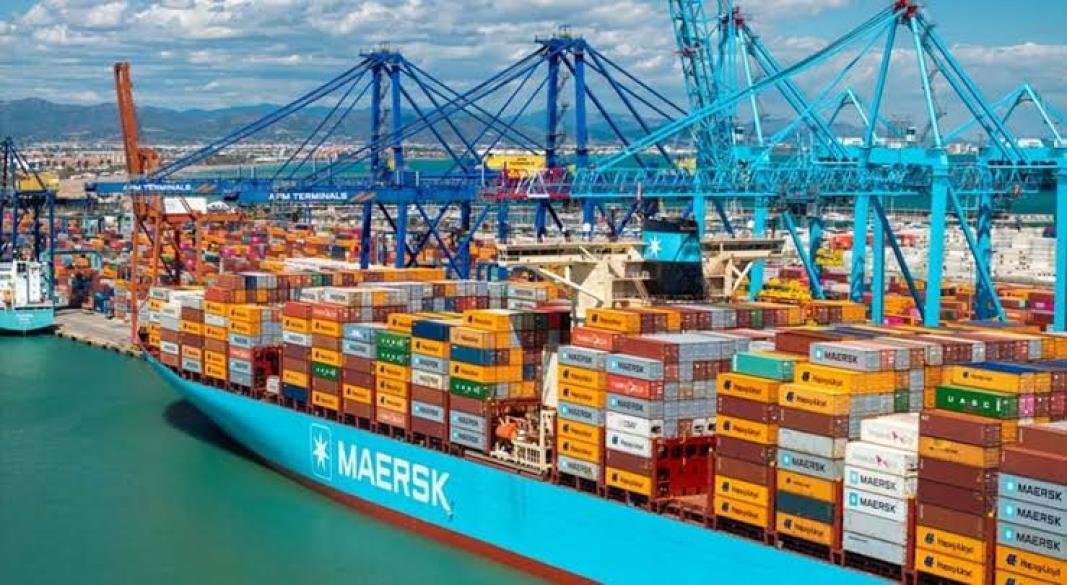
Maersk has announced an increase in its Emergency Contingency Surcharge (ECS) for cargo moving from the Indian subcontinent to North Europe and the Mediterranean, with the revised charges coming into effect from August 1, 2026. The move is expected to raise ocean freight costs for exporters across India and neighbouring South Asian markets, adding further pressure on supply chains already navigating volatile global shipping ecosystem.
The revised ECS applies to cargo transported on Maersk's E3W (North Europe) and E4W (Mediterranean) services originating from North West India, South and East India, Nepal, Pakistan, Bangladesh, Sri Lanka and the Maldives. According to the carrier, the surcharge revision follows a review of prevailing market conditions aimed at maintaining the stability and reliability of its ocean freight.
Under the new tariff structure, the ECS for shipments from North West India and Pakistan to North Europe will increase to US$3,500 per container across dry and reefer equipment, up from US$2,500. Similarly, shipments from South and East India and Nepal to North Europe will attract an ECS of US$3,800 for 20-foot containers and US$4,400 for 40-foot containers and reefers. Bangladesh-bound exports to North Europe will see the surcharge rise to US$4,000 for 20-foot containers and US$4,800 for 40-foot dry containers. Comparable increases have also been announced for shipments destined for the Mediterranean.
The surcharge increase effectively adds US$1,000 per container across most trade lanes, making exports to Europe more expensive for manufacturers and shippers. Industry observers believe sectors such as textiles, engineering goods, chemicals, pharmaceuticals and automotive components, which rely heavily on Europe-bound container traffic, are likely to witness higher logistics costs in the coming months.
The announcement comes amid continued uncertainty in global shipping markets, where carriers are adjusting freight rates and surcharges to offset elevated operating costs, capacity constraints and network disruptions. Shipping lines have increasingly relied on emergency and contingency surcharges to recover additional expenses arising from changing trade dynamics and operational challenges.
In a separate advisory issued on July 17, Maersk also introduced a Heavy Load Surcharge (HWS) for cargo moving from North West India to North Europe and Israel-bound Mediterranean destinations, indicating a broader review of pricing across its regional services.
For Indian exporters, the revised ECS is expected to translate into higher freight bills from August, prompting many to reassess logistics budgets, negotiate shipping contracts and explore cost optimisation strategies as Europe remains one of India's largest export markets.
𝐒𝐭𝐚𝐲 𝐓𝐮𝐧𝐞𝐝 𝐭𝐨 CARGOCONNECT 𝐟𝐨𝐫 𝐥𝐚𝐭𝐞𝐬𝐭 𝐮𝐩𝐝𝐚𝐭𝐞𝐬!
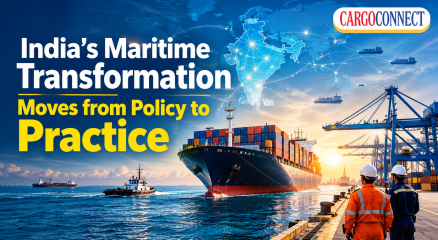
India’s maritime sector is entering a new phase of transformation, with the focus shifting from policy formulation to effective implementation, technology adoption and measurable outcomes. The message emerged prominently during discussions around the country’s evolving maritime strategy, highlighting the need to translate long-term policy objectives into operational capabilities. The transition reflects a broader effort to strengthen India’s maritime ecosystem through coordinated action across infrastructure, institutions, technology, skills and processes. With a comprehensive policy framework and long-term maritime vision already in place, the emphasis is increasingly on execution supported by clearly defined targets and measurable key performance indicators (KPIs). Technology is emerging as a critical enabler of this shift. Digital systems, data-driven decision-making, research, innovation and entrepreneurship are expected to connect policy intent with implementation and ultimately deliver tangible improvements across maritime operations. The approach also underscores the importance of developing skilled human capital capable of supporting a technology-led and increasingly sustainable maritime industry. India’s maritime transformation is also being reflected at the operational level. Ports are increasingly adopting artificial intelligence and digital technologies to improve efficiency, resilience, safety and competitiveness. Recent industry discussions have highlighted the potential of AI-enabled systems to support predictive operations, integrated data management and smarter decision-making across ports. The shift from policy to practice is therefore becoming a defining feature of India’s maritime development agenda. Rather than measuring progress solely through policies and infrastructure creation, the sector is moving towards evaluating outcomes through operational performance, technology deployment, institutional coordination and workforce capability. As India pursues its ambition of becoming a globally competitive maritime power, effective implementation will remain central to translating strategic objectives into real-world outcomes. The emerging approach positions technology, innovation and execution as key pillars of India’s maritime transformation. 𝐒𝐭𝐚𝐲 𝐓𝐮𝐧𝐞𝐝 𝐭𝐨 CARGOCONNECT 𝐟𝐨𝐫 𝐥𝐚𝐭𝐞𝐬𝐭 𝐮𝐩𝐝𝐚𝐭𝐞𝐬!

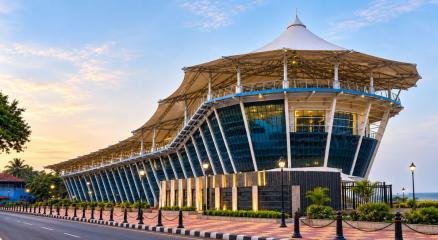


Chennai Port Authority has sought government approval for a ₹17,000 crore outer harbour project that will add 5 million TEUs of container capacity in two phases. The project is proposed to be developed through a hybrid public-private model, with marine works such as breakwater construction, dredging and reclamation planned under the Hybrid Annuity Mode (HAM) at an estimated cost of ₹7,000 crore. Container terminals will be developed through a DBFOT concession with private investment. The first phase is planned with an 18-metre draft, followed by a second phase with a 21-metre draft, enabling the facility to handle larger vessels and additional transhipment cargo. The proposal comes as Chennai’s existing container terminals face capacity constraints, while the port’s location within the city limits limits further expansion of current facilities. The outer harbour is expected to support gateway cargo from Tamil Nadu’s manufacturing and export sectors while strengthening Chennai’s role in east coast transhipment. Subject to approval, the project could be awarded by mid-to-late 2027, with construction expected to begin in 2028 and container operations targeted for 2033. The outer harbour is also expected to include berths supporting the requirements of the Indian Navy and Coast Guard. Follow CARGOCONNECT for more such updates
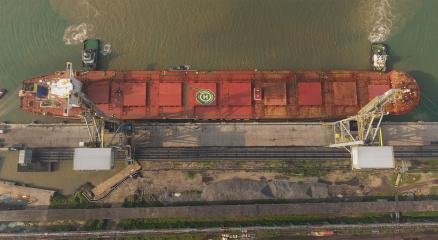
Mundra, Gujarat | September 5, 2026 A strike by empty-container depot operators at Mundra Port has disrupted the movement of export-import (EXIM) cargo, with transporters also joining the stoppage. The disruption is affecting the return and availability of empty containers required for export cargo stuffing. The dispute follows Adani Ports and Special Economic Zone (APSEZ)'s decision to restrict empty-container yard codes outside the Mundra port/SEZ limits. Under the new system, shipping lines are required to nominate empty containers to designated yards within the Mundra SEZ. Empty-container yard operators have opposed the move, arguing that it could adversely affect their businesses. The resulting stoppage has created difficulties for exporters, importers, freight forwarders and transport operators. Industry estimates suggest that around 5,000 containers a day could face delays, increasing the risk of shipment rollovers, missed vessel cut-offs, additional transportation costs and detention charges. APSEZ plans dedicated empty-container yard Amid the disruption, APSEZ has announced plans for a dedicated Empty Container Yard (ECY) inside the Mundra Port SEZ, with integrated warehousing facilities. The facility is intended to centralise empty-container handling and improve operational efficiency. However, the effectiveness of the new facility could depend on the availability of transport services, as container transport operators have also supported the ongoing strike. Impact on exporters and importers The disruption is particularly significant for industries that depend heavily on Mundra for international shipments. Exporters may face difficulties obtaining empty containers for factory stuffing, while importers could experience delays in returning empty boxes. Trade bodies have called for intervention to maintain the smooth flow of EXIM cargo and prevent additional costs from being passed on to exporters and importers. What it means for the logistics sector The Mundra situation highlights the importance of empty-container availability and last-mile connectivity in maintaining uninterrupted container supply chains. A prolonged disruption could increase logistics costs, create congestion and affect export schedules. With APSEZ developing a new dedicated yard while depot operators continue their protest, the coming days will be important for determining whether container movement at Mundra returns to normal. Key takeaway: The Mundra disruption is creating immediate pressure on India's EXIM supply chain, while APSEZ's proposed dedicated empty-container yard could provide a longer-term solution to streamline empty-container handling.