
Loading...
India’s National Industrial Corridor Development Corporation (NICDC) is expanding engagement with Portuguese businesses as both countries explore deeper cooperation in industrial infrastructure, logistics and manufacturing investments. The discussions come amid growing European interest in India’s industrial corridor and smart city development programmes.
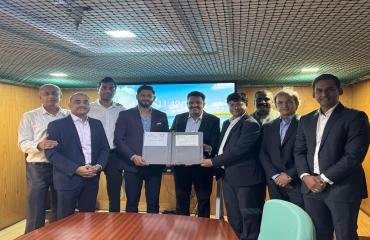
NICDC Managing Director and CEO Rajat Kumar Saini recently held talks with representatives from Portugal India Business Hub (PIBhub) and infrastructure major Mota-Engil to identify collaboration opportunities across industrial development, engineering and investment facilitation. The discussions focused on strengthening business linkages and encouraging greater Portuguese participation in India’s expanding industrial ecosystem.
During the meeting, NICDC outlined investment opportunities across 20 greenfield industrial smart cities being developed under India’s industrial corridor programme. These projects are designed with integrated logistics connectivity, plug-and-play manufacturing infrastructure and multimodal transport networks aimed at attracting global manufacturing and supply chain investments.
The proposed collaboration also includes plans for a dedicated Portuguese business conclave in India to facilitate engagement between Indian authorities and Portuguese companies seeking entry into sectors such as infrastructure, construction, logistics and industrial services.
Portugal’s increasing interest in India aligns with broader shifts in global supply chains, where European companies are looking to diversify manufacturing and infrastructure partnerships beyond traditional markets. Portuguese firms are particularly exploring opportunities linked to transport infrastructure, engineering services, renewable energy and industrial technology.
For India, attracting foreign participation in industrial corridor projects remains central to efforts aimed at reducing logistics costs, improving export competitiveness and building integrated manufacturing hubs connected through road, rail and port infrastructure. The NICDC programme currently spans multiple industrial corridors across the country, including the Delhi-Mumbai, Chennai-Bengaluru and Amritsar-Kolkata corridors.
Industry analysts say partnerships with European infrastructure and engineering firms could help accelerate technology transfer, sustainable urban planning and logistics modernisation within India’s emerging industrial cities. Increased foreign participation is also expected to strengthen India’s positioning as an alternative global manufacturing and supply chain destination amid ongoing geopolitical and trade realignments.
Follow CARGOCONNECT for more such updates.

India’s National Industrial Corridor Development Corporation (NICDC) is expanding engagement with Portuguese businesses as both countries explore deeper cooperation in industrial infrastructure, logistics and manufacturing investments. The discussions come amid growing European interest in India’s industrial corridor and smart city development programmes. NICDC Managing Director and CEO Rajat Kumar Saini recently held talks with representatives from Portugal India Business Hub (PIBhub) and infrastructure major Mota-Engil to identify collaboration opportunities across industrial development, engineering and investment facilitation. The discussions focused on strengthening business linkages and encouraging greater Portuguese participation in India’s expanding industrial ecosystem. During the meeting, NICDC outlined investment opportunities across 20 greenfield industrial smart cities being developed under India’s industrial corridor programme. These projects are designed with integrated logistics connectivity, plug-and-play manufacturing infrastructure and multimodal transport networks aimed at attracting global manufacturing and supply chain investments. The proposed collaboration also includes plans for a dedicated Portuguese business conclave in India to facilitate engagement between Indian authorities and Portuguese companies seeking entry into sectors such as infrastructure, construction, logistics and industrial services. Portugal’s increasing interest in India aligns with broader shifts in global supply chains, where European companies are looking to diversify manufacturing and infrastructure partnerships beyond traditional markets. Portuguese firms are particularly exploring opportunities linked to transport infrastructure, engineering services, renewable energy and industrial technology. For India, attracting foreign participation in industrial corridor projects remains central to efforts aimed at reducing logistics costs, improving export competitiveness and building integrated manufacturing hubs connected through road, rail and port infrastructure. The NICDC programme currently spans multiple industrial corridors across the country, including the Delhi-Mumbai, Chennai-Bengaluru and Amritsar-Kolkata corridors. Industry analysts say partnerships with European infrastructure and engineering firms could help accelerate technology transfer, sustainable urban planning and logistics modernisation within India’s emerging industrial cities. Increased foreign participation is also expected to strengthen India’s positioning as an alternative global manufacturing and supply chain destination amid ongoing geopolitical and trade realignments. Follow CARGOCONNECT for more such updates.

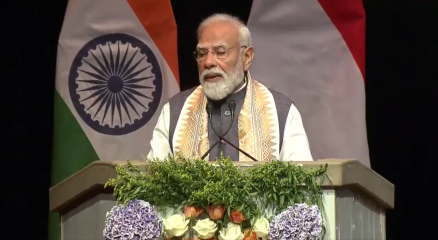

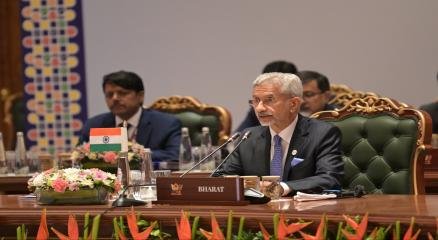
India has intensified its call for secure maritime trade routes amid escalating tensions in West Asia, warning that disruptions in key shipping corridors such as the Strait of Hormuz and the Red Sea could severely impact global supply chains, energy flows, and trade stability. Speaking at the BRICS foreign ministers’ meeting in New Delhi, External Affairs Minister Subrahmanyam Jaishankar stressed that “safe and unimpeded maritime flows” are essential for global economic well-being. The statement comes as geopolitical tensions surrounding Iran and the wider Gulf region continue to rattle international shipping markets and logistics networks. For the supply chain and logistics sector, the concerns are significant. The Strait of Hormuz handles nearly a fifth of the world’s oil trade and remains one of the most strategically important maritime chokepoints globally. Any prolonged disruption could trigger sharp increases in freight costs, marine insurance premiums, bunker fuel prices, and cargo transit delays across Asia, Europe, and Africa. Industry analysts warn that container shipping lines and tanker operators are already reassessing route risks as attacks on vessels and regional instability threaten operational continuity. Reports of reduced tanker traffic and heightened security risks in the Gulf have also raised fears of inventory shortages and inflationary pressures, particularly for energy-dependent economies such as India. India’s intervention at the BRICS forum also reflects broader concerns among emerging economies over the fragility of global supply chains amid geopolitical conflict. The expanded BRICS grouping — which now includes major energy producers and trade economies such as the UAE, Iran, Egypt, and Indonesia — is increasingly positioning itself as a platform to discuss supply chain resilience, trade continuity, and economic security. In parallel, India has reportedly strengthened maritime monitoring and energy security measures to safeguard cargo movement and critical imports. The country’s emphasis on uninterrupted sea lanes underscores the growing convergence between geopolitics and logistics planning, with supply chain resilience now emerging as a central pillar of global trade diplomacy.



Locus, a global B2B SaaS logistics planning and dispatch optimisation platform for last-mile delivery enterprises announced its recognition as a Representative Vendor in 2022 Gartner ® Market Guide for Supply Chain Network Design Tools. “High-impact disruptions have made structural design of networks and product flows harder to hold steady. The frequency with which organisations review the design of their supply chain networks has increased from being measured in multiples of years to months or even weeks, due to shifts in markets and consumer behaviour,” Gartner said in the report. “A well-planned network design is indispensable for running frictionless last-mile deliveries. Given the growing complexities in modern supply chains, more brands are now rethinking their distribution networks. With ‘what if’ simulations and supply chain digital twin representations, we help enterprises design flexible and optimal distribution networks for smooth flow of merchandise. Being listed as a representative vendor in the latest Gartner® Market Guide is an absolute honor for us as we strive to make last-mile logistics effortless for enterprises across the globe with our tech,” Nishith Rastogi, CEO and Founder of Locus said. Locus uses machine learning and proprietary algorithms to offer solutions like route optimization, real-time tracking, vehicle allocation, fleet utilisation, insights and analytics.