
Loading...
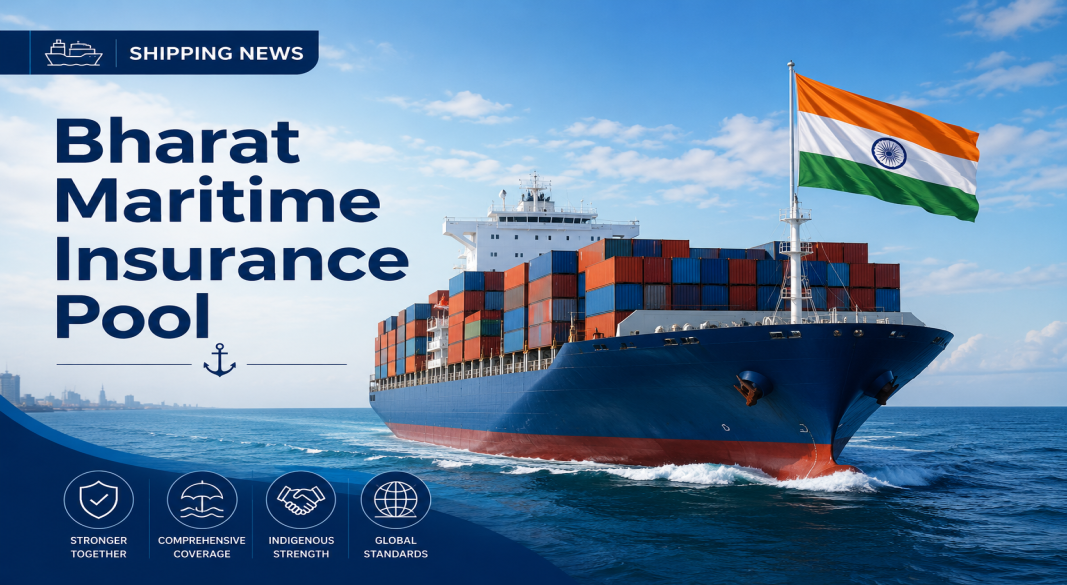
In a major boost to provide trade security amid rising global shipping disruptions, India unveiled the Bharat Maritime Insurance Pool (BMIP), a whopping $1.5 billion insurance instrument solidly supported by a sovereign guarantee of $1.4 billion (around ₹12,980 crore). The objective is simple, however, strategically important for the Indian-linked ships. The idea is to ensure that the ships continue to get insurance coverage even during times of global uncertainty and volatility.
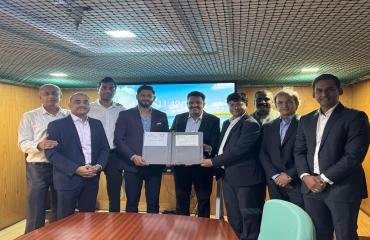
The BMIP was launched on Tuesday by the Department of Financial Services (DFS) under the Union Ministry of Finance. The official launch took place during an event chaired by DFS Secretary M. Nagaraju. During the event, the first Marine Hull and Machinery War Policy issued under the instrument was officially handed over to Hoger Offshore and Marine Pvt Ltd.
The Bharat Maritime Insurance Pool (BMIP) will cover marine hull and machinery, cargo, protection and indemnity (P&I), and war for Indian-flagged or India-linked vessels. General Insurance Corporation of India (GIC Re) will manage the pool, while a governing body and underwriting committee will oversee its operations. The first policy under this system has already been issued. The New India Assurance Company provided a Marine Hull & Machinery War Policy to Hoger Offshore and Marine Pvt Ltd, officially starting the pool. The structure is organised carefully. Claims up to $100 million will be paid from pooled resources. Claims exceeding that amount will be covered by the sovereign guarantee, after reserves and reinsurance are used up. It is also learnt that the Government has assured the stakeholders from the maritime industry that India will not allow critical maritime activity to stop due to insurance disruptions.
The timing of rolling out the BMIP is crucial as there have been major disruptions on key global shipping routes due to the West Asia crisis, a region very crucial for India's oil and energy imports. In these situations, international insurers often raise premiums significantly or avoid risky routes altogether, as they did with the Strait of Hormuz. For a country that imports most of its energy and relies heavily on sea trade, this unpredictability creates a strategic risk. India is now working to establish a domestic safety net.
For more such news and updates, visit CARGOCONNECT.
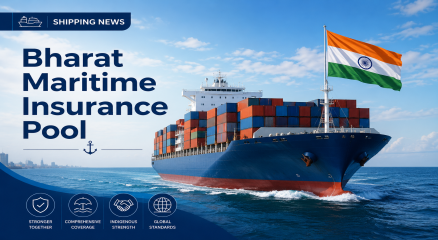
In a major boost to provide trade security amid rising global shipping disruptions, India unveiled the Bharat Maritime Insurance Pool (BMIP), a whopping $1.5 billion insurance instrument solidly supported by a sovereign guarantee of $1.4 billion (around ₹12,980 crore). The objective is simple, however, strategically important for the Indian-linked ships. The idea is to ensure that the ships continue to get insurance coverage even during times of global uncertainty and volatility. The BMIP was launched on Tuesday by the Department of Financial Services (DFS) under the Union Ministry of Finance. The official launch took place during an event chaired by DFS Secretary M. Nagaraju. During the event, the first Marine Hull and Machinery War Policy issued under the instrument was officially handed over to Hoger Offshore and Marine Pvt Ltd. The Bharat Maritime Insurance Pool (BMIP) will cover marine hull and machinery, cargo, protection and indemnity (P&I), and war for Indian-flagged or India-linked vessels. General Insurance Corporation of India (GIC Re) will manage the pool, while a governing body and underwriting committee will oversee its operations. The first policy under this system has already been issued. The New India Assurance Company provided a Marine Hull & Machinery War Policy to Hoger Offshore and Marine Pvt Ltd, officially starting the pool. The structure is organised carefully. Claims up to $100 million will be paid from pooled resources. Claims exceeding that amount will be covered by the sovereign guarantee, after reserves and reinsurance are used up. It is also learnt that the Government has assured the stakeholders from the maritime industry that India will not allow critical maritime activity to stop due to insurance disruptions. The timing of rolling out the BMIP is crucial as there have been major disruptions on key global shipping routes due to the West Asia crisis, a region very crucial for India's oil and energy imports. In these situations, international insurers often raise premiums significantly or avoid risky routes altogether, as they did with the Strait of Hormuz. For a country that imports most of its energy and relies heavily on sea trade, this unpredictability creates a strategic risk. India is now working to establish a domestic safety net. For more such news and updates, visit CARGOCONNECT.
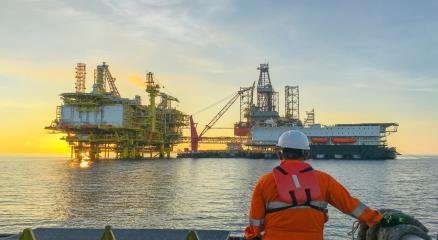
Adani Ports and Special Economic Zone Ltd. (APSEZ), through its marine platform Astro Offshore, has entered into a strategic agreement with Oceaneering International to jointly pursue specialised offshore and subsea opportunities across Europe, marking a major step in its global marine expansion strategy. The collaboration strengthens APSEZ’s ambitions to build one of the world’s largest integrated marine platforms while accelerating its entry into ultra-deepwater offshore operations and international markets. A key milestone in this expansion is the induction of Astro Atlas — Astro Offshore’s first ultra-deepwater vessel and its largest, most advanced asset to date. The 2021-built 97-metre DP2 multipurpose support vessel has been added to the company’s growing fleet to support complex subsea engineering and offshore infrastructure projects. Equipped with a 150-tonne subsea AHC crane, secondary lifting systems, moonpool functionality and accommodation for up to 100 personnel, Astro Atlas is designed for specialised operations including cable laying, subsea construction, underwater intervention and pipeline installation in water depths exceeding 3,000 metres. According to Ashwani Gupta, Whole-time Director and Chief Executive Officer (CEO), APSEZ, the partnership combines Astro Offshore’s expanding high-specification fleet with Oceaneering’s expertise in deepwater engineering and remotely operated vehicle (ROV) systems, significantly enhancing APSEZ’s offshore operational capabilities. Mark Humphreys, CEO, Astro Offshore noted that the addition of Astro Atlas strengthens the company’s ability to support increasingly complex offshore requirements while reinforcing its focus on operating one of the industry’s youngest and smartest fleets. The move aligns with APSEZ’s broader roadmap to scale its marine business into a globally diversified platform spanning logistics, offshore support, subsea engineering and deepwater infrastructure services. The company is targeting a 200-vessel fleet, marine revenues of ₹6,000 crore and planned capital expenditure of ₹13,000 crore by FY31.

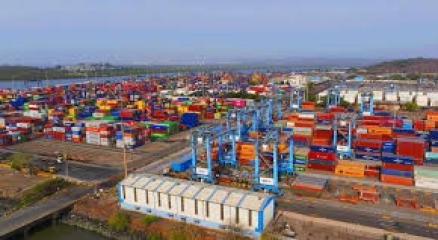

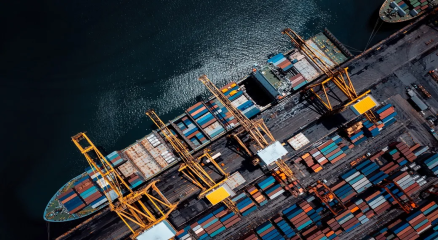
Global container freight rates recorded a modest rebound this week after three consecutive weeks of decline, as major ocean carriers introduced fresh emergency fuel and peak season surcharges amid ongoing geopolitical tensions surrounding the Strait of Hormuz. According to the latest Drewry World Container Index (WCI), the composite index rose 3% to US$2,286 per 40-foot container, driven primarily by strengthening Transpacific trade lane pricing. Rates from Shanghai to New York climbed 7% week-on-week to US$3,721 per FEU, while Shanghai to Los Angeles increased 5% to US$3,062 per FEU. The upward movement follows a series of surcharge revisions by leading carriers responding to elevated bunker costs, operational uncertainty and rising war-risk exposure linked to Middle East shipping routes. MSC Mediterranean Shipping Company raised its Emergency Fuel Surcharge (EFS) on Asia–US East Coast cargo from US$430 to US$644 per FEU, while Asia–US West Coast shipments saw EFS levels rise from US$272 to US$467 per FEU. CMA CGM Group also implemented a new Peak Season Surcharge (PSS) of US$2,000 per FEU effective May 1. On the Asia–Europe corridor, freight rates remained relatively stable despite carriers preparing another round of Freight All Kinds (FAK) rate hikes later this month. Shanghai-to-Rotterdam spot rates rose 2% to US$2,170 per FEU, while Shanghai-to-Genoa rates edged up 1% to US$3,075 per FEU. Carriers including CMA CGM, Hapag-Lloyd and MSC have announced revised FAK pricing ranging between US$3,500 and US$4,500 per FEU for Asia–North Europe trades and up to US$4,600 per FEU for Asia–Mediterranean cargo from mid-May onwards. Despite the latest rebound, analysts caution that the broader freight market remains fragile due to weak underlying cargo demand and persistent vessel overcapacity. To support rate stability, carriers continue relying on blank sailings, network adjustments and capacity reductions across key trade corridors. Drewry estimates effective capacity on Asia–North Europe services will decline 3% month-on-month in May, while Asia–Mediterranean capacity could contract by as much as 10%. The latest pricing volatility underscores how geopolitical uncertainty, fuel market fluctuations and supply chain disruptions continue reshaping global container shipping dynamics, with carriers increasingly depending on surcharge mechanisms and capacity discipline to stabilise freight markets.