
Loading...
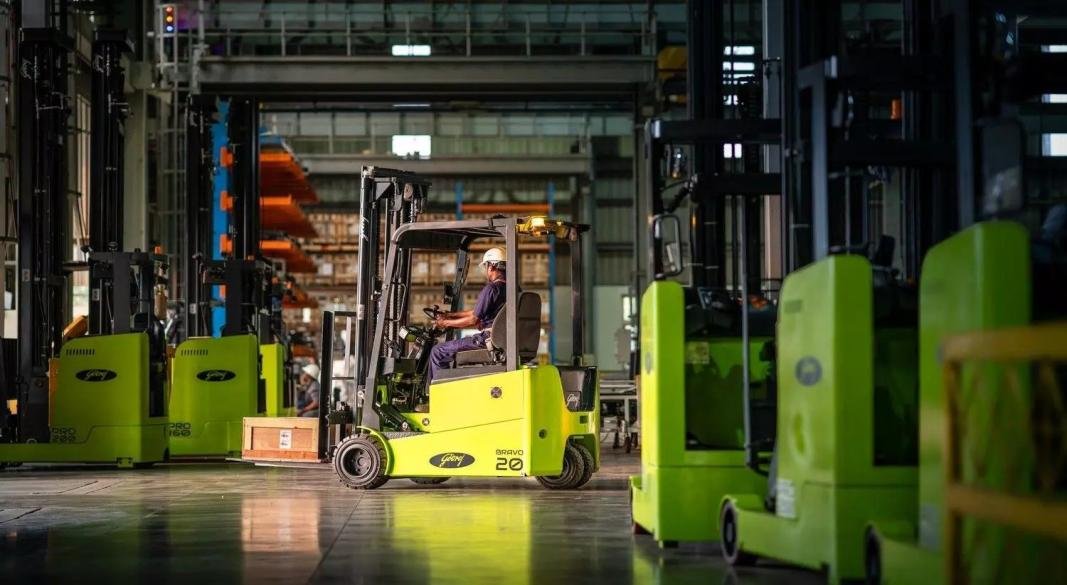
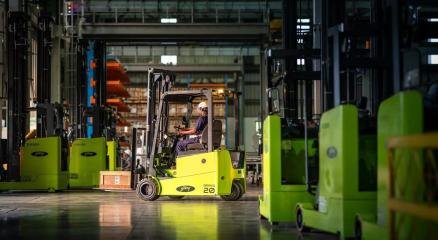
India’s material handling sector has received a major innovation boost with the launch of the country’s first Multilon battery technology for electric forklifts by Godrej Enterprises Group. Developed by the company’s Material Handling Equipment division, the new battery solution aims to improve efficiency, reduce operational costs, and support sustainable warehouse operations.
The launch comes at a time when India’s warehousing and logistics industries are expanding rapidly, driven by e-commerce growth, manufacturing activity, and increasing demand for modern supply chain infrastructure.
According to the company, the Multilon battery technology can lower forklift operating costs by nearly 25 percent over its lifecycle. The batteries are designed for long-term use and support features such as fast charging, opportunity charging, and maintenance-free performance.
The technology was developed in collaboration with an Indian deep-tech battery company and offers up to 5,000 charging cycles, significantly higher than conventional lithium-ion batteries. It also reduces reliance on rare-earth materials, helping minimize environmental impact and disposal concerns.
One of the key advantages of the new battery system is its agility to operate efficiently in temperature above 45 degree Celsius, making it suitable for challenging Indian industrial conditions.
Company officials said the launch reflects the growing focus on sustainable and future-ready industrial solutions that can improve productivity and energy efficiency across warehouses and logistics operations.
Follow CARGOCONNECT for more such updates.
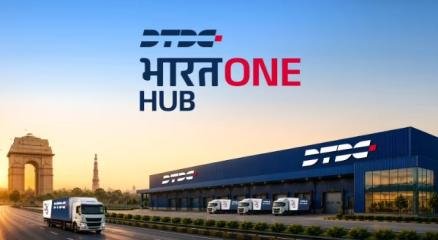
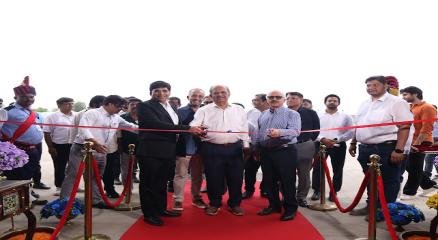
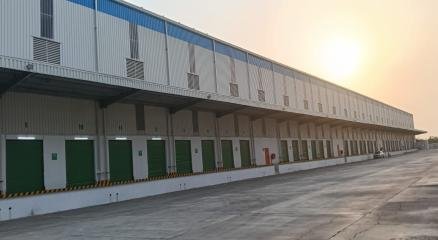
DTDC Express Ltd. has expanded its logistics infrastructure with the launch of the Bharat One Hub at Rathiwas in Haryana, marking a significant milestone in the company's long-term strategy to enhance freight movement and strengthen supply chain capabilities across North India. The new facility has been developed as part of Vision 2030 roadmap, which focuses on building a technology-driven, scalable logistics network capable of supporting India's rapidly evolving e-commerce landscape. Spread across approximately 1.5 lakh square feet, the Bharat One Hub has a peak processing capacity of 2,500 tonnes per day, making it one of DTDC's largest logistics facilities in the region. Strategically located to cater to Delhi-NCR, Haryana, Punjab, Rajasthan and neighbouring markets, the hub is expected to significantly improve freight consolidation, mid-mile connectivity and shipment processing efficiency. The facility has been equipped with advanced automation technologies, including high-speed sorter systems, multiple conveyor belts, hydraulic dock infrastructure and optimised dock utilisation capabilities. These features are designed to reduce turnaround times, minimise transit bottlenecks and enhance operational productivity while supporting increasing shipment volumes. The hub is currently operated by a workforce of more than 150 trained professionals. The Bharat One Hub is expected to serve as a critical transit centre within its nationwide network, enabling faster movement of goods across key freight corridors while improving route optimisation and network resilience during seasonal demand peaks. The investment reflects the company's commitment to creating future-ready logistics infrastructure that can efficiently serve businesses of all sizes. Commenting on the development, DTDC CEO Abhishek Chakraborty said India's next phase of economic and commercial growth will increasingly rely on robust logistics infrastructure, particularly as businesses expand into Tier II and Tier III cities. He noted that investments in modern, scalable logistics assets are essential to improving service reliability, operational agility and customer reach. The company currently operates over 500 operating facilities, maintains more than 16,500 customer access points, and serves nearly 96% of India's population. With the addition of the Haryana hub, the e-commerce service provider is expected to further strengthen its capacity to deliver faster, more efficient and reliable logistics services across the country while supporting the growing demands of India's manufacturing, retail and online commerce sectors. 𝐒𝐭𝐚𝐲 𝐓𝐮𝐧𝐞𝐝 𝐭𝐨 CARGOCONNECT 𝐟𝐨𝐫 𝐥𝐚𝐭𝐞𝐬𝐭 𝐮𝐩𝐝𝐚𝐭𝐞𝐬!
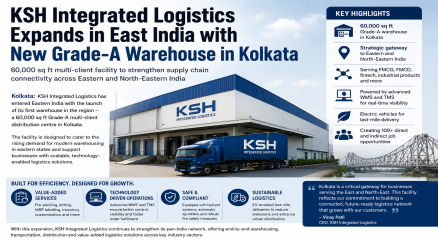

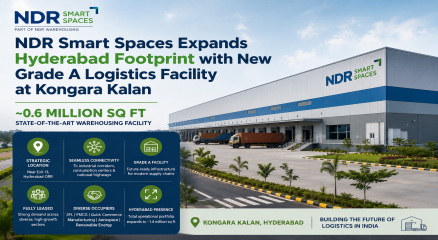
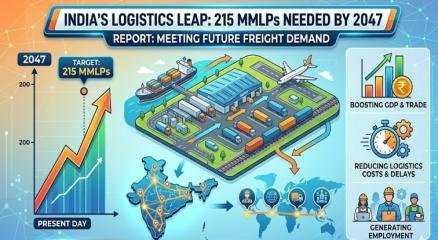
India will require around 215 multimodal logistics parks (MMLPs) by 2047 to accommodate rising freight volumes and support the shift in cargo movement from road to rail, according to a new industry report. The study highlights the critical role of next-generation logistics infrastructure in enabling the country’s long-term economic growth and logistics efficiency goals. The report estimates that India’s freight demand will increase substantially over the next two decades, driven by industrial expansion, growing domestic consumption, infrastructure development, and rising international trade. To manage this surge efficiently, the country will need a robust network of MMLPs that can integrate multiple transport modes, including rail, road, inland waterways, and ports. A key recommendation of the report is the development of 215 strategically located MMLPs across the country to facilitate seamless cargo movement and reduce logistics costs. These facilities are expected to serve as integrated hubs offering warehousing, cargo consolidation, value-added services, and efficient multimodal connectivity. The proposed logistics parks are also central to India’s ambition of increasing rail’s share in freight transportation. Currently, road transport dominates cargo movement, contributing to higher logistics costs and environmental impacts. Expanding multimodal infrastructure would help shift a larger portion of freight to rail, improving fuel efficiency, reducing congestion on highways, and lowering carbon emissions. Industry experts believe that MMLPs will play a crucial role in supporting the government’s broader logistics modernisation agenda, including initiatives such as the PM Gati Shakti National Master Plan and the National Logistics Policy. By improving connectivity between production centres, consumption hubs, ports, and industrial corridors, these facilities can significantly enhance supply chain resilience and operational efficiency. The report also underlines the importance of coordinated planning between central and state governments, infrastructure agencies, and private sector stakeholders. Timely land acquisition, regulatory approvals, and investment support will be essential to accelerate the development of these logistics hubs. As India targets becoming a developed economy by 2047, strengthening freight infrastructure will be a strategic priority. The creation of a nationwide network of multimodal logistics parks is expected not only to meet future freight demand but also to improve logistics competitiveness, reduce transportation costs, and support sustainable economic growth. With freight volumes projected to rise sharply over the coming decades, investment in multimodal logistics infrastructure is increasingly being viewed as a cornerstone of India’s supply chain transformation journey. 𝐒𝐭𝐚𝐲 𝐓𝐮𝐧𝐞𝐝 𝐭𝐨 CARGOCONNECT 𝐟𝐨𝐫 𝐥𝐚𝐭𝐞𝐬𝐭 𝐮𝐩𝐝𝐚𝐭𝐞𝐬!
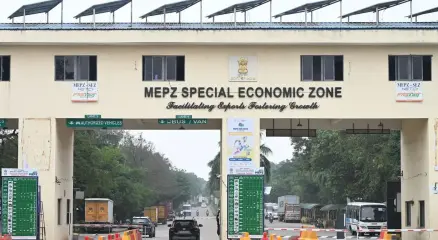
The MEPZ SEZ (Madras Export Processing Zone Special Economic Zone) has approved a fresh round of investment proposals worth more than ₹450 crore across Tamil Nadu, reinforcing the state’s position as a rapidly expanding hub for warehousing, logistics and export-oriented industrial infrastructure. The approvals are expected to create nearly 6,650 jobs across the Tamil Nadu, Andaman and Puducherry (TAP) region. The latest approvals were cleared by the Unit Approval Committee (UAC) chaired by Arthur Worchuiyo, Joint Development Commissioner of MEPZ SEZ. The projects span sectors including warehousing and logistics, IT/ITES, engineering services, footwear manufacturing and nutraceuticals, reflecting the increasing diversification of Tamil Nadu’s industrial and supply chain landscape. Among the most significant proposals is the project by Grand Atlantia Panapakkam SEZ Developers Private Limited at SIPCOT SEZ, Panapakkam in Ranipet district. The company plans to invest around ₹385 crore in developing its SEZ unit, with projected employment generation of over 5,000 jobs. Industry observers believe such large-format industrial and logistics developments will enhance warehousing capacity and improve supply chain connectivity for manufacturing clusters across northern Tamil Nadu. Another notable approval involves Tamil Nadu Nutraceutical Innovation Hub (TNIH) Private Limited, which will establish operations at the Integrated Chennai Business Park FTWZ in Ponneri. The Free Trade Warehousing Zone (FTWZ) model is increasingly gaining traction in India as companies seek integrated storage, distribution and export facilitation infrastructure near ports and industrial corridors. The project is expected to support value-added logistics activities while generating new employment opportunities. Additionally, Impex received approval to set up a unit at SIPCOT SEZ, Bargur, further strengthening the state’s industrial supply chain ecosystem. Tamil Nadu has been aggressively positioning itself as a preferred destination for manufacturing and logistics investments through infrastructure-led industrial policies, SEZ expansion and multimodal connectivity initiatives. Recent investment approvals across sectors such as electronics, aerospace, renewable energy and advanced manufacturing indicate a broader strategy to build integrated industrial and logistics corridors across the state. With warehousing demand rising alongside export growth and industrial diversification, the latest MEPZ approvals are expected to accelerate the development of modern logistics infrastructure and strengthen Tamil Nadu’s role in India’s evolving supply chain network. 𝐒𝐭𝐚𝐲 𝐓𝐮𝐧𝐞𝐝 𝐭𝐨 https://cargoconnect.co.in/ 𝐟𝐨𝐫 𝐥𝐚𝐭𝐞𝐬𝐭 𝐮𝐩𝐝𝐚𝐭𝐞𝐬!