Loading...
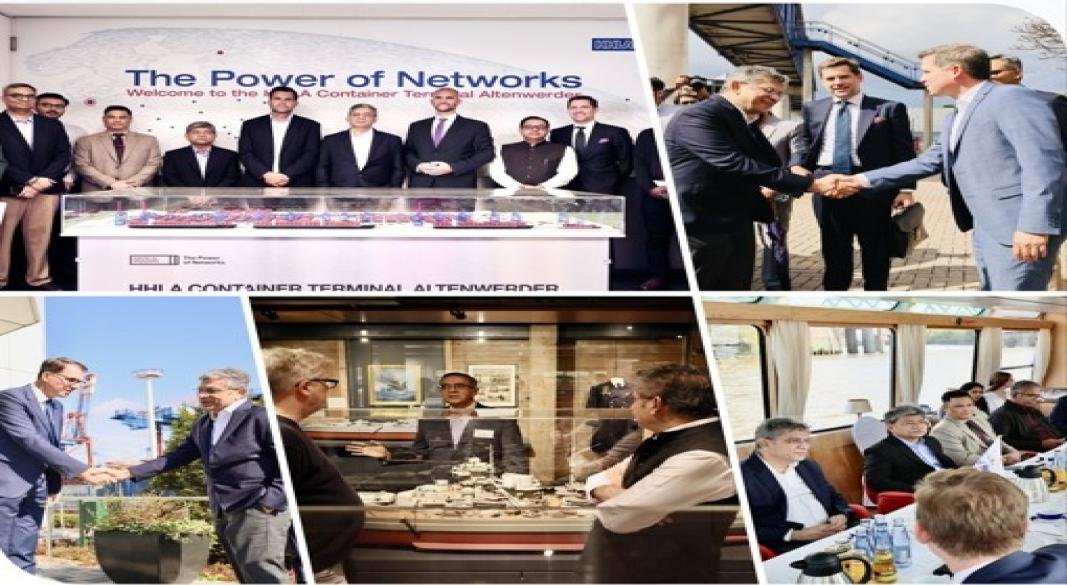
India is utilising the global platform of SMM Hamburg 2026 to deepen maritime cooperation with Germany, with a high-level Indian delegation undertaking strategic engagements with port authorities, terminal operators and maritime industry stakeholders in Hamburg.
Led by Vijay Kumar, IAS, Secretary, Ministry of Ports, Shipping and Waterways (MoPSW), the delegation included Vipul Singhal, Director, MoPSW, and Pradeep Sudhakar, Chief Ship Surveyor, Directorate General of Shipping/Maritime Administration (DGMA). Their engagements focused on exchanging expertise and identifying opportunities for collaboration across port operations, maritime infrastructure, digitalisation and sustainability.
A key component of the visit was an interaction at HHLA Container Terminal Altenwerder (CTA), where the delegation examined advanced approaches to automated container-terminal operations. Discussions with Patrick Krawutschke, Managing Director, Hamburg Port Consulting (HPC), covered terminal efficiency, automation, logistics planning and the deployment of technology to improve port management.
The delegation also visited EUROGATE Container Terminal Hamburg and held discussions with Tom Eckelmann, President, EUROGATE, exchanging perspectives on terminal productivity, digitalisation and the evolution of modern maritime logistics infrastructure. Further discussions with senior representatives of the Hamburg Port Authority (HPA) and Hamburg’s Ministry of Economic Affairs, Labour and Innovation covered port modernisation, green-port initiatives, environmental sustainability, logistics management and future-ready maritime infrastructure.
India's participation at SMM 2026 comes amid an expanded national presence at the world's leading maritime trade fair. For the first time, MoPSW and the Indian Ports Association are organising two official Indian joint pavilions, while around 35 Indian exhibitors are expected to showcase capabilities spanning shipbuilding, maritime technology and sustainable solutions.
The Hamburg engagements assume added significance as India-Germany strategic relations enter a new phase, with both countries marking 75 years of diplomatic relations in 2026. The two governments have also reaffirmed their commitment to expanding cooperation in trade, investment, technology, innovation and sustainable development.
For India's maritime sector, the discussions provide an avenue to learn from Hamburg's port ecosystem while exploring partnerships in smart ports, green shipping, automation, logistics integration and maritime infrastructure. The engagements are expected to contribute to stronger institutional and industry-level cooperation between India and Germany and support India's ambition to build a globally competitive, technology-enabled and sustainable maritime ecosystem.
𝐒𝐭𝐚𝐲 𝐓𝐮𝐧𝐞𝐝 𝐭𝐨 CARGOCONNECT 𝐟𝐨𝐫 𝐥𝐚𝐭𝐞𝐬𝐭 𝐮𝐩𝐝𝐚𝐭𝐞𝐬!
India is utilising the global platform of SMM Hamburg 2026 to deepen maritime cooperation with Germany, with a high-level Indian delegation undertaking strategic engagements with port authorities, terminal operators and maritime industry stakeholders in Hamburg. Led by Vijay Kumar, IAS, Secretary, Ministry of Ports, Shipping and Waterways (MoPSW), the delegation included Vipul Singhal, Director, MoPSW, and Pradeep Sudhakar, Chief Ship Surveyor, Directorate General of Shipping/Maritime Administration (DGMA). Their engagements focused on exchanging expertise and identifying opportunities for collaboration across port operations, maritime infrastructure, digitalisation and sustainability. A key component of the visit was an interaction at HHLA Container Terminal Altenwerder (CTA), where the delegation examined advanced approaches to automated container-terminal operations. Discussions with Patrick Krawutschke, Managing Director, Hamburg Port Consulting (HPC), covered terminal efficiency, automation, logistics planning and the deployment of technology to improve port management. The delegation also visited EUROGATE Container Terminal Hamburg and held discussions with Tom Eckelmann, President, EUROGATE, exchanging perspectives on terminal productivity, digitalisation and the evolution of modern maritime logistics infrastructure. Further discussions with senior representatives of the Hamburg Port Authority (HPA) and Hamburg’s Ministry of Economic Affairs, Labour and Innovation covered port modernisation, green-port initiatives, environmental sustainability, logistics management and future-ready maritime infrastructure. India's participation at SMM 2026 comes amid an expanded national presence at the world's leading maritime trade fair. For the first time, MoPSW and the Indian Ports Association are organising two official Indian joint pavilions, while around 35 Indian exhibitors are expected to showcase capabilities spanning shipbuilding, maritime technology and sustainable solutions. The Hamburg engagements assume added significance as India-Germany strategic relations enter a new phase, with both countries marking 75 years of diplomatic relations in 2026. The two governments have also reaffirmed their commitment to expanding cooperation in trade, investment, technology, innovation and sustainable development. For India's maritime sector, the discussions provide an avenue to learn from Hamburg's port ecosystem while exploring partnerships in smart ports, green shipping, automation, logistics integration and maritime infrastructure. The engagements are expected to contribute to stronger institutional and industry-level cooperation between India and Germany and support India's ambition to build a globally competitive, technology-enabled and sustainable maritime ecosystem. 𝐒𝐭𝐚𝐲 𝐓𝐮𝐧𝐞𝐝 𝐭𝐨 CARGOCONNECT 𝐟𝐨𝐫 𝐥𝐚𝐭𝐞𝐬𝐭 𝐮𝐩𝐝𝐚𝐭𝐞𝐬!
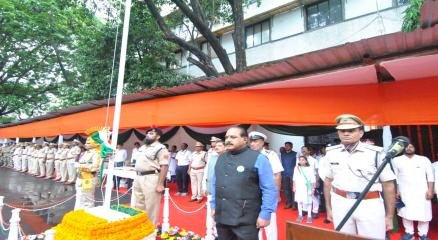
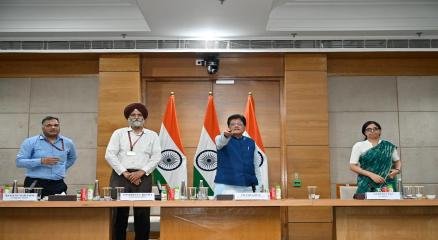
Mumbai Port Authority marked India’s 80th Independence Day at Indira Dock on Saturday, with officials highlighting the port’s role in the country’s maritime economy and its record cargo performance in fiscal 2025-26. The flag-hoisting ceremony began at 8 a.m. with the arrival of participating platoons, followed by the arrival of Chief Guest Vipin Menoth, Traffic Manager, Mumbai Port Authority. The programme included the singing of Vande Mataram, hoisting of the National Flag, the National Anthem, a parade inspection, an address by Menoth, felicitation and a cultural programme. Senior port officials, Central Industrial Security Force personnel, police representatives, employees, workers and members of the wider port community attended the event. In his address, Menoth recalled the contribution of workers in Bombay’s docks, mills and other workplaces to the freedom movement, while noting that the port’s workforce has continued to play a role in the city and the country’s economic development. He said Mumbai Port had been sustained for more than 150 years by workers and maritime professionals whose contribution has supported the growth of the national economy. The port handled 75.15 million tonnes of cargo in FY 2025-26, its highest-ever annual throughput, representing a 9% increase from the previous year. The performance comes as India seeks to expand maritime capacity and improve the efficiency and sustainability of its logistics infrastructure. Menoth said Mumbai Port would focus on strengthening its operations through digitalisation, safety measures and environmental sustainability as India works towards its 2047 development objectives. The Independence Day programme also formed part of the Har Ghar Tiranga 2026 campaign, which runs from August 9 to 17. Mumbai Port Authority encouraged its departments, employees, port workers, seafarers and other associated personnel to participate by displaying the National Flag, singing Vande Mataram and registering their participation through the campaign’s official digital platform. Merchant ships, port facilities and other maritime establishments were also encouraged to display the National Flag during the campaign period. The celebrations concluded with a cultural programme, bringing together the port’s administrative, operational and security personnel at Indira Dock. Follow CARGOCONNECT for more such updates.
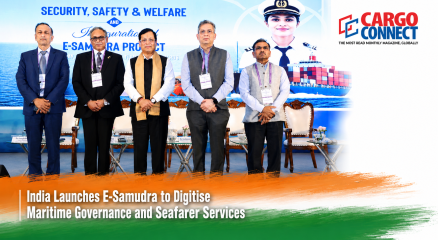
India has launched E-Samudra, a unified digital platform intended to bring a wide range of maritime regulatory and service functions onto a single online system for seafarers, shipowners, shipping companies, ports and other industry stakeholders. Union Minister for Ports, Shipping and Waterways Sarbananda Sonowal inaugurated the platform in Mumbai during a national stakeholder interaction focused on seafarer security, safety and welfare. E-Samudra is designed around a single-window model, with end-to-end digital workflows, online payments, real-time status tracking and digitally issued certificates. The objective is to make regulatory processes more predictable and reduce the need for stakeholders to interact with multiple administrative systems. According to the Ministry of Ports, Shipping and Waterways, the platform will consolidate maritime services and provide a common digital interface for stakeholders. The move is expected to reduce administrative friction while improving visibility over applications and certificates. The development comes as India's maritime workforce and shipping activity have expanded significantly. The country's active seafarer workforce increased from about 103,000 in 2013 to more than 323,000 in 2025, increasing the scale of services that maritime authorities need to administer. The Directorate General of Maritime Administration has described the platform as a shift towards "Digital First and Faceless Governance", with greater reliance on online processing rather than physical submissions and office visits. The E-Samudra launch was accompanied by several measures aimed at improving services and welfare for Indian seafarers. These include the e-NAVIK 24×7 grievance-redressal system, a planned Seafarer Tracking Dashboard and a Digital Seafarers Employment Agreement. Authorities also highlighted initiatives under the Seafarers Welfare Fund Society, along with programmes focused on the physical and mental wellbeing of seafarers and improving support for women working at sea. The government's focus on digital service delivery also reflects the operational challenges faced by Indian seafarers during periods of disruption to international shipping. Maritime authorities said they had monitored more than 16,000 vessel calls, processed over 40,000 communications and helped coordinate the repatriation of more than 4,000 Indian seafarers affected by recent geopolitical disruptions. E-Samudra is not an isolated technology initiative. It follows other digital reforms introduced by the maritime administration, including a ship-registration module on the platform and additional digital systems covering grievances, medical practitioners and ship recycling.The government's broader maritime strategy is being implemented under the Maritime India Vision 2030 and Maritime Amrit Kaal Vision 2047 frameworks. The Merchant Shipping Act 2025, which recognises seafarers as key workers, is also part of the policy framework underpinning the latest reforms. For the shipping industry, the significance of E-Samudra will ultimately depend on how comprehensively services are integrated and how reliably the platform handles applications, payments, certificates and regulatory interactions. Greater standardisation and visibility could reduce administrative delays, but the effectiveness of the system will be measured by its adoption and day-to-day performance across India's maritime ecosystem. The launch nevertheless marks another step in the government's effort to move maritime administration towards a more integrated digital model, with seafarer services and industry-facing regulatory processes increasingly managed through online platforms. Follow CARGOCONNECT for more such updates.