
Loading...
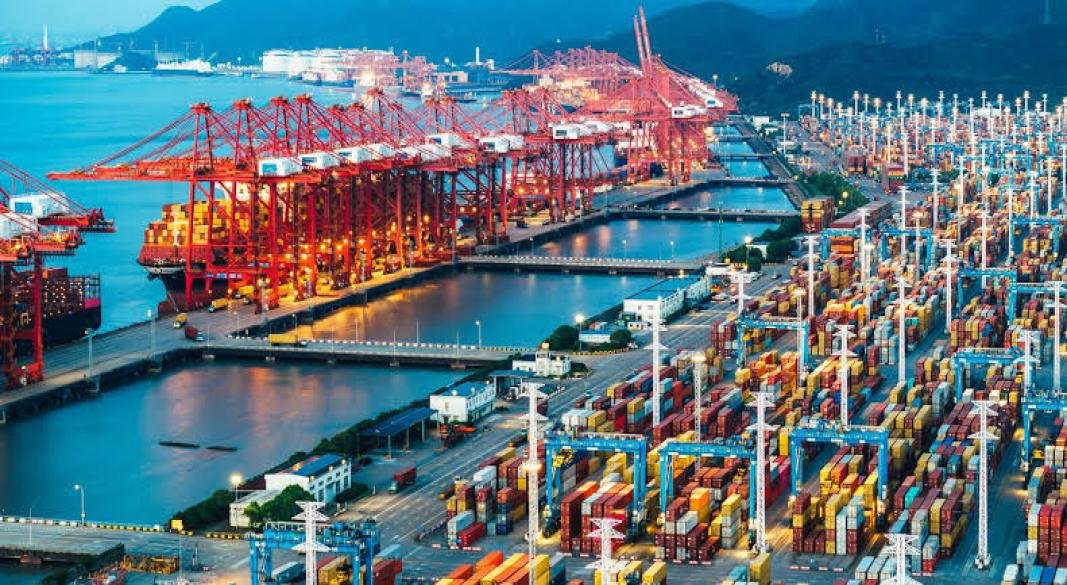
China’s Ningbo-Zhoushan Port has overtaken Singapore to become the world’s second-busiest container port during the first half of 2026, according to the latest container throughput rankings compiled by shipping analyst Alphaliner. The shift marks a notable change in the global port hierarchy, although the margin between the two gateways remains narrow.
Ningbo-Zhoushan handled 22.90 million twenty-foot equivalent units (TEUs) between January and June 2026, registering an 8.8% year-on-year increase. Singapore, meanwhile, processed 22.74 million TEUs, up 4.7% from the corresponding period last year. The difference of roughly 160,000 TEUs highlights the increasingly competitive race for the second position.
Shanghai retained its position as the world’s busiest container port, handling approximately 28.74 million TEUs in the first half of 2026, an increase of 6.2% year on year. The latest ranking therefore places two Chinese ports at the top, with Ningbo-Zhoushan moving ahead of Singapore for the first time over a complete six-month reporting period.
Jintang Expansion Strengthens Ningbo-Zhoushan
Ningbo-Zhoushan’s stronger growth has been supported by capacity expansion and improved international connectivity. The second phase of the Jintang container hub was completed in July 2026, bringing all five operational container berths within the expanded development.
During the first half of the year, Jintang added 17 international shipping routes, while its container volumes increased by 23.4%. The expansion is expected to strengthen the port complex’s ability to accommodate rising cargo demand and serve an expanding network of global trade lanes.
The port has experienced significant growth over the past two decades, crossing 20 million TEUs in 2015 and 30 million TEUs in 2021. In 2025, it exceeded 40 million TEUs for the first time, handling 43.87 million TEUs for the full year. Singapore remained ahead in the annual ranking, recording 44.66 million TEUs.
Competition Expected to Remain Close
Despite Ningbo-Zhoushan’s first-half lead, Singapore remains a formidable competitor. Alphaliner has indicated that Ningbo-Zhoushan’s growth could moderate during the second half of 2026, leaving open the possibility of Singapore reclaiming the second position.
For global supply chains, the development underscores how port investments, shipping connectivity, cargo generation and changing trade patterns are reshaping the competitive landscape. With only a small volume separating the two ports, the battle for the world’s second-busiest container gateway is likely to remain closely watched through the remainder of 2026.
𝐒𝐭𝐚𝐲 𝐓𝐮𝐧𝐞𝐝 𝐭𝐨 CARGOCONNECT 𝐟𝐨𝐫 𝐥𝐚𝐭𝐞𝐬𝐭 𝐮𝐩𝐝𝐚𝐭𝐞𝐬!
Paradip Port Authority (PPA) has constructed the 500-metre-long Atharabanki Bridge at a cost of ₹24.89 crore to strengthen road connectivity and facilitate smoother cargo transportation in the Paradip Port region. The three-lane bridge is expected to ease traffic congestion, improve the movement of commercial vehicles and enhance connectivity between the port and the surrounding road network. The development is particularly significant given that nearly 3,000 trucks move through Paradip Port every day. Three-Lane Bridge to Ease Traffic Congestion: The newly constructed Atharabanki Bridge replaces an ageing two-lane structure that faced capacity constraints amid rising transportation demand. Its expanded configuration is designed to accommodate increased traffic volumes and improve access for trucks and other vehicles involved in port-related operations. The upgraded infrastructure is expected to support more efficient cargo movement, reduce potential delays and improve road access for transport operators, logistics providers and other stakeholders associated with the port. Key Features of the Atharabanki Bridge: The project incorporates several features aimed at improving connectivity and functionality: Project cost: ₹24.89 crore Length: 500 metres Configuration: Three lanes Structural component: 30-metre composite girder Additional facilities: Dedicated footpaths and a pipeline corridor Dedicated pedestrian pathways provide designated space for people on foot, while the pipeline corridor accommodates infrastructure requirements associated with pipelines. Boost to Port Logistics and Regional Connectivity: As a major maritime gateway on India's eastern coast, Paradip Port plays an important role in cargo transportation and trade. Efficient road connectivity is essential to ensuring the smooth movement of goods between port facilities and the wider transportation network. The Atharabanki Bridge is expected to strengthen this vital link by improving traffic flow and supporting the movement of cargo-carrying vehicles. Better connectivity could also help reduce transportation delays, improve logistics efficiency and enhance the reliability of port-related operations. Beyond its immediate benefits for port traffic, the bridge is expected to improve regional accessibility and support economic activity in the Paradip area. Infrastructure Investment to Support Future Growth: The construction of the Atharabanki Bridge highlights the importance of developing supporting infrastructure to meet the evolving demands of ports, trade and logistics. As cargo volumes and road transportation requirements increase, investments in bridges and connectivity corridors are essential to strengthening supply-chain efficiency. By upgrading the existing two-lane crossing to a modern three-lane structure, Paradip Port Authority has taken a step towards improving the port's supporting infrastructure. The project is expected to contribute to smoother cargo movement, stronger regional connectivity and improved efficiency across India's maritime logistics network.


Assam has marked a significant milestone in India’s inland waterways and Northeast logistics landscape, with the first international cargo consignment from Upper Assam to a foreign port since Independence departing from the Bogibeel Terminal in Dibrugarh for Bangladesh. Union Minister for Ports, Shipping and Waterways Sarbananda Sonowal flagged off the vessel DLB Patkai, pushed by the tug Kushal Konwar, carrying 540 metric tonnes of methanol produced by Assam Petro-Chemicals Limited (APCL) at Namrup. The consignment is bound for Pangaon Port in Dhaka, Bangladesh, marking the revival of Dibrugarh’s international river trade after nearly seven decades. The cargo will travel approximately 768 km along the Brahmaputra, designated as National Waterway-2 (NW-2), before entering the Indo-Bangladesh Protocol Route (IBPR) for onward movement to Bangladesh. The overall journey from Bogibeel to Narayanganj is expected to cover around 1,300 km. The landmark movement is being viewed as a test of the Brahmaputra’s potential as a commercially viable freight corridor connecting the Northeast with international markets. The reopening of this route could provide industries in Assam and neighbouring states with an alternative to road-based transportation, while improving access to Bangladesh and other regional markets. The development has been enabled by infrastructure upgrades at Bogibeel and the establishment of customs and immigration facilities at Bogibeel and Dhubri. The Bogibeel passenger and cargo terminal, which became operational in 2024, is expected to play an important role in supporting future cargo movements. The Ministry of Ports, Shipping and Waterways said the initiative is expected to reduce logistics costs, ease pressure on road networks and strengthen regional economic connectivity. Regular methanol shipments to Bangladesh are also planned, indicating that the maiden voyage could evolve into a sustained trade service rather than remain a one-off movement. The revival also reconnects Dibrugarh with its historic role as a river-trade centre. Regular river cargo operations from the town declined after the mid-20th century as trade patterns shifted towards rail and other modes. The latest shipment represents a renewed effort to leverage the Brahmaputra for modern freight movement. Sonowal has also announced a ₹200-crore skill development centre at Bogibeel, expected to train around 50,000 young people from Assam and the Northeast over the next decade for opportunities in the maritime and shipping sectors. A With cargo movement on India’s national waterways rising substantially in recent years, the Dibrugarh-Dhaka shipment adds another dimension to the country’s multimodal logistics strategy. It could strengthen the Northeast’s position as a gateway to eastern and international markets while promoting inland waterways as a cost-efficient and lower-emission freight option. 𝐒𝐭𝐚𝐲 𝐓𝐮𝐧𝐞𝐝 𝐭𝐨 CARGOCONNECT 𝐟𝐨𝐫 𝐥𝐚𝐭𝐞𝐬𝐭 𝐮𝐩𝐝𝐚𝐭𝐞𝐬!

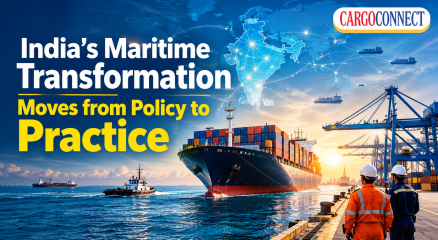

Sagarmala Finance Corporation Limited (SMFCL), India’s first maritime-focused lender, is set to launch the country’s maiden blue bond issue on September 28, 2026, marking a significant step towards creating dedicated financing avenues for maritime and coastal infrastructure. The lender plans to raise ₹600 crore through 10-year bonds, including a ₹500-crore greenshoe option, according to a provisional term sheet. The proceeds will be directed towards lending to the maritime sector, financing greenfield port projects and supporting coastal road networks, among other related infrastructure initiatives. SMFCL Managing Director L.V.S. Sudhakar Babu said the funds are expected to be utilised during the current financial year. Blue bonds are debt instruments designed to mobilise capital for sustainable water and marine-related projects. Such financing can support areas including clean water, recycling, sustainable shipping and fishing, ocean energy, marine mapping and other projects linked to the sustainable use of marine resources. The proposed issue has received an AA+ credit rating from ICRA and CARE, while SBI Capital Markets has been appointed as the arranger. SMFCL is also engaging large insurance companies and provident fund institutions as potential investors. The lender plans to invite coupon and commitment bids as part of the issue process. SMFCL was inaugurated in June 2025 as India’s first Non-Banking Financial Company focused on the maritime sector. The institution was established to help address financing gaps across ports, shipping, maritime infrastructure, MSMEs and startups. Its board has approved an overall borrowing limit of ₹25,000 crore, with ₹8,000 crore earmarked for its first financial year of operations. The proposed blue bond also comes as other Indian institutions explore similar financing mechanisms. Vadodara Municipal Corporation is separately planning to raise around ₹200 crore through a blue bond issue, highlighting the emerging interest in thematic financing for sustainable water and maritime-related infrastructure. 𝐒𝐭𝐚𝐲 𝐓𝐮𝐧𝐞𝐝 𝐭𝐨 CARGOCONNECT 𝐟𝐨𝐫 𝐥𝐚𝐭𝐞𝐬𝐭 𝐮𝐩𝐝𝐚𝐭𝐞𝐬!