
Loading...
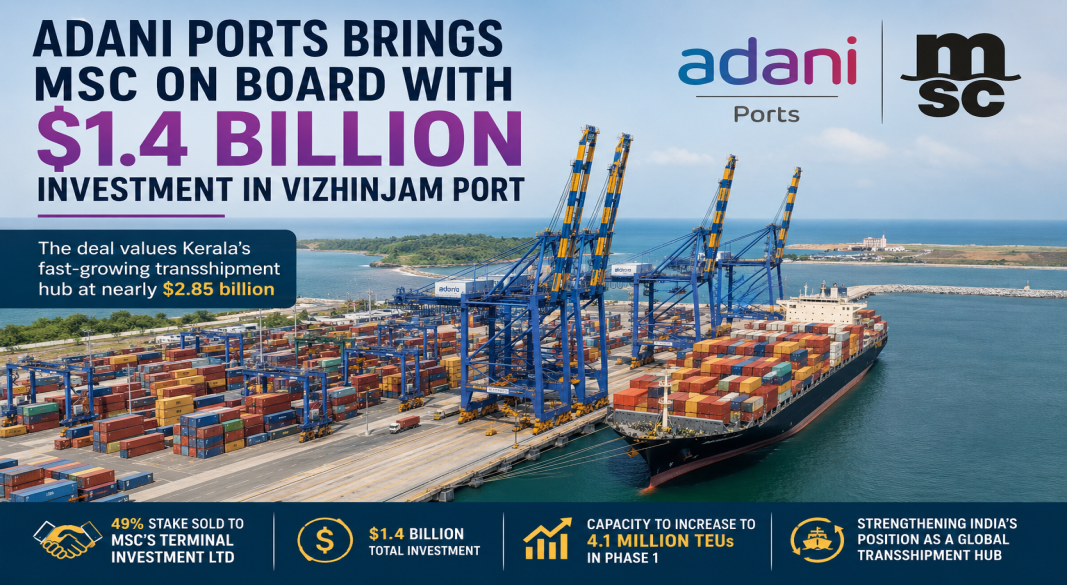
The deal values Kerala’s fast-growing transshipment hub at nearly $2.85 billion and marks a significant foreign investment in India’s maritime infrastructure.
Adani Ports and Special Economic Zone (APSEZ) has entered into an agreement with Switzerland-based Mediterranean Shipping Company (MSC) to divest a 49% stake in its Vizhinjam International Seaport in Kerala for a total investment of $1.4 billion (around ₹13,225 crore). The partnership is expected to strengthen the port’s position as a leading transshipment hub while supporting its next phase of expansion. The investment will be made through Terminal Investment Ltd (TiL), MSC’s port investment arm. As per the agreement, TiL will initially invest $539 million to acquire a 49% stake in Adani Vizhinjam Port Pvt. Ltd. (AVPPL), a wholly owned subsidiary of APSEZ. It will further contribute $858 million by December 2028 towards its share of the port’s ongoing capacity enhancement programme.
According to APSEZ, the transaction represents the largest single foreign private investment made in India's port sector to date. The company believes the strategic alliance with one of the world's biggest container shipping companies will accelerate cargo growth and improve long-term operational efficiency at Vizhinjam. Currently capable of handling 1.6 million TEUs annually, the port is undergoing a major expansion that will raise its capacity to 4.1 million TEUs, with a long-term roadmap to increase it further to 5.7 million TEUs. The expansion project carries an estimated cost of $1.75 billion.
Beyond financial investment, the collaboration is expected to provide the port with stronger cargo commitments from MSC's global shipping network. APSEZ said this would improve traffic visibility, enable faster capacity utilisation, and help attract additional transshipment volumes, particularly cargo originating from Bangladesh that is presently routed through Southeast Asian ports. Investor sentiment remained positive following the announcement. Shares of Adani Ports traded about 1% higher during Tuesday's morning session, while the stock has gained more than 20% since the beginning of the year.
Commenting on the development, APSEZ Whole-time Director and CEO Ashwani Gupta said Vizhinjam has rapidly established itself as India's leading transshipment port, becoming the country's first facility to handle over 2 million TEUs within just 18 months of commencing operations.
Transshipment ports play a crucial role in global shipping by transferring cargo containers between vessels before they continue to their final destinations. Owing to its strategic location near major international shipping lanes and its naturally deep draft, Vizhinjam is expected to compete with established global hubs such as Singapore, Tanjung Pelepas (Malaysia), Busan (South Korea), Tanger Med (Morocco), and Shanghai (China).
The port has witnessed remarkable growth since operations began. During its first full year, ending in December 2025, it handled approximately 1.3 million containers across 615 vessel calls, making it the fastest Indian port to surpass the one-million-TEU milestone. Within 18 months, it crossed the two-million-TEU mark, and recently welcomed its 1,000th vessel.
Gupta added that expanding APSEZ's long-standing association with MSC to Vizhinjam would further enhance global supply chain connectivity while improving India's access to both established and emerging international markets.
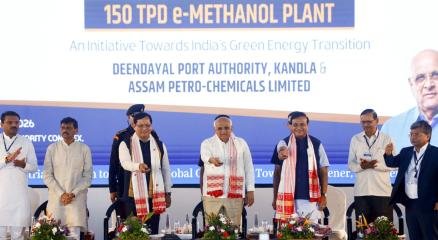
India has taken a landmark step towards establishing itself as a global supplier of green maritime fuel with the foundation stone laid for the country’s first port-based e-methanol production facility at Deendayal Port Authority (DPA) in Kandla, Gujarat. The ₹2,300-crore project is being jointly developed by DPA and Namrup-based Assam Petro-Chemicals Ltd (APCL) and is designed to support the decarbonisation of international shipping. The foundation stone was laid on September 26 by Union Minister for Ports, Shipping and Waterways Sarbananda Sonowal, Gujarat Chief Minister Bhupendra Patel and Assam Chief Minister Himanta Biswa Sarma. The facility will have a total production capacity of 150 tonnes of e-methanol per day. It will use renewable power, water and biogenic carbon dioxide (CO₂) to produce e-methanol, which is intended to be supplied to vessels operating along the Asia-Europe International Trade Corridor, one of the world’s busiest maritime routes. The e-methanol plant will be established through scalable modules in two phases. Phase I will add 50 tonnes per day of production capacity at an investment of ₹1,200 crore and is targeted for completion by January 2027. Phase II, involving a further 100 tonnes per day, will require an investment of ₹1,100 crore and is scheduled for completion by March 2027. Together, the two phases will take the project’s total investment to ₹2,300 crore. The capital contribution between DPA and APCL will be in a 76:24 ratio. DPA’s contribution includes ₹567.32 crore in equity capital, 75 acres of land, desalinated water and renewable energy in the form of green hydrogen. The facility is expected to rank among India’s largest e-methanol production plants and generate more than 3,500 direct and indirect jobs. According to the Ministry of Ports, Shipping and Waterways, the plant is expected to produce green methanol at around US$750 per tonne, compared with a global rate of about US$1,300 per tonne. This cost advantage could strengthen India’s position as a competitive producer and supplier of green fuel for international shipping. Beyond fuel production, the project is expected to stimulate a wider green-energy value chain around Kandla, covering transportation, storage, supply and other ancillary activities associated with green molecule production. It also aligns with India’s broader maritime decarbonisation objectives and its Net Zero emissions target for 2070. The government aims to add 100 ships to the Indian merchant fleet over the next five years and make India one of the world’s top five ship-owning nations by 2047. Therefore, the Kandla facility represents more than a new green-fuel production asset; it marks an effort to integrate port infrastructure, renewable energy and maritime fuel supply into a single ecosystem, potentially positioning Kandla as an emerging green-fuel hub for global shipping. 𝐒𝐭𝐚𝐲 𝐓𝐮𝐧𝐞𝐝 𝐭𝐨 CARGOCONNECT 𝐟𝐨𝐫 𝐥𝐚𝐭𝐞𝐬𝐭 𝐮𝐩𝐝𝐚𝐭𝐞𝐬!

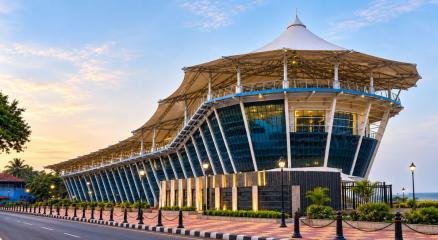
The Captain of Ports (CoP) Department, Government of Goa, has invited bids under a public-private partnership (PPP) model for the operation and maintenance of the Captain of Ports Terminal at Panaji, along with associated jetty facilities and the development of a new yacht docking station. The project, estimated at ₹27.04 crore, is aimed at strengthening Goa’s passenger and maritime infrastructure while creating a more integrated waterfront facility. Under the proposed PPP arrangement, the selected private operator will be responsible for operating and maintaining the newly developed Captain of Ports Terminal and six existing jetties located across Panaji, Old Goa and Betim. The project also envisages the integration of three additional floating jetties near Kala Academy, Mahaveer Garden and the Parshuram statue. According to the tender details, bids for the project can be submitted until October 23, 2026. A key component of the project is the proposed yacht docking station near Divja Circle, adjacent to the Santa Monica Tourism Jetty. The facility is planned as a floating concrete jetty with an associated mini-terminal building and yacht docking infrastructure. The proposed docking station will measure approximately 200 metres by six metres and is designed to accommodate at least 40 vessels, including three berths earmarked for government use. The private concessionaire will be permitted to generate revenues through passenger and user charges, as well as commercial activities at the terminal. For the yacht docking facility, the operator can charge up to ₹30,000 per vessel per month. Where Central Government financial assistance is utilised, the permitted monthly charge would be capped at ₹15,000 per vessel. The concession period is proposed at 30 years, with a possible extension of another 10 years. The model is expected to bring private-sector operational capabilities into the management of Goa’s maritime passenger infrastructure while supporting investment in allied waterfront facilities. The tender also provides an opportunity to develop commercial services around the terminal and associated jetties. Located along Dayanand Bandodkar Marg on the Mandovi River, the Captain of Ports Terminal has been developed as an integrated administrative, passenger and maritime services facility. The proposed PPP structure is intended to consolidate its operations while expanding the network of passenger and recreational maritime facilities around Panaji. The initiative comes as Goa continues to strengthen its maritime and tourism infrastructure. By combining terminal operations, existing and proposed jetties and yacht berthing facilities under a single concession, the project could improve coordination across passenger movement, vessel berthing and waterfront services. 𝐒𝐭𝐚𝐲 𝐓𝐮𝐧𝐞𝐝 𝐭𝐨 CARGOCONNECT 𝐟𝐨𝐫 𝐥𝐚𝐭𝐞𝐬𝐭 𝐮𝐩𝐝𝐚𝐭𝐞𝐬!


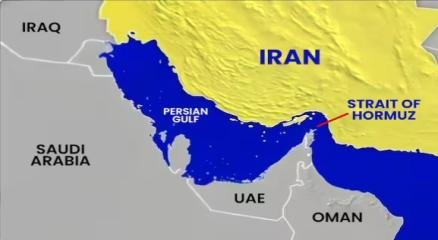
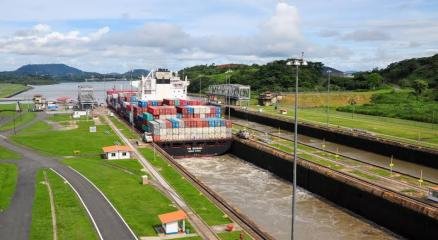
The Panama Canal could further reduce the number of vessels permitted to transit the crucial waterway as intensifying El Niño conditions worsen drought and water shortages, raising fresh concerns for global shipping, commodity flows and supply chains. The Panama Canal Authority’s new administrator, Ilya Espino de Marotta, has warned that daily transit slots could eventually fall to around 29 if rainfall fails to replenish the reservoirs that supply the canal’s lock system. The canal is currently moving towards a limit of 32 vessels a day, down from 36 previously. Authorities have indicated that further restrictions could be introduced in January, February or March depending on rainfall during the critical months ahead. The potential reduction comes as the Panama Canal is already facing heightened demand. The waterway has become particularly important for shipping lines seeking alternatives amid disruptions to traffic through the Strait of Hormuz. The canal handles around 5% of global maritime trade and provides a key shortcut between the Atlantic and Pacific oceans. The canal’s dependence on freshwater makes it especially vulnerable to prolonged dry conditions. Each vessel transit consumes approximately 200 million litres of water, which is used to operate the locks. Between April and August, Panama recorded a rainfall deficit of 35.8% against the historical average, with authorities reporting no immediate signs of recovery. Alongside transit restrictions, the maximum permitted vessel draft has already been reduced from 15.2 metres to 14.6 metres. A lower draft can restrict the amount of cargo vessels are able to carry, potentially affecting vessel economics and increasing pressure on freight rates. The situation recalls the severe 2023-24 drought, when daily Panama Canal crossings fell as low as 22. However, the canal authority does not currently expect restrictions to reach those levels. Any further reduction in Panama Canal capacity could increase waiting times, vessel operating costs and freight rates, while prompting carriers to consider longer alternative routes. Industry observers have already warned that the canal’s constraints could add to disruptions affecting global commodity and supply-chain movements. For a maritime industry already navigating geopolitical disruptions and shifting trade routes, the prospect of another capacity constraint highlights the growing influence of climate and water security on global logistics networks. Panama is pursuing a new reservoir project on the Rio Indio as a longer-term solution, although completion is expected to take several years. 𝐒𝐭𝐚𝐲 𝐓𝐮𝐧𝐞𝐝 𝐭𝐨 CARGOCONNECT 𝐟𝐨𝐫 𝐥𝐚𝐭𝐞𝐬𝐭 𝐮𝐩𝐝𝐚𝐭𝐞𝐬!