
Loading...
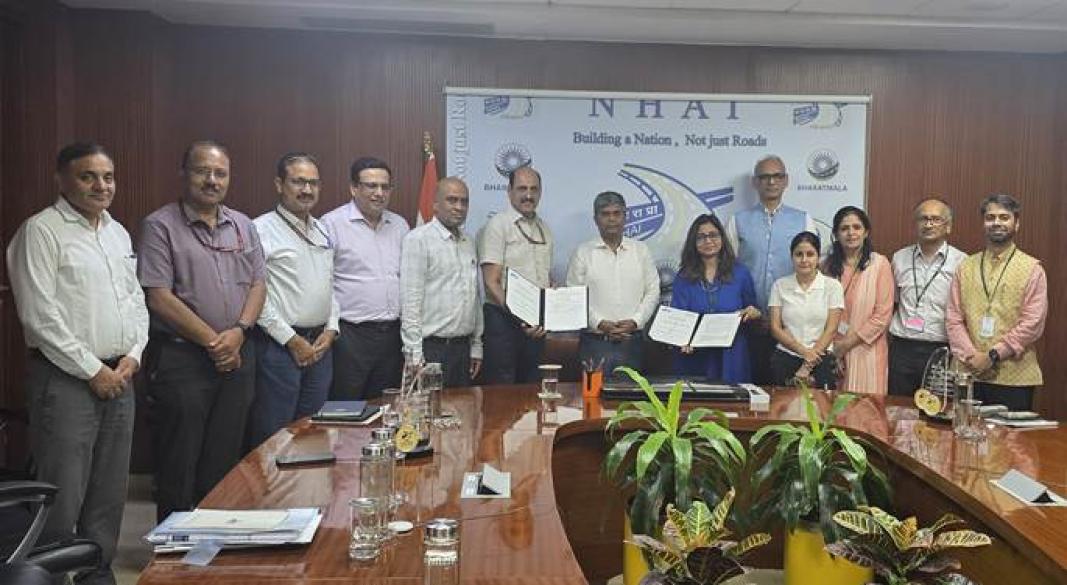
In a move aimed at deepening research-driven policymaking in the infrastructure sector, the National Highways Authority of India (NHAI) has announced the establishment of a specialised research centre focused on transportation, mobility, and logistics economics. The facility will be housed at the National Council of Applied Economic Research (NCAER) in New Delhi.
The initiative marks the first dedicated and permanent institutional effort in India to study the economic dimensions of the transport and logistics sector through a structured research framework.
To formalise the collaboration, NHAI and NCAER have signed a Memorandum of Understanding (MoU). While NHAI will provide financial support for the project, NCAER will work with academic institutions, industry stakeholders and research partners to build a robust knowledge ecosystem around the centre.
According to officials from the Ministry of Road Transport and Highways (MoRTH), the initiative reflects the growing importance of data-backed planning in managing and expanding India's rapidly evolving highway infrastructure network.
The centre's research agenda will cover a broad spectrum of subjects, including freight movement, highway economics, multimodal transport integration, regional development impacts, tolling strategies, road asset monetisation, safety-related interventions and the use of emerging technologies in highway operations and maintenance.
By generating policy-focused studies and analytical insights, the institution is expected to support government departments in designing more efficient, sustainable and user-centric transportation systems. The findings could also contribute to improving investment planning and infrastructure management practices across the sector.
Apart from conducting research, the centre will function as a national knowledge platform. It will disseminate findings through reports, policy briefs, working papers, stakeholder consultations, workshops and academic collaborations, while also helping build expertise in transportation economics among professionals and researchers.
Governance of the centre will be overseen by an Advisory Committee comprising economists, public policy experts, transportation specialists and academicians. NHAI's Member (Finance) and NCAER's Director General will also be part of the panel. In addition, a separate Steering Committee established by NHAI will monitor research priorities and review outcomes.
NHAI has committed support for the centre over the next decade, underlining its long-term commitment to strengthening institutional capacity and evidence-based decision-making in the transport sector.
Commenting on the partnership, NHAI Chairman Santosh Kumar Yadav said the authority has consistently focused on improving connectivity and logistics efficiency across the country. He noted that the collaboration would provide a dedicated platform for high-quality research and policy analysis, enabling more informed decisions on infrastructure planning, investment and asset management in the years ahead.
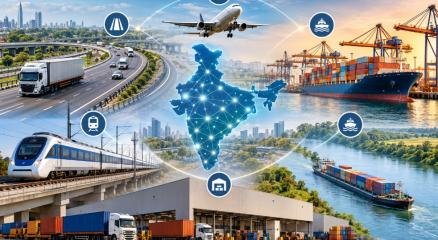
The Union Cabinet, chaired by Prime Minister Narendra Modi, has approved the establishment of the Integrated Transport & Logistics Authority (ITLA) as a Special Purpose Vehicle (SPV) to bring greater coordination and multimodal integration to India’s transport and logistics infrastructure planning. The decision, announced on October 6, 2026 is aimed at addressing fragmented planning and implementation across multiple ministries and agencies. ITLA will function as the national apex institution for integrated transport and logistics planning, research, project appraisal, monitoring, policy support and data analytics. A key mandate will be the preparation of a National Transport Master Plan with a planning horizon of 10 years or more. The plan will cover roads, railways, ports and shipping, civil aviation, inland waterways, coastal shipping, urban mobility and logistics. The authority will also assess short-term sectoral plans of around five years and annual plans of transport ministries to ensure their alignment with the long-term master plan. This is expected to encourage multimodal infrastructure development and improve coordination between different modes of transport. Another important responsibility will be the technical appraisal of Central government infrastructure projects costing ₹500 crore or more. While ITLA will undertake technical evaluation, financial appraisal will continue through existing government mechanisms. The authority will subsequently monitor the implementation of such projects, facilitate coordinated issue resolution and conduct post-implementation impact assessments to evaluate project outcomes. The new institution will also establish a National Transport Data Repository (NTDR) by integrating transport and logistics datasets from multiple sources, including GSTN e-way bills, FASTag, Vahan, GPS-based systems and urban traffic management platforms. The consolidated data is expected to support freight-flow and origin-destination analysis, enabling more evidence-based infrastructure planning and monitoring. ITLA will further advise and assist in reviewing and updating the National Logistics Policy, 2022, besides supporting capacity building, training and skilling in logistics. It will also promote research and innovation across transportation and logistics. The government expects the authority to strengthen multimodal connectivity, improve infrastructure efficiency and help reduce logistics costs, while enhancing India’s competitiveness in global trade. The initiative is also positioned as an institutional mechanism supporting the country’s Vision 2047 objectives and complementing existing initiatives such as the PM GatiShakti National Master Plan and the National Logistics Policy. 𝐒𝐭𝐚𝐲 𝐓𝐮𝐧𝐞𝐝 𝐭𝐨 CARGOCONNECT 𝐟𝐨𝐫 𝐥𝐚𝐭𝐞𝐬𝐭 𝐮𝐩𝐝𝐚𝐭𝐞𝐬!



FedEx has introduced Global Trade Navigator, a new suite of digital tools designed to help businesses simplify international shipping, improve shipment data and navigate customs requirements with greater confidence. The initiative, announced on September 9, 2026, brings trade information and guidance earlier into the shipping process, helping businesses make more informed decisions and address potential clearance issues before they arise. International shipping can involve complex requirements related to customs documentation, duties, taxes, product classifications and regulatory compliance. FedEx said these challenges can affect businesses of all sizes. Its 2026 FedEx Small Business Trade Index found that 68% of small and medium-sized businesses regularly see customers surprised by duties at delivery, while 60% report losing revenue through refunds or abandoned purchases. Against this backdrop, Global Trade Navigator brings together digital capabilities covering key stages of international trade, from shipment planning and preparation to checkout, customs clearance and reporting. “International shipping requires businesses to make complex decisions long before a package begins its journey,” said Jason Brenner, senior vice president, digital portfolio, FedEx. “Building on decades of global trade expertise, Global Trade Navigator makes critical trade information and guidance more accessible to businesses as they grow internationally. The result is fewer surprises and a more predictable experience for businesses and consumers.” As part of the new offering, the FedEx Trade Planner will provide free, self-service guidance through fedex.com without requiring users to log in. Businesses can use the tool to look up Harmonized System codes, estimate duties, taxes and fees, and identify recommended documentation before creating a shipping label. FedEx is also enhancing FedEx Ship Manager, enabling customers to review product Harmonized System classifications, customs values and country-of-manufacture information. These capabilities are intended to improve the quality and completeness of shipment data before goods enter the international shipping process. For e-commerce businesses, the new FedEx Duty and Tax app on Shopify will allow merchants to display a duty and tax guarantee at checkout, giving customers greater visibility into potential import costs before completing purchases. Meanwhile, Global Trade APIs, available through the FedEx Developer Portal, will allow businesses to integrate product classifications, estimated duties and taxes, and regulatory information into their existing workflows. FedEx is also enhancing its Import Tool and Reporting capabilities, allowing customers to monitor customs clearance activity, identify required actions, manage payments and access global import and export data. The company said the tools are designed to serve a broad customer base, from small and medium-sized businesses undertaking international shipping for the first time to larger enterprises integrating trade information into established systems. The launch forms part of FedEx's wider investment in a more connected and intelligent international shipping experience aimed at helping businesses navigate cross-border trade complexity and expand globally. 𝐒𝐭𝐚𝐲 𝐓𝐮𝐧𝐞𝐝 𝐭𝐨 CARGOCONNECT 𝐟𝐨𝐫 𝐥𝐚𝐭𝐞𝐬𝐭 𝐮𝐩𝐝𝐚𝐭𝐞𝐬!



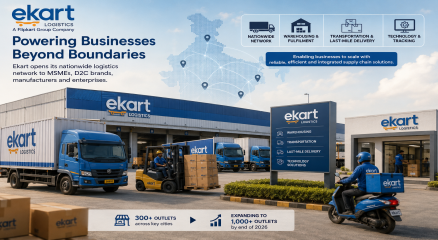
Flipkart has expanded the scope of its logistics business by opening its supply chain arm, Ekart, to external businesses, allowing micro, small and medium enterprises (MSMEs), direct-to-consumer (D2C) brands, manufacturers and large enterprises to use its nationwide logistics infrastructure. The move marks a broader push by the e-commerce company to grow its business-to-business logistics operations beyond servicing its own marketplace. Under the new model, businesses can access Ekart's transportation, warehousing and fulfilment services without being part of the Flipkart ecosystem. The company has also introduced a franchise-based logistics network that currently operates through more than 300 outlets across cities including Delhi, Mumbai, Bengaluru and Surat. Flipkart plans to expand this network to over 1,000 outlets by the end of 2026. The expansion is aimed at enabling smaller businesses to leverage an established national logistics network instead of investing in their own distribution infrastructure. In addition to freight movement and last-mile delivery, participating businesses will gain access to Ekart's warehousing facilities and technology platform to manage inventory, fulfilment and shipment tracking. The development reflects the increasing trend of e-commerce companies commercialising their in-house logistics capabilities as standalone service offerings. India's growing D2C ecosystem, coupled with rising demand for integrated supply chain solutions, has created new opportunities for logistics providers offering nationwide fulfilment, transportation and warehouse management services. Ekart has gradually expanded its third-party logistics portfolio in recent years through services such as warehousing, business-to-business transportation and integration with digital commerce platforms. The latest initiative further broadens its addressable customer base by making its end-to-end logistics network available to businesses across sectors. The company said the expanded network is designed to support businesses of varying sizes by providing access to nationwide logistics infrastructure, allowing them to focus on product development and market expansion while outsourcing supply chain operations. Follow CARGOCONNECT for more such updates.