
Loading...
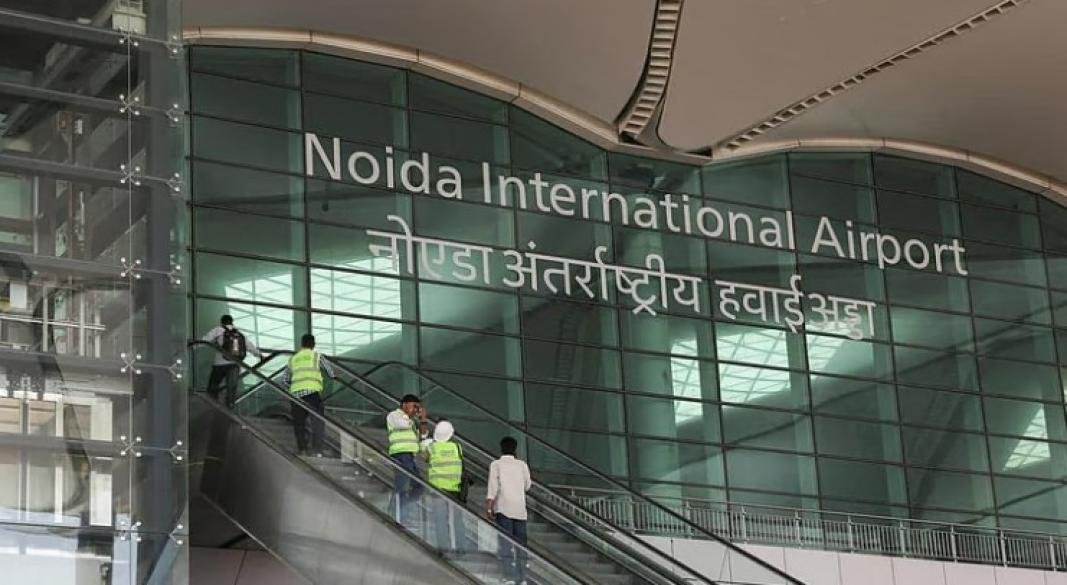
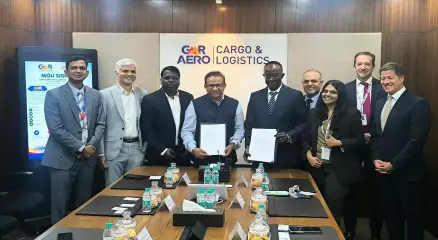
Afcom Holdings Limited has entered into a strategic partnership with Air India SATS Airport Services Pvt Ltd and Noida International Airport to enhance cargo connectivity and develop integrated freight operations in Jewar.
The tripartite collaboration is expected to accelerate the emergence of Noida International Airport (NIA) as a major logistics and cargo hub for North India. Under the agreement, Afcom will base its freighter aircraft at the airport and operate dedicated cargo services connecting key international markets.
The partnership comes at a time when India is witnessing rapid growth in air freight demand, driven by e-commerce expansion, electronics manufacturing, pharmaceuticals, and export-oriented industries. Industry experts believe the strategic location of NIA, combined with multimodal connectivity infrastructure, positions the airport to become a crucial gateway for international trade and time-sensitive cargo movement.
Afcom currently operates a fleet of Boeing 737-800 freighters serving destinations across Asia and the Middle East, including Bangkok, Yangon, Hanoi, Colombo, Malé, and Dubai. Through the collaboration, the airline aims to expand its cargo network while leveraging the airport’s developing logistics ecosystem.
As part of the agreement, the three partners will jointly identify high-potential international routes, assess cargo demand patterns, and create a long-term network development strategy. The alliance will also focus on aligning operational and infrastructure requirements to ensure efficient cargo handling and sustainable growth.
AISATS, one of India’s leading airport services and cargo handling companies, has been actively strengthening its footprint at Noida International Airport. Earlier this year, the company announced large-scale investments in cargo and logistics infrastructure at Jewar, including an integrated cargo terminal with advanced handling systems and scalable capacity for future growth.
The airport’s integrated cargo terminal is expected to play a pivotal role in supporting exporters from northern India, especially from manufacturing clusters in Uttar Pradesh, Delhi-NCR, and adjoining states. With industries increasingly seeking faster and cost-efficient logistics solutions, dedicated freighter operations from NIA could reduce dependency on existing congested metro airports.
The collaboration also aligns with broader government efforts to position Uttar Pradesh as a logistics and manufacturing powerhouse. Noida International Airport is scheduled to commence commercial operations from June 15, 2026, opening new opportunities for passenger airlines, cargo operators, and supply chain stakeholders.
For the Indian air cargo sector, the Afcom-AISATS partnership represents more than a routine commercial agreement. It signals growing confidence in emerging airport infrastructure and highlights the increasing importance of integrated logistics networks in supporting India’s trade ambitions and supply chain resilience.
𝐒𝐭𝐚𝐲 𝐓𝐮𝐧𝐞𝐝 𝐭𝐨 https://cargoconnect.co.in/ 𝐟𝐨𝐫 𝐥𝐚𝐭𝐞𝐬𝐭 𝐮𝐩𝐝𝐚𝐭𝐞𝐬!
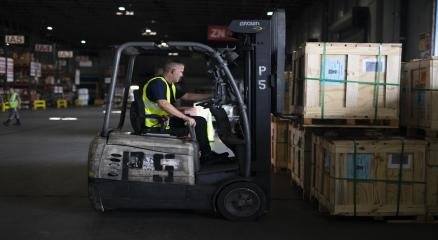
LATAM Cargo Group has introduced virtual reality (VR) technology to train warehouse personnel at its Miami International Airport (MIA) hub, strengthening its focus on operational safety, hazard prevention and efficient cargo handling. The initiative enables employees to practise high-risk operational scenarios in an immersive, digitally simulated environment without exposing themselves or others to actual workplace hazards. The programme’s initial phase will cover approximately 550 employees, including 250 forklift operators. Developed in collaboration with Academia LATAM, the LATAM Group’s internal training division, the system replicates the working environment and allows personnel to rehearse procedures that are critical to safe warehouse operations. The VR simulators incorporate scenarios across six warehouse pedestrian zones, alongside three specialised training modules for forklift drivers. Employees practise procedures involving dangerous goods segregation, cargo handling, pedestrian movement and maintaining safe separation between personnel and machinery. These exercises are designed to improve situational awareness and help workers recognise and respond to potential risks more effectively. Beyond immersive instruction, the platform records behavioural metrics, including response times during contingencies and employees’ ability to identify and mitigate hazards. These measurements can help assess training performance and provide insights into how personnel respond to safety-critical situations. By combining realistic simulations with measurable performance indicators, the programme aims to strengthen practical preparedness alongside conventional training. Daniel Leng, Chief Operating Officer (COO) at LATAM Cargo, said: “Integrating Virtual Reality at our Miami hub marks a key step in our operational safety strategy. By placing our teams in critical operational scenarios within an exact replica of their daily work environment, we significantly close the gap between classroom theory and ramp practice. This directly translates into safer and more efficient cargo handling for our customers.” The Miami deployment follows an initial implementation of VR-based onboarding training at the Fast Air warehouse in Santiago, Chile. The expansion brings a broader range of operational scenarios to one of LATAM Cargo’s important cargo hubs, extending the application of simulation-based learning beyond its initial rollout. The company is also assessing the possibility of introducing the VR training system at other strategic locations across its network, including Brazil. Hence, the initiative reflects the growing role of digital training technologies in air cargo operations, where warehouse teams must coordinate cargo movements, operate machinery and manage safety-sensitive procedures in demanding environments. By enabling employees to practise complex tasks in a controlled setting and measuring their responses, LATAM Cargo aims to reinforce workplace safety while supporting more reliable and efficient cargo-handling operations. 𝐒𝐭𝐚𝐲 𝐓𝐮𝐧𝐞𝐝 𝐭𝐨 CARGOCONNECT 𝐟𝐨𝐫 𝐥𝐚𝐭𝐞𝐬𝐭 𝐮𝐩𝐝𝐚𝐭𝐞𝐬!
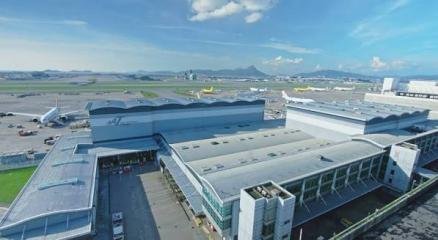


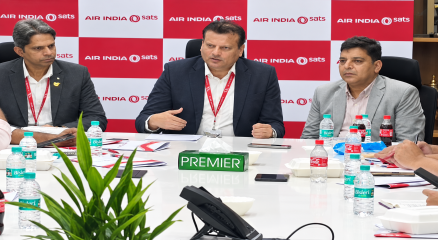
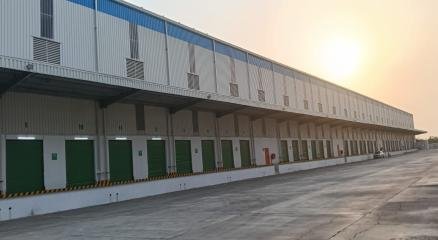
Air India SATS Airport Services (AISATS) has introduced short-term Warehousing Solution (STW) at its BLR Logistics Park, offering freight forwarders and shippers flexible storage for urgent, last-minute and temporary cargo requirements. Designed for both general and temperature-controlled cargo, the solution enables customers to access storage on demand, with rental periods starting from just one day and no long-term lease requirements. Within its first year of operations, the AISATS BLR Logistics Park witnessed strong market traction and is on track to achieve full occupancy, underpinned by a compelling total cost of ownership proposition for customers. Spread across eight acres, the integrated facility brings together Grade A warehousing, a customs-bonded warehouse, a consolidation centre, cold storage, office spaces and a suite of value-added logistics services within a single ecosystem. In addition to storage, customers can access cargo inter-shuttle services, packing and labelling support, dedicated manpower, forklift service and other cargo facilitation services, making the Logistics Park a one-stop solution for their end-to-end warehousing and logistics requirements. Strategically located in close proximity to the airport and with seamless access to NH44, the facility helps significantly reduce transit times and transportation costs by eliminating the need to move cargo to off-airport warehouses located 40-50 kilometres away. The facility has attracted leading multinational logistics companies, including DHL, DSV, FedEx, Kuehne+Nagel, CEVA Logistics etc. which have established operations at the Logistics Park. The new STW extends these capabilities to mid-sized and smaller freight forwarders, shippers and businesses with occasional storage requirements. Instead of leasing dedicated warehouse space for extended periods, customers can access the facility on a short-term basis, according to their flexible needs. The solution is particularly relevant during peak cargo periods such as Diwali, Christmas and New Year, as well as for project cargo and oversized or specialised consignments. Recently STW solution was used to store odd-sized medical equipment that required special care, and special chemicals and pharmaceutical ingredients at its common user cold storage facility. Commenting on the development, Salim Chaudhary, Chief Operations Officer, AISATS, said, “The AISATS BLR Logistics Park was developed to address Bengaluru’s evolving air cargo and logistics requirements through world-class, integrated infrastructure. The response from the market has been extremely encouraging, with occupancy already reaching 70%, reflecting the strong value proposition and cost efficiencies the facility offers. As cargo volumes grow, we are witnessing increasing demand for flexible storage solutions, particularly for urgent, short-duration and specialised cargo requirements. Our Short-term Warehousing Solution has been introduced to address this need, enabling freight forwarders and shippers to access premium warehousing infrastructure on demand, without the constraints of long-term commitments.” With demand being driven by high-value sectors including electronics, semiconductors, engineering goods, aerospace and pharmaceuticals, the AISATS BLR Logistics Park is well-positioned to play a critical role in supporting the region’s evolving supply chain and logistics requirements. 𝐒𝐭𝐚𝐲 𝐓𝐮𝐧𝐞𝐝 𝐭𝐨 CARGOCONNECT 𝐟𝐨𝐫 𝐥𝐚𝐭𝐞𝐬𝐭 𝐮𝐩𝐝𝐚𝐭𝐞𝐬!

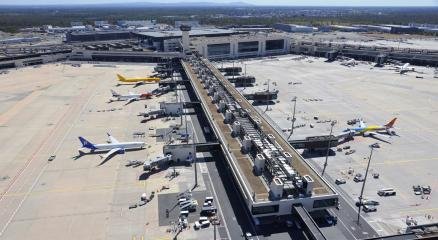
Frankfurt Airport (FRA) recorded a 2.5% Year-on-Year (YoY) increase in cargo throughput to 174,773 Metric Tonnes (MT) in September 2026, with combined airfreight and airmail volumes registering growth despite a decline in aircraft movements. However, aircraft movements at the German cargo hub fell 3.5% YoY to 40,539 take-offs and landings during the month. Accumulated Maximum Take-Off Weights (MTOWs) also contracted by 1.2% to approximately 2.5 MMT. The September cargo performance highlights continued growth in freight volumes even as overall aircraft activity declined, reflecting differing trends across cargo throughput and airport movements. The latest figures form part of Fraport’s monthly traffic report, which tracks cargo and operational performance at Frankfurt Airport alongside developments across its international airport portfolio.