
Loading...

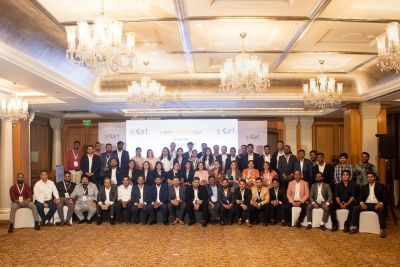
Air Cargo Forum India (ACFI) organised its 10th annual event yesterday, on May 10, 2022. The theme was “10 Million: Vision 2030; Stimulating, Scaling, Steering Air Cargo”. Dignitaries who graced the event were, Jyotiraditya M Scindia, Union Minister of Civil Aviation; Piyush Srivastava, Senior Economic Advisor, Minister of Civil Aviation; Cyrus Katgara, President, ACFI; Yashpal Sharma, Vice President, ACFI; besides Arvind Aggarwal, Arun Sharma and other top dignitaries of AFCI, as well as representatives of the cargo industry.
Introduction
The theme ‘10 million Vision 2030- Stimulating, Scaling and Steering Air Cargo’ is the vision of Ministry of Civil Aviation of the Government of India, to reach the figure of 10 million metric tonnes of air cargo from the current 3.14 metric tonnes. The dedication and enthusiasm to achieve the target is immense.
During the last two years of COVID, the domestic air cargo sector has emerged as a promising area for Indian aviation. In this period, airlines have witnessed 520% increase in cargo revenue. As of today, India’s air cargo revenue stands at INR 2,000 crore with 3.1 million metric tonnage, with a CAGR of 13%. Today, India has approximately 21 international and 35 domestic cargo terminals.
Cyrus Katgara, President, ACFI commented:
Changing the theme of the event, I would like to introduce everyone present here as different parts in the process of filmmaking. The sponsors are the producers, of which Yashpal Sharma is a part as he is supposed to execute the idea and Arvind Aggarwal is the Director. This event is, however, bound to be a blockbuster event as we have a superhero amongst us, Hon'ble Minister Jyotiraditya Scindia. He has been actively hustling around, visiting all those 141 airports present in India. There has not been a single day when he has not visited an airport. In fact, he has just come from Bhopal. He is not just a minister-on-the-wheels but he is minister-on-the-air, always flying around.
We must acknowledge the achievements of Mr Scindia that he has achieved in such a short time. One of which is the reduction of VAT in 13 states, from the earlier 25-30% to just 1-5%. Of course, we would like Mr Scindia to cut down the GST on aviation fuel. Well, it is a herculean task, we all know. He is looking after all the airlines. He knows that the airlines are the roosters that lay golden eggs for the national economy. Terminal operators, freight forwarders – all of them depend on airlines and hence, the airline industry must be maintained healthy. These stakeholders have high investments, white body aircrafts to compete globally. For every new 100 jobs in aviation, they create 600 more indirect jobs. Aviation sector contributes 3.5% to the GDP. Mr Scindia is the only aviation minister who has been at Delhi Airport, taking a walk around the cargo terminals. That simply shows his enthusiasm for air cargo. Under his leadership, we are proud to announce that Delhi International Airport is now the second busiest airport in the world.
Keeping in line with the expected boost of manufacturing and consumption, the Ministry of Civil Aviation has set an impressive and solid target of 10 million tonnes for the Indian air cargo industry by 2030. Now, the industry has to push towards this target with collective dedication, as the task is huge.
The CAGR is going to be 13% per year. Today, the CAGR is about 7%, and to get to 13%, everyone has to put in their chips.
We pledge on behalf of ACFI to collaborate and promote air freight as the preferred mode of transportation so that it actively contributes to the growth of India’s GDP by achieving the mentioned target of 10 million metric tonnes of air cargo by 2030.
Jyotiraditya M Scindia, Union Minister of Civil Aviation remarked:
Air cargo had started as an underdog during the difficult COVID times, but the industry was able to adapt and change to the new environment. During times of COVID, we have rapidly expanded from having seven cargo freighters to 28 cargo freighters in a short period of three years.
To achieve the target of 10 million metric tonnes of cargo, the industry players need to focus on transportation of smaller cargo loads from tier II and III cities to metros, which can be achieved by acquisition of smaller size aircrafts. To give you an example, today, Jackfruit from Tripura is finding markets in the UK and Germany while King Chillies and Lemon from Assam are now being supplied to London. This is a classic example of A2A, i.e. Agriculture to Aviation, the link of two seemingly unrelated sectors being linked due to air infrastructure being made available to remote areas in the country. To further facilitate all of this, we are also establishing 33 new domestic cargo terminals by 2024-2025 which will allow our cargo sector to flourish and grow.
Additionally, Ministry of Civil Aviation will be spending close to INR 98,000 crores over four years in terms of setting up new Greenfield airports and expansion of existing Brownfield airports. Out this, INR 62,000 crores will be invested by private sector and INR 36,000 crores will be invested by the centre through AAI. The government, through AAI, will expand 42 Brownfield airports and setup three new Greenfield airports. Meanwhile, the private sector will expand seven existing Brownfield airports and setup three new Greenfield airports including Navi Mumbai, Jewar, and Mopa.
In the meantime, we need to work on ease of doing business in cargo sector by making processes paperless, adapting automation, digitalisation which can make cargo processing swift.
Piyush Srivastava, Sr Economic Adviser, Ministry of Civil Aviation expressed:
The event today with the vision of 2030 is truly a very remarkable one. As we know, the civil aviation industry is basically a multiple sector regulator and multiple stakeholder industries and the stakeholders are oftentimes in conflicting positions. So, it is very important that everyone should be on the same page as far as the common vision is concerned. The vision has to be contextual with respect to where we stand today.
As we all know, the last few years have been very hard for the industry. The civil aviation sector has been the worst affected. The overall aviation sector was chasing a double digit growth for quite some time, before the outbreak of COVID. Surprisingly, the air cargo arrived as the knight in shining armour, not just for the citizens by supplying vaccines, PPE kits, oxygen concentrators and various other medicines, but also for the civil aviation sector as many of the airlines would belly-up, had it not been for the air cargo sector which was clipping around at a good pace, even at the peak of COVID. 25 lakh tonnes of cargo was ferried which included all life saving things as I just mentioned. So, the point that I am trying to make here is that cargo is going to be at the centre stage of the aviation sector, and there are two recent news items that came out. The Delhi International Airport has become the second busiest airport in the world. The second news item is about our Hon’ble Prime Minister Narendra Modi addressing the expatriate Indians in Europe, recently. He exhorted all the expatriate citizens to convince at least five foreigners to visit India in the current year. Believe me, this is going to be a reality sooner than later, and once this happens, this will open up the floodgates for the aviation sector.
Talking in the context of air cargo, 85% of the global cargo is ferried on the belly of the passenger planes. So, if there is going to be an explosion of passenger traffic into the country, it is natural that cargo traffic will also grow at the same pace. And, once this happens, it will create demand for more infrastructure, which would in turn invite more investment. This is going to be a virtuous circle, further increasing the growth rate of the aviation sector. In a spin-off to this, I believe will be the growth of the MRO sector, the manufacturing (leasing and financing as well).
So, we are in for a very good time. Decision makers, stakeholders, cargo movers, and everyone who had connected with us both offline and online are well aware that the Ministry of Civil Aviation does not believe in reactive administration. We believe in proactive administration. Our friends and various other associations that represent the cargo industry have been meeting us at various levels, and most of the time, in person with me wherever they are faced with any grave problem or issue. In this process, various issues have been noticed by us policy makers and also our Hon’ble Minister Mr Scindia, and we have taken pledges to look into all of that.
I can recall in the last seven to eight months that I have worked with the Ministry, a laundry list of around 33 items were brought to our notice which were sieved and distilled and finally, at the level of our Hon’ble Minister Mr Scindia, we are now down to three crucial issues, which we are pursuing relentlessly: one is the reduction of area requirement for FTWZ, second is single bond and faceless and paperless customs clearances, and third is the presence of the PGS at airports. I am positive that we will yield positive results and deliver them to you, very soon, under the Hon'ble Minister Mr Scindia’s leadership.
We will pull all stops that are coming in the path of progress as hindrances in this sector. I am sure you people, with your experience, your foot on the ground and hand on the impulse of the sector, will come up with constructive ideas – thinking like the citizens of this country and produce ideas that will leverage the entire air cargo sector. To borrow a phrase from the Marine Industry, they say that when the tides are up, all boats rise. So, thinking within and around these lines always helps. When we give an idea, it should be for the betterment of the entire cargo sector and the country, such that all the players and all the industries are interdependent and grow together.
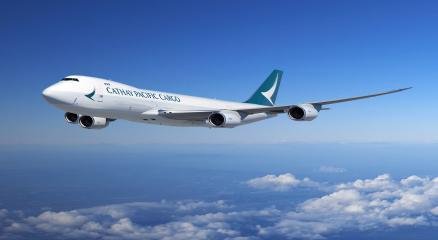
Cathay Cargo is set to increase freighter capacity to the Americas from September 2026 as it prepares for the upcoming air cargo peak season and responds to sustained demand for technology-related shipments across its transpacific network. The additional capacity is aimed at balancing growing cargo volumes with available lift while supporting further demand through the peak period. According to Cathay Cargo, cargo demand remained positive through the summer, driven particularly by shipments of semiconductors and data-centre equipment from Asia to transpacific markets. The carrier also reported rising volumes of lithium batteries moving from Northeast Asia and the Greater Bay Area through its Hong Kong hub. Cargo carried across its network grew by 6% year on year in July, highlighting the continued strength of demand ahead of the traditional peak season. Alongside the additional transpacific capacity, Cathay Cargo is preparing to introduce a leased Airbus A330 freighter in the fourth quarter. The aircraft is being converted from a passenger aircraft in Shanghai and will be operated on Cathay Cargo’s behalf by Air Hong Kong, its wholly owned Cathay Group subsidiary. The aircraft is expected to provide additional capacity to address growing regional demand for general cargo. Cathay Cargo is also placing emphasis on handling specialised shipments safely and efficiently. The carrier said it is working with shippers and freight forwarders to align operational checklists with the requirements of growing volumes of AI chips, server racks and vibration-sensitive wafer steppers, while strengthening safety processes for lithium-ion battery shipments. Beyond aircraft capacity, Cathay Cargo is continuing to develop intermodal connectivity through its Hong Kong hub and the wider Greater Bay Area. The carrier is expanding air, land and sea links, while working towards a connected intermodal smart port supported by a Port Community System designed to provide a single view of shipment tracking. The capacity additions come as Cathay Cargo positions its network to accommodate evolving technology-driven cargo flows and higher volumes during the 2026 peak season. 𝐒𝐭𝐚𝐲 𝐓𝐮𝐧𝐞𝐝 𝐭𝐨 CARGOCONNECT 𝐟𝐨𝐫 𝐥𝐚𝐭𝐞𝐬𝐭 𝐮𝐩𝐝𝐚𝐭𝐞𝐬!
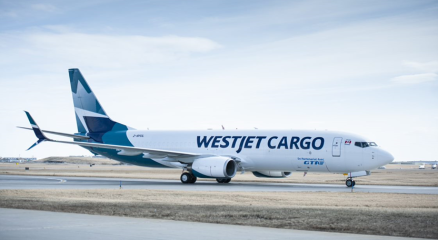

Dubai-based airline flydubai is expanding its cargo business with the launch of dedicated freighter operations, adding three Boeing 737-800 freighters under a wet-lease agreement with SolitAir. The new operation is scheduled to commence on 1 October 2026 from Al Maktoum International Airport (DWC), marking the first phase of the carrier’s dedicated cargo fleet expansion. The three freighters will provide an additional 23,000 kg of payload capacity per flight, complementing cargo carried in the belly holds of flydubai’s existing fleet of 98 Boeing 737 passenger aircraft. The dedicated main-deck capacity is being introduced ahead of the fourth-quarter peak season, while the airline plans to assess passenger-to-freighter conversions from 2029 onwards. Further cargo capacity is also expected as flydubai takes delivery of its planned 30 Boeing 787 Dreamliners. Ghaith Al Ghaith, Chief Executive Officer at flydubai, said: “Dubai has established itself as one of the world's most connected hubs for E-commerce, trade and logistics, and its ambitions under the Dubai Economic Agenda D33 continue to create new opportunities for businesses to reach global markets. The launch of dedicated freighter operations marks an important step in flydubai’s evolution and reflects our commitment to supporting Dubai's vision through enhanced trade connectivity and logistics capabilities. By building on the strength of our network and expanding our cargo offering and list of codeshare and interline partners, we are creating new pathways for businesses to move goods more efficiently, access new markets and contribute to economic growth across the region and beyond.” Based at DWC, flydubai Cargo will benefit from dedicated airside infrastructure and multimodal connectivity through Dubai South. The freighter operation will support scheduled freight services and point-to-point charter operations across a network of more than 125 destinations spanning Africa, Central Asia, the Caucasus, Europe, the GCC, the Middle East, South Asia and Southeast Asia. The dedicated aircraft will also enable specialised handling for pharmaceuticals, perishables, live animals, dangerous goods, express shipments and aerospace components. Initial flights are expected to focus on high-demand regional sectors, with frequencies increasing as capacity develops. The expansion is intended to position flydubai Cargo as a broader logistics provider offering both scheduled freight and ad-hoc charter solutions. 𝐒𝐭𝐚𝐲 𝐓𝐮𝐧𝐞𝐝 𝐭𝐨 CARGOCONNECT 𝐟𝐨𝐫 𝐥𝐚𝐭𝐞𝐬𝐭 𝐮𝐩𝐝𝐚𝐭𝐞𝐬!


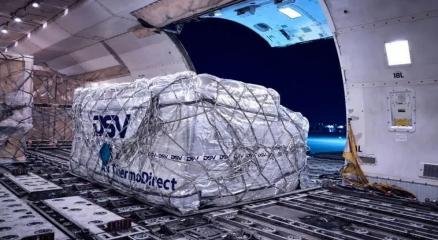
DSV is expanding its Air ThermoDirect temperature-controlled air freight network with a new direct connection between Luxembourg Airport and Shanghai Pudong International Airport (PVG), strengthening its capabilities for pharmaceutical and healthcare logistics. The logistics provider also plans to introduce an additional direct route between Indianapolis International Airport and Shanghai, further extending its Europe-US-Asia cold chain network. The new Luxembourg-Shanghai service will operate with multiple departures using dedicated freighter aircraft. According to DSV, dedicated capacity gives the company greater control over scheduling, routing and cargo handling, helping improve reliability for temperature-sensitive healthcare shipments. The expansion comes amid growing demand for secure, predictable and efficient pharmaceutical logistics worldwide. Shanghai Pudong International Airport is a key gateway for temperature-controlled pharmaceutical cargo and provides an important link between global manufacturers and healthcare markets across Asia. By expanding its operations at PVG, DSV aims to support both inbound and outbound pharmaceutical flows while maintaining consistent temperature-controlled handling throughout the transportation process. “DSV is helping customers improve supply chain efficiency, reduce operating costs, and ensure the integrity of critical healthcare products across one of the world's fastest-growing regions. Through our sustainable reusable thermal packaging program, we are reducing packaging waste and improving the environmental performance of cold chain logistics. This investment represents another important step in building a more resilient, efficient, healthcare supply chain across Asia,” says Kenneth Kallström, EVP, Global Enterprise Vertical Head, Healthcare, DSV. The Shanghai operation is supported by DSV’s partnership with Eastern Air Logistics (EAL), whose specialised ground-handling facilities will support Air ThermoDirect activities in Shanghai. China Eastern Logistics Cold Chain Ltd. will also provide dedicated cold-chain expertise and infrastructure as a ground-handling partner. A key element of the service is DSV’s use of modular thermal packaging solutions. The approach reduces reliance on active containers and conventional passive packaging, providing a more flexible, scalable and cost-efficient model for temperature-controlled air freight while maintaining pharmaceutical handling requirements. The latest expansion follows DSV’s launch earlier this year of “Indy Wings”, a direct air freight connection between Indianapolis and Luxembourg. With the addition of Shanghai connections, Air ThermoDirect is positioned to provide stronger connectivity between major pharmaceutical production, distribution and consumption markets across Europe, North America and Asia. 𝐒𝐭𝐚𝐲 𝐓𝐮𝐧𝐞𝐝 𝐭𝐨 CARGOCONNECT 𝐟𝐨𝐫 𝐥𝐚𝐭𝐞𝐬𝐭 𝐮𝐩𝐝𝐚𝐭𝐞𝐬!