
Loading...
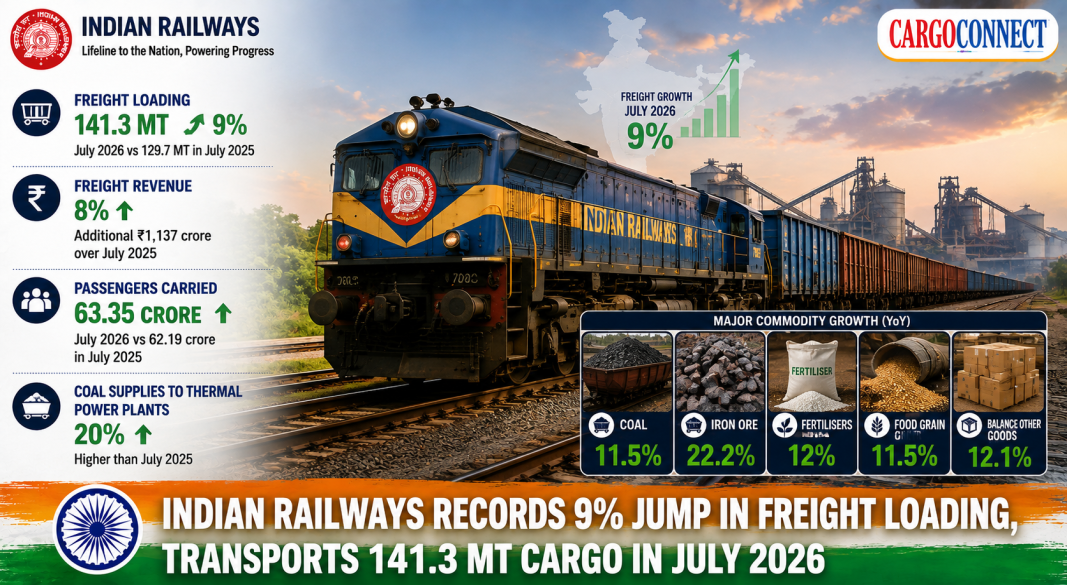
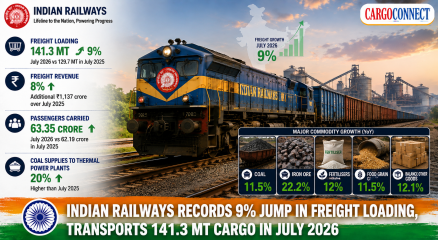
Indian Railways recorded a 9% year-on-year increase in freight loading during July 2026, transporting 141.3 million tonnes (MT) of cargo compared with 129.7 MT in the corresponding month last year. The growth was supported by higher movement of coal, iron ore, fertilisers and food grains, reinforcing rail's role in India's industrial and energy supply chains.
The increase in cargo volumes translated into an 8% rise in freight revenue, generating an additional ₹1,137 crore over July 2025. East Central Railway and Eastern Railway recorded the highest freight revenue growth among railway zones at 33% each, followed by West Central Railway at 23% and South Eastern Railway at 10.33%.
Among major commodities, iron ore loading grew 22.2% year on year, while coal and food grain shipments each increased 11.5%. Fertiliser traffic rose 12%, and the "balance other goods" category expanded 12.1%, reflecting sustained demand from infrastructure, manufacturing and agriculture. Indian Railways also increased domestic coal supplies to thermal power plants by 20% compared with the same month last year to support electricity generation.
Passenger traffic also continued to grow during the month. Indian Railways carried 63.35 crore passengers in July 2026, up from 62.19 crore a year earlier, with growth reported across both suburban and non-suburban services.
The July performance highlights continued demand for rail-based freight transport as Indian Railways expands its role in supporting industrial production, agricultural supply chains and energy security while improving freight movement across the national network.
Follow CARGOCONNECT for more such updates.

The Union Cabinet has approved eight railway multitracking projects worth ₹20,804 crore across nine states, marking a major push to expand rail capacity, improve freight movement and decongest high-density railway corridors. The projects, cleared by the Cabinet Committee on Economic Affairs (CCEA) chaired by Prime Minister Narendra Modi, will add around 1,196 km to the Indian Railways network and are targeted for completion by 2029-30. The projects span Tamil Nadu, Andhra Pradesh, Karnataka, Telangana, West Bengal, Jharkhand, Odisha, Madhya Pradesh and Chhattisgarh, covering 31 districts and improving connectivity to around 6,911 villages with a combined population of nearly 1.08 crore. The capacity expansion is expected to ease congestion, enhance operational efficiency and improve the reliability of passenger and freight services. Five projects, with an estimated investment of ₹10,021 crore, will add approximately 540 km across Tamil Nadu, Andhra Pradesh, Karnataka and Telangana. These include the third and fourth lines between Arakkonam-Renigunta and Whitefield-Bangarapet, doubling of the Hosur-Omalur and Salem-Karur-Dindigul sections, and multitracking between Secunderabad (Ghatkesar)-Kazipet. The remaining three projects, costing around ₹10,783 crore, will add about 656 km across West Bengal, Jharkhand, Odisha, Madhya Pradesh and Chhattisgarh. They comprise the fourth line between Kharagpur-Jharsuguda (Bagdehi), the fourth line between Katni-Pendra Road, and the third line between Bilaspur (Uslapur)-Pendra Road. Importantly for India’s logistics sector, the projects are expected to generate additional freight capacity of around 74 million tonnes per annum (MTPA). The upgraded corridors will support movement of coal, cement, iron and steel, containers, automobiles, foodgrains, petroleum products and fertilisers. Planned under the PM Gati Shakti National Master Plan, the projects are intended to strengthen multimodal connectivity, improve logistics efficiency and support a greater shift towards rail freight, helping reduce logistics costs, fuel consumption and emissions. 𝐒𝐭𝐚𝐲 𝐓𝐮𝐧𝐞𝐝 𝐭𝐨 CARGOCONNECT 𝐟𝐨𝐫 𝐥𝐚𝐭𝐞𝐬𝐭 𝐮𝐩𝐝𝐚𝐭𝐞𝐬!

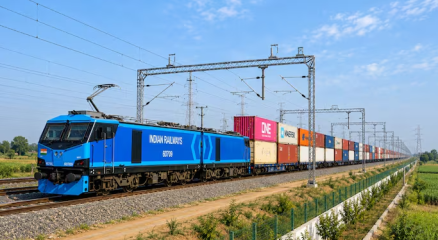
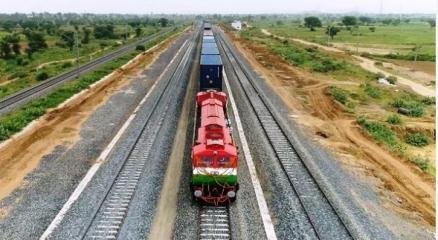
Indian Railways has approved an 11-km bypass line between Adra and Joychandipahar in South Eastern Railway at an estimated cost of ₹272 crore, in a move aimed at expanding freight-handling capacity, reducing operational bottlenecks and supporting rising industrial traffic. The Adra–Joychandipahar–Sanka bypass will provide dedicated path segregation and a bi-directional connection with the upcoming third line. The infrastructure is projected to facilitate the movement of around 6.065 freight rakes per day, while creating additional capacity for growing mineral and industrial cargo flows. The project assumes significance against the backdrop of rising freight requirements from major industrial consumers. According to the Ministry of Railways, the bypass will support freight movement linked to SAIL’s projected iron ore requirement of 23.40 million tonnes per annum (MTPA) and BCCL’s projection of 45 rakes per day. The bypass is expected to address operational constraints on the Adra–Joychandipahar section, including delays caused by surface-crossing conflicts. The existing network is operating at around 71% utilisation, with such conflicts affecting freight speeds and creating the potential for further congestion as traffic increases. Once completed, the project is expected to facilitate additional traffic of 8.88 MTPA. The line capacity of the Joychandipahar–Adra section is projected to rise from 47.50% currently to 56.45% by 2028-29, strengthening the corridor’s ability to accommodate future freight demand. The bypass forms part of Indian Railways’ identified Energy, Mineral and Cement Corridor, reinforcing its role in improving the movement of key industrial commodities. By separating freight operations, reducing crossing-related detentions and adding network capacity, the project is expected to improve the reliability and efficiency of rail-based logistics in the region. The investment highlights Indian Railways’ broader focus on augmenting freight infrastructure to accommodate industrial growth while improving network fluidity and reducing congestion across strategically important corridors. 𝐒𝐭𝐚𝐲 𝐓𝐮𝐧𝐞𝐝 𝐭𝐨 CARGOCONNECT 𝐟𝐨𝐫 𝐥𝐚𝐭𝐞𝐬𝐭 𝐮𝐩𝐝𝐚𝐭𝐞𝐬!
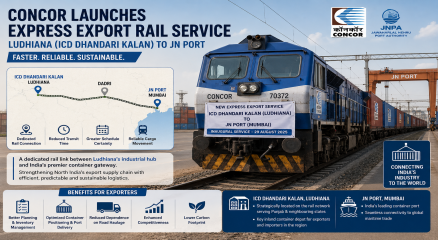
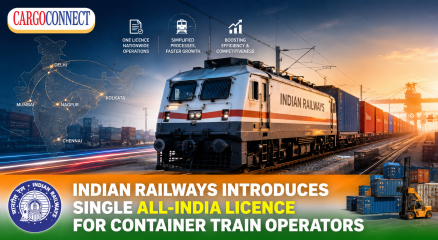
Indian Railways has approved a single all-India licence for container train operators (CTOs) to improve the ease of doing business in rail freight sector. The move replaces the existing zone-specific licensing framework and is expected to simplify operations, reduce compliance requirements, and encourage greater private sector participation in rail-based container logistics. The decision was approved by the Cabinet Committee on Economic Affairs (CCEA) as part of amendments to the Liberalised Special Freight Train Operator (LSFTO) and Container Train Operator (CTO) policies. Under the revised framework, operators will now be able to obtain a single licence permitting container train operations across the entire Indian Railways network, instead of securing separate permissions for multiple railway zones. A one-time licence fee of ₹25 crore will be applicable for the all-India permit. Existing operators holding licences for individual railway zones will have the flexibility to migrate to the new regime by paying only the differential amount between the fee already paid and the new all-India licence fee. This provision ensures a smooth transition while protecting previous investments made by operators. According to the government, the reform is designed to remove procedural complexities, create a more predictable regulatory environment, and improve operational flexibility for container train companies. A unified licensing system is expected to reduce administrative burdens, eliminate duplication of approvals, and enable operators to expand services seamlessly across different regions. The initiative aligns with the government's broader objective of increasing the modal share of rail in freight transportation. By making rail freight operations more efficient and business-friendly, Indian Railways aims to strengthen multimodal logistics, reduce transportation costs, and improve cargo movement across the country. Industry stakeholders are expected to benefit from faster network expansion, improved asset utilisation, and simplified business planning. The policy is also likely to support logistics parks, inland container depots, ports, and industrial clusters by facilitating uninterrupted rail connectivity across state boundaries. The reforms are in line with the government's vision under the National Logistics Policy and PM Gati Shakti initiative, both of which focus on improving logistics efficiency, lowering supply chain costs, and enhancing India's competitiveness in global trade. By streamlining licensing procedures and encouraging greater private participation, Indian Railways expects the new framework to accelerate containerised cargo movement while contributing to a more integrated and efficient national logistics ecosystem. 𝐒𝐭𝐚𝐲 𝐓𝐮𝐧𝐞𝐝 𝐭𝐨 CARGOCONNECT 𝐟𝐨𝐫 𝐥𝐚𝐭𝐞𝐬𝐭 𝐮𝐩𝐝𝐚𝐭𝐞𝐬!