
Loading...
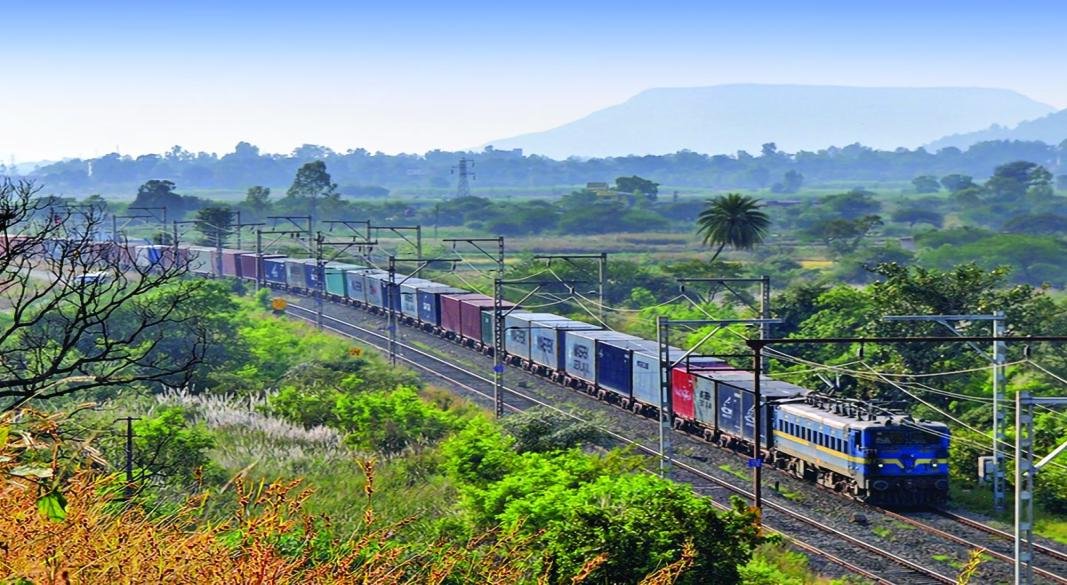
India has joined a select group of countries operating heavy-haul freight railway systems, marking a significant step in its efforts to improve freight efficiency and reduce logistics costs across the economy. The development follows the operationalisation of the country's dedicated freight corridors, which are enabling the movement of longer, heavier and higher-capacity freight trains. According to officials from the Dedicated Freight Corridor Corporation of India Ltd. (DFCCIL), India now ranks alongside nations such as the United States, China, Australia, Brazil, Sweden and South Africa that have established heavy-haul rail networks.
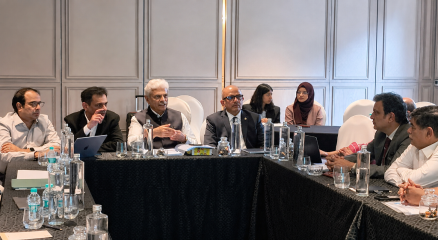
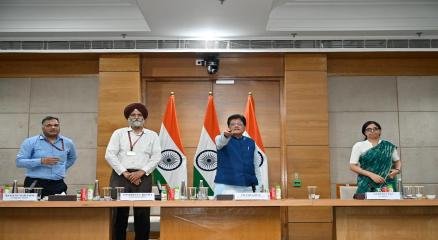
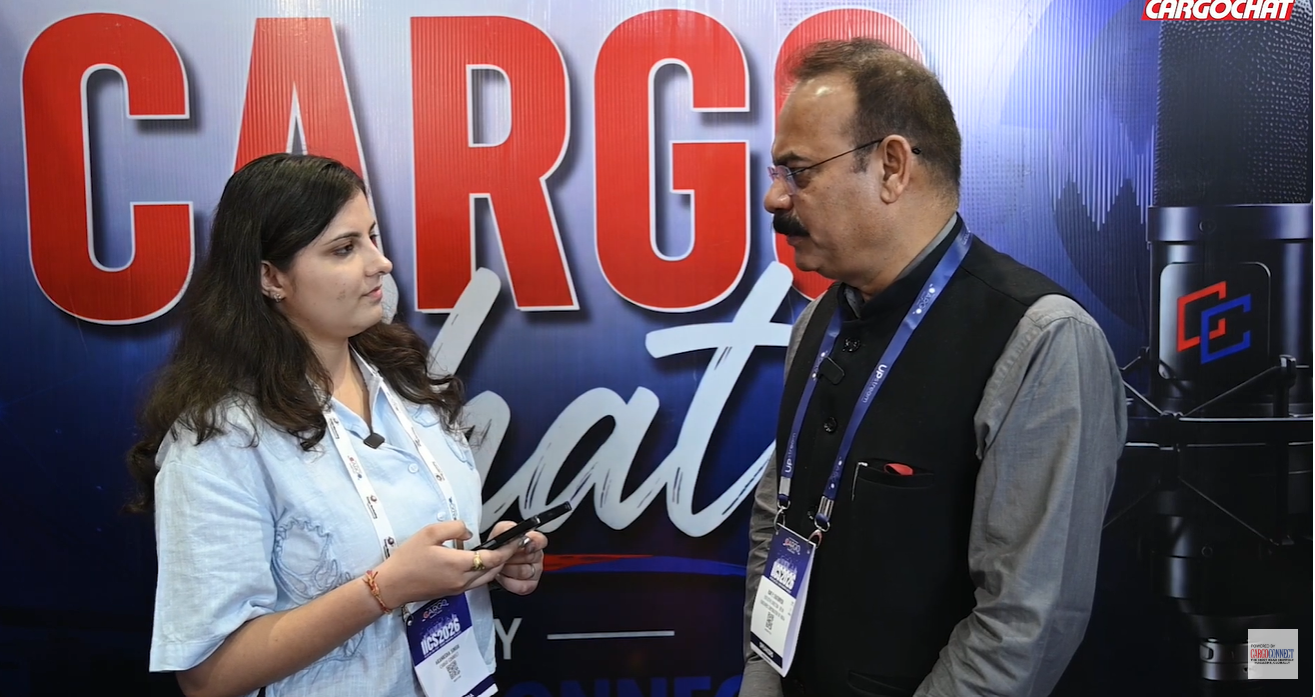
The announcement was made during the International Heavy Haul Seminar 2026 in New Delhi, where railway experts, technology providers and policymakers gathered to discuss advancements in freight transportation and rail logistics. The event focused on sharing global best practices and technologies that could further enhance the efficiency, safety and reliability of India's freight rail operations.
Heavy-haul railways are designed to move large volumes of cargo with greater efficiency than conventional rail systems. Their ability to transport higher payloads over long distances can help lower transportation costs, reduce network congestion and improve overall supply chain performance.
For India, the expansion of dedicated freight infrastructure is closely linked to the broader objective of reducing logistics costs. While logistics expenditure in several developed economies is estimated at around 7-8 percent of GDP, India's logistics costs have historically remained significantly higher, affecting the competitiveness of domestic manufacturers and exporters. Dedicated freight corridors were conceived to address this challenge by creating rail networks focused exclusively on cargo movement.
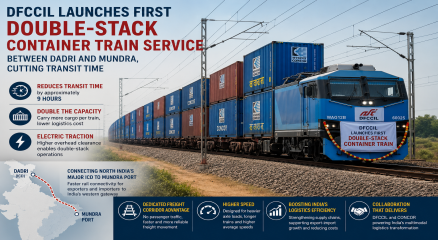
The Eastern and Western Dedicated Freight Corridors have already begun reshaping freight movement patterns by separating cargo traffic from passenger operations, improving train speeds and increasing network capacity. Industry studies cited by officials indicate that the corridors have contributed to more efficient freight transportation and lower logistics costs on key routes.
Looking ahead, the government has expanded its freight rail ambitions with plans for the proposed East-West Dedicated Freight Corridor. The project is expected to connect Dankuni in West Bengal with the Surat region in Gujarat through a high-capacity rail network spanning approximately 2,100 kilometres. Once completed, the corridor would strengthen connectivity between manufacturing centres, consumption markets and major ports across the country.
The next phase of development is likely to focus on technology-driven operations. Industry discussions at the seminar highlighted the growing role of artificial intelligence, predictive maintenance systems, automated inspections and digital monitoring tools in improving asset utilisation and operational reliability. These technologies are expected to become increasingly important as freight volumes continue to grow.
For the logistics sector, the emergence of a heavy-haul rail network could accelerate the shift of cargo from road to rail, particularly for bulk commodities, containers and long-distance freight. Improved rail efficiency may help shippers reduce transportation costs, enhance supply chain reliability and support India's ambition of building a more competitive multimodal logistics ecosystem.
Follow CARGOCONNECT for more such updates.

New Delhi: Prime Minister Narendra Modi will dedicate three key sections of the Western Dedicated Freight Corridor (WDFC) to the nation during his visit to Vadodara on September 8, marking the completion of the project. The three sections, Sanand (North)-Makarpura, New Umbergaon-New Saphale and New Saphale-JNPT cover 326 route kilometres and have been developed at a cost of more than ₹20,700 crore. Commissioning the sections will provide direct connectivity to Jawaharlal Nehru Port Authority (JNPA), enabling faster movement of EXIM cargo, strengthening links between industrial centres and ports, reducing logistics costs, and helping decongest Mumbai’s railway network. With these sections becoming operational, the Dedicated Freight Corridor network will be fully operational across its entire length. The dedicated freight infrastructure is expected to improve multimodal connectivity, reduce transit times and facilitate smoother cargo movement across regions. Prime Minister Modi will also flag off freight train services from New Sanand (North), New Makarpura, New Umbergaon and New JNPT in Mumbai. In addition, the Prime Minister will lay the foundation stone for three railway projects spanning 329 km and costing more than ₹9,700 crore. These include the Vadodara-Ratlam third and fourth lines, the Miyagam Karjan-Choranda-Malsar gauge conversion, and the Vishwamitri-Dabhoi doubling project. The projects are aimed at enhancing passenger and freight capacity and easing congestion between Gujarat and Madhya Pradesh. The developments come as the government seeks to strengthen rail-based freight infrastructure and improve connectivity between industrial production centres, ports and national logistics networks. Follow CARGOCONNECT for more such updates
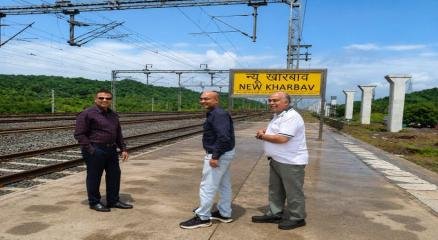
The Jawaharlal Nehru Port Authority (JNPA) has stepped up efforts to strengthen rail-based container evacuation and multimodal connectivity between the port and major consumption and distribution centres in the Mumbai region. JNPA Chairman Gaurav Dayal, IAS, accompanied by Deputy Chairman Ravish Singh, IRTS, and senior port officials, conducted a field inspection of key railway infrastructure along the Dedicated Freight Corridor (DFC) route. The inspection focused on infrastructure that could support faster and more efficient movement of containerised cargo from JNPA towards Bhiwandi, one of the region’s prominent warehousing and distribution hubs. Improved rail connectivity to the logistics cluster is expected to help reduce transit times, enhance supply-chain efficiency and ease pressure on road networks handling container traffic. During the visit, the JNPA delegation inspected Kharbhav Railway Station to assess its strategic integration with the DFC and its potential role in facilitating container movement. The location is being evaluated in the context of improving rail connectivity between the port and inland consumption and distribution centres. The team also visited the Bhiwandi Warehousing Hub, where officials reviewed warehousing capacity, last-mile logistics infrastructure and storage readiness. With Bhiwandi serving as a major logistics and fulfilment cluster for the Mumbai Metropolitan Region, efficient links between the port, rail network and warehousing facilities are increasingly important for supporting growing cargo volumes. Another key stop was New Nilanje Railway Station, which was inspected for its potential to serve as an additional freight node. The assessment forms part of broader efforts to identify infrastructure opportunities that can improve cargo evacuation and provide greater flexibility within the regional freight network. The DFC is designed to facilitate faster and more reliable freight transportation by providing dedicated rail infrastructure for goods movement. For ports such as JNPA, stronger integration with the freight corridor can support a shift towards rail-based cargo evacuation, potentially improving turnaround times while reducing dependence on road transport for longer-haul container movements. The latest field review highlights JNPA’s focus on developing an integrated logistics ecosystem linking port infrastructure with rail freight, warehousing and last-mile distribution. As cargo flows and supply-chain requirements continue to evolve, enhanced multimodal connectivity will remain critical to improving the efficiency, resilience and competitiveness of India’s logistics network. 𝐒𝐭𝐚𝐲 𝐓𝐮𝐧𝐞𝐝 𝐭𝐨 CARGOCONNECT 𝐟𝐨𝐫 𝐥𝐚𝐭𝐞𝐬𝐭 𝐮𝐩𝐝𝐚𝐭𝐞𝐬!
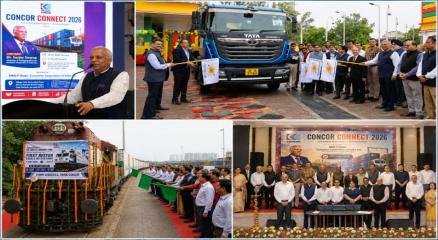
Container Corporation of India Ltd. (CONCOR) brought together leading exporters, importers, freight forwarders, shipping lines, customs brokers and logistics stakeholders at CONCOR Connect 2026 held at its Multi Modal Logistics Park (MMLP) in Dadri, reaffirming its commitment to delivering world-class, customer-centric logistics solutions while strengthening engagement with the trade community. The event served as a strategic platform for dialogue, collaboration and knowledge sharing, reflecting CONCOR's continued focus on enhancing India's multimodal logistics ecosystem. The interactive customer engagement programme was attended by Sanjay Swarup, Chairman and Managing Director, CONCOR, along with senior company officials and representatives from across the logistics and EXIM trade. Addressing the gathering, Swarup highlighted the importance of sustained collaboration between logistics service providers and trade partners in building an efficient, reliable and globally competitive supply chain network. He reiterated that customer feedback remains central to CONCOR's service enhancement initiatives and operational strategy. Participants were briefed on CONCOR's expanding portfolio of integrated logistics services, technological advancements and infrastructure capabilities. Discussions focused on improving cargo movement, increasing operational efficiency, enhancing customer experience and identifying solutions to emerging logistics challenges. Trade representatives also shared valuable insights and suggestions on service delivery, enabling constructive exchanges aimed at further strengthening CONCOR's offerings. The event showcased the strategic significance of MMLP Dadri, one of India's most important inland logistics hubs, which provides seamless multimodal connectivity through rail and road networks while supporting faster EXIM cargo movement. Positioned at the intersection of major freight corridors, the facility continues to play a pivotal role in improving supply chain efficiency for northern India. Recent infrastructure additions and dedicated freight connectivity have further strengthened Dadri's position as a key logistics gateway for domestic and international trade. Swarup emphasised that CONCOR remains committed to delivering reliable, efficient and cost-effective logistics solutions through continuous investment in infrastructure, digitalisation and customer-focused services. He also underlined the company's broader vision of supporting India's logistics transformation by offering integrated multimodal solutions that align with the government's infrastructure and trade facilitation initiatives. Beyond business discussions, CONCOR Connect 2026 reinforced the company's philosophy of building long-term partnerships with customers and stakeholders. The customer meet provided an opportunity to strengthen relationships, exchange ideas and collectively explore new opportunities for improving logistics performance in an increasingly competitive market. As India continues investing in modern freight infrastructure and multimodal connectivity, such initiatives are expected to play an important role in fostering stronger industry collaboration, accelerating trade facilitation and supporting the country's ambition of becoming a globally competitive logistics hub. 𝐒𝐭𝐚𝐲 𝐓𝐮𝐧𝐞𝐝 𝐭𝐨 CARGOCONNECT 𝐟𝐨𝐫 𝐥𝐚𝐭𝐞𝐬𝐭 𝐮𝐩𝐝𝐚𝐭𝐞𝐬!