
Loading...
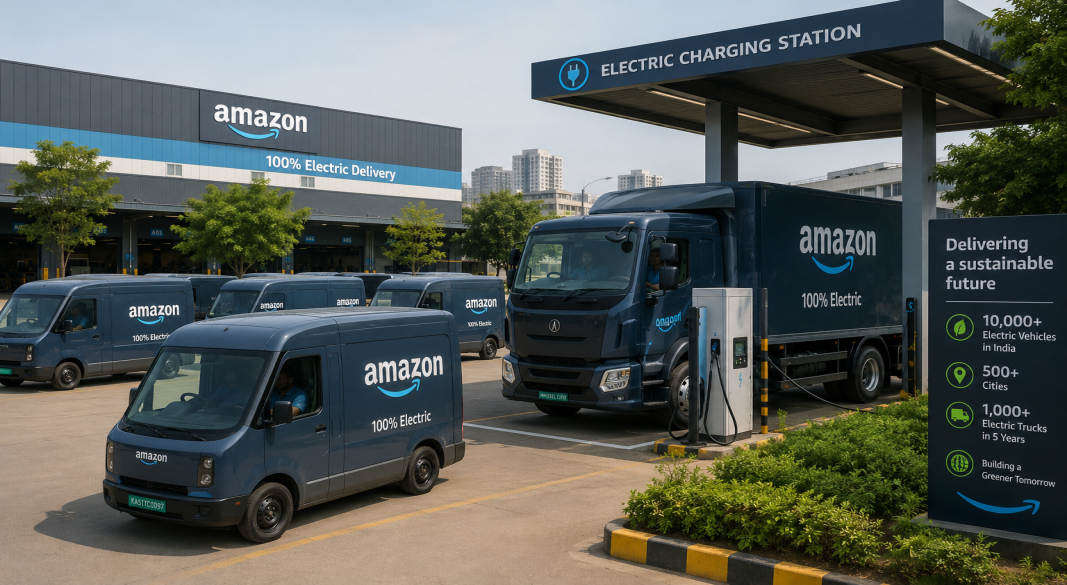
Amazon is accelerating the electrification of its logistics network in India, expanding its electric vehicle fleet while investing in dedicated charging infrastructure to support the transition away from conventional fuel-powered deliveries.
The e-commerce company currently operates more than 10,000 electric vehicles across its Indian delivery network, having achieved its original fleet target ahead of schedule. The vehicles are deployed in over 500 cities and support both last-mile and middle-mile logistics operations across the country.
As part of its next phase of expansion, Amazon plans to introduce more than 1,000 electric trucks over the next five years. The initiative is expected to strengthen the company's efforts to reduce transport-related emissions while supporting growing delivery volumes from fulfilment centres and distribution hubs.
Unlike many fleet operators that rely heavily on public charging networks, Amazon is primarily building and operating charging infrastructure at its own delivery stations. Company executives said the strategy helps overcome challenges associated with limited public charging availability, grid capacity constraints and inconsistent infrastructure development across markets.
The company has also expanded partnerships with vehicle manufacturers and mobility providers to support fleet growth. Recent collaborations include the deployment of electric trucks for freight transportation and the introduction of additional electric vehicles for delivery partners operating within Amazon’s network.
Beyond last-mile deliveries, Amazon is exploring broader decarbonisation opportunities across its transportation network. The company has tested electric heavy-duty trucks on key freight corridors and is working with industry stakeholders to evaluate the feasibility of larger-scale electric freight operations in India.
The expansion forms part of Amazon’s wider global sustainability strategy, which aims to reduce carbon emissions across logistics and transportation activities. India remains a key market in that effort, given the scale of the company’s delivery operations and the country's growing focus on electric mobility adoption. This is another sign of increasing electrification within India's logistics sector, where e-commerce companies, retailers and fleet operators are investing in electric vehicles to lower operating costs, meet sustainability targets and comply with evolving environmental regulations.
Follow CARGOCONNECT for more such updates.
Amazon is accelerating the electrification of its logistics network in India, expanding its electric vehicle fleet while investing in dedicated charging infrastructure to support the transition away from conventional fuel-powered deliveries. The e-commerce company currently operates more than 10,000 electric vehicles across its Indian delivery network, having achieved its original fleet target ahead of schedule. The vehicles are deployed in over 500 cities and support both last-mile and middle-mile logistics operations across the country. As part of its next phase of expansion, Amazon plans to introduce more than 1,000 electric trucks over the next five years. The initiative is expected to strengthen the company's efforts to reduce transport-related emissions while supporting growing delivery volumes from fulfilment centres and distribution hubs. Unlike many fleet operators that rely heavily on public charging networks, Amazon is primarily building and operating charging infrastructure at its own delivery stations. Company executives said the strategy helps overcome challenges associated with limited public charging availability, grid capacity constraints and inconsistent infrastructure development across markets. The company has also expanded partnerships with vehicle manufacturers and mobility providers to support fleet growth. Recent collaborations include the deployment of electric trucks for freight transportation and the introduction of additional electric vehicles for delivery partners operating within Amazon’s network. Beyond last-mile deliveries, Amazon is exploring broader decarbonisation opportunities across its transportation network. The company has tested electric heavy-duty trucks on key freight corridors and is working with industry stakeholders to evaluate the feasibility of larger-scale electric freight operations in India. The expansion forms part of Amazon’s wider global sustainability strategy, which aims to reduce carbon emissions across logistics and transportation activities. India remains a key market in that effort, given the scale of the company’s delivery operations and the country's growing focus on electric mobility adoption. This is another sign of increasing electrification within India's logistics sector, where e-commerce companies, retailers and fleet operators are investing in electric vehicles to lower operating costs, meet sustainability targets and comply with evolving environmental regulations. Follow CARGOCONNECT for more such updates.


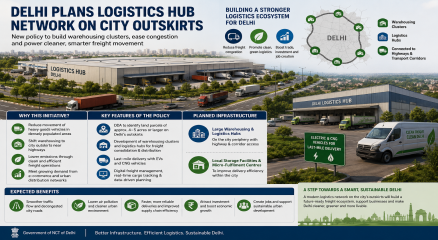
The Delhi government has approached the Delhi Development Authority (DDA) to identify land parcels for a planned network of warehousing and logistics facilities on the outskirts of the national capital, as part of a broader effort to improve freight movement and reduce urban congestion. The initiative is being developed under a forthcoming Logistics and Warehousing Policy that aims to strengthen supply chain infrastructure, support trade activity and address long-standing challenges linked to freight traffic within the city. The policy proposes establishing multiple warehousing clusters and logistics hubs along Delhi's periphery, particularly in areas with direct access to national highways and major transport corridors. The Department is working with the DDA to identify suitable sites, with plans focused on land parcels of approximately four to five acres or larger. These facilities are expected to serve as freight consolidation and distribution centres, helping reduce the movement of heavy goods vehicles through densely populated urban areas. The strategy aligns with the government's objective of shifting warehousing activities away from crowded commercial districts and relocating them closer to the city's boundaries. The proposed policy also includes measures to support cleaner freight operations. Last-mile deliveries would increasingly rely on electric and compressed natural gas (CNG) vehicles, a step intended to lower emissions associated with urban logistics activities. In addition to large warehousing hubs, the government plans to establish localised storage facilities and micro-fulfilment centres to improve delivery efficiency within the city. Officials said the policy will incorporate digital freight management tools, real-time cargo tracking and data-driven planning systems to support logistics operations. The initiative comes amid growing demand for warehousing space in Delhi, driven largely by the expansion of e-commerce and urban distribution networks. By creating dedicated logistics infrastructure, the government aims to attract investment into the sector while building a more organised freight ecosystem for the capital. Follow CARGOCONNECT for more such updates.


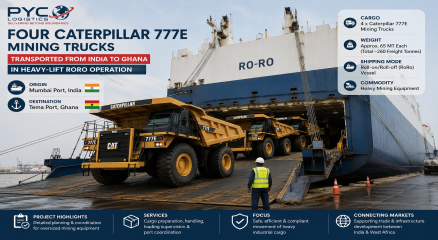
PYC Logistics has completed the shipment of four Caterpillar 777E mining trucks from Mumbai Port to Tema, Ghana, using a roll-on/roll-off (RoRo) vessel, marking another cross-border movement of heavy industrial equipment between India and West Africa. The cargo consisted of four off-highway Caterpillar 777E trucks, each weighing approximately 65 metric tonnes, bringing the total shipment volume to around 260 freight tonnes. The equipment was transported aboard a RoRo vessel, a shipping method commonly used for wheeled and self-propelled heavy machinery. According to the company, the project required detailed planning and coordination to manage the movement of oversized mining equipment from the port of origin through vessel loading and onward transportation to Ghana. Cargo preparation, handling procedures and loading supervision were carried out to ensure the safe transfer of the trucks during the ocean voyage. The shipment highlights the continued demand for specialised logistics services capable of handling large-scale industrial and mining equipment. Such projects typically involve complex operational requirements, including heavy-lift handling, port coordination and compliance with international shipping standards. The movement also reflects ongoing trade activity between India and African markets, particularly in sectors such as mining, construction and infrastructure development. Demand for heavy machinery and industrial equipment continues to support cargo flows between India and several African economies, including Ghana, where investment in resource and infrastructure projects remains a key driver of equipment imports. RoRo services have increasingly been used for transporting large mobile equipment, offering an efficient alternative to conventional container shipping for oversized and high-weight cargo. Follow CARGOCONNECT for more such updates.