
Loading...
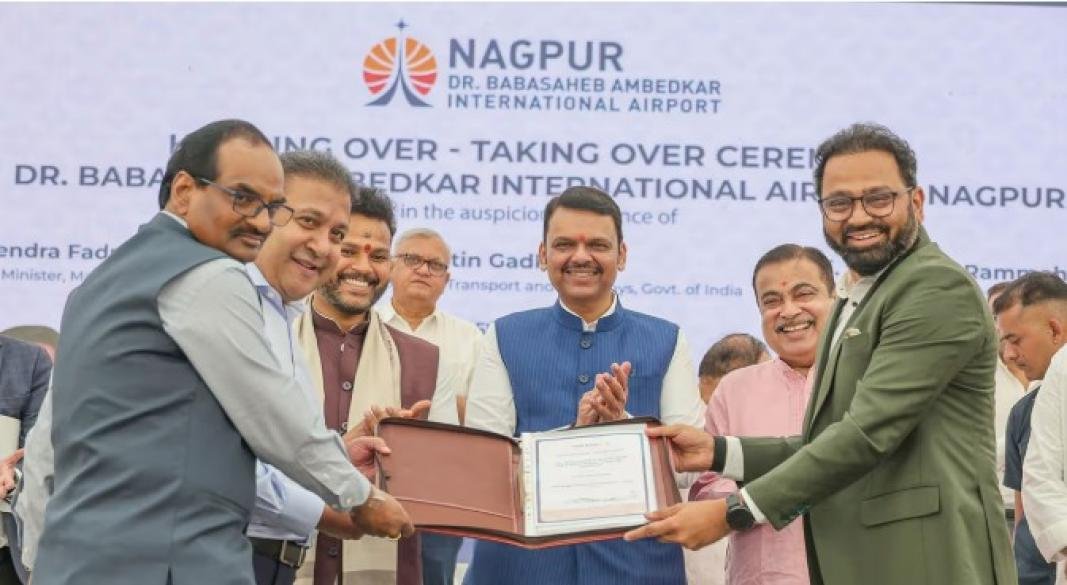
GMR Airports Limited has formally assumed operational control of Dr. Babasaheb Ambedkar International Airport in Nagpur, marking a significant milestone in India's aviation infrastructure landscape. The move is expected to accelerate the airport's transformation into a major passenger, cargo and multimodal logistics hub, reinforcing Nagpur's strategic position at the geographical centre of the country.
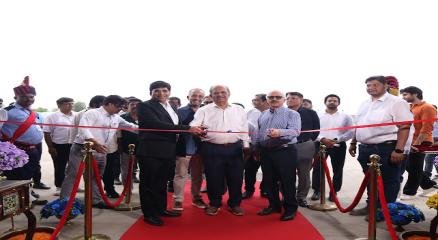
The Handing Over ceremony was attended by Maharashtra Chief Minister Devendra Fadnavis, Union Minister Nitin Gadkari, former Union Civil Aviation Minister Praful Patel, Chairman of GMR Airports G B S Raju, senior officials of the Civil Aviation Ministry, Airports Authority of India and GMR Group, along with public representatives and industry stakeholders.
The takeover expands GMR's airport portfolio to nine airports operated or under development globally, strengthening its presence as India's largest private airport operator. The transition follows the Centre's approval of a 30-year public-private partnership (PPP) concession, paving the way for large-scale infrastructure upgrades and capacity expansion.
Union Civil Aviation Minister Kinjarapu Rammohan Naidu said that the city is uniquely positioned to emerge as a major aviation, cargo and aircraft maintenance hub as the redevelopment of Dr Babasaheb Ambedkar International Airport formally entered a new phase with its handover to GMR Group. "Cargo operations would be major growth driver, helping connect Nagpur's oranges, handicrafts, artisan products, electronics and manufactured goods with global markets.," he said.
CM Fadnavis said Nagpur's central location makes it a natural aviation and logistics hub and revealed that the state government is exploring the establishment of a Free Trade Zone linked to MRO activities to attract aircraft maintenance business from across Southeast Asia. He said the airport would serve as a catalyst for investment, employment generation, cargo growth and overall economic development in the region.
For the supply chain and logistics sector, the development holds considerable significance. Nagpur has long been viewed as a natural logistics gateway due to its central location and its proximity to the Multi-modal International Cargo Hub and Airport at Nagpur (MIHAN). GMR plans to leverage this advantage by developing modern cargo handling infrastructure capable of supporting growing domestic and international freight movement.
In the first phase, the airport operator will expand the existing passenger terminal to handle around three million passengers annually while introducing a state-of-the-art cargo terminal with an initial handling capacity of 20,000 metric tonnes. Future development plans include a new integrated passenger terminal, a second parallel runway and infrastructure capable of supporting long-term passenger demand of up to 30 million annually.
The redevelopment is also expected to strengthen Nagpur's role within India's evolving hub-and-spoke aviation network. Improved cargo infrastructure, enhanced air connectivity and aircraft maintenance facilities are anticipated to attract logistics operators, exporters, e-commerce companies and manufacturing industries looking to optimise distribution across domestic and international markets.
Overall, the airport will potentially emerge as a key economic growth engine for Central India. Enhanced aviation infrastructure is expected to improve trade, tourism, industrial investment and employment opportunities across Maharashtra's Vidarbha region while supporting exports of agricultural produce and manufactured goods, positioning it to evolve into a critical aviation and logistics gateway over the coming decade.
𝐒𝐭𝐚𝐲 𝐓𝐮𝐧𝐞𝐝 𝐭𝐨 CARGOCONNECT 𝐟𝐨𝐫 𝐥𝐚𝐭𝐞𝐬𝐭 𝐮𝐩𝐝𝐚𝐭𝐞𝐬!
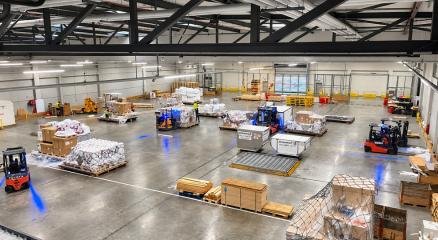
Swissport has expanded its European air cargo operations with the launch of Swissport Cargo Services France at EuroAirport Basel-Mulhouse, marking the company’s return to the French market. The new operation is supported by a 3,000-square-metre cargo warehouse in the French sector of the airport and is designed to provide a platform for future growth. The new facility comprises a 1,000-square-metre French customs zone and 2,000 square metres of international cargo handling space. The latter will support the build-up and breakdown of airline pallets, strengthening Swissport’s ability to handle cargo flows through the strategically located airport. Initially, Swissport Cargo Services France will focus on airline cargo handling. Although the new entity will operate independently within the French market, it will work closely with Swissport’s established Basel cargo operation. This approach will enable the company to leverage local expertise while applying its global standards for safety, quality and operational efficiency. “France is an important aviation market with significant long-term potential for Swissport,” says Bruno Stefani, Regional CEO Switzerland, Italy and France at Swissport. “The launch of Swissport Cargo Services France marks a significant step in strengthening our presence in the country. Beyond cargo, we see opportunities to bring our global expertise in airport ground services and hospitality to the French market and to build strong, long-term partnerships with airlines and airports.” The new operation also builds on Swissport’s longstanding presence at EuroAirport. The company has served airlines at Basel since 1994 and already operates a cargo facility at the airport. In 2024, Swissport handled more than 47,000 tonnes of cargo at the site, highlighting the importance of EuroAirport as a gateway for international freight, including pharmaceutical shipments. “The new operation allows us to build on the strong expertise of our established Basel cargo team while developing a dedicated presence in France,” said Andreas Behnke, Head of Cargo Switzerland, Italy and France and Station Manager Basel-Mulhouse at Swissport. “Our focus is on bringing the same commitment to teamwork, safety and operational excellence to our new operation and providing a strong foundation for its future development.” The launch further strengthens Swissport’s European cargo network, which forms part of a global network of more than 120 cargo centres. The company handles more than five million tonnes of air freight annually worldwide, combining international scale with local operational capabilities. 𝐒𝐭𝐚𝐲 𝐓𝐮𝐧𝐞𝐝 𝐭𝐨 CARGOCONNECT 𝐟𝐨𝐫 𝐥𝐚𝐭𝐞𝐬𝐭 𝐮𝐩𝐝𝐚𝐭𝐞𝐬!


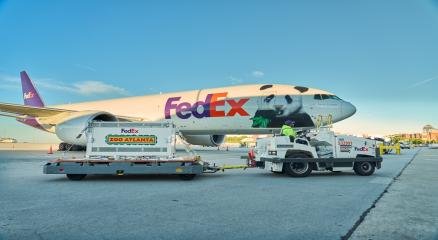
FedEx has completed a specialised international air cargo operation, transporting two giant pandas from Chengdu, China to Atlanta, United States, as part of ongoing global conservation efforts. The mission saw six-year-old male Ping Ping and five-year-old female Fu Shuang travel aboard a dedicated FedEx Boeing 777F, known as the “FedEx Panda Express”, to their new home at Zoo Atlanta. The pandas travelled on a non-stop flight from Chengdu Shuangliu International Airport to Hartsfield-Jackson Atlanta International Airport. According to industry reports, the journey covered approximately 13,000 kilometres and lasted around 16 hours, highlighting the operational precision required to move live and highly sensitive cargo across continents. For the journey, Ping Ping and Fu Shuang were placed in custom-built travel crates and accompanied by animal specialists from Zoo Atlanta. The pandas were the only cargo aboard the aircraft, travelling with fresh bamboo, water and their preferred treats. Before departure, they were also given time to become familiar with their transport enclosures, helping ensure a safe and comfortable journey. The operation extended beyond air transportation. Following the flight, FedEx provided trucking and logistical support in Atlanta to move the pandas from the airport to Zoo Atlanta. The coordinated operation brought together air, ground and logistics capabilities across China and the US, demonstrating the specialised handling, security and precision required for exceptional cargo movements. FedEx also donated the full transportation cost of the mission as part of its corporate social responsibility and environmental conservation efforts. The company has been involved in transporting giant pandas for more than two decades, working with the Chinese government and zoos and conservation institutions worldwide. With the latest mission, FedEx has transported 23 pandas to and from China since 2000. The latest movement follows several previous FedEx Panda Express missions involving the transportation of pandas between China and destinations including the United States, Canada, France and Scotland. These operations have established specialised animal transportation as an important demonstration of the logistics provider’s ability to manage high-priority, sensitive shipments requiring dedicated resources and cross-border coordination. Following their arrival, Ping Ping and Fu Shuang entered quarantine at Zoo Atlanta ahead of their planned public debut later this year. Beyond the symbolic importance of the animals, the mission underscores how specialised air cargo networks can support international conservation, scientific collaboration and wildlife protection by safely connecting institutions across borders. 𝐒𝐭𝐚𝐲 𝐓𝐮𝐧𝐞𝐝 𝐭𝐨 CARGOCONNECT 𝐟𝐨𝐫 𝐥𝐚𝐭𝐞𝐬𝐭 𝐮𝐩𝐝𝐚𝐭𝐞𝐬!

Cathay Cargo has shifted its Mumbai freighter operations to Navi Mumbai International Airport (NMIA), effective September 21, 2026, strengthening dedicated freighter connectivity from the Mumbai region. The carrier is operating three dedicated freighter flights per week from NMIA, using Boeing 747-400ERF and Boeing 747-8F aircraft. The services provide robust main-deck capacity and nose-door loading capabilities, enabling the handling of oversized, heavy and other specialised cargo. From its Hong Kong hub, Cathay Cargo connects Indian customers with key markets across the Chinese Mainland, Southeast Asia, North America and other international destinations. The relocation is expected to support the growing movement of Indian manufacturing and export cargo by providing direct freighter connectivity to Cathay Cargo’s global network through Hong Kong. The move also strengthens Western India’s access to international cargo markets at a time when freighter operations are shifting towards Navi Mumbai. Cathay Regional Head of Cargo for South Asia, the Middle East, and Africa, Rajesh Menon said, “The move of our Mumbai freighter operations to Navi Mumbai International Airport reinforces our steadfast commitment to the Indian market and its growth trajectory. By combining NMIA's modern infrastructure with our dedicated freighter presence and our ‘We Know How’ expertise, we are providing reliable connectivity and specialist handling for local enterprises, exporters and SMEs. This will also further strengthen connectivity between Western India’s exporters and key global markets through our Hong Kong hub." In addition to its Navi Mumbai International Airport freighter service, Cathay Cargo continues to operate its dedicated freighter network across India, operating five weekly freighter flights from Delhi and Chennai, respectively. Cathay Cargo’s “We Know How” approach is supported by specialist solutions including Cathay Expert for odd-sized, heavy and project cargo; Cathay Pharma for temperature-controlled pharmaceuticals and vaccines; Cathay Fresh for perishables and seafood; Cathay Priority for time-critical commercial shipments; and Cathay Live for specialised live-animal transportation. Its specialist cargo solutions and Hong Kong cargo terminal are supported by IATA CEIV certifications covering Pharma, Fresh, Live Animals and Lithium Batteries. In addition to its freighter network, Cathay Cargo leverages belly-hold capacity on Cathay Pacific passenger services from Mumbai, Delhi, Chennai, Bengaluru and Hyderabad, with 45 passenger flights per week across these five Indian gateways. 𝐒𝐭𝐚𝐲 𝐓𝐮𝐧𝐞𝐝 𝐭𝐨 CARGOCONNECT 𝐟𝐨𝐫 𝐥𝐚𝐭𝐞𝐬𝐭 𝐮𝐩𝐝𝐚𝐭𝐞𝐬!