
Loading...
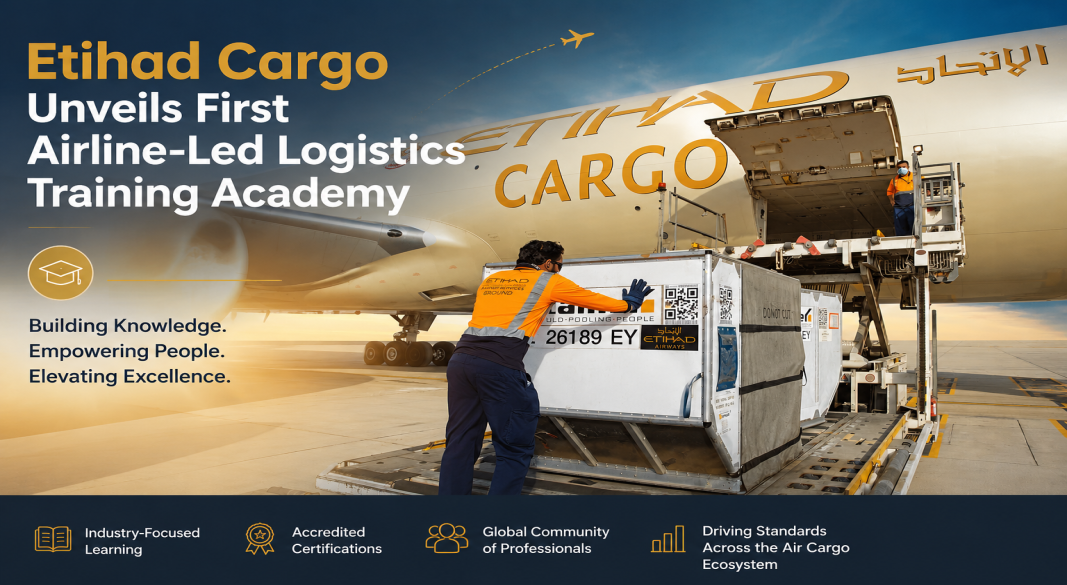
Etihad Cargo, the cargo and logistics division of Etihad Airways, has introduced the Excellence Hub, describing it as the airline industry's first dedicated logistics training academy established by an airline. The initiative has been launched to strengthen knowledge sharing, professional development, and operational excellence across the global air cargo ecosystem.
The new platform has been designed to bring greater consistency to operational practices throughout Etihad Cargo's worldwide partner network. By standardising learning and best practices, the Excellence Hub aims to maintain uniform service quality, reinforce safety and regulatory compliance, and improve risk management across every stage of cargo operations. The academy is also expected to strengthen collaboration among partners while supporting the carrier's commitment to reliable and customer-focused services.
Developed for Etihad Cargo employees, representatives, partners, customers, and logistics professionals around the world, the academy offers an extensive learning framework covering operational procedures, service standards, product knowledge, safety practices, and compliance requirements aligned with international aviation regulations. The platform also includes industry-recognised certification programmes created in collaboration with accredited educational institutions.
The Excellence Hub features a wide range of learning formats, including introductory courses, expert-led masterclasses, educational podcasts, and executive programmes such as a miniMBA. Participants receive accredited certifications after successfully completing their respective learning tracks. To keep users engaged, the academy incorporates interactive elements such as leaderboards, reward points, and LinkedIn achievement badges that recognise individual progress. In addition, university students are being offered complimentary access, enabling aspiring professionals to gain industry exposure and become part of a global learning community.
Supporting continuous learning is an AI-powered system that delivers personalised recommendations, monitors learner performance, and provides real-time insights throughout the training journey. With a mobile-friendly interface, the platform ensures that users can access educational content anytime and from virtually anywhere, making professional development more flexible and accessible.
Commenting on the launch, Stanislas Brun, Chief Cargo Officer at Etihad Airways, said the Excellence Hub represents a major milestone for the air cargo sector. He noted that bringing operational expertise, accredited education, and industry knowledge together on a single platform will help enhance professional capabilities and elevate service standards across the global logistics network.
Dr Nadia Al Bastaki, Chief People and Corporate Affairs Officer at Etihad Airways, emphasised that investing in people remains a core priority for the airline. She said the Excellence Hub reflects that commitment by creating accessible learning opportunities for both newcomers and experienced professionals. According to her, the initiative will contribute to higher operational efficiency, stronger customer service, and the continued development of talent within the global air cargo industry.
Additionally, Etihad Cargo has expanded its digital customer platform with five additional languages and a series of new online shipment management tools designed to improve accessibility, visibility and customer self service. The logistics arm of Etihad Airways announced that its website is now available in Japanese, German, Spanish, Chinese and Arabic, enabling customers and partners to access services and manage shipments in their preferred language across key international markets.
The latest updates form part of the carrier’s digital strategy to simplify customer interactions and improve the end to end cargo experience through enhanced connectivity and shipment visibility.
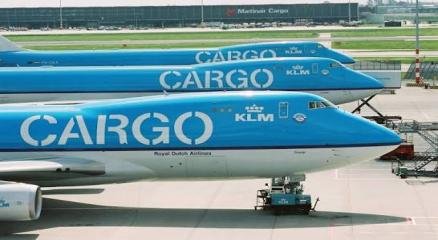
Air France KLM Martinair Cargo (AFKLMP Cargo) is expanding its global freighter network for the 2026/27 winter season, adding Cairo in Egypt as a new dedicated cargo destination while strengthening capacity across key international markets. The winter schedule will run from October 25, 2026 to March 27, 2027. The new Cairo service will be operated by Air France using Boeing 777F freighters, with three flights per week. The service will establish a dedicated main-deck cargo connection between Europe and North Africa, providing capacity that operates independently of passenger flight schedules. The addition is expected to improve connectivity for freight moving between European markets and Egypt, while giving shippers greater access to the wider AFKLMP Cargo network through its Paris Charles de Gaulle and Amsterdam Schiphol hubs. AFKLMP Cargo plans to serve 14 freighter destinations, 112 wide-body belly destinations worldwide and 54 European destinations during the winter season. The network will combine dedicated freighter capacity with wide-body and narrow-body belly operations, supported by intra-European trucking and interline partnerships. The carrier is also making changes to its Indian freighter operations. Air France Cargo will shift its freighter services from Mumbai Airport to Navi Mumbai International Airport (NMI), with two weekly Boeing 777F flights planned during the winter schedule. The move adds a new dimension to AFKLMP Cargo’s India network as Navi Mumbai develops its international cargo operations. Meanwhile, KLM/Martinair will continue its Boeing 747 freighter network from Amsterdam to markets across the Americas, Africa and Asia. Services to Seoul will operate three times a week, comprising one standalone flight and two services combined with Hong Kong, increasing dedicated capacity on the Seoul route. Beyond freighter operations, AFKLMP Cargo will expand its wide-body belly network from Paris. Punta Cana in the Dominican Republic will be introduced with three weekly Boeing 777-300ER services from November, while Malé in the Maldives will receive two weekly Airbus A350-900 services from December. Seasonal services to Ottawa and Barbados will also return. Pierre-Olivier Bandet, Executive Vice President Cargo at Air France-KLM, said the winter period presents demanding requirements for customers, particularly during the year-end peak and the flower season ahead of Valentine’s Day. He added that the combination of dedicated main-deck capacity and extensive belly networks through Paris and Amsterdam would provide customers with greater flexibility and choice. 𝐒𝐭𝐚𝐲 𝐓𝐮𝐧𝐞𝐝 𝐭𝐨 CARGOCONNECT 𝐟𝐨𝐫 𝐥𝐚𝐭𝐞𝐬𝐭 𝐮𝐩𝐝𝐚𝐭𝐞𝐬!

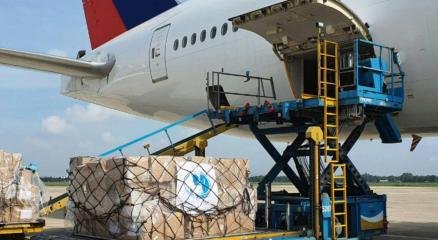
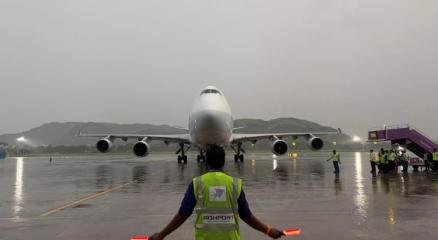
Cargo operations at Navi Mumbai International Airport (NMIA) are facing a series of operational challenges as airlines transition freight services from Mumbai’s Chhatrapati Shivaji Maharaj International Airport (CSMIA). Industry stakeholders have raised concerns over cargo-handling capacity, manpower shortages, equipment availability, delays in customs processes and inadequate coordination, creating uncertainty for carriers ahead of the peak air-freight season. The concerns have intensified following the decision by Malta-based Challenge Group to temporarily suspend its Mumbai cargo operations. The carrier said the current operating environment at NMIA does not yet provide the reliability and certainty required to maintain its services. Challenge Group had shifted its freighter operations to NMIA following the mandatory transition from CSMIA. According to Challenge Group, cargo-handling bottlenecks have affected both inbound and outbound operations. The airline's Chief Commercial Officer Or Zak highlighted constraints involving dollies, cargo availability and warehouse processes. He said a substantial volume of inbound cargo was waiting on dollies, limiting the ability to offload arriving aircraft, while export shipments were at times not ready, incorrectly built or awaiting release. The resulting bottlenecks could leave freighters departing with significantly reduced loads or, in some cases, without cargo. Customs brokers have separately flagged serious delays at the NMIA cargo complex. The Brihanmumbai Customs Brokers’ Association (BCBA) has reported instances of flight-checking delays exceeding 72 hours, along with shortages of operational manpower, loaders, forklifts, trained equipment operators and supervisory personnel. The association has also raised concerns about delays in registration and Permanent Deposit account opening, which can hold up cargo clearance even after shipments are ready for customs processing. Cargo storage has emerged as another concern, with the BCBA reporting instances of import consignments, including heavy and high-value shipments, being exposed to rain. The association has called for better covered storage, stronger cargo-handling procedures, adequate staffing and equipment, and faster resolution of operational grievances. The timing of these challenges is particularly significant as air cargo volumes enter the traditional peak season. Industry bodies and freight forwarders have indicated that the problems are not isolated, pointing to recurring delays in flight checking, cargo handling and account registration since freighter operations began at NMIA. Despite the hurdles, NMIA remains strategically important for Mumbai’s long-term aviation and logistics ecosystem. Several international freighter operators have already operated flights to the airport, while incentives such as landing-fee discounts are being offered to strengthen international cargo connectivity. For NMIA to establish itself as a competitive air cargo hub, industry stakeholders say operational readiness will need to catch up with the airport’s infrastructure capacity, particularly across ground handling, warehousing, customs coordination and cargo-flow management. 𝐒𝐭𝐚𝐲 𝐓𝐮𝐧𝐞𝐝 𝐭𝐨 CARGOCONNECT 𝐟𝐨𝐫 𝐥𝐚𝐭𝐞𝐬𝐭 𝐮𝐩𝐝𝐚𝐭𝐞𝐬!


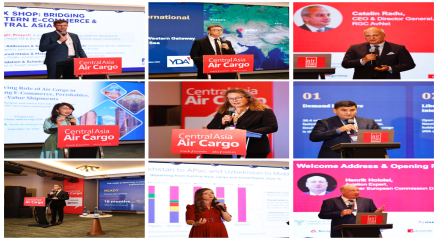
Central Asia is strengthening its position as an emerging air cargo bridge between Asia and Europe, with airlines, airports, logistics providers and regulators increasingly focused on building stronger connections with China, Europe and the Middle East. The shift was a key theme at the Central Asia Aviation Cargo Summit, held in Tashkent on September 30 and October 1, 2026, which brought together 340 representatives from across the aviation and logistics ecosystem. The region’s growing relevance is supported by a significant expansion in air cargo volumes. According to the International Air Transport Association (IATA), Central Asia’s air cargo volumes more than doubled between 2019 and 2024. Kazakhstan remained the region’s leading gateway, with volumes increasing 149% over the period, while Uzbekistan recorded even faster growth of 182%, supported by infrastructure investment. The summit highlighted that Central Asia’s ambitions are extending beyond simply adding aircraft capacity. Airlines and airports are increasingly looking at how airfreight can be integrated with road and rail networks to create more efficient multimodal corridors. Representatives from Silk Way West Airlines, Saudia Cargo and DHL Global Forwarding discussed opportunities to strengthen connections linking Central Asia with China, Europe, the Middle East and other major markets. Digitalisation and Standards Gain Importance Digital transformation emerged as another critical component of the region’s cargo development. An IATA roundtable brought together representatives from IATA, Lufthansa Cargo, Qatar Airways, Centrum Air/My Freighter and Uzbekistan’s Customs Committee to discuss international standards, certification, ONE Record, cargo connectivity and regulatory modernisation. For Central Asian markets seeking deeper integration with global supply chains, improved data exchange and greater alignment with international cargo standards could help reduce manual processes and improve shipment visibility. The summit also examined artificial intelligence, cargo terminal automation and cybersecurity as technologies that could support higher volumes and more efficient operations. Airports Compete for Eurasian Cargo Flows Tashkent, Almaty and Navoi are increasingly positioning themselves as important gateways within the emerging Eurasian cargo network. Tashkent Airport and Navoi International Airport presented their cargo development strategies and infrastructure plans at the summit, while an industry panel examined the competitive and complementary roles of regional airports. The discussions covered scheduled and charter services, ACMI operations, express logistics, GSSA services, digital platforms and airport infrastructure. Flexible capacity is expected to remain important as cargo flows evolve and airlines respond to changing demand across Eurasian trade lanes. E-Commerce Adds Momentum The expansion of cross-border e-commerce is also creating new opportunities for Central Asian air cargo. Perishables, high-value shipments and express consignments are generating demand for faster customs processes, specialised handling and reliable last-mile delivery. The summit also addressed workforce development, highlighting the need for skilled professionals as airlines, airports and logistics companies expand their operations. Training, recruitment and operational expertise will therefore remain critical alongside investment in terminals, aircraft and digital infrastructure. Central Asia’s air cargo proposition is consequently evolving from a transit-focused model towards a broader logistics ecosystem. With rising cargo volumes, new infrastructure, stronger multimodal connections and greater adoption of digital standards, the region is seeking to convert its geographic position between East and West into a sustainable competitive advantage. The next phase will depend on how effectively airlines, airports, customs authorities and logistics providers translate these investments and partnerships into new routes, efficient cargo handling and dependable Eurasian trade corridors. 𝐒𝐭𝐚𝐲 𝐓𝐮𝐧𝐞𝐝 𝐭𝐨 CARGOCONNECT 𝐟𝐨𝐫 𝐥𝐚𝐭𝐞𝐬𝐭 𝐮𝐩𝐝𝐚𝐭𝐞𝐬!