
Loading...
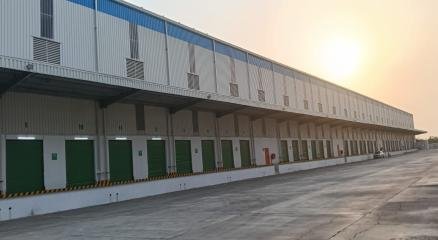
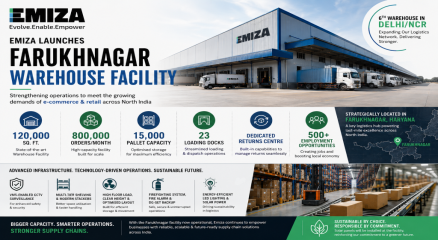
Emiza has inaugurated its 27th multi-client fulfilment centre, its 110,000-square-foot facility in Farrukhnagar, Haryana, enhancing its capacity to meet the growing demands of the e-commerce and retail sectors, mainly the Northern India region.
This is its fifth warehouse in the Delhi/NCR region. With this, the company expands its total warehousing footprint to over 50 lakh cubic feet across 14 cities and 13 states. Over the last two years, Emiza's warehousing space has grown by 150 percent, indicating that the firm is strategically scaling its operations to meet the changing demands of India's logistics ecosystem," this release states.
The Farrukhnagar facility aims to cater to up to 18 lakh D2C orders every month, thereby greatly enhancing Emiza's logistics delivery speed, reliability, and efficiency. Located in a strategic logistics hub, the warehouse facilitates efficient last-mile services and timely order fulfilment for businesses located in the region.
The expansion is also expected to create more than 300 jobs, adding to the company's contribution to local employment. Emiza has generated 2,500 jobs across its network so far and is investing Rs 12 crore in the adoption of cutting-edge technology such as robotics, machine learning, and blockchain to increase operational efficiency and enhance customer experiences.
Ajay Rao, Founder of Emiza, said, "Our new facility at Farrukhnagar is more than just an expansion; it is a critical step toward strengthening our ability to meet the surging demand from the e-commerce and retail sectors across North India. With cutting-edge technology and the capacity to handle 1.8 lakh orders per month, this facility will be designed to deliver faster, more reliable, and highly efficient logistics solutions to our clients. This facility will also fulfill bulk shipments to quick commerce regional distribution centers (DCs) on behalf of our brands."
According to Jitendra Kumar, Co-founder of Emiza: "The new facility is a result of our long-term vision to scale up without compromising on safety or sustainability. With automation-driven processes and related sustainability initiatives, we are offering smarter, more efficient, and eco-friendlier logistics solutions to our partners. The warehouse also presents new opportunities for the communities we serve, driving both operational and local economic growth."
The multi-tier long-span shelving racks have more than 17,000 pallet positions with a storage capacity of over 900,000 cubic feet. Equipped with 20 dock levellers, FM2 flooring, and a conveyor system to ease the flow of materials. To ensure high standards of safety, critical systems including hydrants, sprinklers, electrical dock doors, and 24x7 CCTV surveillance are in place
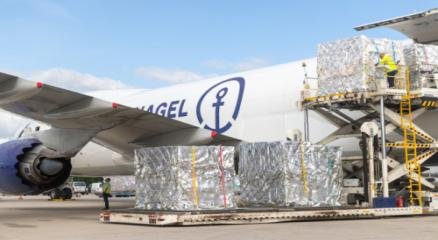
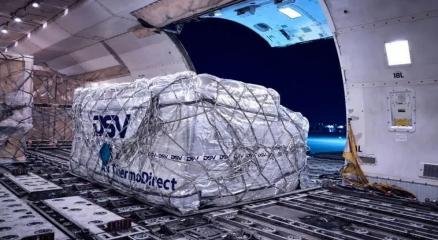
Kuehne+Nagel has expanded its global Cool Corridor network by introducing four new temperature-controlled trade routes, reinforcing its capabilities in transporting sensitive pharmaceutical and healthcare products across key international markets. The latest expansion is aimed at meeting the growing demand for reliable cold chain logistics while ensuring product integrity throughout transit. The newly added Cool Corridors connect Belgium with Singapore, Belgium with Chicago, Belgium with Lima, and Singapore with Sydney, significantly enhancing the company's healthcare logistics network. These dedicated lanes are designed to maintain strict temperature conditions, minimise handling risks, and improve shipment visibility for life sciences and healthcare customers. With the addition of these routes, Kuehne+Nagel continues to strengthen its specialised HealthChain portfolio, which supports the transport of pharmaceuticals, vaccines, biologics and other temperature-sensitive medical products. The Cool Corridor programme combines validated processes, certified infrastructure and advanced monitoring technologies to safeguard cargo quality from origin to destination. The logistics provider noted that the expansion reflects increasing demand from pharmaceutical manufacturers seeking resilient and compliant supply chain solutions amid the continued growth of global healthcare trade. By creating dedicated cold chain lanes, the company aims to reduce transit variability, enhance operational consistency and ensure regulatory compliance across international shipments. The initiative also leverages strategic partnerships with airlines, ground handling agents and logistics facilities that meet stringent healthcare quality standards. These collaborations enable seamless end-to-end temperature management while providing customers with greater transparency through digital shipment monitoring and proactive risk management. “Healthcare customers are looking for ways to maintain product quality while improving efficiency and sustainability across their supply chains. Cool Corridors provide greater control across the shipment journey, helping protect temperature-sensitive products. With more confidence in shipment conditions, customers can use lighter passive packaging, creating opportunities to reduce logistics costs and transport emissions without compromising product integrity,” says Dorothee Becher, VP Global Air Logistics Healthcare at Kuehne+Nagel. The network expansion underscores the company's broader strategy of investing in healthcare logistics infrastructure globally. In recent months, Kuehne+Nagel has also expanded its healthcare footprint through temperature-controlled facilities in major pharmaceutical hubs, further strengthening its ability to support evolving customer requirements. As pharmaceutical supply chains become increasingly global and complex, demand for specialised cold chain logistics continues to rise. By extending its Cool Corridor network, Kuehne+Nagel is positioning itself to offer enhanced reliability, regulatory compliance and end-to-end visibility for temperature-sensitive healthcare shipments, supporting the industry's need for secure and efficient logistics solutions. 𝐒𝐭𝐚𝐲 𝐓𝐮𝐧𝐞𝐝 𝐭𝐨 CARGOCONNECT 𝐟𝐨𝐫 𝐥𝐚𝐭𝐞𝐬𝐭 𝐮𝐩𝐝𝐚𝐭𝐞𝐬!
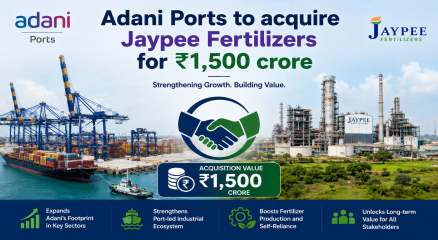
Adani Ports and Special Economic Zone Ltd (APSEZ) has agreed to acquire Jaypee Fertilizers & Industries Ltd (JFIL) from Jaiprakash Associates Ltd (JAL) for ₹1,500 crore, strengthening its presence in India’s logistics and industrial infrastructure sector. The transaction forms part of the insolvency resolution plan approved for JAL by the National Company Law Tribunal (NCLT). Through the acquisition, APSEZ will gain indirect control of Kanpur Fertilizers and Chemicals Ltd (KFCL), which owns nearly 243 acres of industrial and commercial land in Kanpur. The company plans to use the site for logistics and warehousing development as it expands its multimodal logistics network across the country. The move reflects APSEZ’s broader strategy of increasing its inland logistics capabilities beyond port operations. The company has been expanding its presence in warehousing, rail-linked freight infrastructure and cargo handling to create integrated supply chain services. Industry analysts note that private port operators are increasingly investing in logistics assets to secure cargo volumes and improve end-to-end transportation offerings. The acquisition will be completed through a cash transaction under the implementation framework of the approved JAL resolution plan. The NCLT approved the plan in March 2026, and the order was later upheld by the National Company Law Appellate Tribunal (NCLAT). The latest deal adds to APSEZ’s series of infrastructure acquisitions in recent years, including investments in ports, logistics parks and storage assets aimed at strengthening its integrated transport network across India. Follow CARGOCONNECT for more such updates


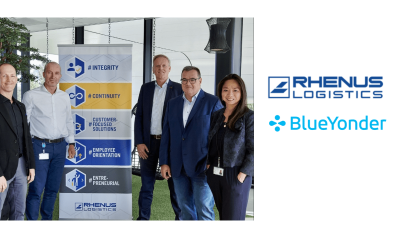
Rhenus Warehousing Solutions has deepened its collaboration with Blue Yonder to drive the global standardisation of its IT systems, reinforcing its digital transformation strategy. As a leading warehousing and fulfilment service provider with operations across 180 sites in 20 countries, Rhenus aims to establish a uniform and efficient IT framework to enhance customer experience worldwide. The partnership will see Rhenus implement Blue Yonder Warehouse Management on a global scale. This interoperable and configurable solution is designed to meet specific customer requirements efficiently while optimising resource allocation across different regions. By enabling in-house configuration of warehouse management modules, Rhenus will reduce its dependence on new software developments, ensuring a more agile and cost-effective operation. Ronny Sassen, Chief Executive Officer of Rhenus Warehousing Solutions, highlighted the significance of the collaboration: "With the global expansion of Blue Yonder, we are creating a robust and flexible foundation for the future of our warehouse management. This not only strengthens our competitiveness but also enables us to respond to the individual needs of our customers worldwide." Beyond system implementation, the partnership will also establish a Blue Yonder competence centre, focused on developing preconfigured modules tailored for various industries. This initiative aims to streamline the implementation process, facilitating the global roll-out of Blue Yonder’s warehouse management solutions and enhancing supply chain efficiencies. Markus Sandbrink, Chief Information Officer of the Rhenus Group, emphasised the long-term strategic benefits: "With Blue Yonder, we are building an IT infrastructure that optimises our global business processes while ensuring the security and performance of our systems. By harmonising this infrastructure, we are strengthening cooperation between all our sites and offering our business partners a reliable basis for their core business." Echoing this sentiment, Nafe Hagen, General Manager, Global Logistics Service Provider and Edge Technologies at Blue Yonder, stated: "Expanding our relationship with Rhenus to include warehousing is an important step in jointly developing innovative and scalable supply chain solutions. Our technology will support Rhenus' security and performance needs as they look to deploy our solutions globally." The initial phase of the collaboration has already demonstrated the potential of a standardised and flexible warehouse management solution. As Rhenus continues its global expansion, the strengthened partnership with Blue Yonder underscores its commitment to digital transformation and operational excellence.