
Loading...
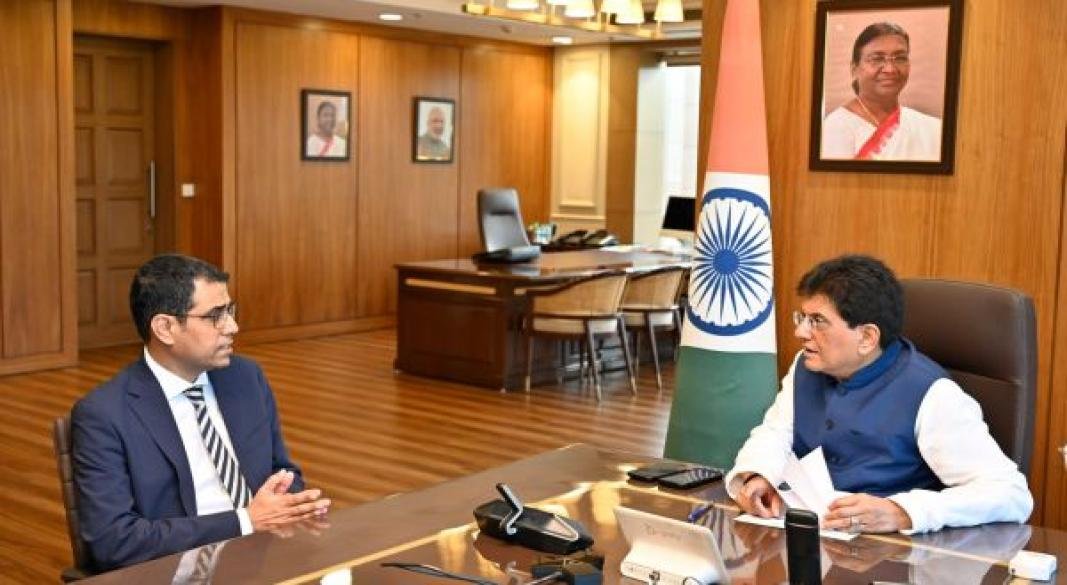
The Government of India and A.P. Moller-Maersk have reaffirmed their commitment to strengthening India's maritime sector through deeper collaboration across shipping, port infrastructure, shipbuilding, repair, container manufacturing and workforce development. The discussions reflect the country's growing focus on building a globally competitive maritime ecosystem while enhancing supply chain resilience and trade connectivity.
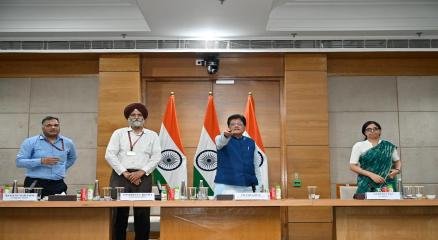
Union Minister of Commerce and Industry, Piyush Goyal recently met Ahmed Hassan, Head of Asset Strategy at A.P. Moller-Maersk Group, to explore opportunities that align with India's long-term vision of becoming a leading maritime and logistics hub. The meeting highlighted the importance of public-private partnerships in accelerating investments, innovation and capacity building across the maritime value chain.
The discussions covered multiple areas of collaboration, including port modernization, ship repair and maintenance, vessel flagging under the Indian registry, development of container manufacturing capabilities and strengthening maritime infrastructure. Both sides also emphasized the need to enhance India's competitiveness in global shipping while creating new employment and skill development opportunities.
Maersk has been steadily expanding its engagement with India's maritime sector through strategic initiatives aimed at supporting the country's logistics transformation. The company has already partnered with Indian shipyards to explore repair, maintenance and shipbuilding opportunities while also evaluating the local sourcing and manufacturing of seaworthy containers. These initiatives are expected to encourage technology transfer, develop domestic capabilities and strengthen India's position in the global maritime supply chain.
The collaboration also supports the Government of India's broader agenda of improving multimodal connectivity, modernizing ports and creating a resilient logistics network that can support the country's growing manufacturing and export ambitions. A stronger maritime sector is expected to reduce logistics costs, improve trade efficiency and enhance India's integration with global supply chains.
Industry observers believe partnerships between the government and Maersk will play a critical role in driving investment, sustainability and operational excellence across India's maritime ecosystem. As international trade patterns continue to evolve, collaborative initiatives focused on infrastructure, technology and skills are expected to position India as a preferred destination for global shipping and logistics operations.
The engagement between the Government of India and A.P. Moller-Maersk underscores a shared vision of creating a future-ready maritime sector capable of supporting economic growth, strengthening supply chain resilience and reinforcing India's emergence as a global logistics powerhouse.
𝐒𝐭𝐚𝐲 𝐓𝐮𝐧𝐞𝐝 𝐭𝐨 CARGOCONNECT 𝐟𝐨𝐫 𝐥𝐚𝐭𝐞𝐬𝐭 𝐮𝐩𝐝𝐚𝐭𝐞𝐬!
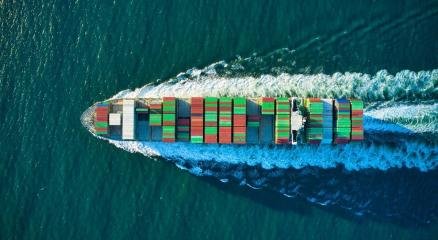
India and the European Union (EU) have launched an industry coalition to develop a green shipping corridor between the two markets, marking a significant step towards cleaner maritime trade and the adoption of low-emission fuels. The initiative was announced during the third edition of Sagar Manthan 2026 and aims to bring industry stakeholders together to advance greener maritime routes and supporting infrastructure. Shipping Secretary Vijay Kumar said the coalition would help translate cooperation between India and the EU into practical industry partnerships focused on cleaner maritime operations. The initiative comes at a time when the global shipping sector is navigating geopolitical disruptions, supply-chain vulnerabilities, climate pressures and rapid technological changes. The coalition is expected to provide a platform for companies and other stakeholders to collaborate on the development of green shipping infrastructure, alternative fuels and lower-emission maritime trade routes. Greater international cooperation and private investment will be critical to building resilient maritime supply chains while enabling emerging economies to participate in the global transition towards cleaner energy. As part of its broader maritime decarbonisation strategy, India is also targeting a substantial increase in renewable energy use at its major ports. The country plans to raise the share of renewable energy in the overall energy consumption of major ports to more than 60% by 2030 and above 90% by 2047. The transition is also extending to harbour craft. Diesel-powered harbour tugs are being progressively replaced with green-powered vessels, while Deendayal Port at Kandla, Paradip Port and V.O. Chidambaranar Port at Tuticorin have been identified as green hydrogen hubs. These ports are being positioned to support the production, storage and bunkering of cleaner fuels, including green hydrogen. The green shipping corridor initiative also aligns with India's wider plans to expand maritime infrastructure and capacity. The government is targeting total port capacity of 10 billion tonnes annually by 2047. Major ports handled more than 915 million tonnes of cargo in 2025-26, compared with 581 million tonnes in 2014-15. Cargo transported through national waterways has also increased substantially, reaching 218 million tonnes from 18 million tonnes in 2013-14. The India-EU green shipping corridor could therefore serve as a framework for aligning cleaner fuels, port infrastructure, vessel operations and international trade. By bringing industry participation into the decarbonisation process, the coalition could help accelerate investment and create commercially viable pathways for lower-emission shipping between India and Europe. 𝐒𝐭𝐚𝐲 𝐓𝐮𝐧𝐞𝐝 𝐭𝐨 CARGOCONNECT 𝐟𝐨𝐫 𝐥𝐚𝐭𝐞𝐬𝐭 𝐮𝐩𝐝𝐚𝐭𝐞𝐬!

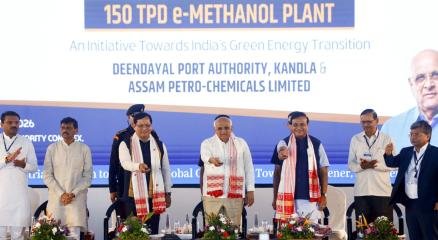
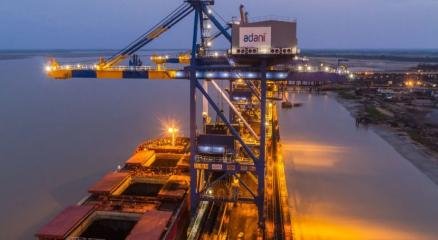
India’s maritime sector is entering a new phase of transformation, with the focus shifting from policy formulation to effective implementation, technology adoption and measurable outcomes. The message emerged prominently during discussions around the country’s evolving maritime strategy, highlighting the need to translate long-term policy objectives into operational capabilities. The transition reflects a broader effort to strengthen India’s maritime ecosystem through coordinated action across infrastructure, institutions, technology, skills and processes. With a comprehensive policy framework and long-term maritime vision already in place, the emphasis is increasingly on execution supported by clearly defined targets and measurable key performance indicators (KPIs). Technology is emerging as a critical enabler of this shift. Digital systems, data-driven decision-making, research, innovation and entrepreneurship are expected to connect policy intent with implementation and ultimately deliver tangible improvements across maritime operations. The approach also underscores the importance of developing skilled human capital capable of supporting a technology-led and increasingly sustainable maritime industry. India’s maritime transformation is also being reflected at the operational level. Ports are increasingly adopting artificial intelligence and digital technologies to improve efficiency, resilience, safety and competitiveness. Recent industry discussions have highlighted the potential of AI-enabled systems to support predictive operations, integrated data management and smarter decision-making across ports. The shift from policy to practice is therefore becoming a defining feature of India’s maritime development agenda. Rather than measuring progress solely through policies and infrastructure creation, the sector is moving towards evaluating outcomes through operational performance, technology deployment, institutional coordination and workforce capability. As India pursues its ambition of becoming a globally competitive maritime power, effective implementation will remain central to translating strategic objectives into real-world outcomes. The emerging approach positions technology, innovation and execution as key pillars of India’s maritime transformation. 𝐒𝐭𝐚𝐲 𝐓𝐮𝐧𝐞𝐝 𝐭𝐨 CARGOCONNECT 𝐟𝐨𝐫 𝐥𝐚𝐭𝐞𝐬𝐭 𝐮𝐩𝐝𝐚𝐭𝐞𝐬!


Chennai Port Authority has sought government approval for a ₹17,000 crore outer harbour project that will add 5 million TEUs of container capacity in two phases. The project is proposed to be developed through a hybrid public-private model, with marine works such as breakwater construction, dredging and reclamation planned under the Hybrid Annuity Mode (HAM) at an estimated cost of ₹7,000 crore. Container terminals will be developed through a DBFOT concession with private investment. The first phase is planned with an 18-metre draft, followed by a second phase with a 21-metre draft, enabling the facility to handle larger vessels and additional transhipment cargo. The proposal comes as Chennai’s existing container terminals face capacity constraints, while the port’s location within the city limits limits further expansion of current facilities. The outer harbour is expected to support gateway cargo from Tamil Nadu’s manufacturing and export sectors while strengthening Chennai’s role in east coast transhipment. Subject to approval, the project could be awarded by mid-to-late 2027, with construction expected to begin in 2028 and container operations targeted for 2033. The outer harbour is also expected to include berths supporting the requirements of the Indian Navy and Coast Guard. Follow CARGOCONNECT for more such updates