
Loading...
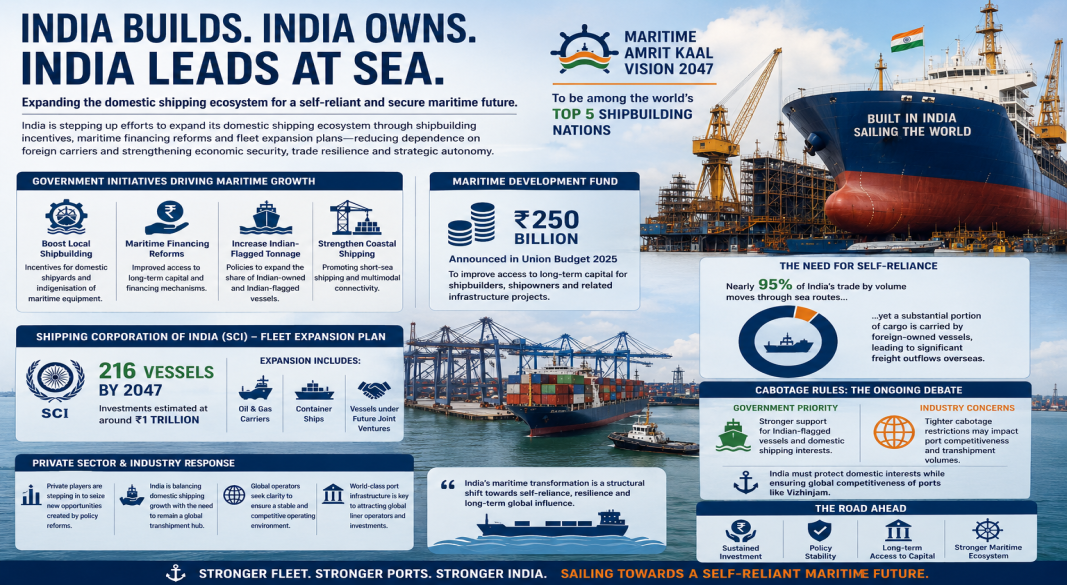
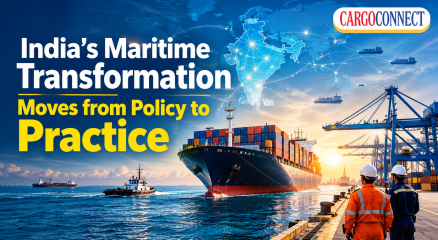
India is stepping up efforts to expand its domestic shipping ecosystem through a combination of shipbuilding incentives, maritime financing reforms and fleet expansion plans aimed at reducing dependence on foreign carriers.
The push reflects a broader policy shift in which maritime infrastructure is increasingly being viewed through the lens of economic security, trade resilience and strategic autonomy. Government initiatives unveiled over the past three years have focused on boosting local ship construction, increasing Indian-flagged tonnage and strengthening coastal shipping capabilities.
Under the Maritime Amrit Kaal Vision 2047, the government aims to position India among the world’s top five shipbuilding nations while significantly expanding domestic shipbuilding capacity. The Union Budget for 2025 also introduced a ₹250 billion Maritime Development Fund intended to improve access to long-term capital for shipbuilders, shipowners and related infrastructure projects.
Although nearly 95 percent of India’s trade by volume moves through sea routes, a substantial portion of cargo continues to be carried by foreign-owned vessels, resulting in significant freight outflows overseas.
The Shipping Corporation of India (SCI), the country’s largest state-owned shipping company, has outlined aggressive fleet expansion plans as part of this transition. According to company officials, SCI intends to acquire 216 vessels by 2047 through investments estimated at around ₹1 trillion. The expansion includes oil and gas carriers, container ships and additional vessels under future joint ventures.
Private sector players are beginning to respond to the policy changes as well as India continues to balance competing priorities between promoting domestic shipping interests and maintaining the competitiveness of its ports as international transhipment hubs.
The debate has intensified following recent changes to cabotage rules governing foreign participation in coastal cargo movement. While the government has signalled stronger support for Indian-flagged vessels, global shipping operators have raised concerns that tighter restrictions could affect the attractiveness of Indian ports such as Vizhinjam for transhipment operations.
Logistics experts argue that India’s long-term success will depend not only on protecting domestic shipping interests but also on developing world-class port infrastructure capable of attracting global liner operators.
Industry executives say the transformation of India’s maritime sector will require sustained investment, policy stability and long-term access to capital. However, they believe the country’s growing focus on shipbuilding, vessel ownership and maritime finance marks a structural shift in how India approaches global trade and supply chain security.
Follow CARGOCONNECT for more such updates.
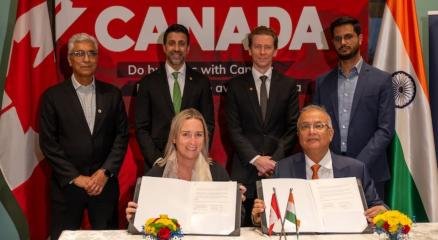
The Port of Montreal and Adani Group have renewed their collaboration agreement to strengthen maritime trade between India and Canada, improve cargo connectivity and create new business opportunities for exporters, importers and logistics providers. The agreement was signed in Mumbai on October 15, 2026, during Team Canada’s trade mission to India, held from October 12 to 17. Captain Sandeep Mehta, representing Adani Group, and Marie-Claude Galarneau, Executive Vice-President and Chief Operating and Transformation Officer of the Montreal Port Authority (MPA), signed the agreement in the presence of Canada’s Minister of International Trade, Maninder Sidhu. The renewed partnership builds on cooperation established in 2018 and prioritises the development of the Mundra-Montreal maritime corridor. Key areas of collaboration include joint business promotion, information sharing, the exchange of port and technological expertise, and improvements in port operations and road-rail connectivity. The organisations will also explore opportunities in vehicle transportation and exchanges between their teams. India ranked as the Port of Montreal’s second-largest trading partner in 2025, with approximately one million tonnes of goods exchanged between the two countries through the port. Exports accounted for around 60% of the trade volume, while imports represented the remaining 40%. Major commodities imported from India include food products, ceramics and plastics, while Montreal facilitates exports to India that include forestry and metal products. To strengthen its market presence, the MPA has appointed Prakash Tulsiani as its representative in India. The appointment is expected to improve engagement with shipping lines, freight forwarders, importers and exporters, helping identify commercial opportunities and promote the port’s services. The Port of Montreal handled 34.3 million tonnes of cargo in 2025, including containerised freight, liquid bulk and dry bulk. Its container throughput reached 1.52 million TEUs, underlining its role as a diversified gateway for international trade and multimodal logistics. The agreement comes amid broader efforts by India and Canada to expand bilateral commercial engagement and diversify international trade partnerships. Both countries are also pursuing a Comprehensive Economic Partnership Agreement, which could create further opportunities for businesses and logistics stakeholders. For supply chain operators, the renewed collaboration offers a framework to explore more efficient cargo movement, share operational best practices and strengthen connections between maritime and inland transport networks. However, the agreement does not announce a new scheduled direct shipping service; actual routing and transit arrangements will continue to depend on carrier networks and cargo requirements. As trade flows evolve, closer cooperation between the Port of Montreal and Adani Group could help businesses assess new market opportunities and improve access to international supply chains. The partnership's long-term impact will depend on commercial participation, reliable transport connections and the growth of cargo volumes between the two countries. 𝐒𝐭𝐚𝐲 𝐓𝐮𝐧𝐞𝐝 𝐭𝐨 CARGOCONNECT 𝐟𝐨𝐫 𝐥𝐚𝐭𝐞𝐬𝐭 𝐮𝐩𝐝𝐚𝐭𝐞𝐬!
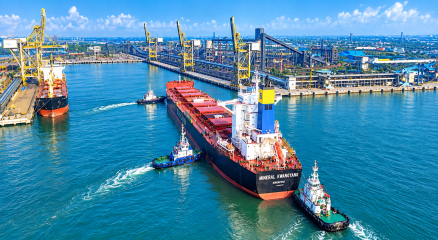
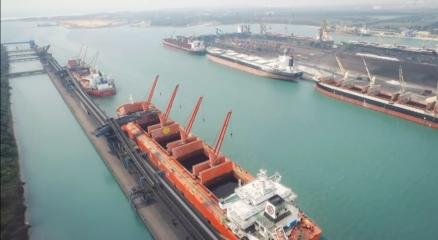
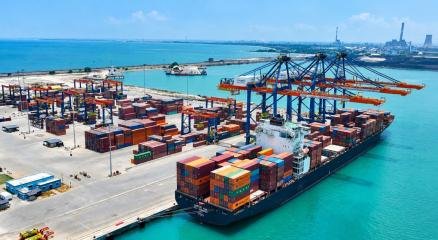

Prime Minister Narendra Modi has inaugurated development projects and laid foundation stones for infrastructure initiatives worth more than ₹13,000 crore across Tamil Nadu, highlighting the state’s strategic role in strengthening India’s maritime logistics, transport connectivity and industrial growth. The announcements, made in Chennai on October 11, 2026, include port infrastructure upgrades, road and railway projects, and urban transport development. A key highlight was the proposed transformation of V O Chidambaranar (VOC) Port in Thoothukudi into a world-class mega container and green energy hub, backed by an investment of approximately ₹17,000 crore. The planned development is intended to enhance the port’s capacity to handle ultra-large container vessels, strengthen maritime connectivity and position Tamil Nadu as a more competitive gateway for international trade. VOC Port Expansion to Strengthen Maritime Logistics The proposed mega container hub at VOC Port is expected to support India’s ambitions to expand its container-handling capabilities and improve integration with global shipping networks. Greater capacity for large vessels could help strengthen trade connectivity, improve operational efficiency and support cargo movement through southern India. The Prime Minister emphasised the importance of modernising port infrastructure to enable the shipping sector to grow. He also highlighted improvements in port efficiency, noting that reduced vessel turnaround times have helped Indian goods reach international markets faster. Alongside the long-term expansion plan, projects worth ₹517.19 crore were included for a container terminal at VOC Port. The terminal forms part of eight projects at the port with a combined investment of ₹753.68 crore. Separately, port infrastructure works worth ₹640 crore at Chennai and Kamarajar ports are aimed at expanding cargo-handling capacity and strengthening logistics infrastructure. The proposed ₹17,000-crore VOC Port transformation is a strategic development distinct from the projects worth over ₹13,000 crore launched during the Chennai visit. Connectivity and Infrastructure Development The wider investment programme spans ports, highways, railways, petroleum infrastructure, urban transport and scientific research. Among the major initiatives, Modi inaugurated the Poonamallee–Vadapalani stretch of Chennai Metro Phase II, developed at a cost of approximately ₹4,900 crore. The new section is expected to improve connectivity across western Chennai and support smoother urban mobility. Road and railway infrastructure projects are also intended to strengthen regional connectivity, facilitate passenger and freight movement, and support industrial activity across Tamil Nadu. Supporting Trade, Jobs and Economic Growth The infrastructure push reflects the importance of coordinated investment across transport modes to improve logistics efficiency and economic competitiveness. Modern ports, supported by efficient road and rail links, can help reduce bottlenecks, improve cargo evacuation and connect manufacturing centres with domestic and international markets. The VOC Port mega container and green energy hub proposal also aligns with the broader ambition to strengthen India’s maritime capabilities while advancing cleaner energy infrastructure. Its long-term impact will depend on project execution, capacity creation and effective integration with inland logistics networks. Together, the announced initiatives are expected to support employment generation, improve connectivity and reinforce Tamil Nadu’s position as an important industrial and logistics centre. For India’s supply chain sector, the port investments are particularly significant as the country seeks to expand trade capacity and build more efficient links with global markets. 𝐒𝐭𝐚𝐲 𝐓𝐮𝐧𝐞𝐝 𝐭𝐨 CARGOCONNECT 𝐟𝐨𝐫 𝐥𝐚𝐭𝐞𝐬𝐭 𝐮𝐩𝐝𝐚𝐭𝐞𝐬!
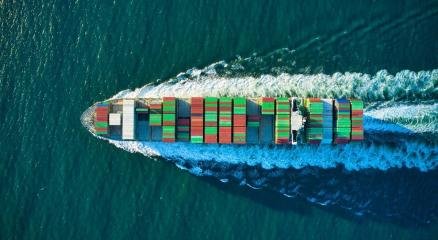

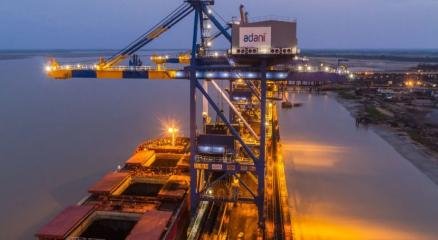
Dhamra Port in Odisha, operated by Adani Ports and Special Economic Zone (APSEZ), has transitioned its entire electricity consumption to renewable power, making it India’s first large-scale private multi-cargo port to operate fully on renewable electricity. The transition, effective from August 2026, forms part of APSEZ’s long-term Net-Zero strategy. The port currently meets more than 90 lakh units of monthly electricity demand through renewable sources, with annualised renewable power consumption exceeding 108 gigawatt-hours (GWh). Renewable electricity now supports its round-the-clock operations, including cargo handling, storage, rail-linked activities and other critical port infrastructure. Dhamra’s renewable electricity supply is structured through a combination of captive generation, third-party access and green-power procurement under Odisha’s regulatory framework. Around 25–30% of its renewable power comes from APSEZ’s captive hybrid power plant at Khavda in Gujarat, while another 10–15% is sourced through third-party access. The remaining requirement is met through a Green Consumer arrangement with Odisha’s distribution utility. The shift is expected to reduce emissions associated with purchased electricity while improving the environmental performance of the port’s energy-intensive operations. It also strengthens Dhamra’s position as a major logistics infrastructure asset supporting the decarbonisation of India’s maritime and supply chain ecosystem. Located on Odisha’s coast between Haldia and Paradip, Dhamra is one of eastern India’s key deep-draft ports. It has an installed cargo-handling capacity of 60 million tonnes (MT) and handled 48.8 MT of cargo during the financial year ended March 2026. The port has six dry-cargo berths, rapid-loading silos, wagon tipplers, track hoppers, mechanised storage yards and jetty equipment. Additionally, the port is also connected by rail and road with mineral-rich hinterlands across Odisha, Jharkhand and West Bengal, making it an important gateway for the region’s industrial and bulk cargo flows. Its renewable electricity transition places the port among large-scale logistics and industrial facilities increasingly adopting cleaner energy to lower operational emissions and advance long-term decarbonisation goals. 𝐒𝐭𝐚𝐲 𝐓𝐮𝐧𝐞𝐝 𝐭𝐨 CARGOCONNECT 𝐟𝐨𝐫 𝐥𝐚𝐭𝐞𝐬𝐭 𝐮𝐩𝐝𝐚𝐭𝐞𝐬!