
Loading...
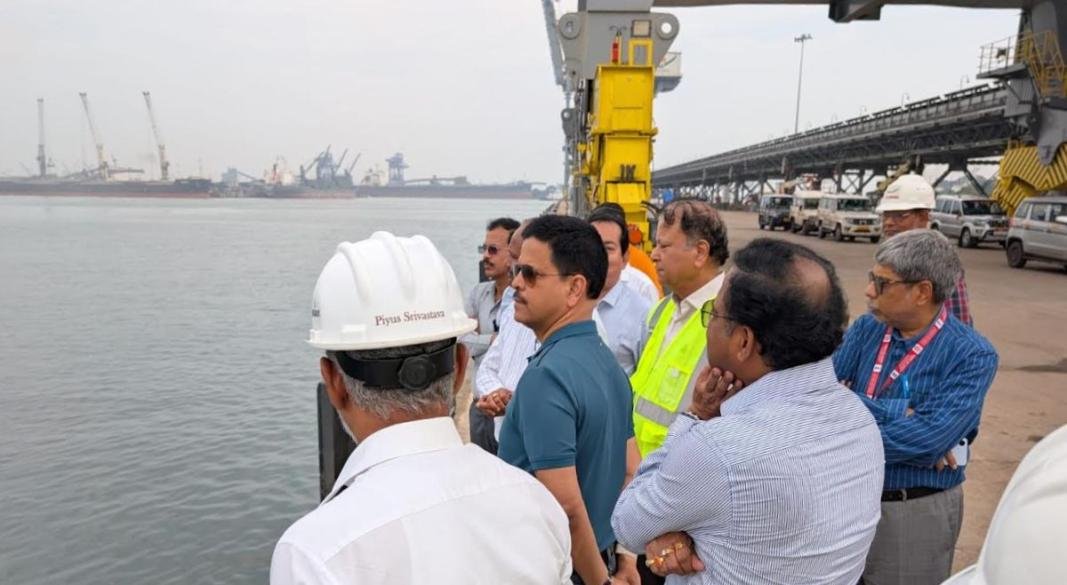
PPA Chairperson Susanta Kumar Purohit reviews Phase I development, focusing on mechanisation, cargo handling efficiency and improved rail-road connectivity at JPPL berth.
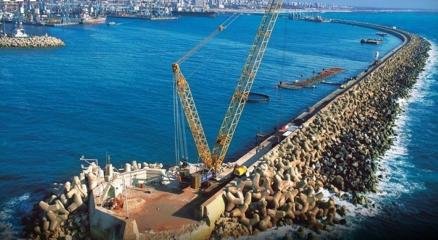
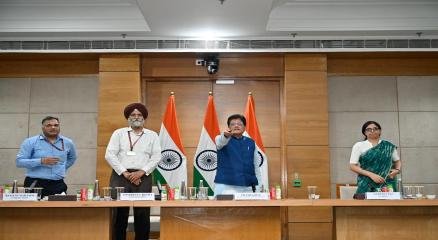
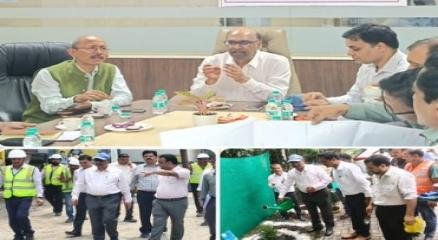
Paradip Port Authority (PPA) Chairperson Susanta Kumar Purohit, IRSEE, reviewed the development and operational readiness of the Western Dock terminal at the Jindal Paradip Port Limited (JPPL) berth, with a focus on commissioning Phase I and strengthening cargo-handling infrastructure.
The review covered berth operations, infrastructure development and measures to improve terminal productivity. Discussions with senior PPA officials and JPPL representatives, including Deputy CEO Sandeep Jaiswal, focused on achieving full berth mechanisation, improving cargo handling efficiency and strengthening rail and road connectivity for cargo evacuation.
Phase I Designed for 12.5 Million Tonnes Annually:
Phase I of the Western Dock project is designed to handle 12.5 million tonnes per annum (MTPA). The wider project envisages a total dry bulk cargo handling capacity of 25 MTPA and is being developed under the Build-Operate-Transfer (BOT) model.
The review assessed progress towards commissioning and operationalising the facility. The planned capacity is intended to expand Paradip Port’s ability to handle dry bulk commodities and support cargo demand from industrial and trade sectors.
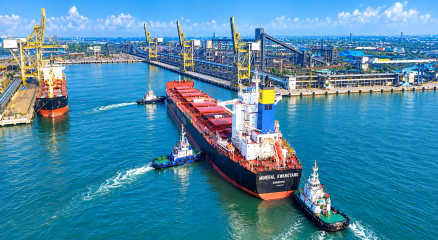
The successful berthing of deep-draft Capesize vessels was also highlighted during the visit, demonstrating the terminal’s role in accommodating large vessels for bulk cargo operations.
Mechanisation and Cargo Evacuation in Focus:
Achieving 100% berth mechanisation was a key priority during the review. Mechanised handling systems can support cargo movement and terminal productivity, while efficient evacuation arrangements are essential to managing volumes at the planned capacity.
PPA and JPPL representatives also discussed improving rail and road connectivity to facilitate the movement of cargo from the terminal to inland destinations.
The effectiveness of these connections will be important in limiting logistics bottlenecks and ensuring that cargo can be moved efficiently beyond the port. Terminal handling capacity and landside evacuation capability will need to work together as operations develop.
Safety, Sustainability and Technology:
The review also addressed sustainable port operations, compliance with safety standards, technology-driven logistics solutions and the integration of multimodal cargo evacuation systems.
These measures form part of the broader operational requirements for developing the Western Dock terminal. Coordination between berth operations, cargo-handling systems and inland transport links will be important to supporting reliable service delivery.
Western Dock to Expand Paradip’s Bulk Cargo Capabilities:
The Western Dock project is part of the ongoing development of Paradip Port’s infrastructure and cargo-handling capabilities on India’s eastern coast.
With Phase I designed for 12.5 MTPA and the wider project targeting 25 MTPA, the development is intended to increase dry bulk handling capacity and support maritime trade.
The next milestones will centre on commissioning Phase I, progressing mechanisation and ensuring effective rail and road connectivity. The extent to which the terminal achieves its planned throughput will depend on operational readiness, cargo demand and the efficiency of its wider logistics connections.
Follow CARGOCONNECT for more such updates
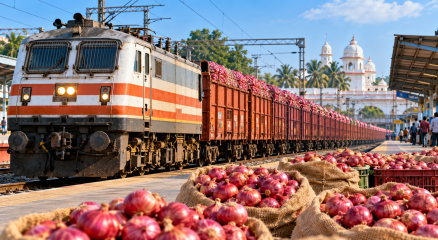
The Government of India has expanded its rail-based onion distribution network in the Northeast, with the first-ever Kanda Express consignment carrying approximately 440 metric tonnes (MT) of buffer-stock onions to Agartala, Tripura. The initiative aims to strengthen market availability, improve regional supply chains and help stabilise prices ahead of the festive season. The Department of Consumer Affairs arranged the movement under the Price Stabilisation Fund (PSF), extending the special rail service to Tripura after earlier consignments were transported to Assam. The consignment was scheduled to reach Agartala by 18 October 2026, providing additional supplies to meet seasonal demand for the essential commodity. Strengthening Last-Mile Distribution Across Tripura The initiative is expected to improve onion availability across seven of Tripura’s eight districts: Dhalai, South Tripura, Khowai, Unakoti, West Tripura, Gomati and Sepahijala. By combining rail-based transportation with road distribution, the government aims to improve the movement of buffer stocks into key consumption centres and strengthen last-mile access. The extension to Agartala forms part of a broader strategy to address regional supply imbalances, particularly in the Northeast, where reliable transportation links are important for ensuring the timely movement of essential commodities. The Kanda Express initiative is designed to supplement existing market supplies and help moderate price fluctuations during periods of increased demand. According to the Department of Consumer Affairs, two Kanda Express rail consignments carrying 840 MT and 452 MT of onions, respectively, along with 44 truck consignments transporting a combined 1,513.46 MT, have supplied buffer onions across the Northeast. The distribution network has covered locations in Assam, Tripura and Nagaland, including Guwahati, Kamrup, Gomati, Dimapur, Kohima, Niuland, Sepahijala and Chumoukedima. Buffer Stocks Support Price Stabilisation The latest rail movement comes as fresh Kharif onion arrivals have contributed to a moderation in wholesale prices. The all-India average mandi price declined from approximately ₹3,600 per quintal in September to around ₹3,300 per quintal in October 2026. Government data also indicated that retail onion prices had fallen by ₹1-₹13 per kg across 211 cities over the preceding two weeks. Calibrated releases from buffer stocks are intended to supplement market supplies, improve availability and reduce undue price volatility. The Department of Consumer Affairs continues to monitor onion prices, market arrivals and supply conditions to determine further releases from the PSF buffer. Additional consignments will be dispatched as required, based on prevailing market conditions and regional demand. The first Kanda Express movement to Tripura highlights the role of rail-led freight distribution in improving access to essential commodities. By expanding the reach of buffer stocks and integrating rail and road transportation, the initiative seeks to strengthen supply resilience and support more stable consumer prices during the festive season. 𝐒𝐭𝐚𝐲 𝐓𝐮𝐧𝐞𝐝 𝐭𝐨 CARGOCONNECT 𝐟𝐨𝐫 𝐥𝐚𝐭𝐞𝐬𝐭 𝐮𝐩𝐝𝐚𝐭𝐞𝐬!

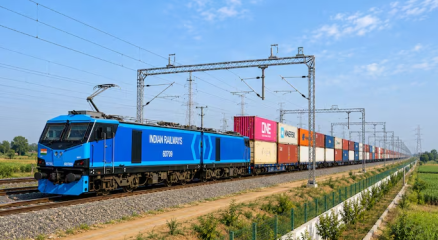
The Union Cabinet has approved eight railway multitracking projects worth ₹20,804 crore across nine states, marking a major push to expand rail capacity, improve freight movement and decongest high-density railway corridors. The projects, cleared by the Cabinet Committee on Economic Affairs (CCEA) chaired by Prime Minister Narendra Modi, will add around 1,196 km to the Indian Railways network and are targeted for completion by 2029-30. The projects span Tamil Nadu, Andhra Pradesh, Karnataka, Telangana, West Bengal, Jharkhand, Odisha, Madhya Pradesh and Chhattisgarh, covering 31 districts and improving connectivity to around 6,911 villages with a combined population of nearly 1.08 crore. The capacity expansion is expected to ease congestion, enhance operational efficiency and improve the reliability of passenger and freight services. Five projects, with an estimated investment of ₹10,021 crore, will add approximately 540 km across Tamil Nadu, Andhra Pradesh, Karnataka and Telangana. These include the third and fourth lines between Arakkonam-Renigunta and Whitefield-Bangarapet, doubling of the Hosur-Omalur and Salem-Karur-Dindigul sections, and multitracking between Secunderabad (Ghatkesar)-Kazipet. The remaining three projects, costing around ₹10,783 crore, will add about 656 km across West Bengal, Jharkhand, Odisha, Madhya Pradesh and Chhattisgarh. They comprise the fourth line between Kharagpur-Jharsuguda (Bagdehi), the fourth line between Katni-Pendra Road, and the third line between Bilaspur (Uslapur)-Pendra Road. Importantly for India’s logistics sector, the projects are expected to generate additional freight capacity of around 74 million tonnes per annum (MTPA). The upgraded corridors will support movement of coal, cement, iron and steel, containers, automobiles, foodgrains, petroleum products and fertilisers. Planned under the PM Gati Shakti National Master Plan, the projects are intended to strengthen multimodal connectivity, improve logistics efficiency and support a greater shift towards rail freight, helping reduce logistics costs, fuel consumption and emissions. 𝐒𝐭𝐚𝐲 𝐓𝐮𝐧𝐞𝐝 𝐭𝐨 CARGOCONNECT 𝐟𝐨𝐫 𝐥𝐚𝐭𝐞𝐬𝐭 𝐮𝐩𝐝𝐚𝐭𝐞𝐬!

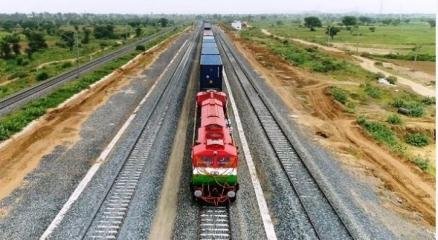
Indian Railways has approved an 11-km bypass line between Adra and Joychandipahar in South Eastern Railway at an estimated cost of ₹272 crore, in a move aimed at expanding freight-handling capacity, reducing operational bottlenecks and supporting rising industrial traffic. The Adra–Joychandipahar–Sanka bypass will provide dedicated path segregation and a bi-directional connection with the upcoming third line. The infrastructure is projected to facilitate the movement of around 6.065 freight rakes per day, while creating additional capacity for growing mineral and industrial cargo flows. The project assumes significance against the backdrop of rising freight requirements from major industrial consumers. According to the Ministry of Railways, the bypass will support freight movement linked to SAIL’s projected iron ore requirement of 23.40 million tonnes per annum (MTPA) and BCCL’s projection of 45 rakes per day. The bypass is expected to address operational constraints on the Adra–Joychandipahar section, including delays caused by surface-crossing conflicts. The existing network is operating at around 71% utilisation, with such conflicts affecting freight speeds and creating the potential for further congestion as traffic increases. Once completed, the project is expected to facilitate additional traffic of 8.88 MTPA. The line capacity of the Joychandipahar–Adra section is projected to rise from 47.50% currently to 56.45% by 2028-29, strengthening the corridor’s ability to accommodate future freight demand. The bypass forms part of Indian Railways’ identified Energy, Mineral and Cement Corridor, reinforcing its role in improving the movement of key industrial commodities. By separating freight operations, reducing crossing-related detentions and adding network capacity, the project is expected to improve the reliability and efficiency of rail-based logistics in the region. The investment highlights Indian Railways’ broader focus on augmenting freight infrastructure to accommodate industrial growth while improving network fluidity and reducing congestion across strategically important corridors. 𝐒𝐭𝐚𝐲 𝐓𝐮𝐧𝐞𝐝 𝐭𝐨 CARGOCONNECT 𝐟𝐨𝐫 𝐥𝐚𝐭𝐞𝐬𝐭 𝐮𝐩𝐝𝐚𝐭𝐞𝐬!