Loading...
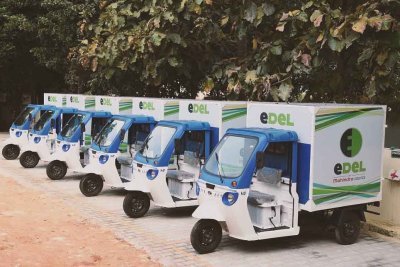
India’s homegrown e-commerce marketplace, Flipkart announced it has partnered with Mahindra Logistics Limited (MLL) who will help fast-track deployment of electric vehicles (EVs) across its logistics fleet in the country.
MLL through its own electric delivery brand ‘EDEL’ will enable Flipkart in its journey towards building a green supply chain by not only deploying a large fleet of EVs but also creating a conducive environment for EV deployment and operations across the country. This includes building supporting infrastructure and technology such as charging stations and parking lots, training workforce, route planning and even battery swapping stations in the near future. Another key focus area will be technology and control tower operations to enable greater efficiency and cost competitiveness.
Flipkart has already partnered with many OEMs and introduced two- and three-wheeled electric vehicles in its supply chain. The company’s partnership with MLL EDEL will further propel this momentum and help in deployment at a national scale, further enhanced by infrastructure and technology support that spans charging, tracking, asset, safety, and cost.
MLL, under its brand EDEL, will be procuring different types and classes of electric vehicles from OEMs as it establishes a pan-India EV presence. EDEL already operates a large fleet of EVs, and now aims to scale up the same significantly to support Flipkart’s objectives in the coming months. EDEL’s robust multi-city presence across Bengaluru, Mumbai, Delhi, Pune, Kolkata, and Hyderabad, with a plan to cover the top 20 cities by year end, will help facilitate a seamless and phased transition to EVs for Flipkart’s pan-India supply chain.
Hemant Badri, SVP- Supply Chain, Flipkart Group said, “Electrification of the logistics fleet is an important part of Flipkart’s larger sustainability goal and a key focus area for the company. We are happy to have Mahindra Logistics on-board as a logistics partner, who will play a major role in helping us achieve our vision of making our logistics fleet fully electric by 2030. Through collective efforts, we aim to build and support solutions that boost EV adoption across the country and gradually make a 100% transition to EVs in our logistics fleet.”
Rampraveen Swaminathan, CEO & MD at MLL said, “Mahindra Logistics is deeply committed to sustainability, in line with our RISE philosophy. The EV based last mile delivery service EDEL is aligned to this and provides customers with a sustainable, cost competitive and technology enabled last-mile delivery solution. Our focus is on expanding our network based on our deep partnership with large enterprise customers. We are pleased about this engagement with Flipkart and look forward to partnering with them.”
With a shared commitment and vision towards sustainable business practices, Mahindra Logistics has already launched EDEL in late 2020. EDEL has partnered with companies in consumer and e-commerce to provide sustainable last-mile delivery across six cities in India.
EDEL by Mahindra Logistics is a last-mile delivery cargo service on EVs. EDEL provides multiple offerings, including package and trip-based services. These offerings provide customers with a scalable, sustainable and cost-efficient solution. With a load capacity and enhanced range that compares well with existing ICE options, EDEL gives customers in the e-commerce, FMCG, pharmaceutical, consumer durables and electronics industries a significant edge in efficient and responsible distribution and last-mile delivery solutions.
Flipkart has also recently announced its partnership with leading electric vehicle manufacturers, including Hero Electric, Mahindra Electric and Piaggio, to deploy EVs in its logistics fleet across the country. In line with its sustainability vision, the company has also been working closely with several ecosystem partners on many aspects of electric mobility, including vehicle design, range, load capacity, etc. to build customised vehicles that are best suited for the e-commerce industry.
Flipkart has committed to 100% electric mobility in its logistics fleet and will deploy more than 25,000 EVs by 2030.
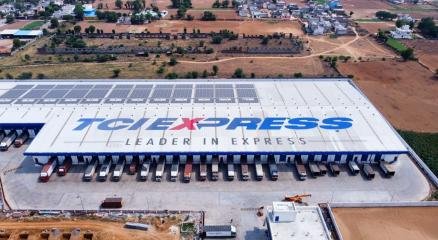
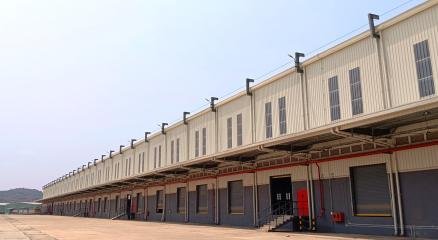
TCI Express has committed an investment of ₹500 crore over the next five years to strengthen its logistics infrastructure, accelerate automation, optimise its network and expand high-growth business verticals as it prepares for its next phase of growth. The announcement follows a strong performance across key business segments in Q2 FY2027, with Domestic Air Express recording 29.4% Year-on-Year (YoY) growth and E-commerce Express registering a 51.6% increase. Surface Express also reported steady growth of 9.4% during the quarter, underlining the contribution of all three verticals to the company's growth outlook. TCI Express said the upcoming investment will be directed towards these high-performing business segments, with a focus on strengthening their individual capabilities, decoupling their networks and expanding the workforce. The company had invested ₹500 crore over the preceding seven years, with the new commitment marking another phase of infrastructure-led expansion. Three New Sorting Centres Strengthen Nationwide Network As part of its network expansion, TCI Express has commenced operations at three fully owned sorting centres in Ahmedabad, Lucknow and Kolkata. The additions take the company's total network of fully owned sorting centres to 28. Together, the three facilities cover approximately four lakh sq. ft. and are expected to enhance shipment processing capacity and operational reach across their respective regions. In line with the company's focus on technology-led operations, the Ahmedabad and Kolkata facilities will be fully automated. With these additions, TCI Express will have four fully automated sorting centres across its network, supporting higher throughput, improved operational efficiency and service reliability. The expansion is also expected to generate employment opportunities in the regions where the new facilities are located. Focus on Scalable and Technology-Led Operations Commenting on the developments, Chander Agarwal, Managing Director, TCI Express, said continuous evolution and innovation remain central to the company's growth philosophy. He noted that the expansion strategy is aimed at strengthening individual business verticals, improving operational efficiencies and developing a more agile and scalable logistics network. Agarwal added that the ₹500 crore investment commitment reflects the company's confidence in the long-term growth potential of India's express logistics industry and its ambition to reinforce its market position. Through the planned investment and expansion of its sorting infrastructure, TCI Express aims to build a future-ready logistics ecosystem, strengthen service capabilities and consolidate its presence in India's organised express logistics sector.

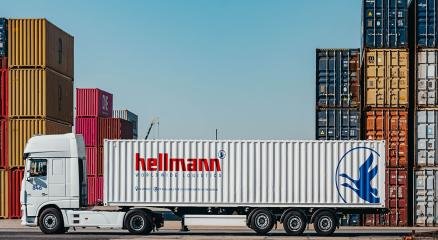
Hellmann Worldwide Logistics has expanded its presence in the United States with three new branches in Indianapolis, the Columbus metropolitan area and the San Francisco Bay Area, taking its nationwide network to 12 locations. The expansion aims to strengthen customer proximity, deepen industry-specific expertise and support the company's long-term growth strategy in one of the world's largest logistics markets. The move forms part of Hellmann's Forward2030 strategy, which focuses on high-potential markets and selected industries. Established in the US in 1988, the company is strengthening its capabilities across international air freight, sea freight and domestic road transport to meet the evolving requirements of businesses and supply chains. The new locations have been planned around the needs of specific industry segments. The Indianapolis branch, which is already operational, will cater to the automotive supply chain, particularly Tier 1 and Tier 2 suppliers. Its services will include international air and sea freight alongside domestic road transport, supporting the movement of components and other automotive shipments. The Columbus office in Ohio will focus on the fashion and retail sectors, while the new branch near San Francisco International Airport will serve customers in technology, semiconductors, electronics, cloud infrastructure and renewable energy. These locations are expected to strengthen Hellmann's ability to deliver integrated, industry-focused logistics solutions across key US growth markets. The expansion comes amid substantial demand for logistics services in the US. According to Hellmann, business logistics costs in the country reached approximately US$2.4 trillion in 2025, equivalent to around 7.8% of gross domestic product (GDP). Rising trade volumes are also increasing the need for dependable international transportation, customs expertise and integrated supply chain solutions. Commenting on the expansion, Mario Stecher, Managing Director, US, Hellmann Worldwide Logistics, said the new locations would bring the company closer to customers while strengthening its industry expertise. Peter Hüwel, Regional CEO, Americas, highlighted the company's US Accelerator Programme as a framework for translating market opportunities into regional growth by combining global network capabilities with local market knowledge. With the additional branches, Hellmann aims to reinforce its competitive position in the US and build a stronger foundation for long-term growth through specialised logistics services and closer customer engagement. 𝐒𝐭𝐚𝐲 𝐓𝐮𝐧𝐞𝐝 𝐭𝐨 CARGOCONNECT 𝐟𝐨𝐫 𝐥𝐚𝐭𝐞𝐬𝐭 𝐮𝐩𝐝𝐚𝐭𝐞𝐬!



The Food Safety and Standards Authority of India (FSSAI) has stepped up its focus on cold chain compliance, directing food business operators (FBOs) to maintain prescribed temperature conditions while handling, storing and transporting perishable food products, including khoa, paneer, meat and fish. The advisory, dated October 15, 2026, aims to strengthen food safety and protect public health by addressing gaps in temperature-controlled supply chains. The directive covers the entire supply chain, from procurement and sourcing to manufacturing, packing, storage, transportation, distribution and delivery to consumers. FSSAI has reiterated that maintaining appropriate temperatures throughout these stages is essential to prevent microbial growth, product deterioration and food contamination. Temperature Control and Hygiene Under Scrutiny According to the regulator, certain perishable food commodities are not consistently handled, stored or transported under suitable temperature conditions. Such lapses can accelerate spoilage and increase the risk of foodborne illness, making effective cold chain management a critical requirement for food businesses. Under the conditions of licence specified in Schedule 4 of the Food Safety and Standards (Licensing and Registration of Food Businesses) Regulations, 2011, operators must comply with prescribed temperature and hygiene requirements across the supply chain. The latest advisory reinforces these existing obligations rather than introducing an entirely new regulatory framework. FSSAI has also directed businesses to use clean, covered and hygienic vehicles suitable for transporting food products. Appropriate food-grade packaging and secondary packaging materials must be used, while products must be protected from dust, moisture, pests, physical damage and cross-contamination during storage, loading, unloading and transit. Gunny bags and unsuitable non-food-grade coverings must be avoided. Traceability and Enforcement Measures The advisory emphasises the importance of maintaining records and ensuring consignment traceability. Food business operators must keep relevant documentation, including invoices and other supporting records, and produce them before the competent authority whenever required. These measures are intended to improve accountability and help officials identify potential breaches in the handling and movement of perishable goods. FSSAI has called on food safety authorities across states and Union Territories to maintain strict vigilance through inspections and transportation checks. The regulator has warned that violations may invite appropriate enforcement action, including the seizure and destruction of non-compliant food products under applicable provisions of the Food Safety and Standards Act, 2006, and associated regulations. Implications for Food Supply Chains The advisory places renewed emphasis on reliable refrigeration, hygienic transport infrastructure and consistent temperature monitoring across India's food distribution network. Dairy processors, meat and fish suppliers, distributors, retailers, cold storage operators and logistics providers will need to ensure that their handling practices and transport arrangements meet the prescribed requirements. For the logistics sector, the directive reinforces the importance of strengthening refrigerated transport, improving storage practices and maintaining end-to-end visibility of temperature-sensitive consignments. These capabilities are particularly important during periods of heightened demand, when increased shipment volumes and multiple handling points can raise the risk of temperature deviations. By reinforcing existing compliance requirements, FSSAI aims to reduce spoilage risks and improve food safety from source to consumer. Effective implementation will depend on consistent monitoring, appropriate infrastructure and accountability among all participants in the perishable food supply chain. 𝐒𝐭𝐚𝐲 𝐓𝐮𝐧𝐞𝐝 𝐭𝐨 CARGOCONNECT 𝐟𝐨𝐫 𝐥𝐚𝐭𝐞𝐬𝐭 𝐮𝐩𝐝𝐚𝐭𝐞𝐬!