
Loading...
Over 550 delegates, government leaders and industry stalwarts unite around the vision — “One Fraternity, One Vision: Logistics Driving India Towards Viksit Bharat”
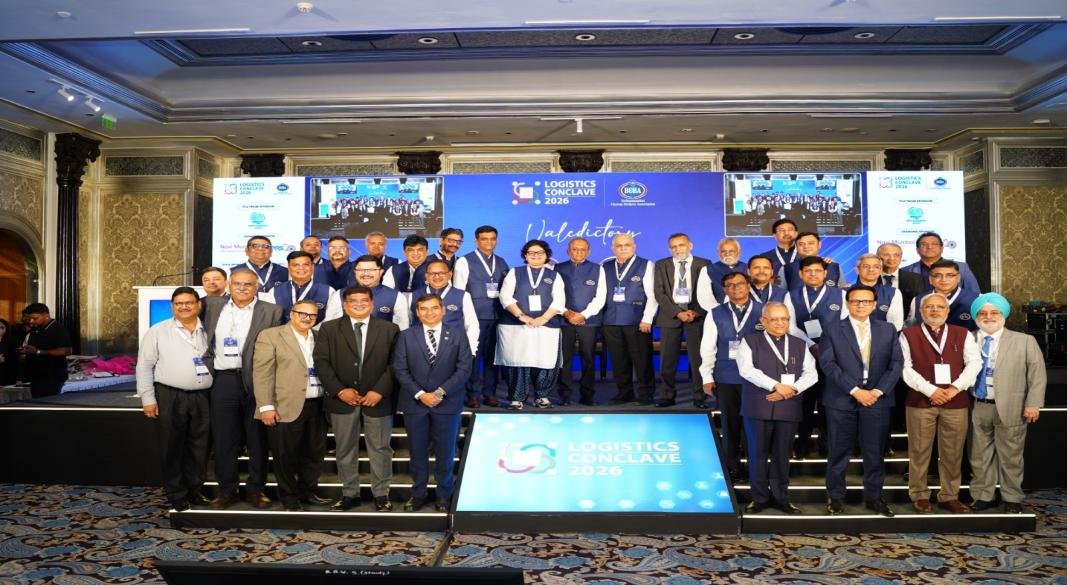
Mumbai, 17 June 2026 — The Brihanmumbai Custom Brokers’ Association (BCBA), established in 1939, successfully hosted the second edition of The India Logistics Conclave 2026 at The Taj Mahal Palace, Mumbai, drawing more than 550 delegates, invitees and guests from across the customs, ports, shipping, trade and logistics ecosystem. Anchored in the theme “One Fraternity, One Vision — Logistics Driving India Towards Viksit Bharat,” the day-long Conclave brought senior government leadership and industry stalwarts onto one platform to chart the road to a developed India by 2047.
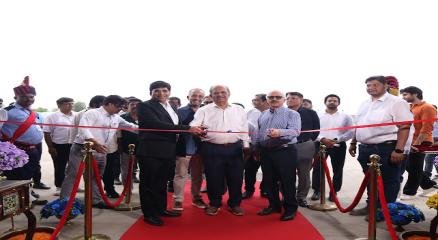
The proceedings began at 09:45 a.m. with the ceremonial inauguration of the CBIC Pavilion, followed by the Inaugural Session. In a defining moment, Shri Vivek Chaturvedi, Chairman, Central Board of Indirect Taxes & Customs (CBIC), delivered the welcome address live online, sharing the Board’s vision for a modern, trust-based and technology-led customs administration — received by the fraternity as a source of great strength and inspiration.
The inaugural dais featured an eminent gathering of dignitaries. These included Shri Yogendra Garg, Member (Customs), CBIC; Shri Anupam Prakash, Joint Secretary, Customs; Shri Sushil Mansing Khopde, IPS, Additional Director General of Shipping; Shri Sunil Jain, IRS, Director General of Valuation; Capt. BVJK Sharma, Chief Executive Officer, Navi Mumbai International Airport; Capt. Deepak Tiwari, Managing Director, MSC India and Chairman, CSLA; Shri Om Hisaria, Senior Executive Vice President, Reliance Industries Limited; and Mr Mukesh Oza, Group President & CEO, Samsara Group. They were joined on the dais by BCBA President Mr Sanjeev Harale and Senior Vice President Mr Paresh Thakkar.
“To see this fraternity stand shoulder to shoulder with the highest offices of government and industry, under one roof and one vision, has been deeply humbling,” said Mr Paresh Thakkar, Senior Vice President, BCBA. “What we have built over two editions is not merely an event, but a platform where the customs broker’s voice is heard, respected and woven into the national agenda. That is the legacy we intend to carry forward.”
The intellectual heart of the Conclave lay in its four business sessions, each a moderated plenary of national stature.
Session 1, “India 2030, 2035, 2047 — A Roadmap for Viksit Bharat,” was moderated by Mr Shantanu Bhadkamkar and brought together Shri Yogendra Garg, Member (Customs), CBIC; Mr Shailesh Haribhakti, eminent voice on economy and governance; Capt. Deepak Tiwari of MSC India and CSLA; Dr Prasad Pradhan, senior strategy and resilience advisor; and Mr Rahul Ahluwalia, Director & Co-Founder, Foundation for Economic Development.
Session 2, “Building India’s Digital Spine — Customs & Trade,” was moderated by Mr Dushyant Mulani. The panel comprised Shri Anupam Prakash, Joint Secretary, Customs; Shri Gaurav Dayal, IAS, Chairman, Jawaharlal Nehru Port Authority; Shri Parvinder Singh, Managing Director, Hans Infomatic; Mr Kunal Maheshwari, Director, Softlink Global; Mr Faisal Khan, Foundation for Economic Development; and Mr Amit Kamat, Chairman, FFFAI.
“Custom Brokers are now playing a nodal role in India’s EXIM Logistics, they are quiet backbone of India’s trade, and forums like this one finally give that contribution the recognition it deserves,” said Mr Dushyant Mulani, Immediate Past President, BCBA. “Keeping National interest of being Globally Competitive it is imperative that government and trade sit at the same table as partners to conceptualise further trade facilitation measures to ensure the entire ecosystem moves faster — and that partnership is the real achievement of this Conclave.”
Session 3, “Geopolitics and the New Geometry of Trade,” was moderated by Mr Tej Contractor and featured Dr Pritam Banerjee of the Indian Institute of Foreign Trade; Mr Sachin Vijan, Vanguard Logistics Services; Mr Fardeen Malbarwalla, Galaxy Freight; Mr S. Mahesh Mahalingam, Head — EXIM, Larsen & Toubro; and Dr Rumki Majumdar, Director & Economist, Deloitte India.
Session 4, “Policy and Infrastructure — Building India’s Futuristic Logistics Ecosystem,” was moderated by Mr Mihir Parekh of the Foundation for Economic Development, who served as moderator cum panellist. The session brought together Shri Unmesh Sharad Wagh, IRS, Commissioner General, JNCH; Shri Ravish Kumar Singh, IRTS, Deputy Chairman, JNPA; Shri Sagar Rameshrao Kadu, Director (Logistics Division), DPIIT; Dr Rekha Raikar Kumar, Senior Advisor, Land Port Authority of India; and Mr Rajiv Chohan, Aegis Vopak Group.
The Valedictory Session, themed “Logisticians — Building a Better India,” offered an inspiring close. It was led by Mr Dhimant Parekh, Founder & CEO of The Better India — the world’s largest positive-impact storytelling platform — and Mr S. Ramakrishna, Past Chairman of FFFAI, who reflected on conviction, reinvention and the logistician’s role in nation building.
“This Conclave reaffirmed that the customs broker and freight forwarder are not mere facilitators, but true partners in India’s growth story,” said Mr Sanjeev Harale, President, BCBA." The participation of the highest echelons of government and industry, and the warmth of over 550 delegates, is a powerful testament to the strength of our fraternity and our shared resolve to drive India towards Viksit Bharat.”
The Conclave was made possible by the generous support of its partners. The BCBA extends profound gratitude to the Jawaharlal Nehru Port Authority (Platinum Sponsor); Navi Mumbai International Airport and MPRS Shipping (Diamond Sponsors); Softlink Global Private Limited (Gold Sponsor); and Reliance Industries Limited (Silver Sponsor). The Association also acknowledges Parekh Global (Lunch Sponsor); Conex CFS, Polaris CFS and Globicon CFS (Delegate Kit Sponsors); Galaxy Freight (Seat Sponsor); Mumbai Cargo Service Center (Lanyard Sponsor); and Unifo (Hi-Tea Sponsor); and DBS Bank (Banking Partner). The BCBA further thanks our Bronze and Associate Sponsors, along with its Media Partners and supporting organisations, whose collective faith — despite a challenging global environment — was vital to the success of the event.
As the second edition closed, the BCBA expressed deep appreciation to every delegate, dignitary, speaker, moderator and partner who made the day a success. The Association reaffirmed its commitment to serving as a unifying voice for the fraternity and advancing the national conversation on India’s logistics future.
About BCBA: The BCBA, established in 1939, is one of India’s oldest and most respected representative bodies for customs brokers, serving as a unifying voice for the customs, trade and logistics fraternity.
For media enquiries, please contact the BCBA.
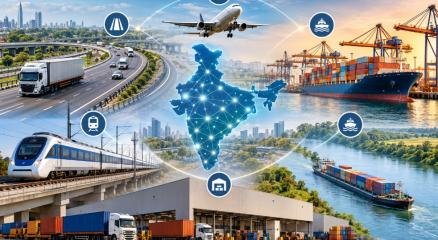
The Union Cabinet, chaired by Prime Minister Narendra Modi, has approved the establishment of the Integrated Transport & Logistics Authority (ITLA) as a Special Purpose Vehicle (SPV) to bring greater coordination and multimodal integration to India’s transport and logistics infrastructure planning. The decision, announced on October 6, 2026 is aimed at addressing fragmented planning and implementation across multiple ministries and agencies. ITLA will function as the national apex institution for integrated transport and logistics planning, research, project appraisal, monitoring, policy support and data analytics. A key mandate will be the preparation of a National Transport Master Plan with a planning horizon of 10 years or more. The plan will cover roads, railways, ports and shipping, civil aviation, inland waterways, coastal shipping, urban mobility and logistics. The authority will also assess short-term sectoral plans of around five years and annual plans of transport ministries to ensure their alignment with the long-term master plan. This is expected to encourage multimodal infrastructure development and improve coordination between different modes of transport. Another important responsibility will be the technical appraisal of Central government infrastructure projects costing ₹500 crore or more. While ITLA will undertake technical evaluation, financial appraisal will continue through existing government mechanisms. The authority will subsequently monitor the implementation of such projects, facilitate coordinated issue resolution and conduct post-implementation impact assessments to evaluate project outcomes. The new institution will also establish a National Transport Data Repository (NTDR) by integrating transport and logistics datasets from multiple sources, including GSTN e-way bills, FASTag, Vahan, GPS-based systems and urban traffic management platforms. The consolidated data is expected to support freight-flow and origin-destination analysis, enabling more evidence-based infrastructure planning and monitoring. ITLA will further advise and assist in reviewing and updating the National Logistics Policy, 2022, besides supporting capacity building, training and skilling in logistics. It will also promote research and innovation across transportation and logistics. The government expects the authority to strengthen multimodal connectivity, improve infrastructure efficiency and help reduce logistics costs, while enhancing India’s competitiveness in global trade. The initiative is also positioned as an institutional mechanism supporting the country’s Vision 2047 objectives and complementing existing initiatives such as the PM GatiShakti National Master Plan and the National Logistics Policy. 𝐒𝐭𝐚𝐲 𝐓𝐮𝐧𝐞𝐝 𝐭𝐨 CARGOCONNECT 𝐟𝐨𝐫 𝐥𝐚𝐭𝐞𝐬𝐭 𝐮𝐩𝐝𝐚𝐭𝐞𝐬!

FedEx has introduced Global Trade Navigator, a new suite of digital tools designed to help businesses simplify international shipping, improve shipment data and navigate customs requirements with greater confidence. The initiative, announced on September 9, 2026, brings trade information and guidance earlier into the shipping process, helping businesses make more informed decisions and address potential clearance issues before they arise. International shipping can involve complex requirements related to customs documentation, duties, taxes, product classifications and regulatory compliance. FedEx said these challenges can affect businesses of all sizes. Its 2026 FedEx Small Business Trade Index found that 68% of small and medium-sized businesses regularly see customers surprised by duties at delivery, while 60% report losing revenue through refunds or abandoned purchases. Against this backdrop, Global Trade Navigator brings together digital capabilities covering key stages of international trade, from shipment planning and preparation to checkout, customs clearance and reporting. “International shipping requires businesses to make complex decisions long before a package begins its journey,” said Jason Brenner, senior vice president, digital portfolio, FedEx. “Building on decades of global trade expertise, Global Trade Navigator makes critical trade information and guidance more accessible to businesses as they grow internationally. The result is fewer surprises and a more predictable experience for businesses and consumers.” As part of the new offering, the FedEx Trade Planner will provide free, self-service guidance through fedex.com without requiring users to log in. Businesses can use the tool to look up Harmonized System codes, estimate duties, taxes and fees, and identify recommended documentation before creating a shipping label. FedEx is also enhancing FedEx Ship Manager, enabling customers to review product Harmonized System classifications, customs values and country-of-manufacture information. These capabilities are intended to improve the quality and completeness of shipment data before goods enter the international shipping process. For e-commerce businesses, the new FedEx Duty and Tax app on Shopify will allow merchants to display a duty and tax guarantee at checkout, giving customers greater visibility into potential import costs before completing purchases. Meanwhile, Global Trade APIs, available through the FedEx Developer Portal, will allow businesses to integrate product classifications, estimated duties and taxes, and regulatory information into their existing workflows. FedEx is also enhancing its Import Tool and Reporting capabilities, allowing customers to monitor customs clearance activity, identify required actions, manage payments and access global import and export data. The company said the tools are designed to serve a broad customer base, from small and medium-sized businesses undertaking international shipping for the first time to larger enterprises integrating trade information into established systems. The launch forms part of FedEx's wider investment in a more connected and intelligent international shipping experience aimed at helping businesses navigate cross-border trade complexity and expand globally. 𝐒𝐭𝐚𝐲 𝐓𝐮𝐧𝐞𝐝 𝐭𝐨 CARGOCONNECT 𝐟𝐨𝐫 𝐥𝐚𝐭𝐞𝐬𝐭 𝐮𝐩𝐝𝐚𝐭𝐞𝐬!

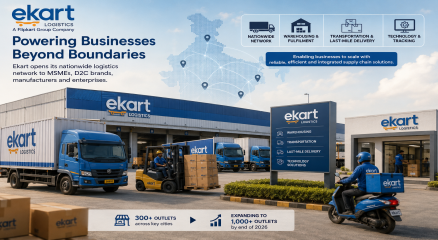
Flipkart has expanded the scope of its logistics business by opening its supply chain arm, Ekart, to external businesses, allowing micro, small and medium enterprises (MSMEs), direct-to-consumer (D2C) brands, manufacturers and large enterprises to use its nationwide logistics infrastructure. The move marks a broader push by the e-commerce company to grow its business-to-business logistics operations beyond servicing its own marketplace. Under the new model, businesses can access Ekart's transportation, warehousing and fulfilment services without being part of the Flipkart ecosystem. The company has also introduced a franchise-based logistics network that currently operates through more than 300 outlets across cities including Delhi, Mumbai, Bengaluru and Surat. Flipkart plans to expand this network to over 1,000 outlets by the end of 2026. The expansion is aimed at enabling smaller businesses to leverage an established national logistics network instead of investing in their own distribution infrastructure. In addition to freight movement and last-mile delivery, participating businesses will gain access to Ekart's warehousing facilities and technology platform to manage inventory, fulfilment and shipment tracking. The development reflects the increasing trend of e-commerce companies commercialising their in-house logistics capabilities as standalone service offerings. India's growing D2C ecosystem, coupled with rising demand for integrated supply chain solutions, has created new opportunities for logistics providers offering nationwide fulfilment, transportation and warehouse management services. Ekart has gradually expanded its third-party logistics portfolio in recent years through services such as warehousing, business-to-business transportation and integration with digital commerce platforms. The latest initiative further broadens its addressable customer base by making its end-to-end logistics network available to businesses across sectors. The company said the expanded network is designed to support businesses of varying sizes by providing access to nationwide logistics infrastructure, allowing them to focus on product development and market expansion while outsourcing supply chain operations. Follow CARGOCONNECT for more such updates.