
Loading...
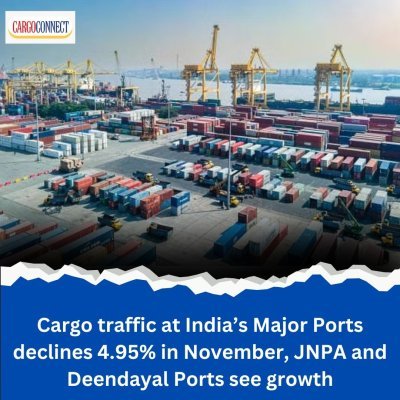
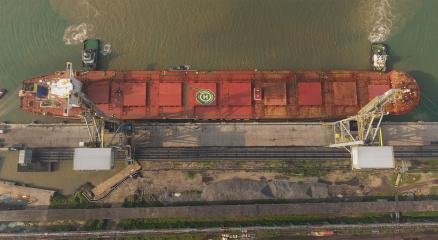
Cargo traffic at India's major ports declined by 4.95% during the month of November to total 67.53 million tonnes. The figure is less than what was recorded for the same month last year when the traffic had stood at 71.05 million tonnes, as per the data released by the Indian Ports Association (IPA).
Among the 12 major ports controlled by the central government, two were exceptions- Jawaharlal Nehru Port Authority (JNPA) and Deendayal Port. Both the ports registered growth figures. JNPA, which is the country's largest container port, witnessed a huge growth of 12.34% in cargo traffic. Deendayal Port also managed to clock a good year-on-year growth of 10.10%.
Still, however, during this period, a majority of other ports faced heavy declines. Mormugao port, for example, declined drastically in this period and had an aggregate decline measured at 29.64%. New Mangalore port was seen to have followed with a decline but considered relatively minor in terms of cargo volume handled with its decline estimated at 19%.
Moreover, other main ports in the regions, including Chennai, Visakhapatnam, and Mumbai, experienced traffic declines that were experienced during November when measured against the same month in previous years.
India's major ports, which include a number of key locations such as Deendayal, formerly Kandla, along with Mumbai, JNPA, Mormugao, New Mangalore, Cochin, Chennai, Kamarajar, also known as Ennore, VO Chidambarnar, Visakhapatnam, Paradip, and Kolkata, which includes Haldia, are critical in handling much of the country's maritime trade activities. The overall decline that has been seen in cargo traffic is indicative of wider economic trends and reflects a number of challenges that are currently faced within the logistics sector.
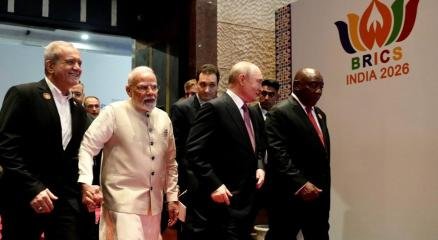
Logistics and supply chain resilience have emerged as key economic themes at the BRICS Summit 2026 in New Delhi, with India using its chairship to push discussions around more resilient and predictable trade infrastructure among member countries. The two-day summit opened in New Delhi this weekend, bringing supply chains and trade logistics into sharper focus as part of the broader economic discussions among BRICS members. The emphasis reflects the growing importance of logistics infrastructure in supporting trade and maintaining the reliability of cross-border supply networks. The issue was already highlighted a day before the formal summit sessions began, at the BRICS Business Forum on Friday, where the push for stronger trade and logistics systems was laid out. Logistics gains strategic importance For BRICS economies, the ability to move goods efficiently across borders is closely linked to the expansion and reliability of trade. Supply chain disruptions can affect the movement of goods, increase uncertainty for businesses and make trade flows less predictable. Against this backdrop, the focus in New Delhi has been on creating conditions that can make trade infrastructure more resilient. India's approach under its BRICS chairship has placed predictability alongside resilience, signalling the importance of infrastructure and logistics networks that can support sustained trade between member economies. The emphasis also reflects the changing role of logistics in the global economy. Once viewed primarily as an operational component of trade, logistics infrastructure is increasingly becoming part of wider economic and strategic discussions, particularly as businesses and governments seek greater resilience in international supply chains. Trade infrastructure in focus The focus on trade logistics at the summit comes as BRICS economies continue to look at ways of strengthening economic cooperation. Efficient infrastructure, dependable trade corridors and predictable movement of goods are fundamental to making greater intra-BRICS trade possible. For India, the discussion is particularly relevant as it continues to position logistics infrastructure as an important element of its wider trade and economic agenda. The BRICS chairship provides a platform to bring these issues into discussions involving major emerging economies. The discussions in New Delhi therefore put logistics closer to the centre of the BRICS economic conversation. Rather than being treated simply as a supporting function for trade, supply chains are increasingly being considered an important part of economic resilience and international cooperation. As the summit proceedings continue, the focus on resilient and predictable trade infrastructure highlights the role that logistics can play in shaping the future of economic engagement among BRICS countries. Follow CARGOCONNECT for more such news



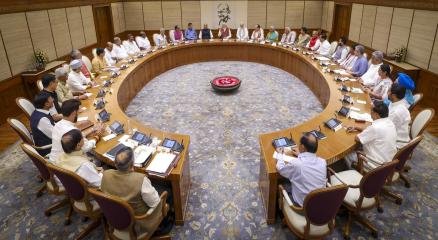
The Union Cabinet, chaired by Prime Minister Narendra Modi, has approved the Emergency Credit Line Guarantee Scheme (ECLGS) 5.0. The scheme aims to provide credit guarantee coverage of 100% for MSMEs and 90% for non-MSMEs, as well as the airline sector, to Member Lending Institutions (MLIs) by National Credit Guarantee Trustee Company Limited (NCGTC) for the amount in default under the additional credit facility extended to the eligible borrowers to tide over any short-term liquidity mismatches in view of the West Asia Crisis. The total outlay of the scheme is expected to be ₹18,100 crore, and it is expected to generate additional credit flows worth ₹2.25 lakh crore. The scheme is open to MSMEs, non-MSMEs with existing working capital limits, and scheduled passenger airlines that have outstanding credit facilities as of March 31, 2026, as long as their loan accounts are not overdue. Under the scheme, the government will provide 100% coverage to MSMEs and 90% to non-MSMEs and airlines for loans they take for additional credit up to 20% of the peak working capital utilised during the fourth quarter of 2025-26, capped at Rs. 100 crore. For airlines, the loans can be for up to 100% of their peak working capital, but this is capped at ₹1,500 crore per borrower, subject to satisfying certain specific conditions. However, the scheme would apply to all loans sanctioned during the period from the date of issue of these guidelines by NCGTC up to 31 March 2027, and the maximum period of guarantee cover shall be co-terminus with the tenor of the loan. The scheme aims to enable businesses to tide over the challenges arising from the West Asia conflict. Additionally, this is expected to help businesses maintain their operations, protect jobs, and sustain supply chains. Overall, the proposed credit guarantee scheme is a major step to help businesses, particularly MSMEs and the airline sector, to ensure their additional working capital needs are catered to by the banks & financial institutions. By providing timely liquidity, the scheme will sustain the businesses and prevent job losses. It will also promote uninterrupted domestic production and maintain the resilience of the ecosystem. Follow CARGOCONNECT for more news & updates!
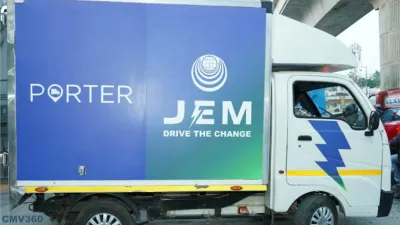
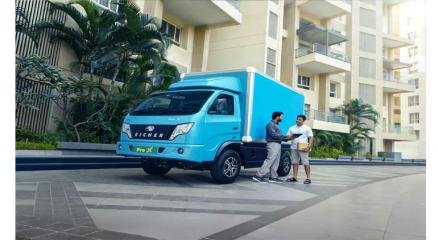
Jupiter Electric Mobility has announced a strategic partnership with Porter to accelerate the transition to electric vehicles (EVs) in the logistics sector. This collaboration centres on Jupiter’s Udaan programme, which supports small entrepreneurs and drivers in adopting electric commercial vehicles. Through the initiative, participants will gain access to professional training, EV resources, and comprehensive business support via Jupiter’s dealership network. Under the partnership, drivers and small business owners purchasing Jupiter’s electric commercial vehicle, the Tez, will receive mentorship to scale their operations efficiently. Porter will play a vital role in onboarding these drivers, ensuring their integration into the burgeoning electric logistics ecosystem. Together, the companies aim to address economic barriers to EV adoption while fostering sustainability within the sector. Tanuj Khandelwal, Vice President at Porter, emphasised that the alliance aligns with their mission to empower logistics professionals and contribute to a greener future. Similarly, Jupiter Electric Mobility, a subsidiary of Jupiter Wagons Ltd, highlighted that the programme is designed to enhance drivers’ earnings and promote eco-conscious operations. Porter’s extensive network, comprising over 7.5 lakh drivers across 22 cities, will enable the widespread rollout of the Udaan programme. This partnership represents a pivotal step toward integrating EVs into India’s logistics framework, demonstrating that environmental sustainability and economic growth can coexist. As India increasingly turns to sustainable practices to combat carbon emissions, this collaboration exemplifies how cross-industry partnerships can accelerate green mobility solutions. Jupiter and Porter’s efforts could inspire a broader shift in the logistics industry, making eco-friendly operations the norm rather than the exception.