
Loading...
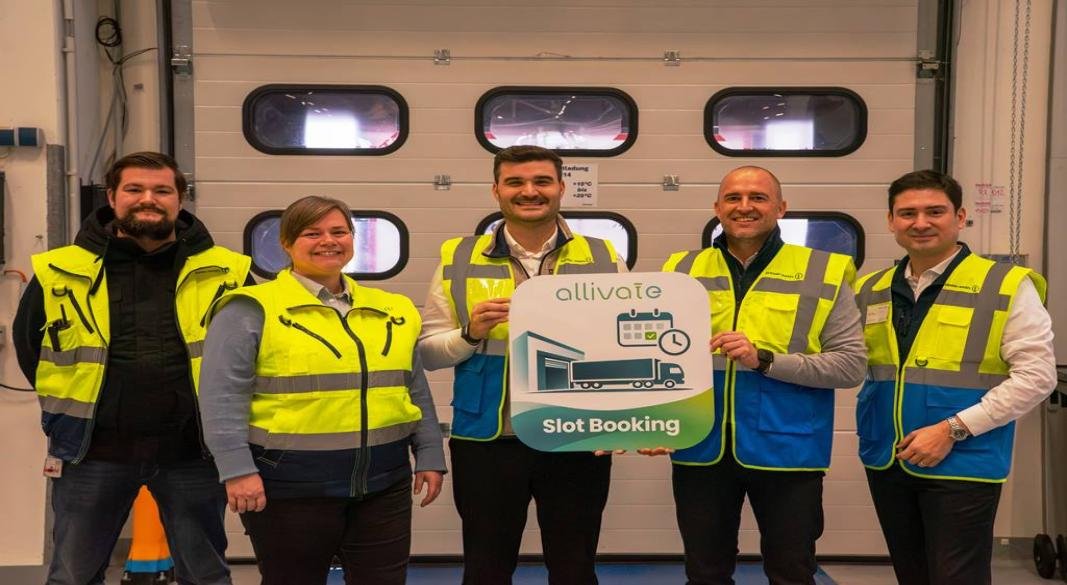
Kühne+Nagel is introducing allivate’s FAIR@Link digital slot booking and dock management solution at its new Healthcare Logistics Centre at Frankfurt Airport, aiming to streamline truck deliveries and collections and improve the coordination of pharmaceutical and healthcare cargo handling.
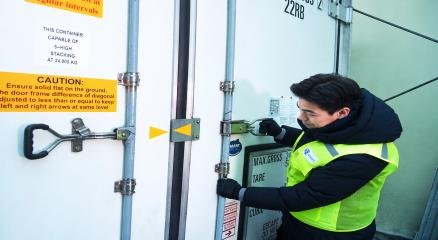
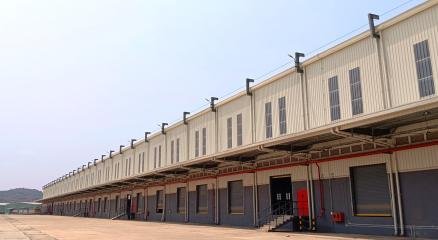
Located in CargoCity South, the facility has 16 docks serving an important interface in the end-to-end transport chain. The handling environment involves time-critical and sensitive shipments requiring temperature-controlled conditions ranging from +20°C to -70°C, making timely and carefully coordinated dock operations essential.
FAIR@Link will provide Kühne+Nagel with a central digital platform to plan and monitor delivery traffic, aligning available capacity in temperature-controlled staging areas and dedicated pharmaceutical handling facilities with incoming truck volumes.
Under the system, transport operators can register their shipments in advance, select an appropriate time slot and receive details of their allocated time window, dock and other relevant delivery or collection information.
Thomas Schuler, National Air Logistics Operations Optimisation Manager at Kühne+Nagel, who supported the implementation, said the solution is expected to reduce driver waiting times, smooth out peak traffic and improve cargo availability. It will also establish a data foundation for monitoring capacity utilisation, punctuality and turnaround times, supporting the continuous improvement of operational processes.
Digital Mapping and Automated Handling-Time Calculations
For the implementation, allivate created a digital representation of the pharmaceutical facility within FAIR@Link, mapping individual docks according to specific shipment categories, including refrigerated and time-critical pharmaceutical products.
The platform also accounts for variations in handling requirements. Since the time needed to process a shipment can differ considerably depending on its size, packaging type and weight, FAIR@Link uses available cargo information to automatically calculate the estimated handling duration and factor it into the allocation of delivery and collection time windows.
According to Niklas Petri, Managing Director of allivate, the solution enables end-to-end digital planning of deliveries and collections, helping Kühne+Nagel manage sensitive pharmaceutical and healthcare shipments with greater predictability, transparency and efficiency.
Existing Airport Integrations Support Implementation
Kühne+Nagel’s decision to adopt FAIR@Link was also influenced by the platform’s established presence at Frankfurt Airport and its familiarity among several transport partners. The company already has interfaces with FAIR@Link and uses its FRA-OS module for customs clearance of consolidated import shipments and slot booking at handling agents.
Schuler noted that these existing connections facilitate implementation while also helping secure acceptance among the partners involved.
The Healthcare Logistics Centre marks Kühne+Nagel’s first application of FAIR@Link for managing its own docks. The company is considering extending the solution to additional facilities and areas within its CargoCity South cargo centre, with the broader objective of further digitising the coordination of air cargo deliveries and collections at the airport.
Further opportunities could also include automating vehicle and personnel access processes, potentially through the integration of automatic number plate recognition.
Kühne+Nagel is introducing allivate’s FAIR@Link digital slot booking and dock management solution at its new Healthcare Logistics Centre at Frankfurt Airport, aiming to streamline truck deliveries and collections and improve the coordination of pharmaceutical and healthcare cargo handling. Located in CargoCity South, the facility has 16 docks serving an important interface in the end-to-end transport chain. The handling environment involves time-critical and sensitive shipments requiring temperature-controlled conditions ranging from +20°C to -70°C, making timely and carefully coordinated dock operations essential. FAIR@Link will provide Kühne+Nagel with a central digital platform to plan and monitor delivery traffic, aligning available capacity in temperature-controlled staging areas and dedicated pharmaceutical handling facilities with incoming truck volumes. Under the system, transport operators can register their shipments in advance, select an appropriate time slot and receive details of their allocated time window, dock and other relevant delivery or collection information. Thomas Schuler, National Air Logistics Operations Optimisation Manager at Kühne+Nagel, who supported the implementation, said the solution is expected to reduce driver waiting times, smooth out peak traffic and improve cargo availability. It will also establish a data foundation for monitoring capacity utilisation, punctuality and turnaround times, supporting the continuous improvement of operational processes. Digital Mapping and Automated Handling-Time Calculations For the implementation, allivate created a digital representation of the pharmaceutical facility within FAIR@Link, mapping individual docks according to specific shipment categories, including refrigerated and time-critical pharmaceutical products. The platform also accounts for variations in handling requirements. Since the time needed to process a shipment can differ considerably depending on its size, packaging type and weight, FAIR@Link uses available cargo information to automatically calculate the estimated handling duration and factor it into the allocation of delivery and collection time windows. According to Niklas Petri, Managing Director of allivate, the solution enables end-to-end digital planning of deliveries and collections, helping Kühne+Nagel manage sensitive pharmaceutical and healthcare shipments with greater predictability, transparency and efficiency. Existing Airport Integrations Support Implementation Kühne+Nagel’s decision to adopt FAIR@Link was also influenced by the platform’s established presence at Frankfurt Airport and its familiarity among several transport partners. The company already has interfaces with FAIR@Link and uses its FRA-OS module for customs clearance of consolidated import shipments and slot booking at handling agents. Schuler noted that these existing connections facilitate implementation while also helping secure acceptance among the partners involved. The Healthcare Logistics Centre marks Kühne+Nagel’s first application of FAIR@Link for managing its own docks. The company is considering extending the solution to additional facilities and areas within its CargoCity South cargo centre, with the broader objective of further digitising the coordination of air cargo deliveries and collections at the airport. Further opportunities could also include automating vehicle and personnel access processes, potentially through the integration of automatic number plate recognition.
DHL Global Forwarding has strengthened its air freight network across Asia and Europe with the introduction of a new dedicated freighter service connecting Hong Kong, Navi Mumbai and Liège. The twice-weekly operation marks the company's first dedicated freighter service serving the Indian market, reinforcing India's growing importance in global air cargo and international trade. Announced on November 16, 2026, the new service will operate using a Boeing 747 freighter, with DHL Aviation acting as the airline supplier. The initiative is aimed at addressing rising customer demand for reliable air freight capacity across the China-India-Europe trade corridor while providing greater connectivity for businesses operating across these markets. The new Hong Kong-Navi Mumbai-Liège connection is expected to strengthen cargo movement in both directions. It will provide customers in Hong Kong and mainland China with dedicated capacity into the Mumbai region while creating additional opportunities for Indian exporters to access European markets through DHL Global Forwarding's network at Liège. From there, shipments can be further connected to destinations across Europe. Operating twice a week, the Boeing 747 freighter offers approximately 100 tonnes of total aircraft capacity per flight. DHL Global Forwarding initially plans to allocate around 25 to 30 tonnes per flight for the India sectors, translating into approximately 50 to 60 tonnes of weekly capacity. The company may increase this allocation as demand develops. The dedicated operation is expected to support shipments across several key industries, including life sciences and healthcare, technology and electronics, engineering, and advanced manufacturing. Cargo categories are likely to include pharmaceuticals, high-value technology components, industrial machinery and precision engineering components, alongside other time-sensitive shipments requiring dependable international transportation. Commenting on the development, Henk Venema, Global Head of Air Freight, DHL Global Forwarding, said India remains a strategic market for the company and an increasingly important part of its global air freight network. He highlighted that the new service would strengthen connectivity between China, India and Europe, offering customers more dependable capacity and improved access to important growth markets. He also reiterated the company's long-term commitment to expanding its presence in India as customer trade flows continue to grow. The development also forms part of DHL Global Forwarding's broader strategy to expand its dedicated air freight operations in India. The company is planning to introduce another dedicated connection between Bengaluru and Europe in March 2027. The proposed service is expected to further enhance India's international air cargo connectivity and provide businesses in southern India with additional access to European markets. India's expanding manufacturing base, growing export activity and increasing movement of high-value goods have made the country an important market for international air freight operators. Demand for specialised transportation of pharmaceuticals, electronics, industrial equipment and other time-sensitive products is also creating opportunities for logistics providers to develop more reliable and dedicated capacity. With the Hong Kong-Navi Mumbai-Liège service and the planned Bengaluru-Europe connection, DHL Global Forwarding is looking to establish a stronger air freight bridge between India and major global trade markets. The expansion is expected to improve supply chain reliability, provide additional capacity for exporters and importers, and support the evolving requirements of India's international trade ecosystem. 𝐒𝐭𝐚𝐲 𝐭𝐮𝐧𝐞𝐝 𝐭𝐨 CARGOCONNECT 𝐟𝐨𝐫 𝐥𝐚𝐭𝐞𝐬𝐭 𝐮𝐩𝐝𝐚𝐭𝐞𝐬!

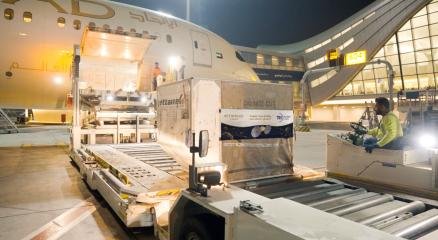

Frankfurt Airport recorded a 4.5% year-on-year increase in cargo throughput in October 2026, handling 187,701 tonnes of airfreight and airmail, according to monthly traffic figures released by airport operator Fraport. The growth highlights continued demand for air cargo services through one of Europe's major aviation and logistics hubs, despite a decline in aircraft movements during the month. The October performance follows consecutive monthly increases, with cargo volumes rising 2.5% in September to 174,773 tonnes and 2.9% in August to 179,400 tonnes. The latest figures indicate sustained momentum in Frankfurt's cargo operations as the airport continues to play a significant role in facilitating international trade and connecting global supply chains. However, the increase in freight volumes came alongside a reduction in overall flight activity. Aircraft movements at Frankfurt Airport declined by 4.7% year-on-year to 40,498 take-offs and landings in October. The accumulated maximum take-off weights (MTOW), which indicate the total aircraft capacity deployed, also decreased by 1.6% to approximately 2.5 million tonnes. The contrasting movement in cargo throughput and aircraft activity points to stronger cargo volumes being handled despite fewer aircraft movements, reflecting the importance of operational capacity and freight demand at the airport. Exports Drive Cargo Growth as Imports Weaken A closer look at the trade mix reveals that export shipments were the primary growth driver. Frankfurt handled approximately 94,600 tonnes of outbound cargo in October, representing a 10.2% increase year-on-year. In comparison, inbound shipments declined by 1.7% to around 88,100 tonnes. The stronger export performance helped offset the weakness in imports and supported the airport's overall cargo growth. Asian markets were particularly important to the export momentum. Cargo volumes from Frankfurt to Asia increased by 18.8% compared with October 2025. Among individual destinations, exports to India registered a notable 30.9% increase, while shipments to South Korea and Japan grew by 22.5% and 14.9%, respectively. On the import side, shipments from Asia declined by 2.2%. Imports originating from China and Hong Kong fell by 4.3% and 10.1%, respectively. The changing import pattern reflects softer inbound demand, with the European Union's €3 charge on low-value imports, introduced in July 2026, also influencing e-commerce-related cargo flows. Industry data indicated that air cargo volumes from China and Hong Kong to Europe declined by 17% year-on-year in October. North American cargo traffic also recorded positive growth, increasing by 10.2%, supported by stronger import and export activity. Fraport highlighted demand for machinery and high-technology products, including goods linked to the expanding technology and artificial intelligence sectors, as important contributors to transatlantic airfreight performance. Cargo volumes involving Latin America rose by 9.5%, while African traffic increased by 23.4%. In contrast, intra-European and Middle Eastern cargo volumes declined by 10.1% and 13.4%, respectively. Fraport Advances Frankfurt's Cargo Development Alongside traffic growth, Fraport continues to focus on strengthening Frankfurt Airport's cargo ecosystem through infrastructure development, digitalisation and operational improvements. Its Cargo Development team is overseeing initiatives under the CargoHub masterplan, aimed at optimising cargo space, improving infrastructure and streamlining processes in collaboration with airport partners. Felix Toepsch, who was appointed Vice President of Cargo Development at Fraport AG in September 2026, is responsible for advancing these initiatives. His previous experience includes leading the Air Cargo Community Frankfurt, which represents more than 115 companies across the airfreight supply chain. The October figures underline the importance of export demand, particularly from Asian and North American markets, in sustaining Frankfurt's cargo performance. Continued investment in infrastructure and digital processes will remain important as the airport seeks to strengthen its position as a leading European air cargo gateway. 𝐒𝐭𝐚𝐲 𝐭𝐮𝐧𝐞𝐝 𝐭𝐨 CARGOCONNECT 𝐟𝐨𝐫 𝐥𝐚𝐭𝐞𝐬𝐭 𝐮𝐩𝐝𝐚𝐭𝐞𝐬!