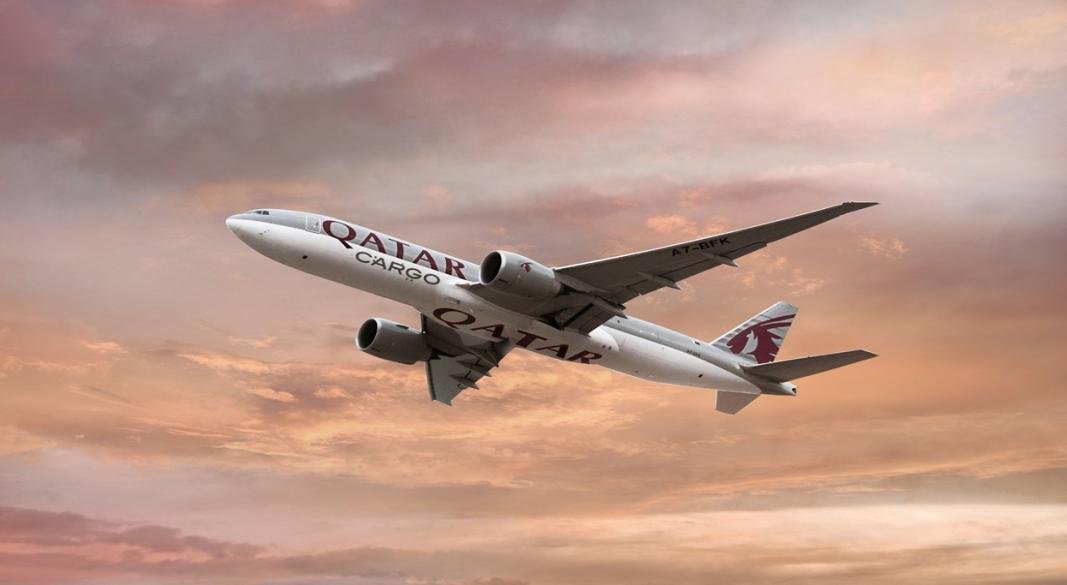
Qatar Airways Cargo has introduced Pharma Passive FlexTemp, a next-generation solution designed to support pharmaceutical and healthcare shipments requiring dual-temperature management during transit, further strengthening specialised cold chain capabilities in air cargo logistics.
Launched as an add-on service for Pharma Passive and Pharma Critical Passive products, the solution addresses a long-standing industry challenge where temperature-sensitive shipments require different transport conditions once single-use passive packaging nears the end of its thermal protection cycle.
With passive packaging increasingly adopted across pharmaceutical supply chains, managing evolving temperature requirements during transit has become a growing operational complexity. Pharma Passive FlexTemp is designed to bridge this gap by enabling greater flexibility and product protection throughout the shipment journey, helping preserve cargo integrity and shelf life across global trade lanes.
The new offering is available for booking through the carrier’s Digital Lounge across all FlexTemp corridors within Qatar Airways Cargo’s network. The launch further reinforces the airline’s focus on advancing specialised pharmaceutical logistics solutions amid rising global demand for reliable and temperature-controlled healthcare transportation.
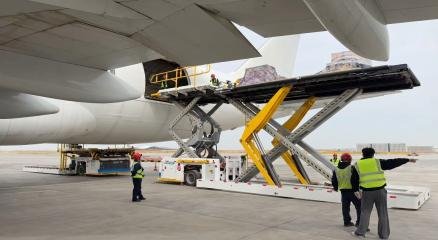
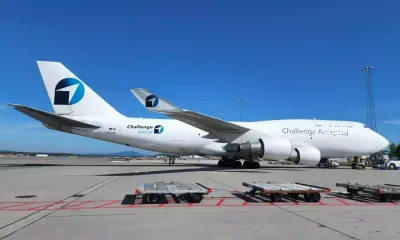
Chapman Freeborn has successfully completed a time-sensitive cargo charter operation transporting oversized oilfield equipment from China to Saudi Arabia, supporting urgent replenishment requirements for a client in the oil and gas sector amid ongoing global shipping disruptions and airfreight congestion. The operation involved the movement of nearly 90 tonnes of cargo, including industrial pumps, precision spare parts and oversized equipment measuring up to eight metres in length. The shipment was transported aboard a Boeing 747 Freighter, selected for its main-deck capacity and ability to handle heavy and outsized freight. The project required complex logistical coordination after fuelling constraints at the original departure airport necessitated the cargo’s relocation inland to an alternative airport. Chapman Freeborn’s China team arranged overnight trucking and managed the freight forwarding process to maintain delivery timelines. The charter operation was further challenged by limited aircraft availability, routing restrictions and slot coordination requirements at destination. Despite the operational complexities, the cargo arrived on schedule, enabling uninterrupted onward movement and preventing disruptions to the client’s ongoing field operations. The project highlights the growing role of specialised air charter solutions in supporting critical industrial supply chains where speed, flexibility and operational coordination remain essential.




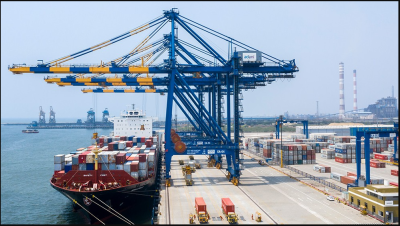
The Union Budget 2025-26, presented by Finance Minister Nirmala Sitharaman, underscores the government's commitment to strengthening India's logistics and supply chain infrastructure. Building upon previous initiatives, the budget introduces several key measures aimed at enhancing efficiency, connectivity, and sustainability in the sector. Maritime Development Fund A significant highlight is the establishment of a ₹250 billion ($3 billion) Maritime Development Fund aimed at revitalising India's shipbuilding and repair industry. The government will contribute 49% to this fund, with the remainder sourced from ports and private entities. This initiative seeks to enhance maritime infrastructure, reduce dependence on foreign carriers, and position India as a formidable player in global shipping. Plans include promoting shipbuilding clusters and extending a 10-year import tax exemption on inputs for shipbuilding and shipbreaking activities. Additionally, credit notes for shipbreaking will be issued to encourage the scrapping of old vessels and the construction of new ones. Expansion of Air Cargo and Regional Connectivity Recognising the critical role of air cargo in facilitating trade, especially for high-value perishable goods, the budget proposes significant investments in modernising air cargo infrastructure. This includes the development of state-of-the-art warehousing facilities equipped with advanced technology to ensure efficient handling and storage. Additionally, cargo screening and customs procedures will be streamlined to improve efficiency and reduce transit times and costs for exporters and importers. To further strengthen regional connectivity, the budget introduces a modified UDAN (Ude Desh ka Aam Naagrik) scheme. This initiative aims to connect 120 new destinations using turboprop aircraft and helicopters, with a target of carrying 40 million passengers over the next decade. The scheme includes substantial incentives and development plans for smaller airports, helipads, and greenfield airports, particularly in hilly and northeastern regions. This expansion is expected to bolster regional trade and integrate remote areas into the national economy. Capital Expenditure and Technological Integration The government has consistently increased budgetary allocations for infrastructure to reduce logistics costs and enhance supply chain efficiencies. Capital expenditures grew by 28.4% in FY24 and are expected to grow by 17% in FY25. This sustained investment underscores the government's commitment to strengthening the logistics framework. Additionally, there is a focus on technological integration, with expectations of reforms that will further accelerate growth and efficiency in the logistics sector. Industry Reactions Industry leaders have lauded the budget's balanced approach to strengthening infrastructure, manufacturing, and consumer spending. Key measures include tax relief for the middle class, increased access to essential drugs, promotion of electric vehicle production, incentives for renewable energy, and support for the agricultural ecosystem. Experts are optimistic about the budget's potential to increase disposable incomes and drive consumer demand while emphasising the importance of continued fiscal discipline and improvements in the ease of doing business. The budget includes significant steps towards developing India's startup ecosystem, enhancing real estate accessibility, and expanding global supply chains. Rampraveen Swaminathan, Managing Director and CEO of Mahindra Logistics, emphasises that the Union Budget reinforces India's position as one of the fastest-growing major economies, strengthening the roadmap for overall growth in consumption and infrastructure. He highlights that the ‘National Manufacturing Mission’ and 'Make in India' initiatives will further accelerate domestic production, fueling 'Move in India'—a vision for seamless cargo movement across the country. Additionally, the sustained emphasis on infrastructure development, along with a three-year project pipeline under the PPP model and state-backed incentives for capital expenditure, lays a strong foundation for future growth. He further notes that the budget’s focus on logistics modernisation—including PM Gati Shakti, streamlined air cargo warehousing, and the new BharatTradeNet initiative—will enhance India's logistics ecosystem. Aligned with these developments, Mahindra Logistics remains committed to leveraging technology, driving efficiency, and strengthening supply chain resilience. "We look forward to collaboratively building a future-ready, sustainable, and tech-driven logistics landscape, aligned with India's growth ambitions," he adds. C.K. Govil, President of the Air Cargo Agents Association of India (ACAAI) & Chairman and Managing Director of Activair Airfreight India, acknowledges that the Union Budget 2025-26 presents a balanced roadmap that fuels economic expansion while maintaining fiscal prudence. He highlights that for the logistics, air cargo, and supply chain industries, the budget introduces key initiatives aimed at enhancing efficiency, reducing costs, and driving modernisation. He further emphasises that these measures will strengthen the overall logistics framework, ensuring seamless operations and improved competitiveness. "The focus on infrastructure development and digital integration will play a crucial role in shaping a more efficient and resilient supply chain ecosystem," he adds.


The International Air Transport Association (IATA) released data for November 2024 global air cargo markets showing: Total demand, measured in cargo tonne-kilometers (CTK), rose by 8.2% compared to November 2023 levels (9.5% for international operations) for a 16th consecutive month of growth. Capacity, measured in available cargo tonne-kilometers (ACTK), increased by 4.6% compared to November 2023 (6.5% for international operations). "It was a good November for air cargo with 8.2% demand growth nearly doubling the 4.6% growth in cargo capacity. Fuel costs tracked at 22% below previous-year levels and tight market conditions supported yield growth at 7.8%. All things considered we are looking to close out 2024 air cargo performance on a profitable note. While this strong performance is very likely to extend into 2025, there are some downside risks that must be carefully watched. These include inflation, geopolitical uncertainties and trade tensions,” said Willie Walsh, IATA’s Director General. Several factors in the operating environment should be noted: Year-on-year, industrial production rose 2.1% in October. Global goods trade grew for a seventh consecutive month, reporting a 1.6% increase. The Purchasing Managers Index (PMI) for global manufacturing output was above the 50-mark for November, indicating growth. However, the PMI for new export orders remained below the 50-mark, suggesting ongoing uncertainty and weakness in global trade. US headline inflation, based on the annual Consumer Price Index (CPI), rose by 0.1 percentage points to 2.7% in November. In the same month, the inflation rate in the EU increased by 0.2 percentage points to 2.5%. China’s consumer inflation fell to 0.2% in November, continuing concerns of an economic slowdown. November Regional Performance Asia-Pacific airlines saw 13.2% year-on-year demand growth for air cargo in November, the strongest growth among the regions. Capacity increased by 9.4% year-on-year. North American carriers saw 6.9% year-on-year demand growth for air cargo in November. Capacity increased by 2.2% year-on-year. European carriers saw 5.6% year-on-year demand growth for air cargo in November. Capacity increased 4.3% year-on-year. Middle Eastern carriers saw 3.6% year-on-year demand growth for air cargo in November. Capacity decreased by 0.6% year-on-year. Latin American carriers saw 11.6% year-on-year demand growth for air cargo in November. Capacity increased 6.4% year-on-year. African airlines saw a 0.7% year-on-year decrease in demand for air cargo in November, the slowest among regions. Capacity increased by 0.4% year-on-year. Trade Lane Growth: International routes experienced exceptional traffic levels for the 16th consecutive month with a 9.5% year-on-year increase in November. Airlines are benefiting from rising e-commerce demand in the US and Europe amid ongoing capacity limits in ocean shipping.