Deutsche Post DHL Group is investing a total of EURO 7 billion over the next ten years in measures to reduce its CO2 emissions. The funds will be made available towards alternative aviation fuels, the expansion of the zero-emission e-vehicle fleet and climate-neutral buildings.
Along the way towards its zero emissions target by 2050, which has already been in force for four years, the company is committing to new, ambitious interim targets. For example, Deutsche Post DHL Group commits as part of the acclaimed Science Based Target initiative (SBTi) to reduce its greenhouse gas emissions by 2030 in line with the Paris Climate Agreement.
The climate targets are part of Deutsche Post DHL Group's new sustainability roadmap, in which the company sets out its ESG goals for the next years. In addition to its commitment to the environment, the Group also defines clear targets and measures in the areas of social responsibility and governance.
The board of management and supervisory board of Deutsche Post DHL Group will propose to shareholders at the next Annual General Meeting that the remuneration system for the board of management will be aligned even more closely with sustainable business development.
In the future, the achievement of ESG targets will be taken into account when calculating the remuneration of the board of management - a clear signal that the commitment to sustainable business is a top priority at Deutsche Post DHL Group.
Since 2008, Deutsche Post DHL Group has had ambitious sustainability targets, for example with regard to CO2 reduction. In 2017, the Group became the first logistics company in the world to set a target of reducing its greenhouse gas emissions to net zero by 2050. To this end, the company offers numerous innovative solutions to make supply chains more sustainable and help its customers achieve their environmental goals.
With ‘Strategy 2025’ introduced in 2019, sustainability has become a fundamental component of the corporate strategy.
"As the world's largest logistics company, it is our responsibility to lead the way and guide the logistics industry into a sustainable future. We are turning our yellow Group into a green company and making an important contribution to our planet and society," says Frank Appel, CEO of Deutsche Post DHL Group. "I am convinced that by focussing even more on our ESG goals, we will remain the first choice for customers, employees and investors - and thus lay the foundations for long-term economic success."
Frank Appel said, "COVID-19 has once again reinforced the major megatrends of our time: globalization, digitalisation, e-commerce and sustainability - the four drivers of our 'Strategy 2025'. Of these topics, sustainability is the most pressing challenge. With our sustainability roadmap, we are stepping up our efforts and explicitly promoting the Sustainable Development Goals of the United Nations.”
Environment: billions invested in alternative fuels, e-mobility and climate-neutral buildings
In the fight against climate change, Deutsche Post DHL Group is committed to ambitious CO2 reduction targets as part of the Science Based Target Initiative. The Group assumes that its emissions would be around 46 million tons in 2030 without the measures of the new sustainability roadmap. In 2020, emissions were 33 million metric tonnes. Today, the company is committed to reducing these annual Group CO2 emissions to below 29 million tonnes by 2030, despite the expected continued strong growth in global logistics activities.
To achieve this, Deutsche Post DHL Group will invest around 7 billion euros (Opex and Capex) in climate-neutral logistics solutions by 2030. The expenditures arising from this up to 2023 have already been taken into account in the investment plan up to 2023 communicated on March 09. For short distances and the last mile, the Group is continuing to drive forward the electrification of its vehicle fleet. By 2030, 60 per cent of global delivery vehicles for the last mile are to be electrically powered, hence more than 80,000 e-vehicles will be on the road. In 2020, the figure was 18 per cent.
On longer routes, especially in air transport, electric drives are not an alternative for the foreseeable future. That is why Deutsche Post DHL Group is pushing for the development and use of fuels produced from renewable energies: By 2030, at least 30 percent of fuel requirements in aviation and line haul are to be covered by sustainable fuels. In addition, the Group is investing in environment friendly properties (office space, mail and parcel centers, and logistics warehouses): All new buildings are being constructed will be climate-neutral.
Frank Appel said, "Sustainable, clean fuel alternatives are elementary for climate-neutral logistics in a globalized world. In air transport in particular, these could help reduce CO2 emissions. That's why we will engage even more intensively in initiatives and strengthen cross-industry exchange to develop a global strategy and standards here. One thing is certain: Only by joining forces - across countries and sectors - will we achieve truly sustainable progress in all areas."
Social responsibility: Promoting diversity and keeping employee satisfaction at a high level
Based on the corporate values ‘Respect & Results’, Deutsche Post DHL Group will also further promote inclusion and equal opportunities within the organisation. The proportion of female executives in management is supposed to increase from 23.2 per cent today to at least 30 per cent by 2025.
"Our motivated diverse workforce is the key to excellent service quality and high customer satisfaction. Satisfied customers are the basis for economic success. This is another reason why we are convinced that it is worth actively promoting equal opportunities," says Thomas Ogilvie, Chief Human Resources Officer and Labour Director at Deutsche Post DHL Group.
In addition, the group has set itself the goal of maintaining the approval rating in the "employee engagement" category in the annual global employee survey at a consistently high level of above 80.
Deutsche Post DHL Group also intends to further expand its social contribution to society in the coming years. The Group commits to invest 1 per cent of its net profits annually in its social impact programs and initiatives.
The GoTrade program, launched in the fall of 2020, focusses on giving small and medium-sized enterprises from developing countries access to global markets and thus enabling cross-border trade. The GoHelp Disaster Response program provides emergency logistical assistance quickly and free of charge in the event of a disaster. The group also continues to expand the GoTeach program, which improves the employability of young people living in socially disadvantaged circumstances due to poverty, loss of loved ones or fleeing from disaster, by preparing them with the necessary skills to successfully transition to the world of work.
The Federation of Freight Forwarders’ Associations in India (FFFAI) held its 6th EC Meeting for the term 2021-23 on May 27 and 28 in Bengaluru. The meeting was attended by the Office Bearers and 28 Member Association representative of FFFAI from across the country, there were many issues discussed and updates provided concerning customs, CBLR, EDI, Service Tax/GST, logistics, air cargo, sea cargo, skill development,importance of social media which FFFAI has expanded recently, technology developments, etc. The special focus of the 6th EC meeting was the updates on forthcoming 24th Biennial Convention of FFFAI to be held from August 12 to 14, 2022 in Chennai with the theme LOGISTICS RESHAPE, EMBRACE AND SURGE IN THE DIGITAL ERA. At this EC meeting, FFFAI also implemented Digital Learning platform for members and next generation for e-learning. It has been decided that FFFAI would initiate FIATA eFBL here in India to benefit the trade, which empowers customs brokers, freight forwarders and logistics service providers. In addition, updates on the recently held FIATA HQ Meet was also provided by the concerned members of FFFAI. FFFAI members present at this EC meeting stressed upon enhancing productivity on ICEGATE for trade facilitation and Ease of Doing Business. The FFFAI members also urged for creating a dedicated portal for LSP integration. As regard to skill development initiatives, IIFF’s (training arm of FFFAI) past and forthcoming training programmes (both online and classroom/physical) for the entire logistics industry were presented at the EC meeting. In addition, FFFAI’s various initiatives on capacity building through technology/IT also discussed withadequate importance. Recent activities of FFFAI Women’s Wing including organising interactive meetings with Government of India officials and industry experts were highlighted at this meeting which drew huge appreciation from the members. The members committed to expand the activities of the Women’s Wing in all the 28 member association locations to empower/encourage the women logistics practitioners. At this EC meeting FFFAI has signed an MoU with the National Institute of Industrial Engineering (NITIE) with an objective of skilling the aspiring candidates looking for opportunities in the logistics sector. Notably, a special session was organised at this 6th EC Meeting where N Sivasailam, former Special Secretary (Logistics), Ministry of Commerce, Government of India was present to address the FFFAI members and highlight the recent initiatives of the government in strengthening the logistics infrastructure, thereby leading in increase of international trade through multimodal connectivity and faster cargo clearance. He projected the ambitious growth potential of the logistics industry in India with a strong collaboration between government and industry people. Also speaking on the occasion was Bani Bhattacharya, IRS, who interacted with members of FFFAI on various initiatives of CBIC for the trade facilitation without human intervention. FFFAI Chairman Shankar Shinde thanked all the 28 associations for their support and appreciated the contribution of CBIC/DG systems trade facilitation measures. FFFAI Member Associations are: 1. Ahmedabad Custom Brokers' Association2. Aurangabad Customs House Agents Association3. Association of Custom House Agents Thiruvanthapuram4. Bangalore Custom House Agents Association5. Brihnamumbai Custom Brokers Association6. Calcutta Customs House Agents Association7. Chennai Customs House Agents Association8. Cochin Customs Brokers' Association9. Coimbatore Customs House and Steamer Agents Association10. Custom Brokers Association Hyderabad11. Delhi Customs Brokers Association12. Goa Custom Brokers Association13.Indore Customs House Agents Association14. The Kakinada Customs Brokers Association15. Kandla Custom Brokers Association16. Kanpur Customs Brokers Association17. Ludhiana Customs House Agents Association18. Mangalore Customs House Agents Association19. Mundra Customs Brokers Association20. Nagpur Customs House Agents Association21. Nashik Customs House Agents Association22. Nadia Custom Brokers Association23. Pipavav Custom Brokers Association24. Pune Customs House Agents Association25. Rajasthan Customs House Agents Association26.Tuticorin Custom Brokers Association27.Visakhapatnam Cusotms Brokers' Association28.West Bengal Custom House Agents Society FFFAI welcomes Women in Logistics/Youth in Logistics to participate on FFFAI forums and also invites membership application form logistics service providers in industry as this is a big national and international forum to network.
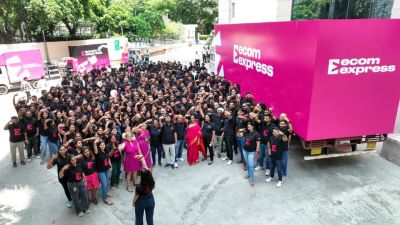
Ecom Express Limited, India’s sole pure-play B2C e-commerce logistics provider as of the Financial Year 2024, has introduced a new brand identity, underscoring its commitment to customer-centricity. This rebranding reflects a focus on addressing specific customer needs, prioritising customer-facing metrics, and integrating innovative technology across its nationwide express logistics network. The goal is to enhance speed, agility, and network reach, ensuring a customer-focused approach. The rebranding includes a dynamic logo and a refreshed visual identity, symbolising Ecom Express’s pursuit of excellence. The new logo features a forward-moving arrow within a square, representing the company’s dedication to delivery. The letter "E" in the logo stands for Expression, Innovation, and Progress, while the bold magenta colour signifies bravery, self-expression, and strength. This vibrant magenta reintroduction reflects Ecom Express's renewed commitment to customers, partners, and team members, as the company aims to simplify and democratise logistics for all. Ajay Chitkara, CEO and MD of Ecom Express, elaborated on the transformation, stating, “Our refreshed brand identity reaffirms our customer-first approach as we continue to integrate technology and innovation to provide reliable, high-speed services with the widest network reach. This transformation also underscores our commitment to our employees and delivery partners, who are essential to our business.” The new logo embodies Ecom Express’s dedication to its core values, focusing on customer welfare and fostering a diverse, inclusive environment. This rebranding signifies a promise to redefine logistics through advanced technology, making life easier for all types of customers.
The Uttar Pradesh government is set to develop a multi-modal logistics hub (MMLH) in Greater Noida’s Dadri, investing Rs 7,064 crore to support its $1 trillion economy goal. This hub will cover 823 acres, with a core development area spanning 455 acres. Key developments include commercial and administrative facilities over 17.5 acres, a rail yard, and other projects across 350 acres. Under Chief Minister Yogi Adityanath’s directives, a detailed action plan has been designed to expedite these initiatives. The Dadri MMLH aims to become a world-class freight handling facility, functioning as a dry port to ensure the swift transit of goods and raw materials. This project is poised to be India's largest logistics hub. Located on the eastern and western dedicated freight corridors, it will serve as a central hub for container handling, warehousing, cold storage, processing, de-stuffing, stuffing, and value-added packing. Providing seamless rail connectivity, the hub will feature rail platforms, customs clearance facilities, cargo segregation areas, truck parking zones, and extensive green spaces. The project is being developed under the Public-Private Partnership (PPP) model, supervised by the Greater Noida Industrial Development Authority and adhering to the guidelines of the National Industrial Corridor Development and Implementation Trust (NICDIT). The Greater Noida Industrial Development Authority has prepared the Master Detailed Project Report (DPR) for constructing the approach track and Rail Over Rail (ROR) bridge from New Dadri station to the MMLH boundary. The Dedicated Freight Corridor Corporation of India (DFCCIL) has approved the DPR for railway tracks and terminal stations within the MMLH. Additionally, the tender documentation for land acquisition and signaling processes for the approach track has been finalized. Concurrently, the development of trunk infrastructure, including boundary work, roads, canals, bridges, utility relocation, and water and power supply, is progressing through various phases.
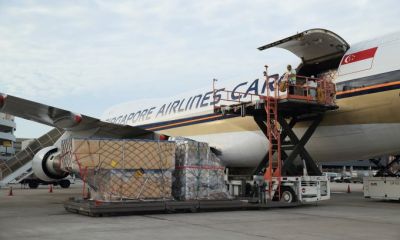
Singapore’s Changi Airport is sharpening its focus on pharmaceuticals and e-commerce shipments to navigate constrained cargo capacity until planned expansion in the 2030s. According to Lim Ching Kiat, Executive Vice President of Air Hub and Cargo Development at Changi Airport Group, current facilities face mounting pressure due to growing regional demand, necessitating strategic tenant and cargo type management. E-commerce continues to be a key growth driver for air cargo globally, fueled by major players like Shein, Temu, and TikTok Shop. At the same time, Singapore is solidifying its position as Southeast Asia’s preferred pharmaceutical hub, attracting investments from global biopharma giants such as Thermo Fisher, Sanofi, BioNTech, and MSD. Looking ahead, Changi Airport plans to launch a second logistics park by the 2030s, aiming to increase its annual cargo capacity from 3 million tons to 5.4 million tons. The new free trade zone will further expedite cargo handling and redistribution. In 2024, Changi Airport reported handling 1.99 million tons of airfreight, a 14.6% rise from 2023, driven by robust cross-border e-commerce demand, improved trade routes with China and the U.S., and recovering electronics exports. Top air cargo markets included China, Australia, the U.S., Hong Kong, and India.
ESR India, the largest APAC focused industrial and logistics real estate platform, has inked a Memorandum of Understanding (MoU) with the Government of Tamil Nadu for a potential investment of INR 550 crores. The MOU is signed for the launch of two industrial parks in Kancheepuram and Krishnagiri districts of the state over the next five years. Once fully operational, the two projects have the potential to create over 4,400 jobs in the facility, that shall boost the overall socio-economic growth in the region. The MoU was signed at the Investment Conclave 2021 conference held today. It will facilitate ESR India’s proposed investment at Kancheepuram and Krishnagiri industrial parks by helping in streamlining land acquisition, approvals, clearances, and administrative processes as per existing policies, rules, and regulations of the Government of Tamil Nadu. The policy and regulatory reforms unveiled in recent times has accentuated the entry of international institutional players and has set new benchmarks for industrial developments in the country. Commenting on the development, Abhijit Malkani, CEO and Country Head, ESR India said, “We are delighted to announce our affiliation with the state government. The Government of Tamil Nadu has been very supportive in encouraging industrial developments in the state by creating a favourable business climate for industrial players. The MoU will see ESR invest INR 550 crores to develop industrial parks in Tamil Nadu, offering 1,800 direct and 2,600 indirect job opportunities in the facility.” “Our goals are aligned with the vision of the Tamil Nadu government, to create avenues to increase business and trade inclusion opportunities and employment towards garnering better economic growth in the region,” he further stated. ESR India is currently present across 9 cities and 15 locations with a total GFA of 18 mn sq ft. These state-of-the-art facilities will be developed upholding the best practices for ESG and sustainability.


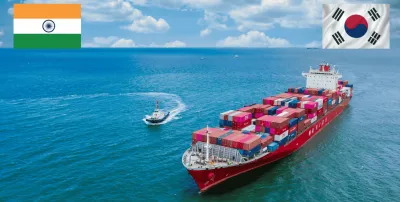
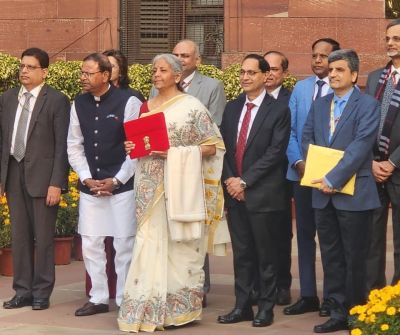
The Indian government’s ambitious push to boost the domestic shipbuilding industry, announced in the Union Budget, is already drawing international interest, with South Korea stepping forward to collaborate on key initiatives. The Korea Marine Equipment Association (KOMEA), a Seoul-based non-profit under South Korea’s Ministry of Industry, Trade and Energy, has offered its support to Indian shipyards for joint vessel design and construction, modernisation of shipyard production facilities, and technology transfer to enhance manufacturing processes, according to multiple sources. KOMEA, which represents major Korean shipbuilding and ship repair enterprises—including HD Hyundai Heavy Industries, Hanwa Ocean (formerly Daewoo Shipbuilding and Marine Engineering), and Samsung Heavy Industries—has formally pledged to provide highly qualified specialists for on-site education and training. The association also aims to develop joint educational programs, supply industrial equipment for modernising Indian shipyards, facilitate technology transfer, and support the localisation of marine equipment and spare parts. Founded in 1980, KOMEA has been instrumental in promoting South Korean marine equipment manufacturers globally and currently has a membership base of 304 entities involved in shipbuilding, design, and repair. The association operates in eight countries, including China, Japan, Singapore, the United States, Greece, Saudi Arabia, Brazil, and Russia. With plans to expand its footprint in India, KOMEA sees the country as a strategic partner in advancing shipbuilding capabilities under a bilateral cooperation framework. “Building strong cooperative relationships between South Korean entities and Indian shipyards could significantly contribute to the growth of the shipbuilding industry in both nations,” a KOMEA official stated. “With over four decades of experience, KOMEA and its members can provide effective solutions to challenges in the shipbuilding sector within a short timeframe.” The Union Budget, presented by Finance Minister Nirmala Sitharaman, earmarked ₹25,000 crore for the Maritime Development Fund (MDF) and introduced a revamped shipbuilding financial assistance policy to counter cost disadvantages. Additional measures include credit incentives for shipbreaking at Indian yards to promote a circular economy and granting infrastructure status to large ships above a specified size. The government also announced plans to develop shipbuilding clusters with enhanced infrastructure, skilling initiatives, and technological advancements to strengthen the industry’s ecosystem. A significant boost for shipbuilders came with the extension of the exemption from Basic Customs Duty (BCD) on raw materials, components, consumables, and parts used in ship manufacturing. This exemption, originally set to expire, will now be extended for another ten years from April 1, 2025. Ahead of the budget announcement, high-level delegations from the Ministry of Ports, Shipping, and Waterways, along with representatives from the private shipbuilding sector, visited leading shipyards in South Korea and Japan. These visits were aimed at forging partnerships and leveraging global expertise to strengthen India’s shipbuilding industry. With South Korea now expressing formal interest in collaboration, the stage is set for India to accelerate its shipbuilding ambitions and emerge as a formidable player in the global maritime sector. Source: ET Infra

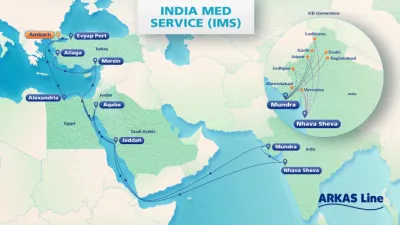
Arkas Line is expanding its international service network as part of its 2025 growth strategy. Building on its recent Red Sea expansion, the company is launching the "India Med Service (IMS)," its first direct route connecting India to the Mediterranean. From February 10, 2025, the IMS will send four vessels with a capacity of 2,500-2,800 TEU. By June 2025, the service will run weekly with five vessels. The route will cover major ports, such as Ambarli, Nhava Sheva, Mundra, and Alexandria. Customers will also benefit from rail connectivity at India's Mundra and Nhava Sheva ports to transport cargo to inland trade centers. Furthermore, Arkas Line is restructuring its Mediterranean operations by integrating its current GPS, EMS, and SEM routes into a streamlined "Blue Med Service (BMS)." This integrated service will improve efficiency in its Mediterranean network while increasing the company's coverage to 72 ports in 27 countries through 33 service routes. About its commitment to further global growth, Arkas Line CEO Can Atalay said, "With the launch of IMS and the strengthened BMS, we are firmly committed to offering efficient solutions that cater to evolving customer needs and consolidate our presence in key markets.
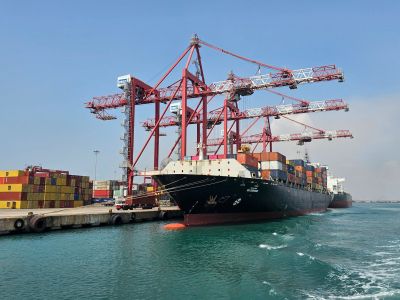
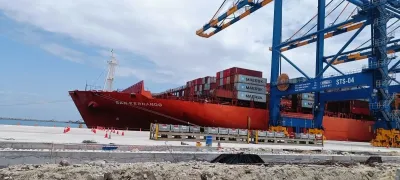
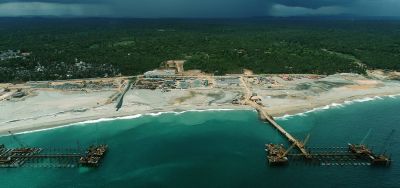
The Vizhinjam International Port was formally inaugurated after a successful five-month trial period with great fanfare and celebration last week for full-fledged commercial operation. This port's first phase has been completed due to effective team effort among Vizhinjam International Seaport Ltd, Adani Vizhinjam Port Private Ltd, and agencies like IIT Madras. All agreed procedures have been finalised and the work may begin operations. "Wednesday, an independent engineer is going to issue a provisional completion certificate for the first phase of construction after examining it," said the Minister. The remaining minor work could be done in three months without hindering the continued operations. The formal commissioning was carried out as per the supplementary concession agreement signed recently between the state government and Adani Ports. In its trial run, the port performed remarkably well by successfully handling 70 cargo ships, including ultra-large mother ships, and handling a total of 147,000 containers. By averaging one vessel every alternate day, the port confirmed its readiness to emerge as a major player in the handling of export-import (exim) containers. Vasavan underscored that "the port's operations will transform Kerala's international trade and drive substantive economic growth for the state."